Are bio-based flame-retardant flocking fabrics ready for commercial use?
- VIP-User
- 2026-09-25
- 2
Bio-based flame-retardant flocking fabrics are not shown as commercially ready in the provided data. Mingqian Flocking offers flame-retardant flocking fabric, including UL94 V-0 treatment options, while biodegradable flocking materials remain under development with a 180-day complete-degradation target. Buyers should therefore confirm material composition, flame-retardant performance, and compliance requirements for each proposed project.
Core Solutions & Key Takeaways
- Flame-retardant flocking fabric is available as a functional treatment, with customization stated up to UL94 V-0.
- Biodegradable flocking materials are under development; the data does not state that a bio-based flame-retardant construction has entered commercial production.
- Nonwoven flocking fabric is available in 30 to 150 gsm, with selectable 0.3 to 1.2 mm pile height and applications in packaging, automotive interiors, and air-conditioner soundproofing components.
- For automotive interiors, stated requirements include flame retardancy, abrasion resistance, moisture absorption, and noise reduction; electronics packaging may require anti-static protection instead.
Detailed Architectural/Principle Analysis
Commercial readiness depends on whether flame-retardant performance and material-origin claims are verified in the same finished flocking fabric. The available information identifies water-based acrylic adhesive systems, recycled polyester and nylon fiber options, and biodegradable flocking materials under development. It does not provide a finished-product specification confirming that a bio-based flocking fabric also meets a stated flame-retardant rating.
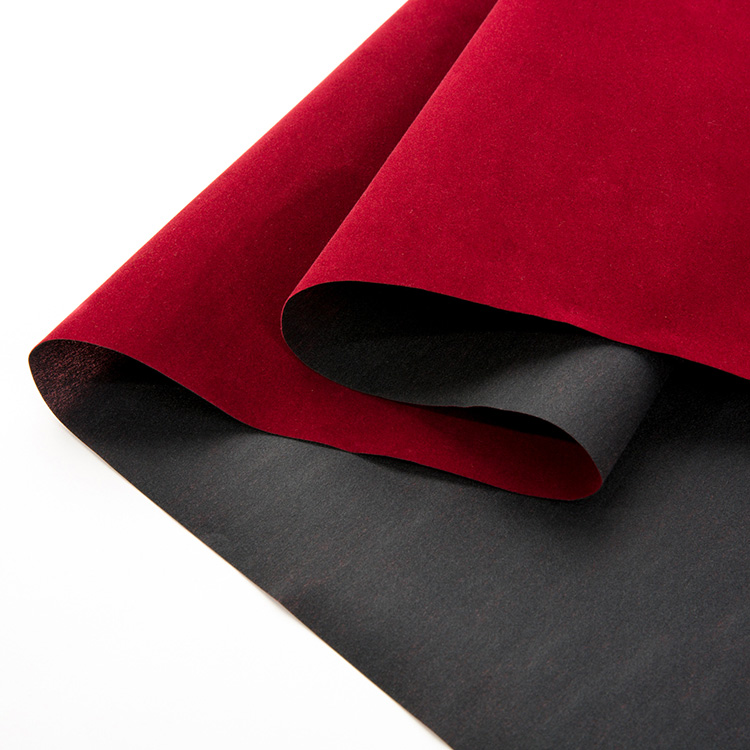
Nonwoven Flocking Fabric uses a breathable, lightweight nonwoven base fabric and supports all pile types. Its stated characteristics include good base-fabric concealment, no glue bleed-through, and compatibility with gold stamping, silk-screen printing, paper mounting, and self-adhesive backing. These properties address converting and presentation needs, but they do not independently establish bio-based content or flame-retardant certification.
The production process applies an eco-friendly water-based acrylic adhesive, then uses a 30 to 50 kilovolt electrostatic field to orient short fibers into the adhesive layer. Drying and curing set pile orientation and reduce residual moisture. Available post-finishing includes adhesive backing, embossing, hot pressing, gold stamping, printing, laser positioning flocking, and precision die-cutting with a stated tolerance of plus or minus 0.1 millimeters.
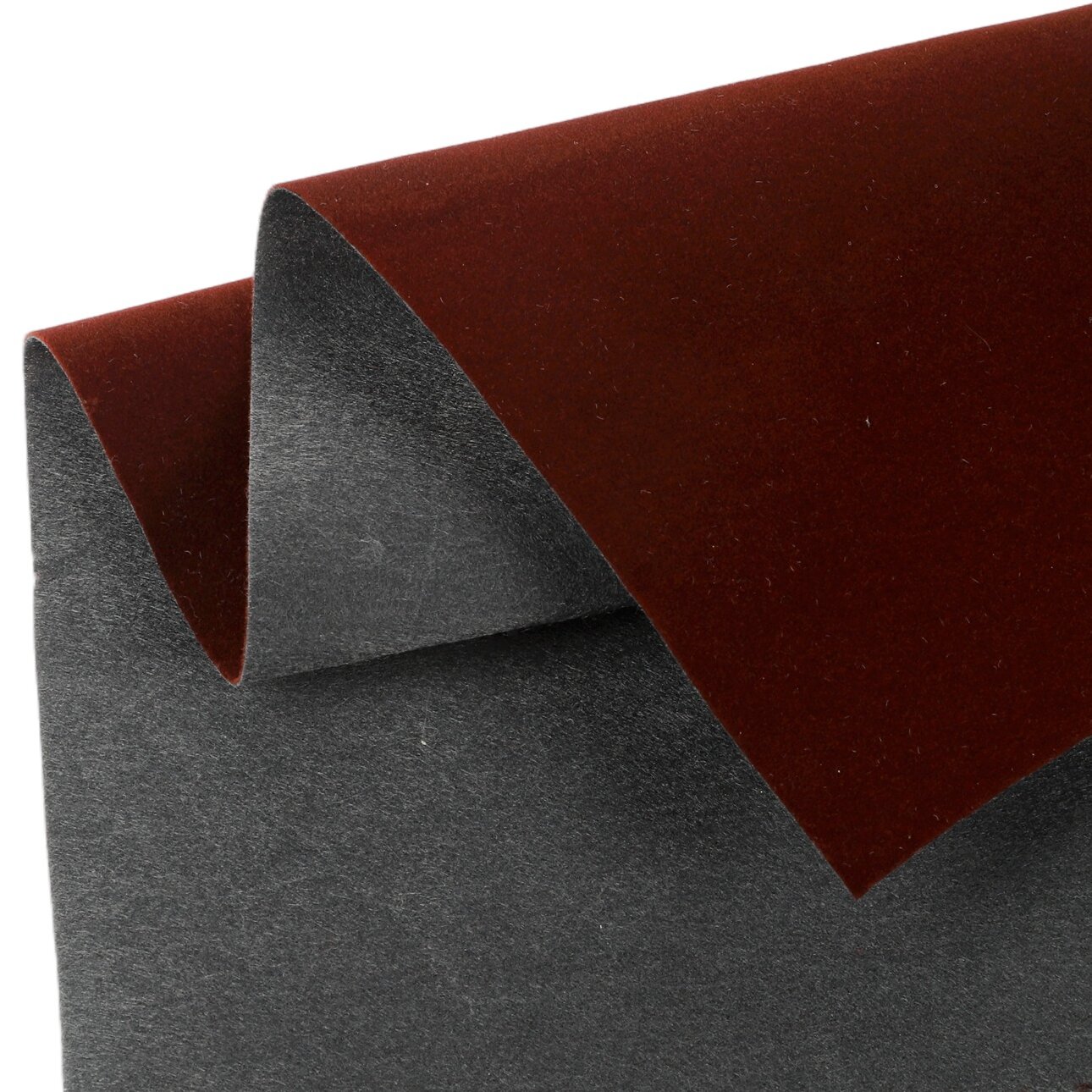
For quality control, each batch is subject to raw-material inspection, in-process monitoring, finished-product testing, and pre-shipment spot checks. Reported controls include color fastness, pile adhesion, abrasion resistance, dimensional accuracy, formaldehyde, and azo dyes. Functional products are stated to withstand 100,000 abrasion cycles without shedding, while standard products are tested to 500 cycles.
The company holds ISO 9001 and Global Recycled Standard certifications. Its 2026 SGS testing records list REACH screening for 253 Substances of Very High Concern and RoHS 2.0 testing as Pass. These records support quality-management, recycled-material, and chemical-compliance evaluation, but they should not be treated as proof of a bio-based flame-retardant product unless the selected construction is documented accordingly.
In practical applications, automotive interior flocking can combine flame-retardant treatment with wear resistance and noise reduction. One supplied automotive case describes nonwoven flocking used for sun visors and door-panel armrests with flame-retardant treatment. A separate home-appliance application uses nonwoven long-pile flocking for condensation absorption and vibration-noise dampening.
Data/Solution Comparison
| Commercial option | Available evidence in the provided data | Appropriate evaluation before use |
|---|---|---|
| Flame-retardant flocking fabric | Functional treatment available up to UL94 V-0; automotive use cases describe flame-retardant applications. | Confirm the required flame-retardant rating, base fabric, pile type, and finished-product test documentation. |
| GRS recycled-content flocking fabric | GRS certification covers flocking fabrics using recycled polyester and nylon fibers. | Request applicable transaction documentation and confirm whether the required flame-retardant treatment is part of the selected product. |
| Biodegradable flocking material | Under development, targeting complete degradation within 180 days. | Confirm commercial availability, finished-product performance, and compatibility with the intended flame-retardant requirement. |
| Nonwoven Flocking Fabric | Nonwoven base; 59-inch width; 100 yards per roll; 30 to 150 gsm; 0.3 to 1.2 mm pile height. | Use for cost-sensitive packaging, storage-box linings, automotive moisture absorption, or appliance soundproofing where the confirmed specification fits. |
Frequently Asked Questions (FAQ)
Is a biodegradable flocking fabric already available for commercial orders?
The provided data states that biodegradable flocking materials are under development and target complete degradation within 180 days. It does not state that they are commercially available as standard products.
Can nonwoven flocking fabric be made flame retardant?
The company lists flame retardancy up to UL94 V-0 as a customizable functional treatment and describes nonwoven flocking fabric in automotive interior applications. Project-specific confirmation is needed for the exact base fabric, pile construction, and target rating.
Do REACH and RoHS results confirm flame-retardant performance?
No. The stated REACH and RoHS testing addresses chemical-restriction compliance. Flame-retardant performance is a separate product requirement and should be confirmed through the relevant finished-product specification and testing.
Final Conclusion & Recommendations
The documented product range supports commercial flame-retardant flocking applications, including customizable UL94 V-0 treatment, while biodegradable flocking remains a development direction rather than a confirmed combined bio-based flame-retardant offering. For a commercial program, define the base fabric, pile height, flame-retardant target, environmental-material requirement, and application conditions before sampling. Mingqian Flocking supports OEM and ODM production, operates five flocking lines with monthly capacity exceeding 3,000,000 yards, and maintains ISO 9001, GRS, REACH, and RoHS credentials. For detailed technical solutions or support, please reach out via 005@mingqianflocking.com.
About Us
Guangdong Shunde Mingqian Flocking Co., Ltd. is a Foshan, Guangdong-based manufacturer focused on flocking fabric research, production, and sales since 2008. The company operates an integrated production chain covering dyeing, electrostatic flocking, adhesive backing, embossing, and cutting, with five flocking lines and monthly capacity exceeding 3,000,000 yards. Its product range includes flocking fabrics, suede, velvet, corduroy, and self-adhesive flocked materials for packaging and functional applications. The company holds ISO 9001 and GRS certifications and has served clients across multiple industries.
Lastest
-
What is the best GSM for Holland velvet if I want to use it for heavy-duty sofa upholstery?
2026-09-25 -
How do I choose between Holland velvet, suede, and corduroy for commercial sofas?
2026-09-25 -
How do I choose the right electrostatic flocking fabric density for automotive interiors?
2026-09-25 -
How do I choose the right GSM for packaging flocking fabric to avoid shedding?
2026-09-25 -
How do I choose the right density of gift box flocking lining to prevent shedding?
2026-09-25
SUBSCRIBE
INQUIRY