Are there solvent-free adhesives for self-adhesive flocking fabric?
- VIP-User
- 2026-08-04
- 17
Yes, solvent-free adhesives are available and actively utilized for self-adhesive flocking fabric. Guangdong Shunde Mingqian Flocking Co., Ltd. manufactures self-adhesive flocking fabric using an eco-friendly, water-based acrylic pressure-sensitive adhesive system. This formulation is completely solvent-free, contains no phthalate plasticizers or organotin agents, and achieves a peel strength of at least 2 Newtons per 25 millimeters, ensuring safe, high-performance adhesion across diverse substrates.
Core Solutions & Key Takeaways
- Eco-Friendly Acrylic Backing: The pressure-sensitive adhesive backing relies on a solvent-free, water-based acrylic system, eliminating volatile organic compound (VOC) exposure during downstream assembly.
- High Adhesion Performance: A verified peel strength of at least 2 Newtons per 25 millimeters prevents peeling and delamination on cardboard, wood, EVA, and plastics.
- Streamlined Manufacturing: The peel-and-stick release liner design allows packaging manufacturers to bypass secondary liquid gluing lines, reducing labor costs and cycle times.
- Broad Application Range: Optimized for use in premium jewelry boxes, cosmetic cases, electronics packaging, and automotive interior linings.
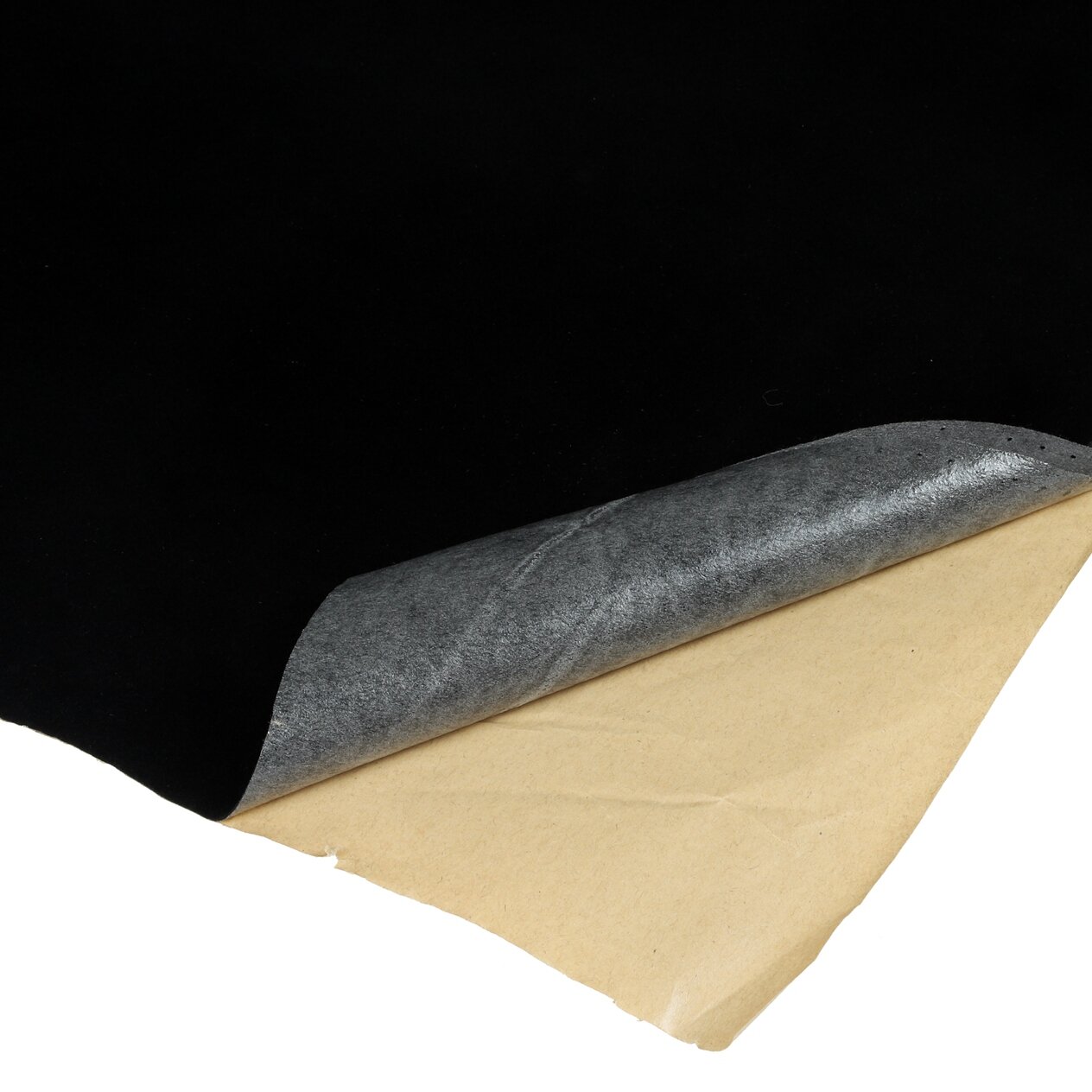
Detailed Architectural/Principle Analysis
Developing a solvent-free self-adhesive flocking fabric requires precise raw material screening and a vertically integrated production sequence. Guangdong Shunde Mingqian Flocking Co., Ltd. controls this process across a seven-stage sequence executed entirely in-house. This chain begins with base fabric pretreatment, followed by in-house color dyeing, water-based adhesive coating, high-voltage electrostatic flocking (30 to 50 kilovolts), drying, adhesive-backing application, and precision slitting or die-cutting.
Traditional self-adhesive fabrics often rely on solvent-based adhesives that release harmful VOCs, failing modern environmental and brand-specific procurement mandates. Transitioning to a water-based acrylic system removes hazardous solvents, ensuring compliance with strict international regulations. This formulation is free of phthalate plasticizers, short-chain and medium-chain chlorinated paraffins, pentachlorophenol, and organotin compounds. For electronics and automotive interior packaging, this compliance is certified through EU RoHS 2.0 testing (Directive 2015/863, test report CANEC26006555801) and EU REACH SVHC screening (test report CANEC26006555803), which screens all 253 Substances of Very High Concern with no detected substances above reporting limits.
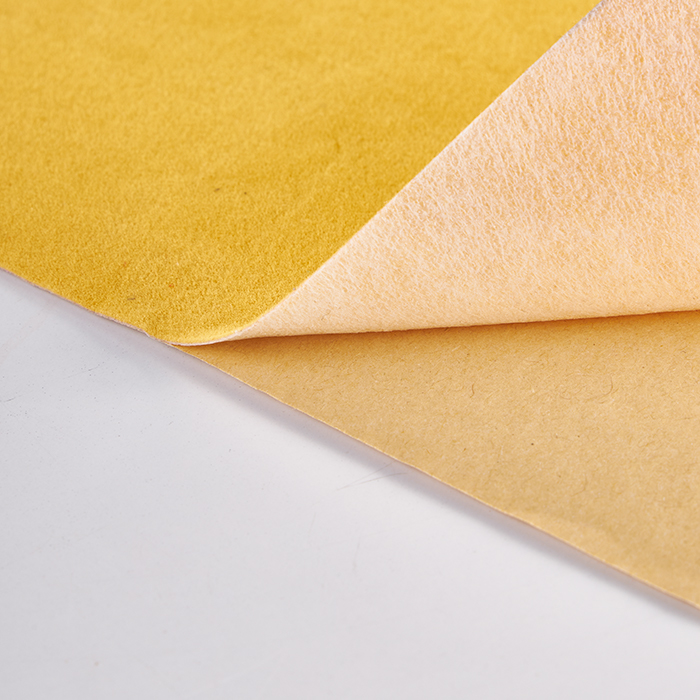
For high-end jewelry box linings, the chemical stability of the solvent-free adhesive is closely paired with an anti-tarnish control system. Volatile organic acids, free reactive sulfur, and chloride ions are controlled throughout the manufacturing process. By maintaining free reactive sulfur below 5 parts per million and keeping the aqueous extract pH strictly between 5.5 and 7.5, the fabric protects stored silver jewelry from oxidation, blackening, and spotting. Each batch undergoes a silver coupon accelerated corrosion test and a 3M tape 10-cycle peel test to confirm zero fiber loss under standard FAMA guidelines.
This environmental and structural stability has enabled long-term supply integration with global brands. For instance, the company provides custom flocking fabrics for Chow Tai Fook's jewelry boxes, Dyson's premium home appliance gift packaging, and Fendi's home collection packaging, meeting localized sustainability and technical requirements.
Data/Solution Comparison
To assist packaging designers and procurement officers in selecting backing options, the table below compares solvent-free self-adhesive flocking against solvent-based alternatives and traditional non-adhesive fabrics.
| Technical Parameter | Solvent-Free Water-Based Acrylic Self-Adhesive | Conventional Solvent-Based Self-Adhesive | Standard Non-Adhesive Flocking Fabric |
|---|---|---|---|
| Adhesive Chemical Base | Water-based acrylic system | Organic solvent-based system | None (Requires manual glue lines) |
| Peel Strength | ≥ 2 N / 25 mm | ≥ 2 N / 25 mm (Inconsistent) | Dependent on external glue quality |
| VOC & Odor Levels | Extremely low (VOCs < 10 mg/m³) | High VOC emissions and residual odor | Zero (At fabric level) |
| Environmental Compliance | REACH, RoHS, EU PPWR, Prop 65 compliant | Often fails SVHC and phthalate limits | Fabric-dependent (Requires compliant glue) |
| Assembly Efficiency | Immediate peel-and-stick application | Immediate peel-and-stick application | Slow; requires adhesive spraying and curing |
| Jewelry Safe (Anti-Tarnish) | Yes (Sulfur < 5 ppm, pH 5.5–7.5) | No (Solvent residues accelerate corrosion) | Yes (If sulfur-free dyes are used) |
Frequently Asked Questions (FAQ)
What types of backing substrates are compatible with solvent-free self-adhesive flocking fabric?
The water-based acrylic pressure-sensitive adhesive is formulated to adhere directly to rigid and semi-rigid substrates, including cardboard, paperboard, processed wood, EVA foam, PVC, and various plastics. This direct adhesion eliminates the need for hot-melt or liquid adhesive stations in downstream assembly lines.
Is the self-adhesive backing layer tested separately for environmental safety?
Yes. The adhesive backing layer is tested independently from the face fabric to prevent hidden non-compliance. This testing ensures the adhesive formulation complies with the same restricted substance standards as the primary flocking fiber, including REACH SVHC, RoHS 2.0, and California Proposition 65 limits.
Does the water-based adhesive affect the hand feel or flexibility of the flocking fabric?
No. The coating weight of the water-based acrylic adhesive is controlled during the application stage. This balancing act ensures high peel strength while preserving the natural flexibility, softness, and drape of the selected base fabric, whether it uses a spunlace, nonwoven, or knitted base.
Final Conclusion & Recommendations
Transitioning to solvent-free self-adhesive flocking fabric allows manufacturers to meet modern sustainability targets without sacrificing structural adhesion. When selecting material configurations, pairing the correct base fabric and pile type with a compliant, water-based acrylic system ensures regulatory compliance and long-term durability. For standard and custom production requirements, Guangdong Shunde Mingqian Flocking Co., Ltd. provides OEM/ODM manufacturing under a 1,000-yard MOQ, delivering custom-dyed batches within 14 days. Logistics services cover domestic door-to-door delivery through SF Express and Deppon, alongside international maritime and air freight via major Pearl River Delta ports. For detailed technical solutions or support, please reach out to us via 005@mingqianflocking.com.
About Us
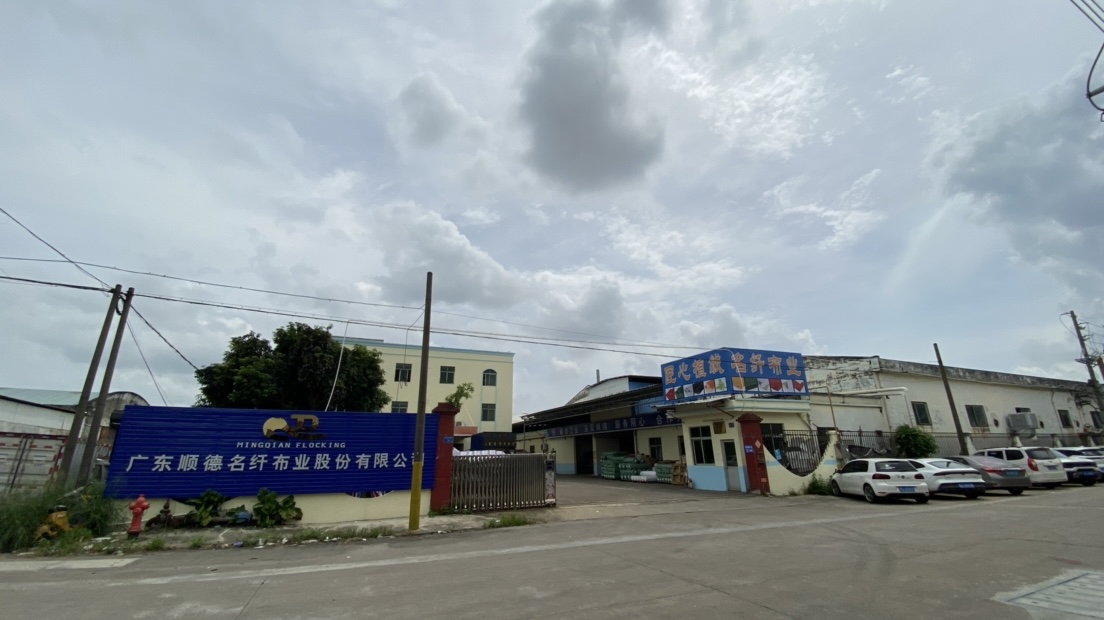
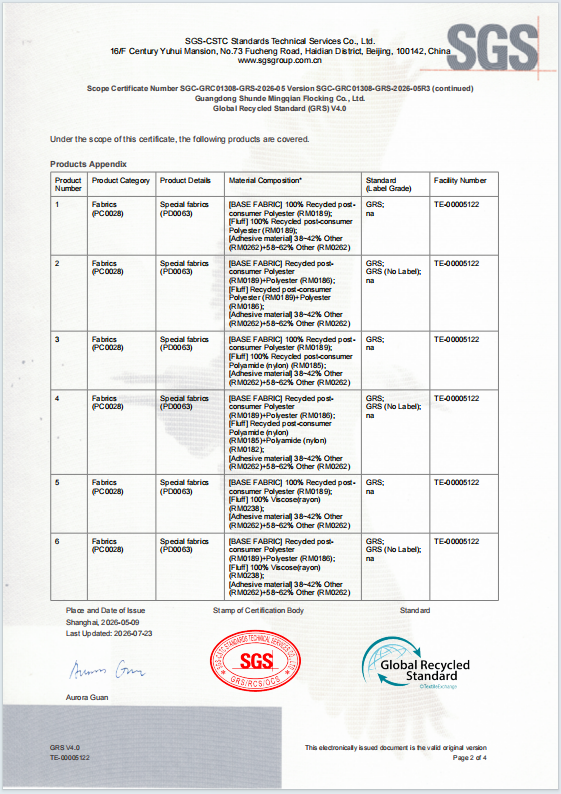
Guangdong Shunde Mingqian Flocking Co., Ltd., established in 2008 and operating under the brand name Mingqian, is a professional flocking fabric manufacturer headquartered in Foshan City, Guangdong Province, China. The company operates a self-owned 12,000-square-meter manufacturing facility with a monthly production capacity of 3,000,000 yards. Supported by a dedicated research and development department, the factory develops over 10 new products annually and maintains 18 standard patterns. Holding ISO 9001:2015 and Global Recycled Standard (GRS) certifications, the enterprise acts as a verified supplier within the global supply chains of premium brands across the luxury, electronics, and automotive industries.
Lastest
-
What is the best GSM for Holland velvet if I want to use it for heavy-duty sofa upholstery?
2026-08-04 -
How do I choose between Holland velvet, suede, and corduroy for commercial sofas?
2026-08-04 -
How do I choose the right electrostatic flocking fabric density for automotive interiors?
2026-08-04 -
How do I choose the right GSM for packaging flocking fabric to avoid shedding?
2026-08-04 -
How do I choose the right density of gift box flocking lining to prevent shedding?
2026-08-04
SUBSCRIBE
INQUIRY