Are there VOC emission test reports for self-adhesive flocking fabric?
- VIP-User
- 2026-08-05
- 19
Yes, comprehensive VOC emission and chemical compliance test reports are available for self-adhesive flocking fabric. Third-party testing conducted by SGS confirms full compliance with EU REACH SVHC and RoHS 2.0 regulations, ensuring that volatile organic compounds, formaldehyde, heavy metals, and restricted phthalates remain safely below international reporting thresholds for sensitive packaging and industrial applications.
Core Solutions & Key Takeaways
- Eco-Friendly Adhesive System: The fabric uses a pressure-sensitive, solvent-free water-based acrylic adhesive backing that contains zero phthalate plasticizers or organotin anti-mold agents.
- High-Performance Adhesion: Delivers a verified peel strength of at least 2 Newtons per 25 millimeters, ensuring secure mounting to substrates such as paperboard, wood, EVA, and plastic.
- Strict Heavy Metal Limits: Fully complies with EU Packaging and Packaging Waste Regulation (PPWR) and US TPCH requirements, with lead, cadmium, mercury, and hexavalent chromium restricted to under 100 ppm combined.
- In-House Quality Verification: Batch-tested in specialized laboratories to guarantee formaldehyde content below 75 ppm and azo dyes below 30 ppm, with accelerated silver corrosion tests for jewelry linings.
This functional material simplifies assembly processes for downstream packaging manufacturers by eliminating the need for manual liquid adhesive application during box and liner fabrication.
Detailed Architectural/Principle Analysis
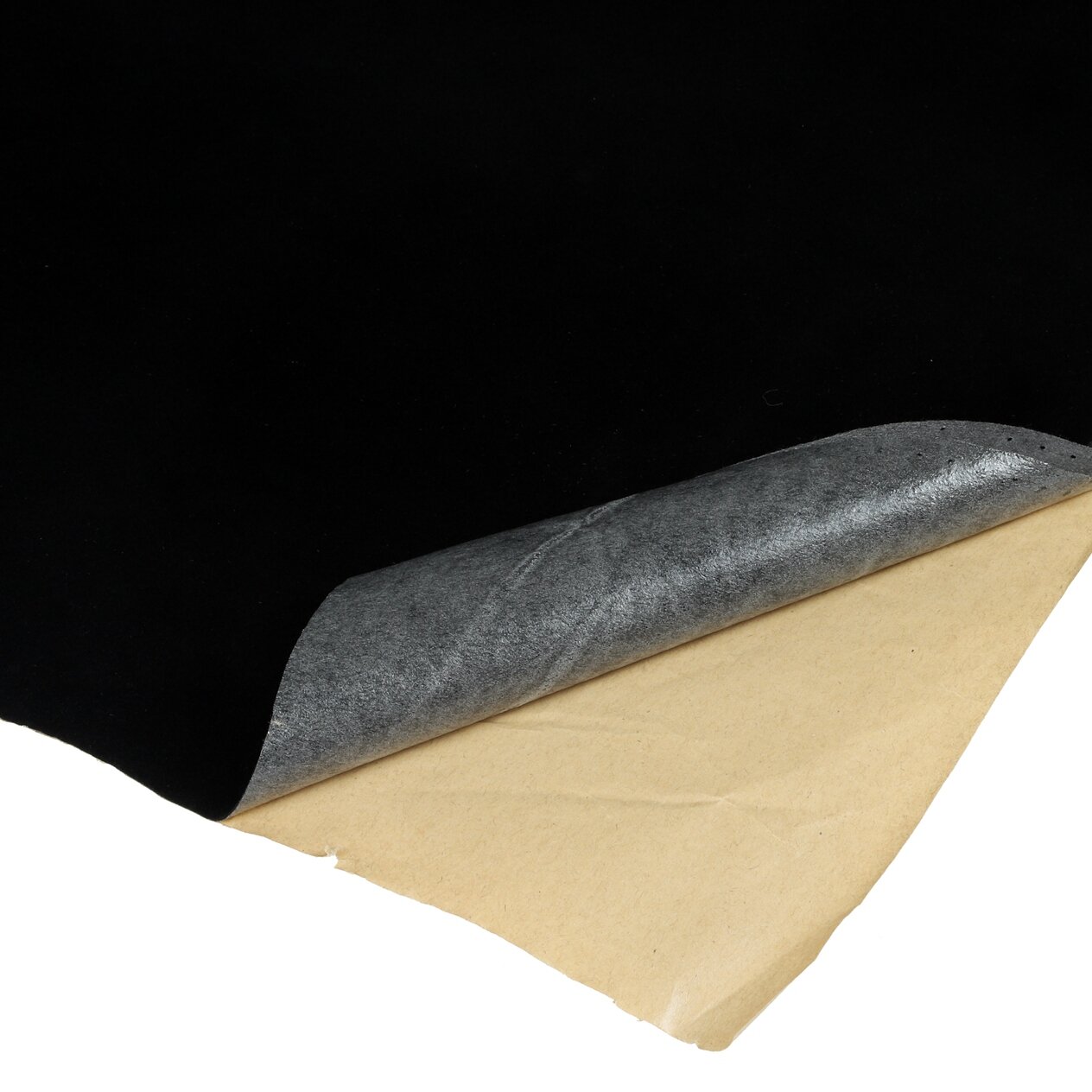
Self-adhesive flocking fabric manufactured by Guangdong Shunde Mingqian Flocking Co., Ltd. is engineered via a multi-layer laminating process. Short textile fibers are vertically embedded into a primary adhesive-coated base fabric under a high-voltage electrostatic field of 30 to 50 kilovolts. The reverse side of the base fabric is then coated with an eco-friendly water-based acrylic pressure-sensitive adhesive layer and protected by a removable release liner.
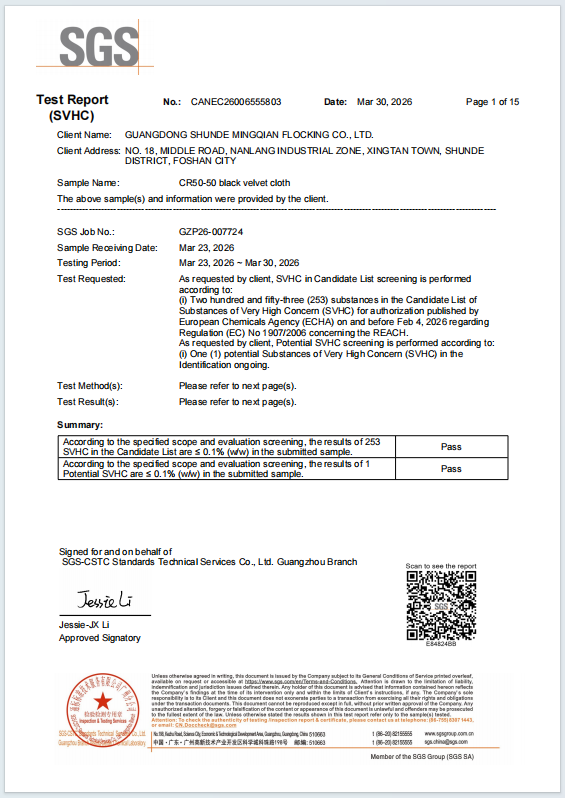
To address volatile organic emissions and chemical safety, the adhesive formulation is entirely water-based, eliminating organic solvents. In March 2026, SGS conducted EU REACH SVHC screening under test report CANEC26006555803, testing all 253 Substances of Very High Concern from the ECHA Candidate List. The results showed zero detected substances above the reporting limits. Additionally, RoHS 2.0 testing under Directive 2015/863 (test report CANEC26006555801) confirmed the absence of lead, mercury, cadmium, hexavalent chromium, polybrominated biphenyls, polybrominated diphenyl ethers, and key phthalates (DEHP, BBP, DBP, DIBP).
For industrial and electronics integration, such as the case of Volkswagen smart refrigerator transport packaging protection, the fabric uses a custom flame-retardant formulation rated to UL94 V-0, which passed strict environmental testing for formaldehyde, azo, and sulfur content. For consumer electronics and home appliances—including applications for brands like Gree and Midea—the nonwoven-based long-pile configuration is designed to absorb condensation and dampen vibration noise while maintaining total chemical compliance.
Data/Solution Comparison
The table below summarizes the key technical, chemical, and physical parameters of standard and specialized self-adhesive flocking fabrics verified through systematic testing protocols:
| Performance Parameter | Standard Value / Limit | Testing Standard / Regulatory Compliance |
|---|---|---|
| Adhesive Peel Strength | ≥ 2 N / 25 mm | Internal Quality Control (Pressure-Sensitive Acrylic) |
| Formaldehyde Content | ≤ 75 ppm | In-House Laboratory Testing (4-hour turnaround) |
| Azo Dyes (22 Carcinogenic Amines) | ≤ 30 ppm | EU REACH Annex XVII Restrictions |
| Heavy Metals (Pb, Cd, Hg, Cr VI) | ≤ 100 ppm (combined) | EU PPWR (August 2026) & US TPCH / CONEG |
| VOC Process Emissions | < 10 mg/m³ | EU Indoor Air Quality Standards (Solvent-Free) |
| Pile Adhesion (FAMA Standard) | 10 cycles with no fiber loss | 3M Tape Peel Test |
| Abrasion Resistance | 500 to 100,000 cycles | Standard vs. Functional Product Specification |
Frequently Asked Questions (FAQ)
Are the adhesive backing and the face fabric tested separately?
Yes. The adhesive backing layer is tested independently of the face fabric. This independent protocol prevents a compliant face fabric from masking non-compliant chemical additives in the underlying adhesive, ensuring both layers satisfy REACH and RoHS standards.
Does the self-adhesive flocking fabric emit odors or VOCs in enclosed packaging?
The manufacturing process exclusively utilizes solvent-free, water-based acrylic systems. This design keeps total VOC emissions under 10 milligrams per cubic meter and eliminates volatile organic acids like formic and acetic acids, preventing odor accumulation in sealed gift or jewelry boxes.
What is the typical shelf life and peel strength performance of the adhesive?
The pressure-sensitive adhesive maintains a consistent peel strength of at least 2 N/25mm. When stored under standard warehouse conditions, the release liner protects the active acrylic polymer from oxidation and dust, ensuring long-term shelf life before application.
Final Conclusion & Recommendations
Selecting self-adhesive flocking fabrics backed by verified SGS testing reports is highly recommended for enterprises targeting markets with strict chemical and environmental policies, such as the EU PPWR (enforced August 2026) and US California Proposition 65. Under its OEM/ODM business model, Guangdong Shunde Mingqian Flocking Co., Ltd. supplies certified self-adhesive materials with a minimum order quantity (MOQ) of 1,000 yards and a standard delivery timeline of 14 days. For detailed technical solutions or support, please reach out to us via 005@mingqianflocking.com.
About Us
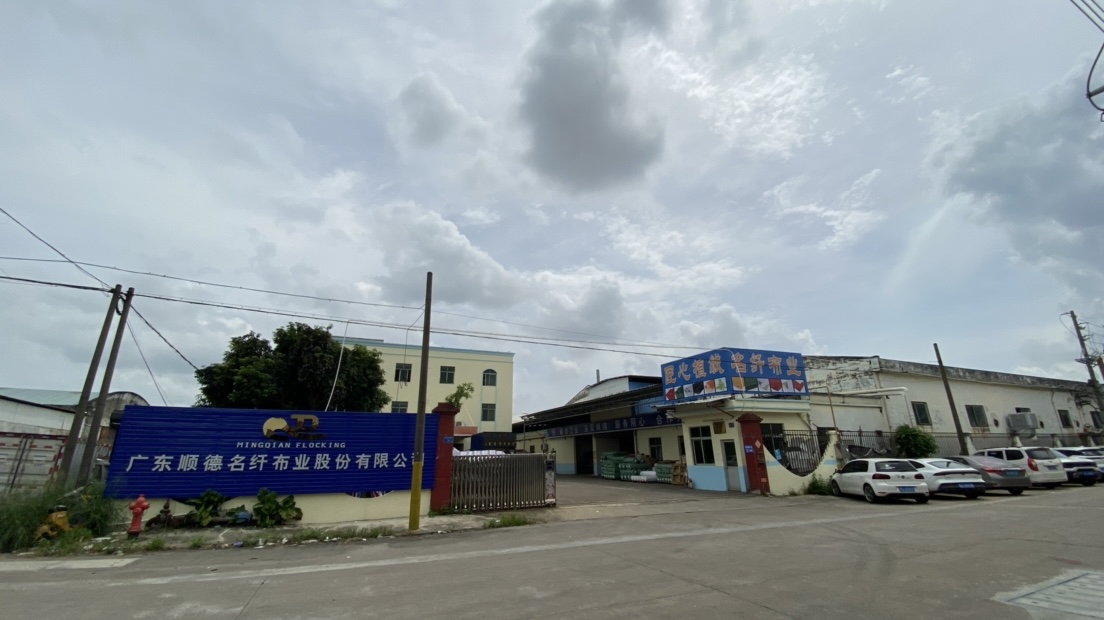
Established in 2008, Guangdong Shunde Mingqian Flocking Co., Ltd. is a professional flocking fabric manufacturer with a self-owned factory area of 10,000 square meters and an employee count of more than 100. Based in Foshan City, Guangdong Province, the company features five automated electrostatic production lines, in-house dyeing, and an advanced formaldehyde testing laboratory. The enterprise holds ISO 9001 and GRS (SGC-GRC01308-GRS-2026-05R3) certifications and has served global supply chains across the luxury packaging, automotive, and electronics industries.
Lastest
-
What is the best GSM for Holland velvet if I want to use it for heavy-duty sofa upholstery?
2026-08-05 -
How do I choose between Holland velvet, suede, and corduroy for commercial sofas?
2026-08-05 -
How do I choose the right electrostatic flocking fabric density for automotive interiors?
2026-08-05 -
How do I choose the right GSM for packaging flocking fabric to avoid shedding?
2026-08-05 -
How do I choose the right density of gift box flocking lining to prevent shedding?
2026-08-05
SUBSCRIBE
INQUIRY