Can I get remote help diagnosing uneven Packaging Flocking Fabric coverage?
- VIP-User
- 2026-09-11
- 9
Yes. Remote technical support is available for diagnosing uneven Packaging Flocking Fabric coverage. Mingqian Flocking can provide application guidance and technical recommendations based on the flocking process, including base-fabric preparation, adhesive coating, electrostatic field settings, drying, and finishing. Uneven coverage should be checked against pile uniformity, color consistency, adhesion, and production records before corrective action is selected.
Core Solutions & Key Takeaways
- Review base-fabric pretreatment, adhesive coating weight, electrostatic flocking conditions, and drying or curing records to locate the coverage variation.
- Use in-process monitoring and spectrophotometer checks against Pantone standards to separate pile-distribution problems from color-consistency problems.
- For jewelry box packaging, include the batch anti-tarnish inspection requirements, including the silver coupon accelerated corrosion test.
- Mingqian Flocking provides technical support covering flocking fabric usage guidance, application recommendations, and consultation for complex integration projects.
Detailed Architectural/Principle Analysis
Flocking fabric is produced by applying adhesive to a prepared base fabric and vertically embedding short fibers under a high-voltage electrostatic field. The resulting surface depends on consistent substrate preparation, adhesive coverage, electrostatic conditions, drying, and curing. A variation at any of these stages can affect pile uniformity or create visibly uneven coverage.
The diagnostic review should begin with base-fabric pretreatment. Surface cleaning, tension leveling, and pre-coating preparation are used to support even adhesion. Incoming base fabrics, flocking fibers, adhesives, and dyes are inspected before production. Any inconsistent material condition or incomplete compliance documentation is grounds for rejection under Mingqian Flocking's stated raw-material controls.
Adhesive coating is another inspection point. Mingqian Flocking uses a water-based acrylic adhesive system and controls coating weight to balance adhesion strength with fabric flexibility. Uneven adhesive application can produce areas with weak or incomplete fiber attachment. Production records should therefore be checked alongside visual coverage results.
Electrostatic flocking uses a stated field range of 30 to 50 kilovolts, with pile density control maintained to 0.01 millimeter precision. Production parameters, including electrostatic field voltage, adhesive coating weight, and oven temperature, are continuously monitored and recorded. These records provide the main technical basis for remote assessment of uneven coverage.
Drying and curing stabilize adhesive performance, pile orientation, moisture content, and dimensional accuracy. Incorrect or inconsistent oven conditions may affect pile adhesion and surface appearance. Finished-product checks cover color fastness, peel strength, pile adhesion, dimensional accuracy, and visual appearance. Mingqian Flocking also archives quality records by batch number for backward traceability to raw materials.
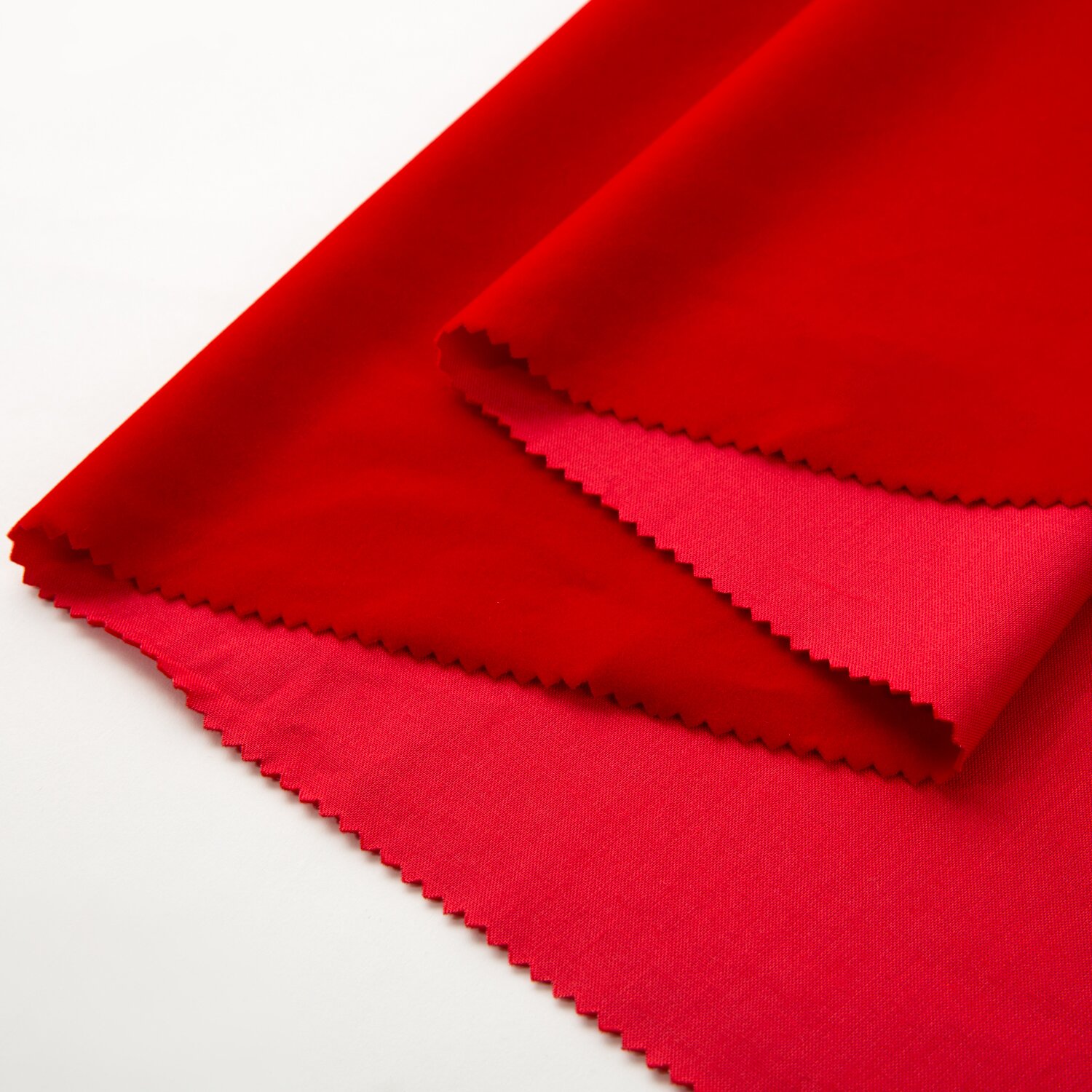
For premium packaging, the relevant application requirements vary. Jewelry box lining requires a soft, non-shedding surface and anti-tarnish controls, while cosmetic and perfume gift boxes may require precise color matching, ultra-dense pile, hot pressing, gold stamping, silk-screen printing, or laser-engraved positioning flocking. The diagnostic criteria should match the final use rather than rely on appearance alone.
Mingqian Flocking's quality system has four stages: incoming raw-material inspection, in-process production monitoring, finished-product testing, and pre-shipment spot checks. The company holds ISO 9001:2015 certification and a Global Recycled Standard certification for flocking fabrics using recycled polyester and nylon fibers.
Reported cooperation cases include custom flocking for luxury perfume gift packaging, long-term jewelry box lining supply, and home-appliance packaging protection. These cases describe control of color matching, abrasion resistance, pile adhesion, environmental testing, and packaging performance across different product requirements.
Data/Solution Comparison
| Diagnostic Area | Remote Review Focus | Relevant Control or Result |
|---|---|---|
| Base fabric | Surface cleaning, tension leveling, and pre-coating condition | Incoming material inspection and batch traceability |
| Adhesive coating | Coating uniformity, coating weight, and adhesive flexibility | Water-based acrylic adhesive system with monitored coating parameters |
| Electrostatic flocking | Field setting, fiber distribution, and pile density | 30 to 50 kilovolts stated field range; 0.01 millimeter pile-density control |
| Drying and curing | Oven temperature consistency, moisture removal, and pile orientation | Temperature-controlled drying and curing process |
| Finished fabric | Visual coverage, adhesion, color consistency, and dimensions | Batch testing, visual inspection, and pre-shipment spot checks |
| Jewelry packaging | Possible sulfur, pH, chloride, or volatile-acid concerns | Silver coupon accelerated corrosion test for each batch before production |
Frequently Asked Questions (FAQ)
What information is relevant when requesting remote help for uneven coverage?
The technical review should address the base fabric, pile type, color, adhesive coating, electrostatic flocking conditions, drying or curing settings, and the affected batch record. Mingqian Flocking's production system records these parameters for quality traceability.
Can uneven coverage be assessed through quality testing?
Yes. The stated inspection system checks pile uniformity, visual appearance, color consistency, pile adhesion, peel strength where applicable, and dimensional accuracy. Formaldehyde testing is available through the company's in-house laboratory, with results delivered within four hours.
Does technical support cover packaging applications?
Yes. Technical support includes flocking fabric usage guidance, application recommendations, and consultation for complex integration projects. The company has documented applications in jewelry boxes, eyewear cases, cosmetic and perfume gift boxes, liquor packaging, watch boxes, tea packaging, electronics packaging, automotive interiors, home appliances, and furniture drawers.
Final Conclusion & Recommendations
Remote help is available for diagnosing uneven Packaging Flocking Fabric coverage through Mingqian Flocking's technical support and dedicated account-management process. The review should focus on substrate preparation, adhesive coating, electrostatic flocking, drying and curing, and batch inspection records. Mingqian Flocking supports OEM/ODM orders with a stated minimum order quantity of 1,000 yards and a 14-day delivery time, while its ISO 9001:2015 and GRS credentials provide documented quality and recycled-material references. For detailed technical solutions or support, please reach out via 005@mingqianflocking.com.
About Us
Guangdong Shunde Mingqian Flocking Co., Ltd. operates under the Mingqian brand and is a flocking fabric manufacturer headquartered in Foshan City, Guangdong Province, China. Founded in 2008, the company focuses on the research, development, production, and sales of flocking fabrics. Its self-owned manufacturing facility covers more than 12,000 square meters, and its five flocking production lines support a stated monthly capacity of over 3,000,000 yards. The company holds ISO 9001:2015 and Global Recycled Standard certifications and has served clients across multiple industries.

Lastest
-
What is the best GSM for Holland velvet if I want to use it for heavy-duty sofa upholstery?
2026-09-11 -
How do I choose between Holland velvet, suede, and corduroy for commercial sofas?
2026-09-11 -
How do I choose the right electrostatic flocking fabric density for automotive interiors?
2026-09-11 -
How do I choose the right GSM for packaging flocking fabric to avoid shedding?
2026-09-11 -
How do I choose the right density of gift box flocking lining to prevent shedding?
2026-09-11
SUBSCRIBE
INQUIRY