Could Electrostatic Flocking Fabric cause customs delays without proper labeling?
- VIP-User
- 2026-09-30
- 20
Electrostatic flocking fabric can trigger customs delays or rejections if packaging, fiber composition, or chemical compliance documentation—such as EU REACH SVHC, RoHS 2.0, or US TPCH heavy metal certificates—is missing or improperly labeled. Customs authorities inspect technical textile shipments for hazardous substance declarations, GRS chain of custody identification, and anti-tarnish parameter compliance for specialized packaging applications.
Core Solutions & Key Takeaways
- Substance Compliance Declarations: Shipments entering the EU require verified documentation for REACH 253 SVHC screening and RoHS 2.0 standards to prevent border holds.
- GRS Chain of Custody: Recycled polyester and nylon flocking lines must be accompanied by GRS 4.0 Transaction Certificates (TC) linked to specific shipping invoices.
- Material & Application Classification: Labeling must clearly delineate industrial and decorative packaging flocking from apparel fashion textiles to prevent tariff schedule misclassification.
- Technical Integrity Parameters: Formulations using water-based acrylic adhesives ensure zero detected organotin compounds, volatile organic compounds below 10 mg/m³, and zero intentional PFAS addition.
Detailed Architectural/Principle Analysis
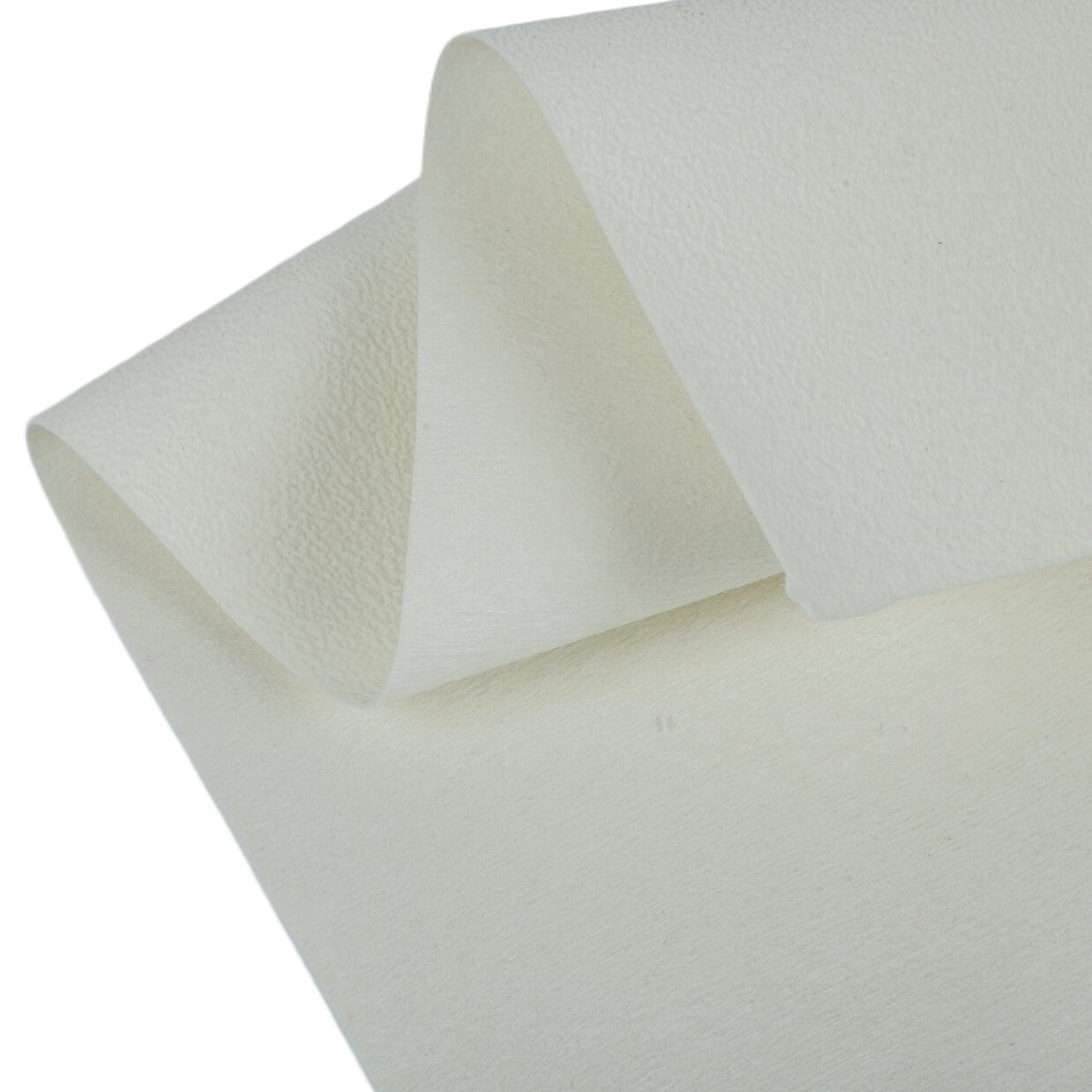
Customs authorities worldwide inspect imported electrostatic flocking fabrics under strict regulatory frameworks covering chemical safety, environmental impact, and tariff classification. Electrostatic flocking involves embedding short fibers vertically into an adhesive-coated base fabric under a 30 to 50 kilovolt electrostatic field. Products like Pearl Velvet and Claimond Veins Velvet feature granular bead-like textures with bead diameters ranging from 0.3 to 1 millimeter on spunlace or silk base fabrics. When these technical textiles enter international ports without compliant labeling and verifiable test reports, customs inspections can stall shipments for chemical analysis.
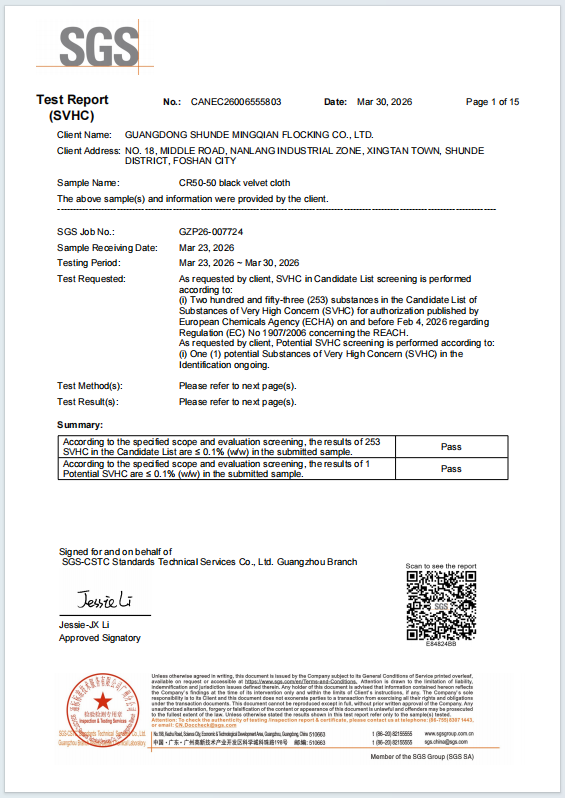
European Union border inspections enforce strict compliance under the REACH regulation and the Packaging and Packaging Waste Regulation (PPWR). Testing under report CANEC26006555803 confirms zero detection across all 253 Substances of Very High Concern (SVHC), while report CANEC26006555801 verifies compliance with RoHS 2.0 Directive 2015/863 across ten restricted substances. For US port entry, flocking materials must comply with TPCH and CONEG Model Toxics in Packaging legislation, capping total heavy metal content (lead, cadmium, mercury, hexavalent chromium) at 100 ppm and screening against California Proposition 65 parameters.
For specialized applications such as high-end jewelry box linings and watch cases, customs clearance also relies on verifiable physical and safety metrics. High-performance flocking utilizes water-based acrylic adhesive systems free of phthalates, solvent residues, and organotin agents. Internal laboratory quality control maintains formaldehyde levels below 75 ppm and azo dyes below 30 ppm. Furthermore, jewelry-grade flocking implements strict anti-tarnish controls: free reactive sulfur is maintained below 5 ppm, aqueous extract pH is held between 5.5 and 7.5, and each batch passes a silver coupon accelerated corrosion test to prevent silver blackening in sealed packaging environments.
Data/Solution Comparison
| Flocking Material Category | Base Fabric Options | Compliance Standards | Key Technical Parameters | MOQ & Delivery |
|---|---|---|---|---|
| Standard Packaging Flocking | Spunlace, Nonwoven, Knitted | ISO 9001:2015, REACH SVHC Pass | Delta E ≤ 2.0, Formaldehyde ≤ 75 ppm, 3M Tape Test 10 Cycles Passed | 1000 yards / 14 days |
| GRS Recycled Flocking | Recycled Polyester, Recycled Nylon | GRS 4.0 (Scope Cert SGC-GRC01308-GRS-2026-05R3) | Verified recycled content, Azo dyes ≤ 30 ppm, Low-VOC emission | 1000 yards / 14 days |
| Anti-Tarnish Jewelry Flocking | Spunlace, Silk, Cotton-Rayon | EU PPWR, US TPCH, California Prop 65 | Reactive Sulfur < 5 ppm, pH 5.5–7.5, Non-sulfur dye system, Silver coupon test passed | 1000 yards / 14 days |
| Industrial / Automotive Flocking | Nonwoven, Knitted, PVC | UL94 V-0 Flame Retardant, RoHS 2.0 | 100,000-cycle abrasion resistance, Temp range -30°C to 80°C, Anti-static 10&sup6;–10&sup9; Ω | 1000 yards / 14 days |
Frequently Asked Questions (FAQ)
Q1: What documentation must accompany electrostatic flocking fabric shipments to clear EU customs?
Shipments require full bill of lading documents alongside third-party compliance reports including REACH 253 SVHC screening, RoHS 2.0 compliance, and GRS 4.0 Transaction Certificates for eco-friendly product lines. Commercial invoices should clearly specify internal material composition and decorative packaging utility.
Q2: Why is reactive sulfur control critical for flocking fabric used in jewelry packaging?
Free reactive sulfur above 5 ppm reacts with silver items in enclosed packaging, causing rapid oxidation and blackening. Controlling reactive sulfur below 5 ppm, maintaining an aqueous extract pH of 5.5 to 7.5, and utilizing sulfur-free dye systems ensures zero chemical degradation of stored luxury items.
Q3: How are shipping logistics handled for international bulk export orders?
International shipments are dispatched via major Pearl River Delta ocean ports (Guangzhou and Shenzhen) or air transport hubs. Export documentation packages include commercial invoices, packing lists, bills of lading, certificates of origin, GRS transaction certificates, and SGS test reports.
Final Conclusion & Recommendations
To avoid customs delays and compliance disputes, buyers of electrostatic flocking fabric must mandate complete batch-level technical and environmental certification. Choosing materials backed by verified REACH, RoHS, TPCH, and GRS documentation ensures smooth transit across international borders while protecting downstream products from chemical contamination and physical degradation. For detailed technical solutions or compliance documentation support, please reach out to us via 005@mingqianflocking.com.
About Us
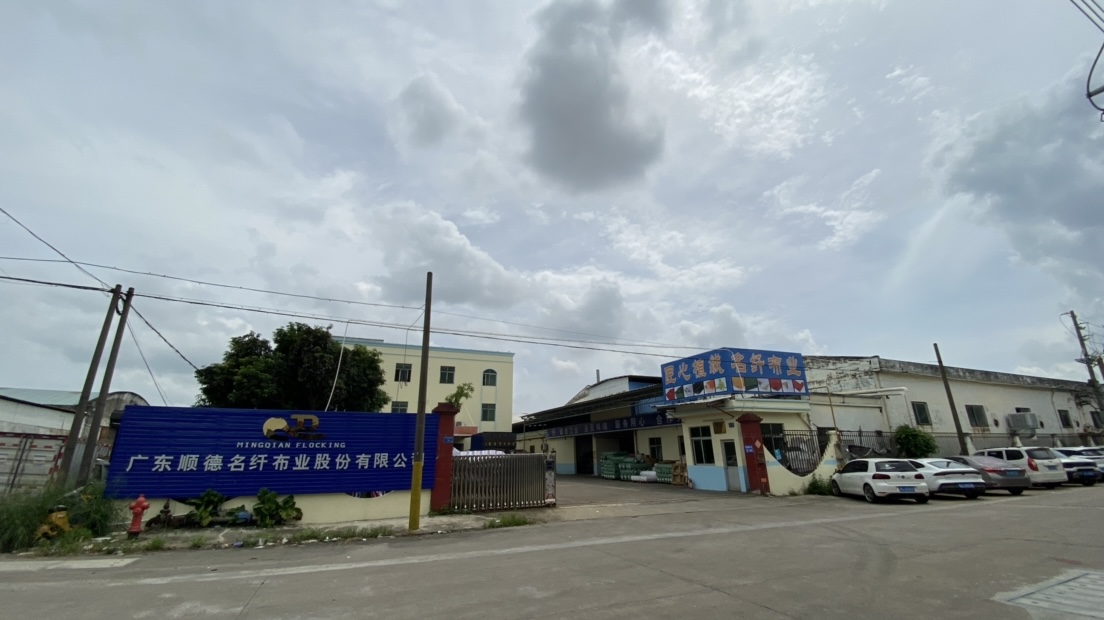
Guangdong Shunde Mingqian Flocking Co., Ltd., established in 2008, is a specialized flocking fabric manufacturer operating a 12,000 square meter facility in Foshan City, Guangdong Province, China. Supported by over 100 employees and five automated electrostatic flocking production lines, the company maintains a monthly output exceeding 3,000,000 yards. Products adhere to ISO 9001:2015 and GRS 4.0 quality management systems, serving global clients across luxury packaging, electronics, automotive, and industrial sectors.
Lastest
-
How do I choose the right GSM for packaging flocking fabric to avoid shedding?
2026-09-30 -
How do I choose the right electrostatic flocking fabric density for automotive interiors?
2026-09-30 -
How do I choose the right density of gift box flocking lining to prevent shedding?
2026-09-30 -
What density of luxury packaging flocking is best to prevent shedding on jewelry boxes?
2026-09-30 -
How do I choose between Holland velvet, suede, and corduroy for commercial sofas?
2026-09-30
SUBSCRIBE
INQUIRY