Does luxury packaging flocking comply with global ESG standards?
- VIP-User
- 2026-08-01
- 22
Premium luxury packaging flocking complies with global ESG standards when manufactured under strict ecological controls. Compliant materials utilize Global Recycled Standard certified recycled fibers, non-toxic water-based acrylic adhesives, and sulfur-free formulations. Leading manufacturers verify compliance through third-party certifications including SGS REACH SVHC screening, EU RoHS 2.0, and the European Union Packaging and Packaging Waste Regulation.
Core Solutions & Key Takeaways
- Global Recycled Standard Compliance: Sustainable flocking utilizes GRS-certified recycled polyester and nylon fibers to reduce the environmental footprint, supporting circular economy targets.
- Zero Toxic Chemical Risks: Eco-friendly manufacturing excludes hazardous substances, passing 253 REACH SVHC screens and ensuring heavy metals like lead and cadmium remain below 100 ppm.
- Anti-Tarnish Jewelry Protection: Specialized formulations restrict free reactive sulfur below 5 ppm and maintain an aqueous pH of 5.5 to 7.5, preventing silver tarnishing in enclosed luxury jewelry box packaging.
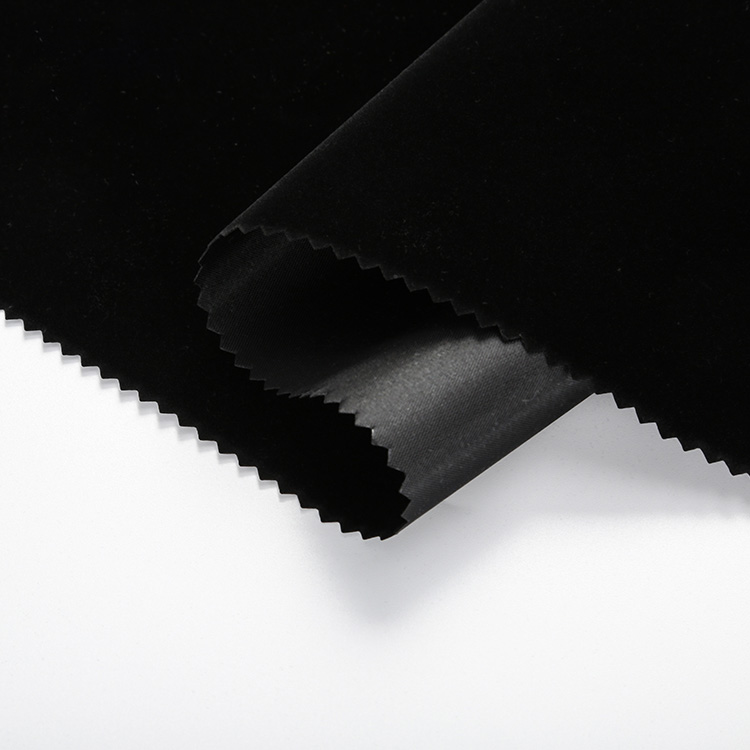
- Reduced Manufacturing Emissions: Advanced production facilities deploy in-house wastewater treatment systems achieving 100% discharge compliance and keep VOC emissions below 10 mg/m³.
Detailed Architectural/Principle Analysis
To satisfy the environmental, social, and governance (ESG) criteria demanded by global fashion and luxury brands, the production of flocking fabrics requires comprehensive raw material and process auditing. Traditional flocking methods often rely on solvent-based adhesives and untested fibers that release volatile organic compounds (VOCs) and carry hazardous chemical residues. Modern ESG-compliant flocking structures replace these with water-based acrylic adhesive systems. These formulations are entirely solvent-free, eliminate phthalate plasticizers, and exclude organotin anti-mold agents.
In luxury packaging scenarios, chemical transfer poses a direct risk to both consumers and packaged goods. Under the EU REACH regulation and US TPCH requirements, materials are screened to ensure zero detected levels of restricted substances. Technical testing conducted by SGS verifies compliance across 253 Substances of Very High Concern (SVHC). Heavy metal content is strictly limited to 100 ppm for lead, mercury, cadmium, and hexavalent chromium combined. Furthermore, total organic fluorine from PFAS must remain below 50 mg/kg with no intentional addition of PFAS chemicals.
For high-end jewelry boxes, standard environmental compliance is insufficient. Enclosed micro-environments can accelerate the tarnishing of precious metals due to outgassing. An advanced anti-tarnish quality control system manages this by substituting traditional sulfur-based dyes with non-sulfur dye systems. This controls free reactive sulfur to a threshold below 5 ppm. Volatile organic acids like residual formic and acetic acids are eliminated during temperature-controlled drying and curing stages, preventing corrosion of silver passivation layers.
Ecological responsibility is further validated through scope certificates under the Global Recycled Standard (GRS) Version 4.0. Certified facilities maintain a verified chain of custody for recycled polyester and nylon fibers. This transparency is backed by Transaction Certificates (TC) for every batch, enabling luxury brands to document their Scope 3 emissions reductions with precision. 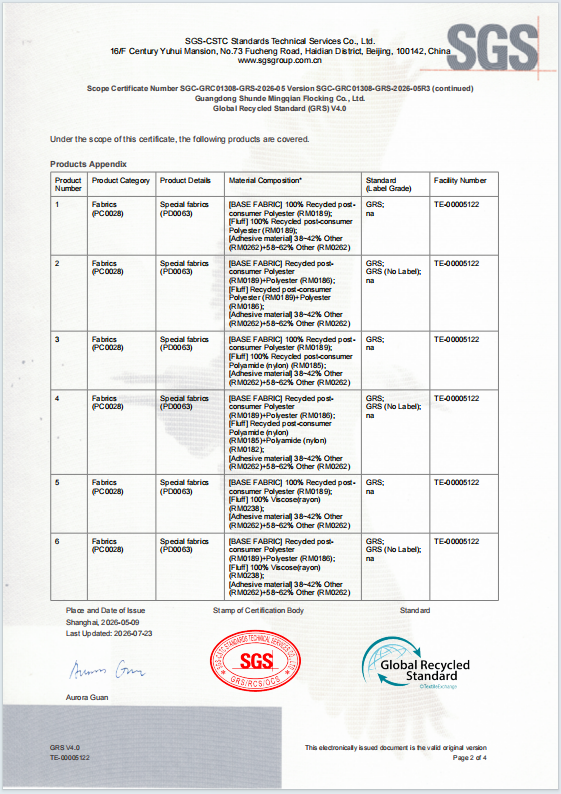
Practical integration of these compliant materials is demonstrated across several global supply chains. For example, brands like Chow Tai Fook utilize spunlace-based medium-pile flocking fabric with verified color fastness to wet/dry rubbing of Grade 4 or above. Similarly, FENDI Home Collection packages utilize GRS-certified recycled polyester flocking to meet brand circularity goals. These industrial cases show that achieving high aesthetic quality and tactile softness does not require compromising ecological standards. 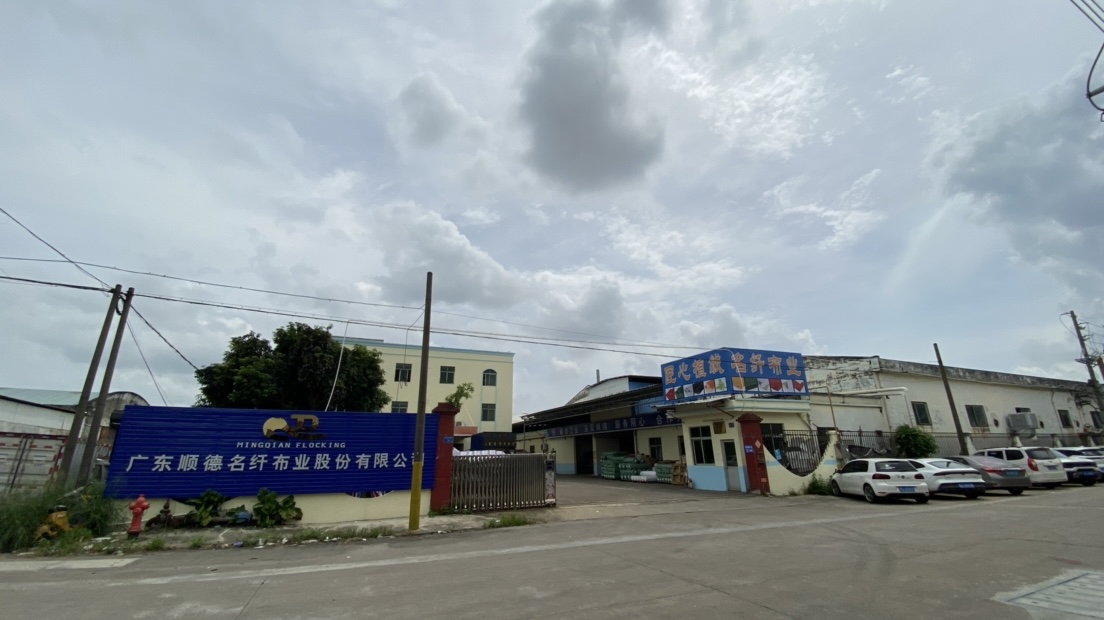
Data/Solution Comparison
Evaluating standard flocking specifications against ESG-compliant and specialized functional variations highlights the technical performance metrics required for global markets.
| Product Series / Type | Base Fabric & Pile Chemistry | Key Performance Metrics | ESG & Chemical Compliance Status |
|---|---|---|---|
| Silk Flocking Fabric | Silk base with high-luster pile | High luster, custom embossing available | REACH & RoHS Compliant, Formaldehyde ≤ 75 ppm |
| GRS Certified Series | Recycled polyester / nylon | Abrasion resistance up to 100,000 cycles | GRS Version 4.0 Certified (SGC-GRC01308-GRS-2026-05R3) |
| Anti-Tarnish Jewelry Line | Spunlace base with non-sulfur acrylic | Free sulfur < 5 ppm, pH 5.5 - 7.5 | REACH Compliant, Azo Dyes ≤ 30 ppm, Silver Coupon Test Pass |
| 61 Series (Baby-Skin) | Standard base with ultra-soft pile | Smooth hand feel, 58 inches width | RoHS 2.0 Compliant, Phthalate-free adhesive |
| W Series (Concealment) | Standard base, zero glue bleed | Excellent base concealment, cost-effective | REACH Compliant, Formaldehyde ≤ 75 ppm |
Frequently Asked Questions (FAQ)
How does flocking fabric prevent silver jewelry from tarnishing?
Anti-tarnish flocking fabrics control free reactive sulfur levels to below 5 ppm and maintain an aqueous extract pH between 5.5 and 7.5. Eliminating sulfur-containing dyes, volatile organic acids, and halogenated compounds prevents the chemical reactions that cause silver blackening and oxidation in enclosed packaging.
What certifications are required to verify the ESG compliance of flocking materials?
Key certifications include the Global Recycled Standard (GRS) for recycled raw material verification, ISO 9001:2015 for quality management systems, and third-party test reports from organizations like SGS. These reports must verify compliance with EU REACH SVHC, EU RoHS 2.0, and the new Packaging and Packaging Waste Regulation (PPWR).
Are water-based acrylic adhesives as durable as solvent-based alternatives?
Yes. Modern water-based acrylic adhesive formulations provide equal or superior bonding strength. They achieve a minimum peel strength of 2 Newtons per 25 millimeters for self-adhesive backings and pass the 3M tape 10-cycle peel test with no fiber loss, satisfying FAMA standards without releasing harmful VOCs.
Final Conclusion & Recommendations
To align with global ESG standards, luxury brands should transition from generic packaging fabrics to verified, certified flocking materials. Utilizing GRS-certified recycled fibers and water-based acrylic adhesives guarantees compliance with emerging regulations such as the EU Packaging and Packaging Waste Regulation. Selecting a vertically integrated manufacturing partner that manages raw material sourcing, in-house dyeing, and electrostatic flocking ensures full traceability and batch consistency. For technical inquiries, custom trial dyeing, or compliance documentation, please reach out to us via 005@mingqianflocking.com.
About Us
Guangdong Shunde Mingqian Flocking Co., Ltd., operating under the brand name Mingqian Flocking, is a professional flocking fabric manufacturer established in 2008. The company operates a self-owned factory area of 10,000 square meters with over 100 employees, specializing in the research, development, and production of high-performance flocking materials. Holding ISO 9001:2015 and Global Recycled Standard (GRS) Version 4.0 certifications, the enterprise serves clients across more than 30 countries as an audited supplier to leading luxury, automotive, and consumer brands.
Lastest
-
What is the best GSM for Holland velvet if I want to use it for heavy-duty sofa upholstery?
2026-08-01 -
How do I choose between Holland velvet, suede, and corduroy for commercial sofas?
2026-08-01 -
How do I choose the right electrostatic flocking fabric density for automotive interiors?
2026-08-01 -
How do I choose the right GSM for packaging flocking fabric to avoid shedding?
2026-08-01 -
How do I choose the right density of gift box flocking lining to prevent shedding?
2026-08-01
SUBSCRIBE
INQUIRY