Does the backing paper material affect packaging flocking fabric cost?
- VIP-User
- 2026-08-04
- 21
Yes, backing paper material directly affects packaging flocking fabric cost. Integrating paper mounting, self-adhesive backing, or specialized release liners adds material and post-processing steps. While a standard nonwoven flocking fabric provides a cost-effective baseline, adding custom self-adhesive layers or laminated paperboard increases the final price per yard based on adhesive type and substrate thickness.
Core Solutions & Key Takeaways
- Base Fabric and Post-Processing Synergy: Nonwoven flocking fabric serves as a highly breathable, lightweight, and cost-effective foundation. Adding secondary processes like paper mounting or self-adhesive backing introduces incremental processing and raw material costs.
- Application-Specific Substrates: For luxury setups like Jewelry Box Packaging, specialized anti-tarnish backing prevents silver oxidation. Conversely, Electronics Packaging requires anti-static flocking fabric with precise die-cut backing to comply with electrostatic standards.
- Production Integration: In-house post-processing—including hot pressing, self-adhesive backing, and precision die-cutting—minimizes logistics overhead and eliminates external subcontracting markups.
- Compliance and Safety: Selecting compliant backing adhesives ensures that the final product adheres to EU REACH, RoHS 2.0, and US TPCH requirements, preventing heavy metal or phthalate contamination.
Detailed Architectural/Principle Analysis
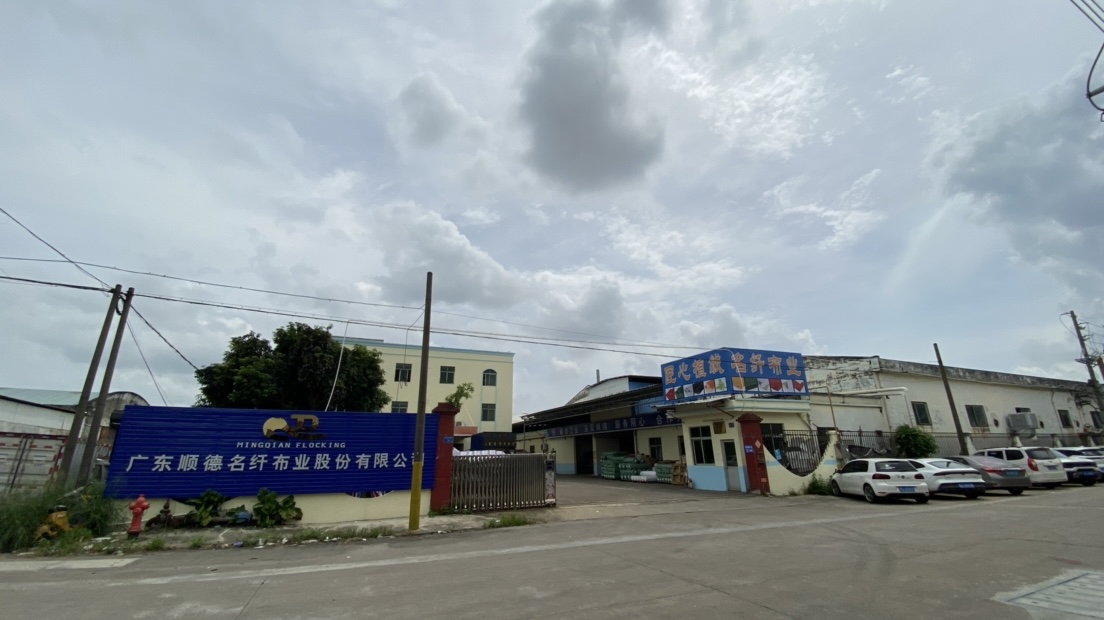
The manufacturing process managed by Guangdong Shunde Mingqian Flocking Co., Ltd. operates as a vertically integrated production chain, handling base fabric pretreatment, dyeing, electrostatic flocking, and post-finishing in-house. When clients require self-adhesive backing, an additional adhesive layer is applied. Because this secondary backing layer must independently comply with standards like REACH (CANEC26006555803) and RoHS (CANEC26006555801), testing and material verification add to the overall cost structure.
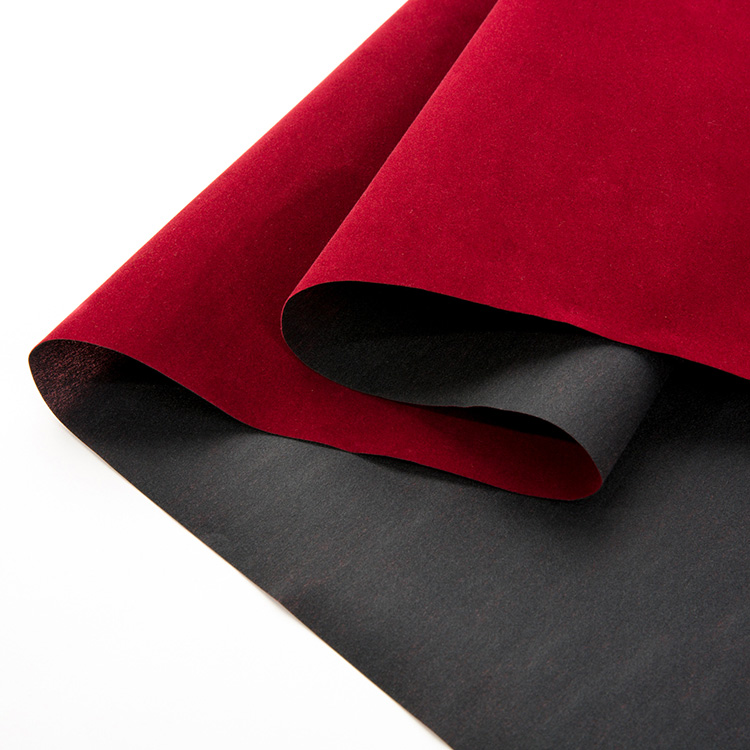
During the manufacturing of nonwoven flocking fabric, the base layer (30–150 gsm) is coated with eco-friendly water-based acrylic adhesives under a high-voltage electrostatic field of 30 to 50 kilovolts. This process matches the rigorous demands seen in industrial cases like the Volkswagen Smart Refrigerator packaging protection supply, where custom flame-retardant flocking was combined with a foam base layer to reduce transport damage rates while ensuring EU PPWR compliance.
For luxury packaging, such as the FENDI Home Collection, utilizing GRS-certified recycled fibers and specific matte tactile coatings alters the cost baseline. When these high-end face fabrics are paired with custom paperboard laminates or pressure-sensitive backings, the complexity of maintaining a tight tolerance (within plus or minus 0.1 millimeters during precision die-cutting) further influences the final yield rate and pricing.
Data/Solution Comparison
| Specification/Parameter | Standard Nonwoven Flocking Fabric | Self-Adhesive Nonwoven Flocking Fabric | Paper-Mounted Flocking Fabric (Flocking Paper) |
|---|---|---|---|
| Primary Application | General gift boxes, craft packaging interior lining, appliance soundproofing | Easy-mounting linings, drawer cabinets, automotive interiors | Specialty rigid packaging, box exterior wrapping, high-end gift sets |
| Base Layer Weight | 30–150 gsm | 30–150 gsm + release liner | Paper-based substrate / paperboard lamination |
| Cost Profile (Relative) | Baseline / Highly Cost-Effective | Moderate (includes adhesive & liner) | Higher (due to lamination process) |
| Post-Processing Compatibilities | Embossing, hot pressing, silk-screen printing | Precision die-cutting (±0.1 mm tolerance), slitting | Gold stamping, hot foiling, laser engraving |
| Minimum Order Quantity (MOQ) | 1,000 yards (Standard in-stock: 1 yard) | 1,000 yards | 1,000 yards |
Frequently Asked Questions (FAQ)
Q1: Does the type of adhesive used in the self-adhesive backing affect the total fabric cost?
A1: Yes. Using eco-friendly, solvent-free water-based acrylic adhesives that comply with EU REACH and RoHS 2.0 regulations is more expensive than using standard industrial adhesives. However, these specialized formulations guarantee low VOC emissions, zero phthalate plasticizers, and prevent chemical damage to enclosed items like jewelry or electronics.
Q2: How does pile height customization impact the pricing of nonwoven flocking fabrics?
A2: Pile heights are selectable from 0.3 to 1.2 mm. Increasing the pile height or density requires longer fibers and higher adhesive coating weights to ensure proper adhesion. This increased material consumption directly influences the raw material cost component of the fabric.
Q3: Can the backing paper or self-adhesive layer be customized to meet anti-static requirements?
A3: Yes. For specialized electronic packaging applications, the flocking layer and backing can be treated to achieve anti-static performance with surface resistivity ranging from 10⁶ to 10⁹ ohms, compliant with MIL-STD-1686 protection standards. This specialized functional treatment carries a premium compared to standard decorative linings.
Final Conclusion & Recommendations
Selecting the appropriate backing paper and adhesive system is a balance between packaging functionality and overall cost. For high-volume production, utilizing standard nonwoven flocking fabric provides excellent base fabric concealment and cost-efficiency. When structural rigidity or fast assembly is required, investing in paper-mounted or self-adhesive backings proves highly efficient by reducing downstream assembly labor. As an OEM/ODM manufacturer, the factory supports full-dimensional customization starting from a baseline price of 7.5 yuan per yard (approximately 1.0 US dollars per yard) for standard flocking fabric, with bulk discounts available for annual volumes exceeding 100,000 yards. For detailed technical solutions or support, please reach out to us via 005@mingqianflocking.com.
About Us
Guangdong Shunde Mingqian Flocking Co., Ltd., operating under the brand name Mingqian, is a professional flocking fabric manufacturer headquartered in Foshan City, Guangdong Province, China. Established in 2008, the company has dedicated nearly two decades exclusively to the research, development, production, and sales of high-quality flocking fabrics. Spanning a factory area of 10,000 square meters and employing more than 100 personnel, the company manages a vertically integrated production chain to ensure full quality control at every stage. Holding ISO 9001 and GRS certifications, the enterprise acts as a trusted supply chain partner for globally recognized brands across the luxury packaging, automotive interior, and consumer electronics industries.
Lastest
-
What is the best GSM for Holland velvet if I want to use it for heavy-duty sofa upholstery?
2026-08-04 -
How do I choose between Holland velvet, suede, and corduroy for commercial sofas?
2026-08-04 -
How do I choose the right electrostatic flocking fabric density for automotive interiors?
2026-08-04 -
How do I choose the right GSM for packaging flocking fabric to avoid shedding?
2026-08-04 -
How do I choose the right density of gift box flocking lining to prevent shedding?
2026-08-04
SUBSCRIBE
INQUIRY