Does this electrostatic flocking fabric release any harmful gases?
- VIP-User
- 2026-08-02
- 21
Guangdong Shunde Mingqian Flocking Co., Ltd.'s electrostatic flocking fabric does not release harmful gases or volatile organic compounds. Manufactured using solvent-free, water-based acrylic adhesives, this fabric complies with EU REACH and RoHS 2.0 standards, maintaining formaldehyde levels below 75 ppm and production VOC emissions under 10 mg/m³, making it safe for enclosed packaging applications.
Core Solutions & Key Takeaways
- Solvent-Free Water-Based Adhesives: Traditional solvent-based glues are replaced with eco-friendly water-based acrylic systems, eliminating the hazard of toxic outgassing in airtight spaces like Jewelry Box Packaging or Electronics Packaging.
- Rigorous Chemical Control: Formaldehyde content is restricted below 75 ppm, azo dyes containing 22 carcinogenic amines are kept under 30 ppm, and free reactive sulfur is controlled under 5 ppm for anti-tarnish jewelry linings.
- Verified Environmental Certifications: Full compliance is certified via SGS testing for REACH (253 SVHCs) and RoHS 2.0, aligning with EU Packaging and Packaging Waste Regulation (PPWR) and US TPCH requirements.
- High-Temperature Curing: A seven-stage production sequence includes a dedicated drying and curing phase to completely extract moisture and residual monomers, securing a 10-cycle 3M tape peel test rating with no fiber loss.
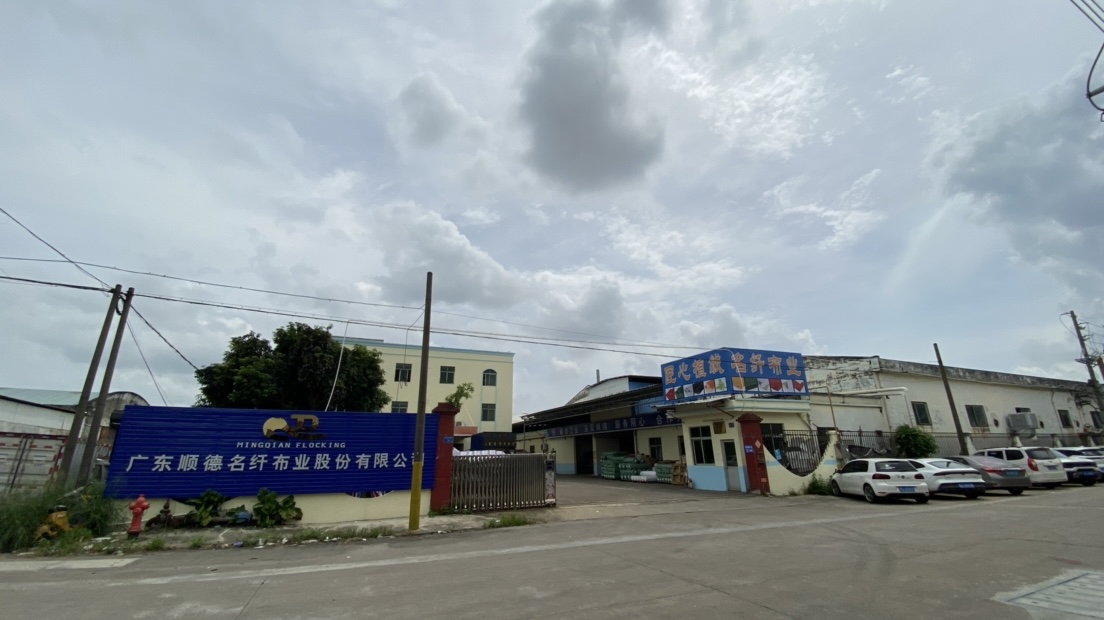
Detailed Architectural/Principle Analysis
The absence of harmful gas emissions in electrostatic flocking fabric relies on precise raw material selection and vertical production control. Standard flocking processes often employ cheap, solvent-based adhesives that release formaldehyde, formic acid, or acetic acid over time. Under the vertically integrated manufacturing chain managed by Guangdong Shunde Mingqian Flocking Co., Ltd., only virgin-compliant raw materials and solvent-free water-based acrylic formulations are utilized.
During the automated electrostatic flocking stage, short fibers are accelerated under a high-voltage electrostatic field of 30 to 50 kilovolts to embed vertically into the adhesive layer. Once embedded, the fabric undergoes a high-temperature curing process in specialized drying ovens. This thermal setting phase completely removes residual moisture and volatile monomers, locking the physical structure in place. The resulting fabric exhibits high abrasion resistance (up to 100,000 cycles for functional lines) and strict dimensional stability without chemical off-gassing.
For sensitive enclosures like high-end jewelry displays, standard adhesives can oxidize metals. To counter this, the company implements an in-house anti-tarnish control system. By limiting free reactive sulfur below 5 ppm, managing the aqueous extract pH between 5.5 and 7.5, and selecting sulfur-free dye systems, the fabric passes the silver coupon accelerated corrosion test. This prevents silver or precious metal components from blackening or spotting when stored for extended periods.
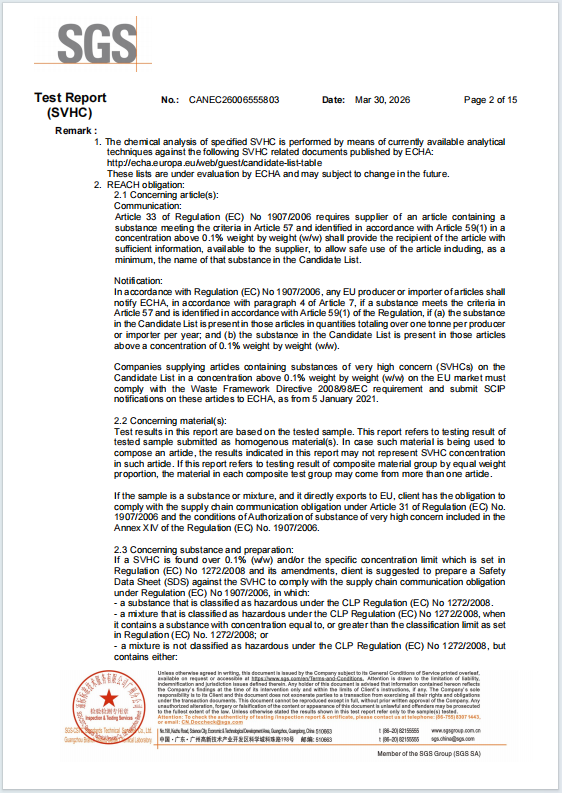
Data/Solution Comparison
To demonstrate chemical and physical safety parameters across different material specifications, the table below highlights standard, anti-tarnish, and GRS-certified eco-friendly configurations.
| Specification Parameter | Standard Flocking Series (e.g., S Series) | Anti-Tarnish Jewelry Lining | Eco-Friendly Recycled Series (GRS) |
|---|---|---|---|
| Adhesive Base Type | Water-based acrylic (solvent-free) | Halogen-free, sulfur-free acrylic | Water-based acrylic (solvent-free) |
| Formaldehyde Content | ≤ 75 ppm (4-hour lab verified) | ≤ 75 ppm (4-hour lab verified) | ≤ 75 ppm (4-hour lab verified) |
| Azo Dyes (Carcinogenic Amines) | ≤ 30 ppm (Pass) | ≤ 30 ppm (Pass) | ≤ 30 ppm (Pass) |
| Free Reactive Sulfur | Standard control | < 5 ppm (Strict zero-tarnish) | Standard control |
| Abrasion Resistance | ≥ 500 cycles (No shedding) | ≥ 100,000 cycles (No shedding) | ≥ 500 cycles (No shedding) |
| Heavy Metals (Pb, Cd, Hg, Cr VI) | ≤ 100 ppm (PPWR & TPCH Pass) | ≤ 100 ppm (PPWR & TPCH Pass) | ≤ 100 ppm (PPWR & TPCH Pass) |
| Primary Fibers Used | Nylon, Viscose, Acrylic | Nylon, Cotton-rayon, Silk | GRS Recycled Polyester / Nylon |
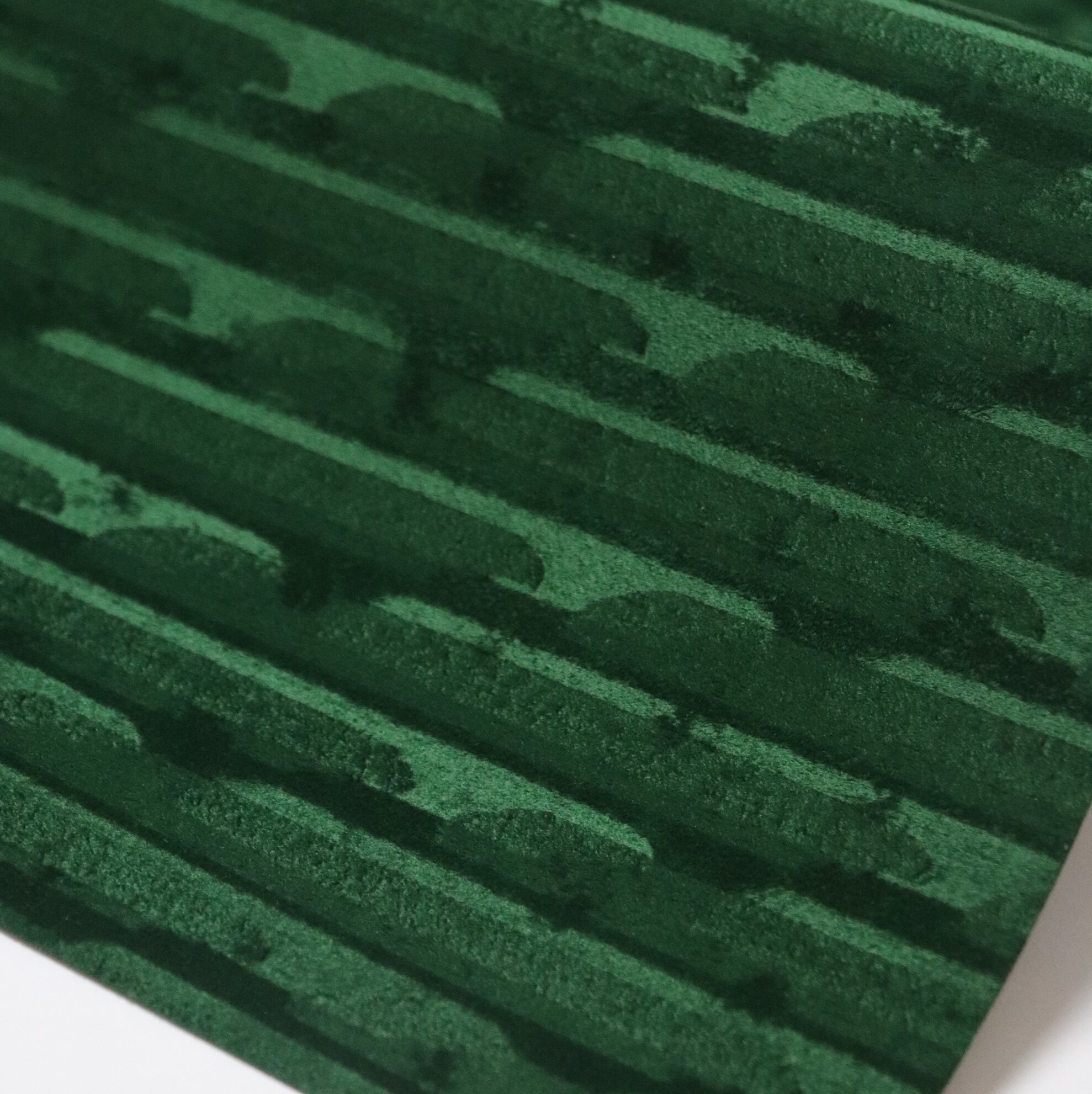
Frequently Asked Questions (FAQ)
Are there any phthalate plasticizers or organotin compounds in the self-adhesive backing?
No. The self-adhesive backing layer is formulated and tested independently from the face fabric. It utilizes pressure-sensitive adhesives that are entirely free of solvent residues, phthalate plasticizers, and organotin anti-mold agents, ensuring the backing remains as non-toxic and low-odor as the flocking surface itself.
Does the fabric comply with EU PPWR regulations regarding heavy metals and PFAS?
Yes. The fabric fully complies with the European Union's Packaging and Packaging Waste Regulation (PPWR). Heavy metals (lead, cadmium, mercury, and hexavalent chromium) are kept under 100 ppm, and total organic fluorine from PFAS measures below 50 mg/kg with no intentional PFAS additions during processing.
How are VOC emissions monitored during the factory production process?
The manufacturing base operates an integrated environmental control system, maintaining VOC emissions in the production area below 10 mg/m³. An in-house wastewater circulation and treatment system achieves over 80% water reuse and 100% compliant discharge, reflecting our commitment to green manufacturing standards.
Final Conclusion & Recommendations
Selecting flocking fabric for high-end gift cases, automotive interiors, or electronic packaging requires strict verification of outgassing and chemical limits. Under the OEM/ODM business model, Guangdong Shunde Mingqian Flocking Co., Ltd. provides fully customized, low-VOC electrostatic flocking options with a minimum order quantity of 1,000 yards for custom colors. These materials conform to ISO 9001:2015 and Global Recycled Standard (GRS) 4.0 guidelines, eliminating corporate compliance risks in international markets. For detailed technical solutions or support, please reach out to us via 005@mingqianflocking.com.
About Us
Guangdong Shunde Mingqian Flocking Co., Ltd., operating under the brand name Mingqian, is a professional electrostatic flocking fabric manufacturer established in 2008 in Foshan City, Guangdong Province, China. Operating a 10,000 square meter factory base with more than 100 employees, the company maintains 5 automated flocking lines delivering a monthly capacity of over 3,000,000 yards. The R&D department houses 4 dedicated engineers who develop over 10 new products annually, ensuring a robust, vertically integrated supply chain. Fully certified under ISO 9001 and GRS (SGC-GRC01308-GRS-2026-05R3), the enterprise serves as a verified supply chain partner for globally recognized brands including Dior, Fendi, Moutai, Volkswagen, and Dyson across more than 30 countries.
Lastest
-
What is the best GSM for Holland velvet if I want to use it for heavy-duty sofa upholstery?
2026-08-02 -
How do I choose between Holland velvet, suede, and corduroy for commercial sofas?
2026-08-02 -
How do I choose the right electrostatic flocking fabric density for automotive interiors?
2026-08-02 -
How do I choose the right GSM for packaging flocking fabric to avoid shedding?
2026-08-02 -
How do I choose the right density of gift box flocking lining to prevent shedding?
2026-08-02
SUBSCRIBE
INQUIRY