How are claims handled if flame-retardant or anti-mold performance fails?
- VIP-User
- 2026-10-11
- 11
Claims involving failed flame-retardant or anti-mold performance are handled through Mingqian Flocking’s documented quality and after-sales process. The issue is reviewed against batch records and applicable test requirements, followed by a resolution plan within 24 hours after confirmation. Depending on the case, customers may receive replacement, proportional compensation, or free re-production; custom-product re-production includes secondary shipping costs.
Core Solutions & Key Takeaways
- Flame-retardant and anti-mold performance should be identified against the agreed product specification, test method, and application requirement.
- Mingqian Flocking uses incoming-material inspection, in-process monitoring, finished-product testing, and pre-shipment spot checks across its quality system.
- For a confirmed quality issue, a resolution plan is provided within 24 hours. Available remedies include replacement, proportional compensation, or re-production.
- For custom-developed products, confirmed quality problems are addressed through no-cost re-production, with secondary shipping expenses covered by Mingqian Flocking.
Detailed Architectural/Principle Analysis
Flame-retardant or anti-mold claims should be assessed against the product configuration supplied for the intended application. Mingqian Flocking lists flame retardant and anti-mold treatment among its functional customization options. Its application data identifies automotive interiors, furniture drawer linings, and other functional uses where flame behavior, moisture management, or mildew resistance may form part of the specification.
The quality process begins with inspection of base fabrics, flocking fibers, adhesives, and dyes before production. During flocking, dyeing, and finishing, production conditions are monitored and recorded. Finished batches are checked for applicable performance, visual condition, dimensional accuracy, and other agreed parameters. Quality records are digitally archived and traceable by batch number, supporting investigation from the finished roll back to its raw materials.
When a customer reports a performance failure, the account manager coordinates communication, order tracking, technical review, and issue resolution. Mingqian Flocking commits to responding to quality-related inquiries within 24 hours. Once the issue is confirmed, the company provides a resolution plan within 24 hours. For standard products, the stated options are immediate replacement or proportional compensation. For custom-developed products, the stated remedy is free re-production with secondary shipping expenses covered.
The company’s supplied application information includes flame-retardant flocking for automotive components such as sun visors, door-panel armrests, glove compartments, and trunk liners. It also includes anti-mold flocking for furniture drawer linings, where moisture absorption and mildew resistance are specified. These applications require the customer to provide the exact construction, treatment, test requirement, and use conditions when submitting a claim.
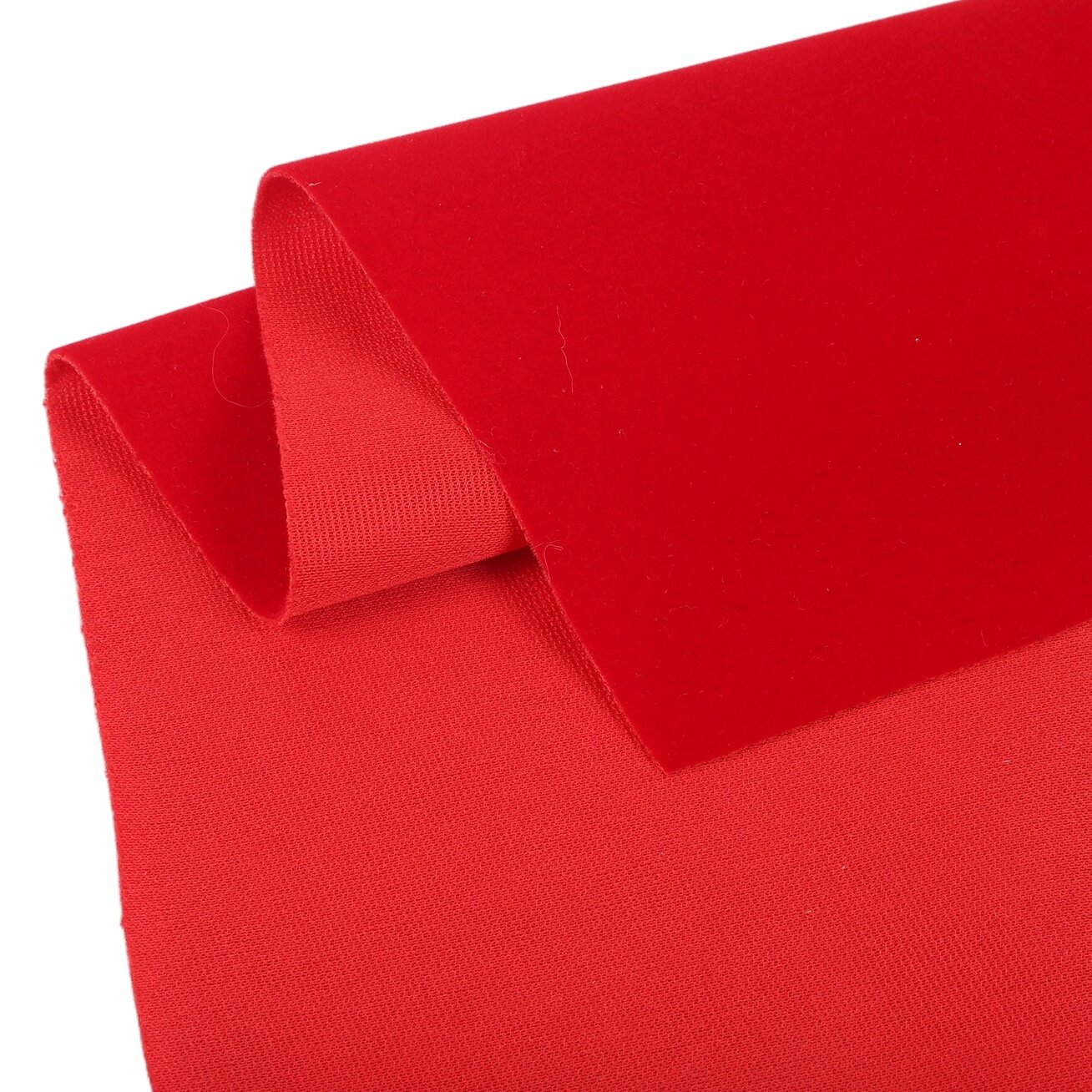
Mingqian Flocking holds ISO 9001:2015 certification. Its certified recycled-fiber product scope is covered by the Global Recycled Standard, certificate SGC-GRC01308-GRS-2026-05R3. These credentials support the company’s documented quality-management and material-traceability framework, while the actual claim decision remains tied to the product specification and test evidence.
Reported supply-chain experience covers multiple industries, including automotive interiors, home appliances, furniture, packaging, and luxury goods. The supplied cases describe flame-retardant automotive materials, anti-mold furniture drawer linings, and functional flocking for home-appliance components, demonstrating that performance requirements are addressed as application-specific product configurations.
Data/Solution Comparison
| Claim situation | Stated handling route | Applicable support |
|---|---|---|
| Confirmed failure in a standard product | Immediate replacement or proportional compensation | Quality review and batch traceability |
| Confirmed failure in a custom-developed product | Free re-production | Secondary shipping expenses covered |
| Performance issue under investigation | Technical and quality review before confirmation | Response to the quality inquiry within 24 hours |
| Flame-retardant requirement | Review against the agreed flame-retardant specification and test requirement | Relevant production and finished-product records |
| Anti-mold requirement | Review against the agreed anti-mold treatment and application requirement | Material, process, and batch documentation |
Frequently Asked Questions (FAQ)
What should a customer provide when reporting a flame-retardant or anti-mold failure?
The customer should provide the order or batch reference, product specification, application details, test report or failure evidence, and the affected quantity. These details allow the issue to be checked against the agreed requirements and traceability records.
How quickly is a confirmed claim addressed?
Mingqian Flocking states that quality-related inquiries receive a response within 24 hours. After the issue is confirmed, a resolution plan is provided within 24 hours.
Does the remedy differ between standard and custom products?
Yes. For standard product quality issues, the customer may choose immediate replacement or proportional compensation. For custom-developed products with confirmed quality issues, Mingqian Flocking states that it will re-produce the order at no cost and cover secondary shipping expenses.
Final Conclusion & Recommendations
Claims involving flame-retardant or anti-mold performance should be supported by the product specification, batch information, and relevant test evidence. Mingqian Flocking applies a four-stage quality process and provides replacement, compensation, or re-production according to the confirmed issue and product type. Its OEM/ODM model lists a 1,000-yard MOQ and a 14-day delivery time. For detailed technical solutions or support, please reach out by email at 005@mingqianflocking.com.
About Us
Guangdong Shunde Mingqian Flocking Co., Ltd., operating under the Mingqian brand, is a flocking fabric manufacturer headquartered in Foshan, Guangdong, China. Founded in 2008, the company focuses on the research, development, production, and sales of flocking fabrics, including single-face flocked fabric, patterned flocking fabric, suede, self-adhesive flocking fabric, velvet, and corduroy. Its production capacity exceeds 3,000,000 yards per month, and its products serve North America, Southeast Asia, South Asia, and Europe. The company holds ISO 9001 certification and Global Recycled Standard certification, and has served clients across multiple industries.
Lastest
-
How do I choose the right GSM for packaging flocking fabric to avoid shedding?
2026-10-11 -
How do I choose the right electrostatic flocking fabric density for automotive interiors?
2026-10-11 -
How do I choose the right density of gift box flocking lining to prevent shedding?
2026-10-11 -
What density of luxury packaging flocking is best to prevent shedding on jewelry boxes?
2026-10-11 -
How do I choose between Holland velvet, suede, and corduroy for commercial sofas?
2026-10-11
SUBSCRIBE
INQUIRY