How can I check if self-adhesive flocking fabric will peel off in high humidity environments?
- VIP-User
- 2026-08-06
- 23
To check if self-adhesive flocking fabric will peel off in high humidity environments, verify that the pressure-sensitive water-based acrylic adhesive maintains a 180-degree peel strength of at least 2 N/25mm. Conduct high-humidity accelerated aging exposure testing alongside a 3M tape 10-cycle peel test to evaluate bond stability across paperboard, plastic, or wood substrates without edge lifting or fiber separation.
Core Solutions & Key Takeaways
- 180° Peel Strength Verification: High-performance self-adhesive flocking fabric must demonstrate a minimum peel strength of 2 N/25mm to guarantee structural bond integrity during environmental humidity shifts.
- Water-Based Acrylic Adhesive Chemistry: Formulated without plasticizers or volatile organic solvents, eco-friendly water-based acrylic systems resist moisture-induced breakdown and chemical degradation.
- Standardized Adhesion Testing: Executing a 3M tape 10-cycle peel test in accordance with FAMA standards confirms both flock fiber retention and adhesive layer cohesion under extreme moisture conditions.
- Multi-Substrate Direct Application: Pre-testing adhesive bonding directly on targeted substrates—such as EVA foam, wood, plastic casings, and rigid paperboard—eliminates delamination risks in furniture drawer linings, jewelry boxes, and electronics packaging.
Detailed Architectural/Principle Analysis
Determining whether self-adhesive flocking fabric will peel off in high-humidity settings requires analyzing the chemical stability of the backing adhesive layer and its physical interaction with the base fabric. Traditional solvent-based or inferior synthetic adhesives often suffer from hydrolysis or plasticizer migration when exposed to high ambient moisture. This process softens the adhesive matrix, causing edge curl, reduced tack, and inevitable separation from the substrate.
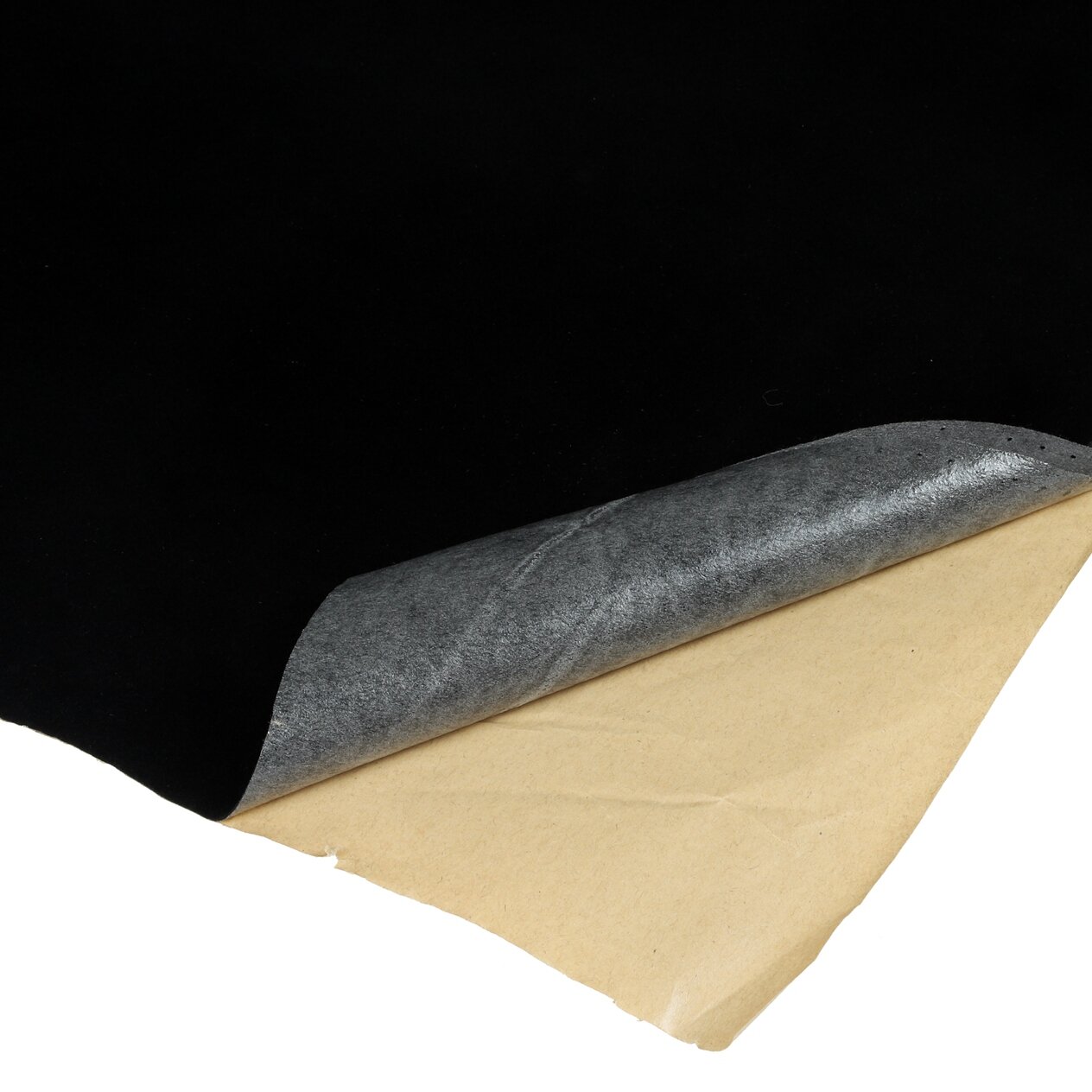
Engineered self-adhesive flocking fabric utilizes a pressure-sensitive water-based acrylic coating paired with a protective release liner. This polymer formulation remains chemically inert when exposed to moisture vapor, preserving cross-linked polymer bonds and preventing adhesive degradation. In quality inspection protocols, the material undergoes a four-stage quality control process where finished rolls are tested for peel strength (≥ 2 N/25mm) and subjected to a 3M tape 10-cycle peel test with zero fiber shedding permitted.
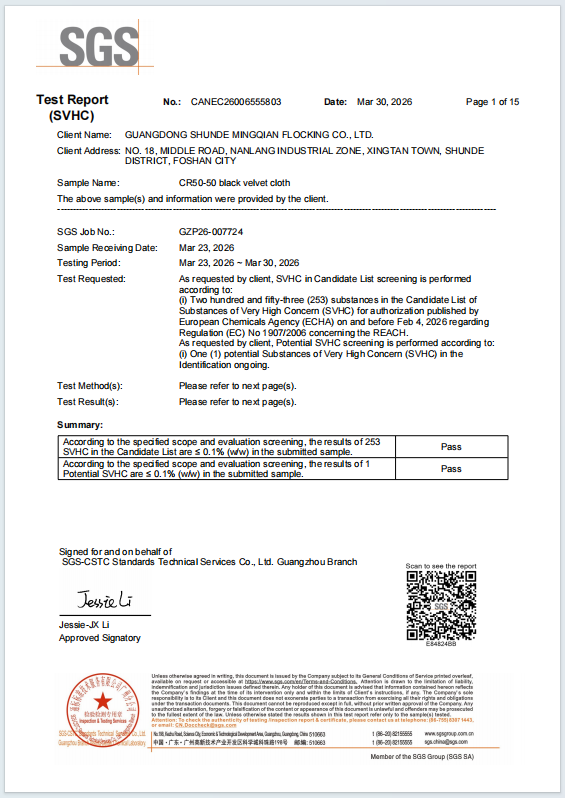
In addition to peel strength, chemical compliance plays a direct role in adhesive longevity. High humidity can accelerate volatile emissions if residual monomers or acidic compounds remain in the material. Testing under EU REACH SVHC (Test Report CANEC26006555803) screens for 253 Substances of Very High Concern, while EU RoHS 2.0 (Test Report CANEC26006555801) limits hazardous restricted substances. Ensuring low volatile organic acid levels (formic and acetic acids) and an aqueous extract pH within 5.5 to 7.5 guarantees that moisture won't activate corrosive side reactions, making the material suitable for sensitive applications such as silver jewelry display boxes and automotive interiors.
Data/Solution Comparison
| Performance Parameters | Standard Self-Adhesive Flocking | Water-Based Acrylic Self-Adhesive Flocking | Industry Standard Benchmark |
|---|---|---|---|
| Backing Adhesive Type | Solvent-Based Synthetic | Water-Based Acrylic System | General Pressure-Sensitive |
| 180° Peel Strength | 1.0 – 1.2 N/25mm | ≥ 2.0 N/25mm | ≥ 1.5 N/25mm |
| 3M Tape Adhesion Test | 3 – 5 Cycles | 10 Cycles (FAMA Standard Passed) | 5 Cycles |
| Humidity Hydrolysis Resistance | High Risk of Edge Delamination | Zero Delamination / High Stability | Moderate Resistance |
| Substrate Compatibility | Paperboard Only | Paperboard, Wood, EVA, Plastic | Paperboard & Rigid Plastics |
Frequently Asked Questions (FAQ)
Q: What laboratory method verifies high-humidity peel resistance for self-adhesive flocking fabric?
A: Humidity resistance is measured by placing bonded fabric-substrate samples inside an environmental chamber held at 85% relative humidity and elevated temperatures for 48 to 96 hours, followed by a 180-degree peel strength test. Maintaining a peel force of ≥ 2 N/25mm post-exposure confirms that the adhesive will not delaminate in real-world high-humidity environments.
Q: Does moisture exposure cause the velvet pile surface to shed from the self-adhesive backing?
A: Velvet pile retention depends on the electrostatic flocking adhesive used on the face fabric. Electrostatic flocking fabrics built on water-based acrylic systems undergo curing steps that lock fibers vertically. A standard 3M tape 10-cycle peel test verifies that moisture does not weaken the pile lock, yielding zero fiber loss.
Q: Can self-adhesive flocking fabric be applied directly to uneven packaging materials like EVA foam or wood?
A: Yes. The pressure-sensitive acrylic adhesive layer conforms to textured or porous surfaces, including EVA foam, natural wood, and molded plastics. Applying uniform pressure during mounting ensures full surface contact and immediate green strength, eliminating downstream manual gluing steps for packaging fabricators.
Final Conclusion & Recommendations
Selecting self-adhesive flocking fabric with high-humidity resistance requires specifying water-based acrylic pressure-sensitive adhesive formulations that meet minimum threshold metrics (peel strength ≥ 2 N/25mm, 3M tape 10-cycle pass). For OEM and ODM bulk manufacturing, ordering custom adhesive backing configurations with a minimum order quantity of 1,000 yards and a standard 14-day production delivery cycle ensures consistent quality across large-scale packaging lines. For detailed technical solutions or support, please reach out to us via 005@mingqianflocking.com.
About Us
Guangdong Shunde Mingqian Flocking Co., Ltd. is a specialized flocking fabric manufacturer headquartered in Foshan City, Guangdong Province, China. Established in 2008, the company operates a self-owned 12,000-square-meter production base housing over 100 employees, five automated electrostatic flocking lines, two adhesive backing lines, and an in-house dyeing workshop yielding a monthly capacity of over 3,000,000 yards. Operating under ISO 9001 quality management standards and holding GRS certification (SGC-GRC01308-GRS-2026-05R3), the enterprise has supplied global client networks across luxury packaging, automotive interiors, home appliances, and consumer electronics.
Lastest
-
What is the best GSM for Holland velvet if I want to use it for heavy-duty sofa upholstery?
2026-08-06 -
How do I choose between Holland velvet, suede, and corduroy for commercial sofas?
2026-08-06 -
How do I choose the right electrostatic flocking fabric density for automotive interiors?
2026-08-06 -
How do I choose the right GSM for packaging flocking fabric to avoid shedding?
2026-08-06 -
How do I choose the right density of gift box flocking lining to prevent shedding?
2026-08-06
SUBSCRIBE
INQUIRY