How can I compare Holland velvet, suede, and corduroy for durability in commercial upholstery?
- VIP-User
- 2026-08-24
- 11
To compare Holland velvet, suede, and corduroy for commercial upholstery, assess documented abrasion resistance, surface construction, weight, backing, and intended use. The provided data identifies Holland velvet as available in 210 gsm, 280 gsm, and double-sided versions for sofas, while suede offers a leather-like surface and corduroy has durable raised ribs. Specific upholstery abrasion results are not provided, so supplier testing is required before selection.
Core Solutions & Key Takeaways
- Holland velvet has the clearest documented relevance to upholstery because the supplied data lists sofas, bedding, curtains, apparel, and packaging as applications.
- Suede provides a leather-like texture for decoration, linings, apparel, bags, and packaging, but the data does not provide upholstery-specific abrasion results.
- Corduroy has a longitudinal raised-rib surface described as classic and durable, although its stated primary use is apparel rather than upholstery.
- For commercial upholstery, compare the actual construction, weight, backing, color fastness, abrasion results, and maintenance requirements of the proposed specification rather than relying on fabric names alone.
Detailed Architectural/Principle Analysis
Holland velvet is available in 210 gsm, 280 gsm, and double-sided constructions. These variants provide a practical basis for comparing surface weight and whether the material is intended to present a velvet face on one side or both sides. The supplied information places Holland velvet in sofas and other textile applications, but it does not assign abrasion-cycle values to each construction.
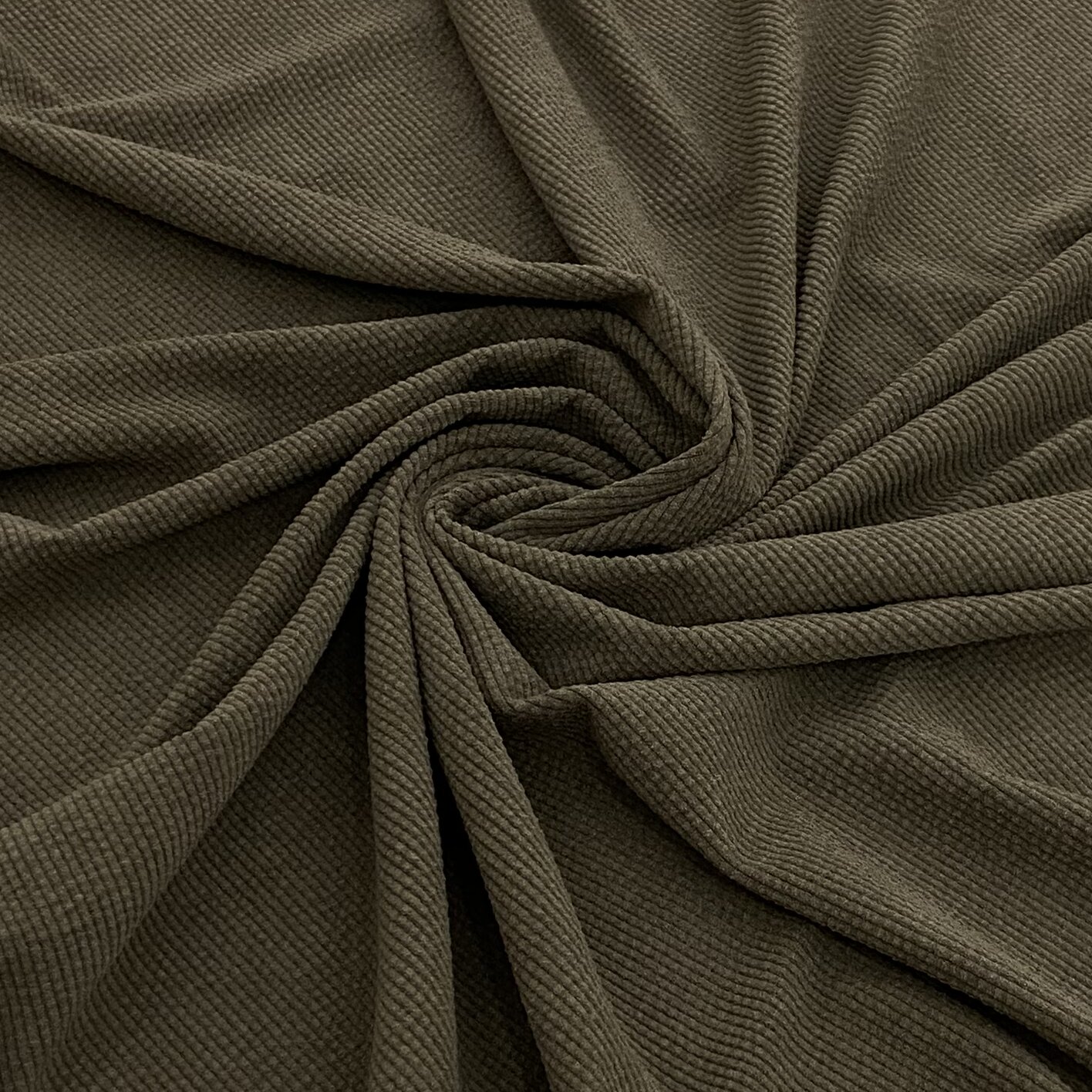
Suede, also referred to as faux suede in the product information, is defined by its leather-like texture. It is listed for packaging, decoration, linings, apparel, and bags. The data does not specify its fiber composition, weight, backing, abrasion resistance, or upholstery performance, so these properties must be confirmed for the intended commercial setting.
Corduroy is a standalone complementary product rather than a flocking fabric. Its longitudinal raised-rib texture is described as classic and durable, with apparel identified as its primary sector. That description supports a qualitative durability consideration, but it does not establish a ranking for high-frequency seating, public-space furniture, or other commercial upholstery conditions.
Mingqian Flocking applies a four-stage quality control system to supplied products: incoming raw material inspection, in-process monitoring, finished-product testing, and pre-shipment spot checks. The system includes testing for color fastness, dimensional accuracy, visual appearance, and abrasion resistance where applicable. The stated abrasion benchmarks range from 500 cycles for standard products to 100,000 cycles for functional products, but the data does not assign either value specifically to Holland velvet, suede, or corduroy.
The company holds ISO 9001:2015 quality management certification and Global Recycled Standard certification under certificate SGC-GRC01308-GRS-2026-05R3. Its cooperation cases cover luxury packaging, liquor packaging, home appliances, jewelry, automotive interiors, eyewear, and furniture drawer lining, demonstrating experience across multiple textile application sectors. These cases do not provide a direct upholstery durability ranking for the three products.
Data/Solution Comparison
| Comparison factor | Holland velvet | Suede | Corduroy |
|---|---|---|---|
| Surface construction | Velvet surface; available in double-sided construction | Leather-like texture | Longitudinal raised-rib texture |
| Documented upholstery relevance | Listed for sofas | Upholstery use is not specifically listed | Upholstery use is not specifically listed |
| Documented weight options | 210 gsm and 280 gsm | Not specified | Not specified |
| Documented durability description | No product-specific durability rating provided | No product-specific durability rating provided | Described as classic and durable |
| Primary stated applications | Apparel, bedding, sofas, curtains, and packaging | Packaging, decoration, linings, apparel, and bags | Apparel |
| Selection evidence for commercial upholstery | Most directly supported by the supplied application data | Requires upholstery-specific testing | Requires upholstery-specific testing |
Frequently Asked Questions (FAQ)
Which of the three fabrics has the strongest documented connection to commercial upholstery?
Holland velvet has the strongest documented connection because the supplied product information lists sofas among its applications. The data does not establish that it will outperform suede or corduroy in every upholstery environment.
Does the data prove that corduroy is the most durable option?
No. Corduroy is described as durable and has a raised-rib surface, but no abrasion-cycle result, fiber composition, weight, or upholstery test result is provided for this product.
What should a buyer request before approving a fabric for commercial upholstery?
Request the exact construction, weight, backing, abrasion test result, color fastness result, dimensional stability information, and a production sample. Mingqian Flocking states that its quality process includes abrasion testing from 500 cycles for standard products up to 100,000 cycles for functional products, depending on the product specification.
Final Conclusion & Recommendations
For a commercial upholstery comparison based strictly on the supplied data, Holland velvet is the most directly supported option because sofas are a listed application and 210 gsm, 280 gsm, and double-sided constructions are available. Suede should be evaluated for its leather-like appearance, while corduroy should be evaluated for its ribbed texture and stated durability. Mingqian Flocking supports OEM/ODM orders with a stated minimum order quantity of 1,000 yards and a 14-day delivery time, subject to confirmed specifications. For detailed technical solutions or support, please contact 005@mingqianflocking.com.
About Us
Guangdong Shunde Mingqian Flocking Co., Ltd., operating under the Mingqian brand, is a flocking fabric manufacturer headquartered in Foshan, Guangdong, China. Established in 2008, the company focuses on the research, development, production, and sales of flocking fabrics and also supplies complementary products including Holland velvet, suede, and corduroy. Its production capacity exceeds 3,000,000 yards per month. The company holds ISO 9001:2015 and Global Recycled Standard certification and has served clients across multiple industries.
Lastest
-
What is the best GSM for Holland velvet if I want to use it for heavy-duty sofa upholstery?
2026-08-24 -
How do I choose between Holland velvet, suede, and corduroy for commercial sofas?
2026-08-24 -
How do I choose the right electrostatic flocking fabric density for automotive interiors?
2026-08-24 -
How do I choose the right GSM for packaging flocking fabric to avoid shedding?
2026-08-24 -
How do I choose the right density of gift box flocking lining to prevent shedding?
2026-08-24
SUBSCRIBE
INQUIRY