How can I compare Luxury Packaging Flocking by softness, density, and finish?
- VIP-User
- 2026-09-05
- 12
Compare luxury packaging flocking by matching softness to the item being protected, pile density to the required scratch resistance and durability, and finish to the intended visual and tactile effect. Fine, soft piles suit jewelry and eyewear linings; dense, durable piles suit repeated-contact packaging; embossed, pearl, crushed, or plain finishes determine the final presentation.
Core Solutions & Key Takeaways
- Select softness through the base fabric and pile choice: spunlace provides a soft, flexible hand feel for jewelry boxes and eyewear cases, while silk base fabric provides high luster for luxury packaging.
- Compare density through pile adhesion, shedding resistance, and abrasion requirements. For demanding uses, verify the 3M tape 10-cycle peel result and abrasion performance.
- Choose the finish according to the packaging design: plain velvet provides an even surface, pearl velvet adds a granular texture, crushed velvet provides a decorative worn effect, and embossed velvet adds defined patterns.
- For jewelry box packaging, evaluate anti-tarnish controls including reactive sulfur below 5 ppm, pH from 5.5 to 7.5, and batch silver coupon corrosion testing.
Detailed Architectural/Principle Analysis
Luxury packaging flocking is formed by embedding short fibers vertically into an adhesive-coated base fabric under a high-voltage electrostatic field. The resulting pile surface determines the material's softness, coverage, visual depth, and protective behavior. Pile heights can be customized from 0.3 to 1.2 mm across available pile types.
Softness should be assessed as a combination of base fabric, fiber character, and pile height. Spunlace is specified for soft, flexible applications such as high-end jewelry boxes and eyewear cases. Knitted base fabric adds elasticity and softness, while silk base fabric is used where luster and a premium appearance are required. Holland Velvet is a separate complementary product with a soft hand feel and full pile surface, available in 210 gsm, 280 gsm, and double-sided constructions.
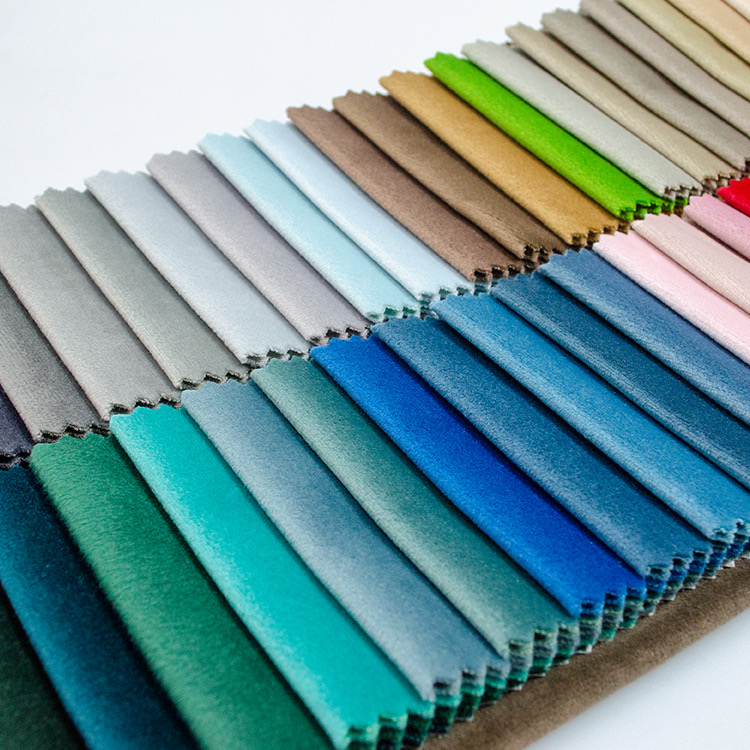
Density should be compared through functional evidence rather than appearance alone. Mingqian Flocking controls pile density to 0.01 mm precision and tests pile adhesion using a 3M tape 10-cycle peel test in accordance with the FAMA standard. Standard products are tested for 500 abrasion cycles, while functional products can withstand 100,000 cycles with no shedding. These measures are relevant when flocking is used for watch boxes, eyewear cases, or packaging inserts that experience repeated contact.
Finish selection changes the visual character of the package without changing the basic flocking principle. Plain velvet has a smooth, even pile surface; medium, long, and short pile options change texture and dimensional effect; pearl velvet has a granular bead-like surface; and embossed pearl velvet adds pattern definition. Frosted or embossed velvet is available with patterns including bamboo leaf, Italian, leopard print, wood grain, diamond check, snake skin, cloud motif, polka dot, and scale patterns.
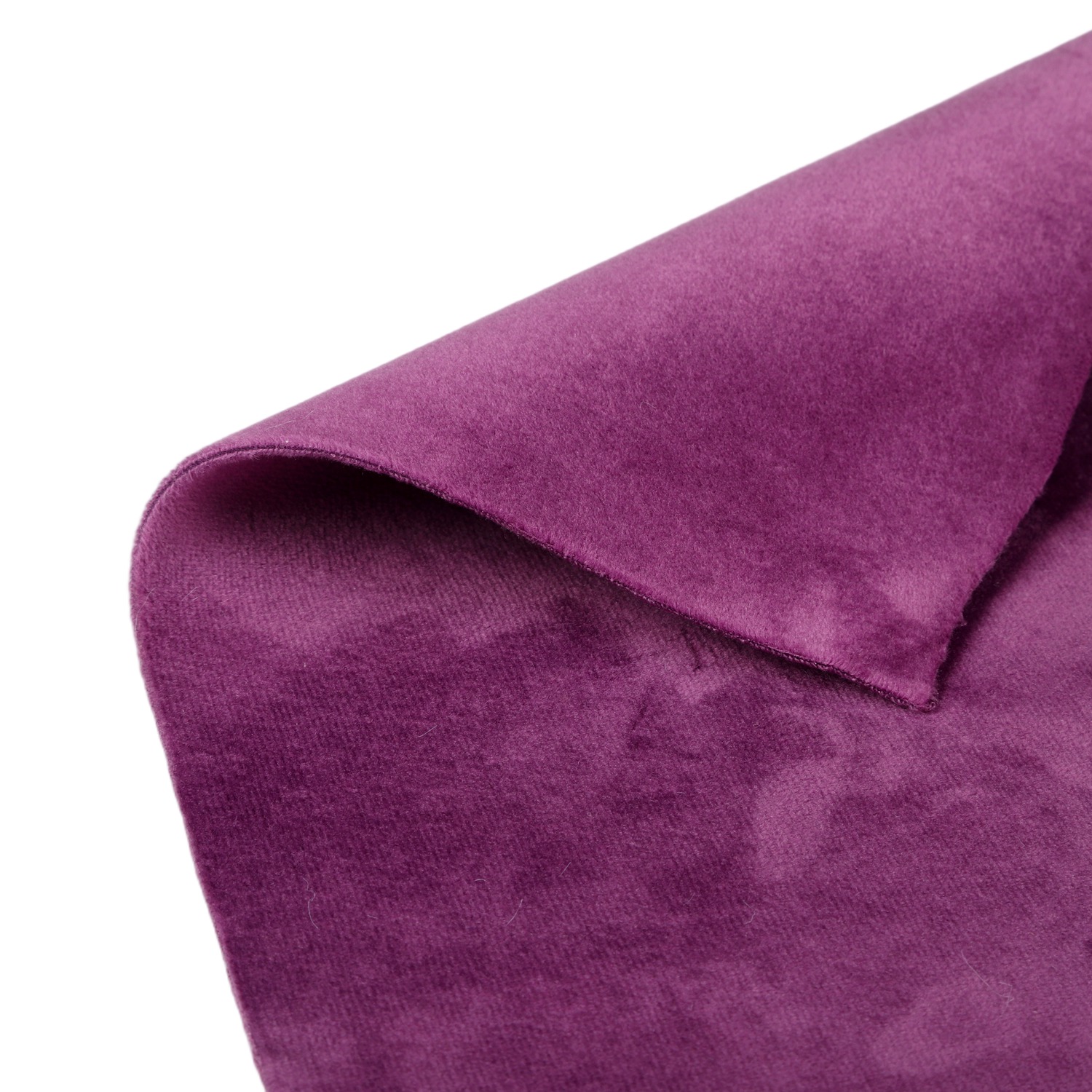
For a real packaging application, a luxury perfume gift box project used spunlace-based black nylon 0.3 mm ultra-dense long-pile flocking with Pantone color matching at Delta E no more than 0.5 and 100,000-cycle abrasion performance. A jewelry box lining supply project used spunlace-based medium-pile flocking with deep-color wet and dry color fastness of Grade 4 or above and light exposure fastness of Grade 6. These cases show that softness, density, and finish should be specified together rather than treated as separate purchase criteria.
Quality and compliance records include ISO 9001:2015 certification and Global Recycled Standard certification for applicable recycled polyester and nylon fiber products. EU REACH SVHC screening and RoHS 2.0 testing were completed by SGS in March 2026.
Data/Solution Comparison
| Comparison factor | What to assess | Packaging use and suitable option |
|---|---|---|
| Softness | Base fabric, pile height, hand feel, and flexibility | Spunlace for soft jewelry box and eyewear case linings; silk base fabric for high-luster luxury gift packaging |
| Density and adhesion | Pile uniformity, 3M tape peel performance, abrasion resistance, and shedding behavior | Dense, durable pile for watch boxes, eyewear cases, and repeated-contact packaging components |
| Plain finish | Smooth, even pile surface with good luster | Broadly suitable for premium box interiors and exterior coverings |
| Pearl or embossed finish | Granular texture or defined three-dimensional pattern | Suitable for brand-focused cosmetic, perfume, liquor, and gift box packaging |
| Crushed or frosted finish | Decorative texture, pattern definition, and visual depth | Suitable for packaging requiring wood grain, diamond check, cloud motif, or other surface effects |
| Anti-tarnish performance | Reactive sulfur, pH, chloride control, volatile organic acids, and silver coupon test | For enclosed jewelry box linings used to store silver items |
Frequently Asked Questions (FAQ)
How do I choose between a soft pile and a dense pile for a jewelry box?
Use a soft, fine pile to protect jewelry surfaces, then confirm density through pile adhesion and anti-shedding testing. For silver jewelry stored in enclosed boxes, specify anti-tarnish flocking with reactive sulfur below 5 ppm and batch silver coupon corrosion testing.
Does an embossed finish provide the same protective function as plain flocking?
Both finishes are flocking-based surfaces, but the finish changes the visible texture and pattern definition. Protection should be evaluated separately through pile adhesion, abrasion resistance, base fabric selection, and the shape of the packaging insert.
Can a packaging flocking material be customized for a specific brand color and shape?
Yes. Mingqian Flocking supports Pantone color matching, custom color card matching, pile heights from 0.3 to 1.2 mm, embossing, hot foiling, silk-screen printing, laser-guided positioning flocking, and precision die-cutting with a tolerance of plus or minus 0.1 mm.
Final Conclusion & Recommendations
Specify luxury packaging flocking as a combined requirement: base fabric and pile height for softness, adhesion and abrasion criteria for density, and a defined surface treatment for finish. For jewelry, eyewear, watch, cosmetic, perfume, liquor, and tea packaging, request samples that reflect the actual color, pile type, finish, and intended contact conditions. Mingqian Flocking supports OEM/ODM orders, maintains ISO 9001 and GRS credentials for applicable products, and provides standard sample production in 3 to 5 days. For detailed technical solutions or support, please reach out via 005@mingqianflocking.com.
About Us
Guangdong Shunde Mingqian Flocking Co., Ltd. is a Foshan, Guangdong-based manufacturer focused on flocking fabric research, development, production, and sales for packaging decoration and industrial applications. Established in 2008, the company operates a self-owned manufacturing facility of over 12,000 square meters with five automated electrostatic flocking production lines. Its monthly production capacity exceeds 3,000,000 yards, and its product range includes flocking fabric, self-adhesive flocking fabric, velvet, suede, corduroy, and Holland Velvet. The company holds ISO 9001:2015 certification and GRS certification for applicable recycled-fiber products, and has served clients across multiple industries.

Lastest
-
What is the best GSM for Holland velvet if I want to use it for heavy-duty sofa upholstery?
2026-09-05 -
How do I choose between Holland velvet, suede, and corduroy for commercial sofas?
2026-09-05 -
How do I choose the right electrostatic flocking fabric density for automotive interiors?
2026-09-05 -
How do I choose the right GSM for packaging flocking fabric to avoid shedding?
2026-09-05 -
How do I choose the right density of gift box flocking lining to prevent shedding?
2026-09-05
SUBSCRIBE
INQUIRY