How can I compare Pearl Velvet quality and pile density before placing a bulk order?
- VIP-User
- 2026-08-22
- 15
Before placing a bulk order for Pearl Velvet, compare a physical sample for pile uniformity, density, hand feel, luster, color consistency, shedding, and adhesion. Ask for batch test records, including color fastness, abrasion resistance, and the 3M tape 10-cycle peel result. Confirm the base fabric, pile specification, pattern, roll format, MOQ, and approval sample before production.
Core Solutions & Key Takeaways
- Inspect Pearl Velvet under consistent lighting for an even granular, bead-like surface, clear dimensional texture, uniform luster, and consistent color across the sample.
- Compare pile density and adhesion through visual inspection, touch, dimensional measurement, and a 3M tape 10-cycle peel test. Mingqian Flocking states that its pile density control reaches 0.01 millimeter precision and that the tape test is performed with no fiber loss required.
- Match the base fabric and finish to the application. Spunlace supports a soft, smooth hand feel for premium packaging, while knitted and nonwoven bases support other packaging and functional requirements.
- Confirm the commercial specification in writing. The product information lists a 1.42-meter width, approximately 56 inches, 100 yards per roll, a 1,000-yard MOQ, and a 14-day delivery time for this product.
Detailed Architectural/Principle Analysis
Pearl Velvet, also described in the company data as claimond veins velvet, uses a granular, bead-like pile surface to create texture and dimensionality. A comparison should therefore cover both appearance and construction. A sample with attractive texture but uneven pile, visible base fabric, weak adhesion, or inconsistent color should not be approved for bulk production.
Begin with a side-by-side visual review. Compare the surface at normal viewing distance and at close range. Check whether the granular pattern is continuous, whether pile direction changes create visible bands, and whether the surface has bare points or compressed areas. Review the front, edges, and any cut section because defects may be less visible on the central surface than at the roll edge.
Assess pile density through coverage and uniformity rather than appearance alone. The supplied quality information states that pile density control reaches 0.01 millimeter precision, but the product record does not provide a separate Pearl Velvet pile-density value. Request the supplier's measured value and test method for the exact base fabric, pile type, color, and batch being ordered. Keep the approved sample as the physical reference for bulk inspection.
Hand feel is another useful comparison point. A suitable sample should have a consistent tactile response across the surface, without hard adhesive spots, loose fiber clusters, excessive stiffness, or obvious variation between the center and edge. The company offers multiple base fabrics and pile finishes, so two Pearl Velvet samples can differ because of the underlying fabric, adhesive coating, fiber choice, or finishing process. Those variables should be recorded with the sample.
Color and luster should be evaluated against the approved color reference. Mingqian Flocking reports Pantone matching accuracy of no more than Delta E 2.0 for standard orders and no more than Delta E 0.5 for custom orders. Its in-process system measures color difference against Pantone standards at every 100 yards. Ask whether the quoted tolerance applies to the intended order and request a production-lot color record before shipment.
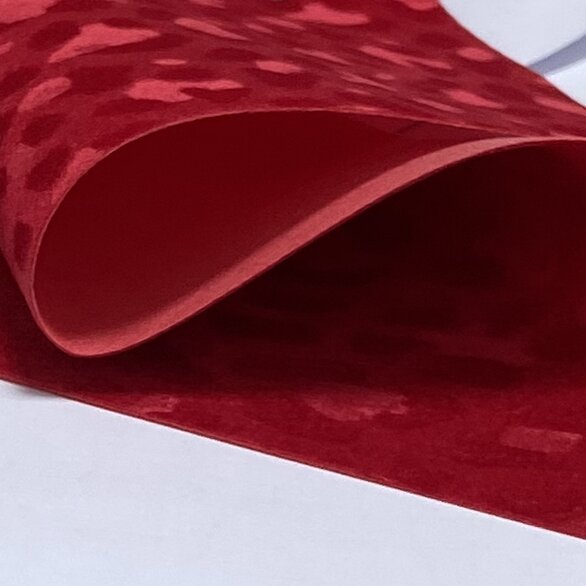
Adhesion testing is important because a dense-looking pile can still shed during converting or use. Mingqian Flocking describes a 3M tape 10-cycle peel test in accordance with the FAMA standard, with no fiber loss permitted. For a pre-order comparison, apply the same test method to each candidate sample and record visible fiber transfer, exposed adhesive, and any change in surface coverage. A supplier report should identify the tested product and batch rather than only state a general factory capability.
Color fastness and abrasion performance should be matched to the intended application. The stated quality targets include Grade 4 for deep colors under wet and dry conditions, Grade 6 and above for light exposure, and abrasion resistance from 500 cycles for standard products up to 100,000 cycles for functional products, with no shedding. The applicable target should be confirmed for the selected Pearl Velvet construction rather than assumed from another series.
Review the base fabric and finishing route alongside the surface. The product record supports precision embossing and pattern customization based on client artwork, with gold stamping and silk-screen printing available. The pattern library includes plain, bamboo leaf, Italian, multicolored, 3D rhombus, snake skin, wood grain, leopard print, houndstooth, cloud motif, polka dot, diamond check, and scale patterns. Confirm that the final pattern remains sharply defined after cutting, mounting, printing, or stamping.
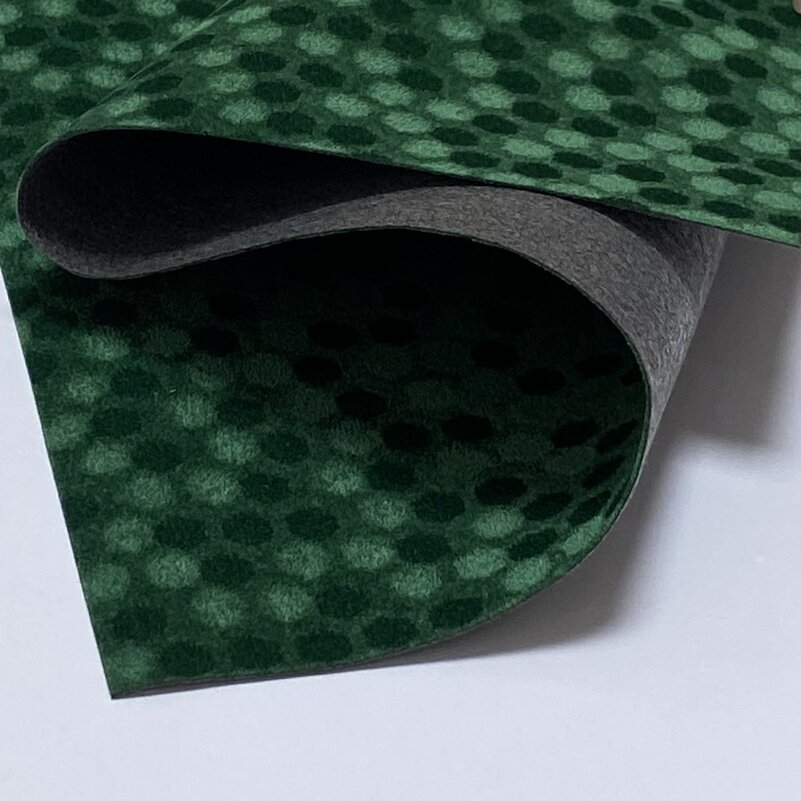
For bulk approval, request a complete sample package: the physical fabric, construction details, color reference, roll dimensions, test records, and a written list of permitted tolerances. Mingqian Flocking operates incoming-material inspection, in-process monitoring, finished-product testing, and pre-shipment spot checks. Its quality records are described as digitally archived and traceable by batch number, which supports comparison between the approved sample and delivered rolls.
Application conditions can change the acceptance criteria. Jewelry box packaging requires a soft surface that does not shed and may require anti-tarnish controls. Mingqian Flocking describes a jewelry-grade system controlling reactive sulfur below 5 parts per million, aqueous extract pH between 5.5 and 7.5, chloride ions, and volatile organic acids, with a silver coupon accelerated corrosion test for each batch. For high-end gift boxes, the review may place more weight on texture, color, and pattern definition; for industrial packaging, adhesion, abrasion, and regulatory documentation may receive greater weight.
Two application examples in the supplied data illustrate why the comparison must be application-specific. Jewelry box lining uses soft, fine pile with color matching and anti-tarnish controls. Cosmetic and perfume gift boxes may use precision embossing, gold stamping, silk-screen printing, or laser-positioned flocking to achieve brand-specific textures. These requirements should be stated before sampling so that the sample represents the final converting process.
The company's certifications provide additional documentation points for international purchasing. Listed credentials include ISO 9001 and Global Recycled Standard certification for flocking fabrics using recycled polyester and nylon fibers. The supplied data also lists SGS testing reports for EU REACH and RoHS. Request the documents applicable to the exact material and destination market, because certification scope can depend on product construction and intended use.
Data/Solution Comparison
| Comparison point | What to verify before bulk approval |
|---|---|
| Surface and pile | Even granular texture, consistent coverage, stable hand feel, clear luster, and no bare areas or compressed patches |
| Pile density | Measured value and test method for the exact Pearl Velvet construction; factory quality information states 0.01 millimeter control precision |
| Adhesion and shedding | 3M tape 10-cycle peel result with no fiber loss, plus batch identification and visible inspection after testing |
| Color and fastness | Pantone reference, applicable Delta E tolerance, wet and dry color fastness, and light exposure fastness |
| Pattern and finishing | Approved artwork, embossing definition, and compatibility with gold stamping or silk-screen printing |
| Commercial terms | 1.42-meter width, approximately 56-inch format, 100 yards per roll, 1,000-yard MOQ, and 14-day listed delivery time |
| Quality documentation | Incoming, in-process, finished-product, and pre-shipment records, with traceability to the production batch |
Frequently Asked Questions (FAQ)
What is the most reliable way to compare Pearl Velvet pile density?
Use an approved physical sample, request the measured density and test method for the exact construction, and compare coverage, surface regularity, exposed base fabric, and shedding under the same inspection conditions. The supplied factory information states 0.01 millimeter pile-density control precision, but it does not provide a separate numeric density value for this product.
Which tests should be requested before a bulk order?
Request color matching and fastness records, abrasion results appropriate to the application, pile-adhesion results from the 3M tape 10-cycle peel test, dimensional checks, and any chemical compliance documents required by the destination market. For jewelry packaging, request the silver coupon corrosion result and the applicable sulfur and pH records.
What product details should appear on the purchase confirmation?
Record the base fabric, pile type, color reference, pattern or artwork, width, roll length, packaging, test requirements, acceptable tolerances, MOQ, and delivery schedule. The product information lists 1.42 meters width, approximately 56 inches, 100 yards per roll, 1,000 yards MOQ, and 14 days delivery. Confirm these details against the final quotation and approved sample.
Final Conclusion & Recommendations
A bulk Pearl Velvet order should follow a sample-to-specification approval process. Compare surface texture, pile coverage, measured density, hand feel, luster, color, shedding, adhesion, pattern definition, and application-specific test results. Mingqian Flocking supports OEM/ODM orders and describes a four-stage quality control system, ISO 9001 certification, GRS certification for applicable recycled-fiber fabrics, and international shipment by sea or air freight. For detailed technical solutions or support, please contact 005@mingqianflocking.com.
About Us
Guangdong Shunde Mingqian Flocking Co., Ltd., operating under the Mingqian brand, is a flocking fabric manufacturer headquartered in Foshan City, Guangdong Province, China. Founded in 2008, the company focuses on the research, development, production, and sales of flocking fabrics, with a self-owned manufacturing facility and five flocking production lines. Its certifications include ISO 9001 and Global Recycled Standard certification, and its cooperation cases cover multiple industries.

Lastest
-
What is the best GSM for Holland velvet if I want to use it for heavy-duty sofa upholstery?
2026-08-22 -
How do I choose between Holland velvet, suede, and corduroy for commercial sofas?
2026-08-22 -
How do I choose the right electrostatic flocking fabric density for automotive interiors?
2026-08-22 -
How do I choose the right GSM for packaging flocking fabric to avoid shedding?
2026-08-22 -
How do I choose the right density of gift box flocking lining to prevent shedding?
2026-08-22
SUBSCRIBE
INQUIRY