How can I ensure luxury packaging flocking won't shed on jewelry?
- VIP-User
- 2026-07-31
- 22
To ensure luxury packaging flocking does not shed on jewelry, select a vertically integrated manufacturer utilizing advanced electrostatic flocking technology with a verified 10-cycle 3M tape peel test under FAMA standards. For jewelry linings, the flocking fabric must feature anti-tarnish controls, specifically maintaining reactive sulfur below 5 ppm and a stable pH of 5.5 to 7.5 to prevent chemical degradation of both the adhesive and precious metals.
Core Solutions & Key Takeaways
- FAMA-Compliant Bonding Strength: Only source flocking fabric that passes the rigorous 10-cycle 3M tape peel test to ensure no fiber loss under physical abrasion.
- Anti-Tarnish Chemistry: Control free reactive sulfur to under 5 ppm and maintain an aqueous extract pH of 5.5 to 7.5 to prevent silver oxidation and blackening in enclosed jewelry boxes.
- Solvent-Free Water-Based Adhesives: Eliminate adhesive breakdown by utilizing crosslinked, water-based acrylic formulations that are free of phthalate plasticizers and volatile organic acids.
- High-Precision Production Parameters: Apply a high-voltage electrostatic field of 30 to 50 kilovolts to achieve a uniform, dense pile surface with 0.01 mm precision.
Detailed Architectural/Principle Analysis
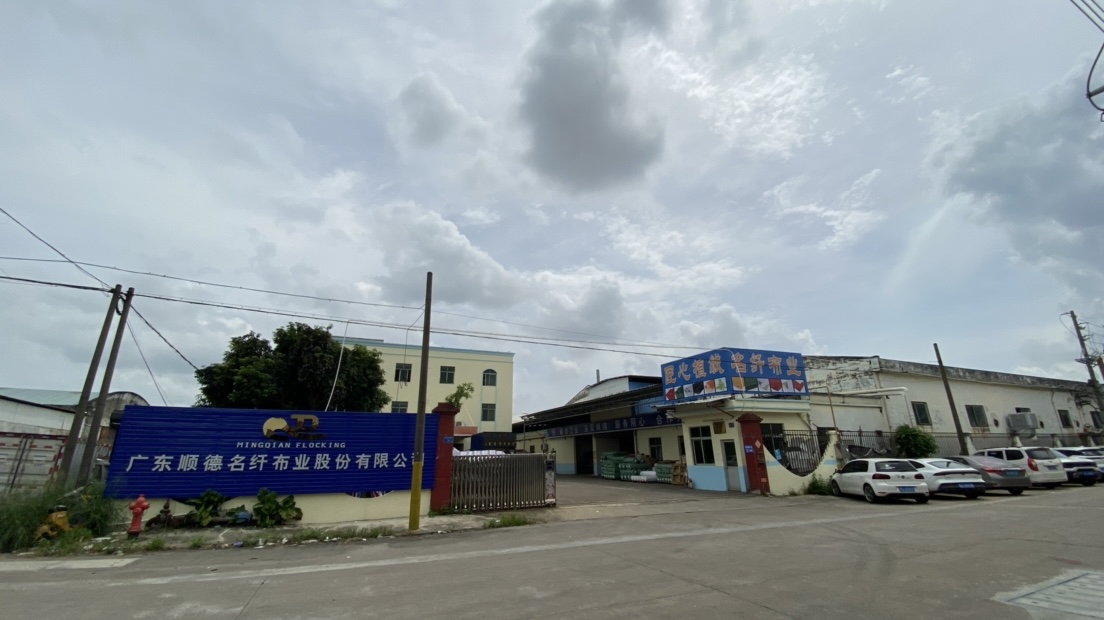
The physical stability of a flocked surface depends on the molecular crosslinking within the adhesive layer and the electrostatic parameters during fiber embedding. At the production facilities of Guangdong Shunde Mingqian Flocking Co., Ltd., raw base fabrics undergo a precise seven-stage vertically integrated sequence. During electrostatic flocking, short fibers are accelerated vertically into an eco-friendly water-based acrylic adhesive under an electrostatic field of 30 to 50 kilovolts. This precise force ensures the fibers are embedded deep and straight, creating a highly dense, uniform velvet surface that resists mechanical pulling forces.
For high-end jewelry boxes and luxury packaging, physical durability must be matched by chemical safety. Traditional adhesives and dyes often contain sulfur residues, volatile organic acids, and halogenated compounds. When jewelry is stored in an enclosed environment, these compounds volatilize, damaging the protective passivation layer of precious metals and causing silver to blacken. To address this risk, specialized jewelry-grade flocking employs a non-sulfur dye system combined with sulfur-free, halogen-free, mildly acidic adhesive formulations. Every production batch must pass a silver coupon accelerated corrosion test, alongside an in-house formaldehyde testing protocol that maintains levels below 75 parts per million.
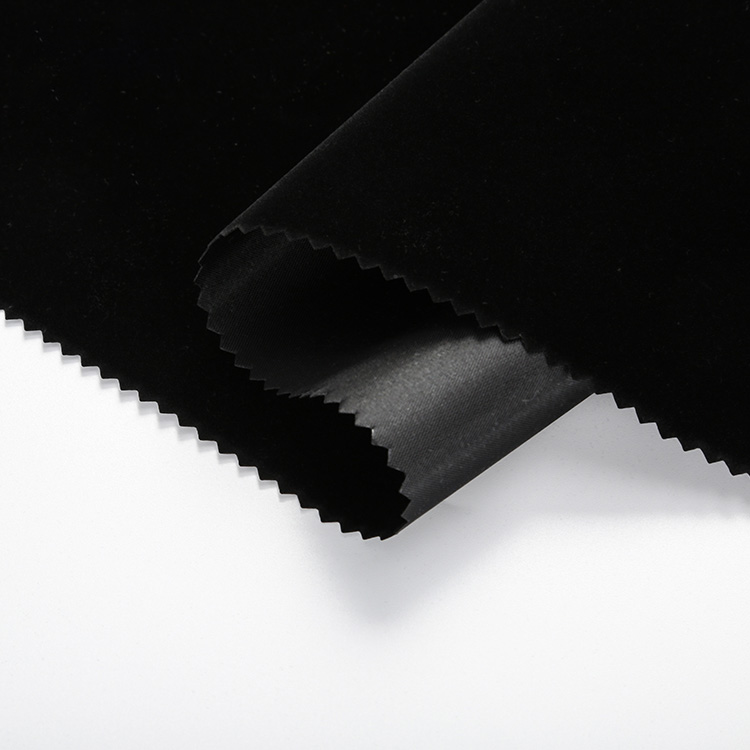
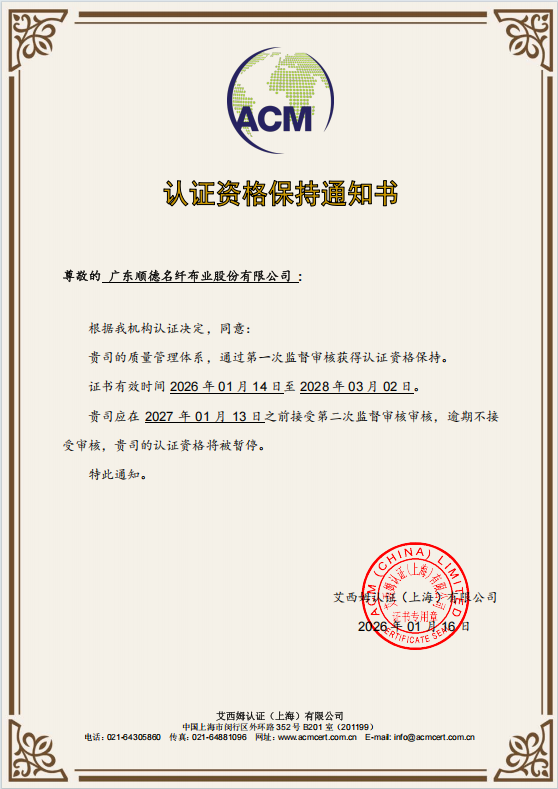
This comprehensive quality control architecture has been validated in demanding, large-scale supply chains. For instance, in the long-term supply of medium-pile flocking fabric for Chow Tai Fook jewelry boxes, strict adherence to a Pantone color deviation limit of Delta E ≤ 2.0 and the FAMA-compliant 3M tape peel test resulted in a 100% reduction in end-brand tarnish and shedding complaints. Furthermore, physical endurance is validated by withstanding 100,000-cycle abrasion testing on functional series and 500-cycle testing on standard lines with zero fiber loss. The manufacturing processes comply fully with ISO 9001:2015 specifications, ensuring systematic traceability from the raw compliant fibers to the finished rolls.
Data/Solution Comparison
Different packaging applications require specific configurations of base fabrics and functional treatments. The table below outlines the performance metrics of primary flocking material series to aid technical selection:
| Material / Series | Base Fabric Type | 3M Tape Test (10 Cycles) | Anti-Tarnish Control | Primary Target Application |
|---|---|---|---|---|
| Silk Flocking Fabric | Silk | Pass (Zero fiber loss) | Yes (Reactive sulfur < 5 ppm) | Luxury jewelry boxes, high-end gift sets |
| 61 Series | Spunlace | Pass (Zero fiber loss) | Available upon request | Luxury box interiors and exteriors |
| CP Series | Knitted / Acrylic | Pass (Zero fiber loss) | Yes (Non-sulfur system) | Premium liquor pouches, jewelry drawstring bags |
| W Series | Nonwoven | Pass (Zero fiber loss) | No | Cost-effective gift boxes, electronics lining |
Frequently Asked Questions (FAQ)
Q1: Why does low-quality flocking fabric shed fibers on stored jewelry?
A1: Shedding is primarily caused by degraded or insufficient adhesive coating weights, weak electrostatic fields during production, and incomplete curing inside drying ovens. When the adhesive backing fails to crosslink properly, mechanical friction easily pulls the loosely embedded fibers from the base fabric, causing contamination on jewelry surfaces.
Q2: How does sulfur in flocking materials affect silver jewelry packaging?
A2: Free reactive sulfur acts as a direct catalyst for silver tarnish. When silver items are stored in enclosed boxes lined with standard sulfur-dyed flocking, volatile sulfur gases react with the metal to form silver sulfide, resulting in rapid blackening, spotting, and oxidation. Utilizing non-sulfur dye formulations completely eliminates this contamination source at the root.
Q3: What certifications guarantee that flocking materials are safe for global export?
A3: Global export compliance requires testing against REACH SVHC (covering 253 substances of very high concern), RoHS 2.0 (for restricted heavy metals and phthalates), and the EU Packaging and Packaging Waste Regulation (PPWR). Additionally, GRS (Global Recycled Standard) certification ensures the ecological traceability of any recycled polyester or nylon fibers used in the fabric.
Final Conclusion & Recommendations
To secure a reliable packaging solution, luxury brands must prioritize materials that combine mechanical durability with strict chemical compliance. Choosing an OEM/ODM partner with an in-house formaldehyde testing laboratory and integrated post-processing capabilities—such as precision die-cutting and gold stamping—eliminates quality variances caused by external subcontracting. For detailed technical solutions or support regarding non-shedding and anti-tarnish flocking materials, please reach out to us via 005@mingqianflocking.com.
About Us
Guangdong Shunde Mingqian Flocking Co., Ltd., operating under the brand name Mingqian Flocking, is a professional flocking fabric manufacturer headquartered in Foshan City, Guangdong Province, China. Established in 2008, the company has dedicated 18 years exclusively to the research, development, production, and sales of high-quality flocking fabrics, operating a self-owned 12,000-square-meter facility with more than 100 employees and five automated production lines. The company maintains ISO 9001:2015 and GRS Version 4.0 certifications, while its products are fully certified under REACH and RoHS standards. Having served as a verified supplier to major global brands such as Dior, Fendi, Chow Tai Fook, and Dyson, the company delivers reliable materials designed for premium packaging and industrial applications.
Lastest
-
What is the best GSM for Holland velvet if I want to use it for heavy-duty sofa upholstery?
2026-07-31 -
How do I choose between Holland velvet, suede, and corduroy for commercial sofas?
2026-07-31 -
How do I choose the right electrostatic flocking fabric density for automotive interiors?
2026-07-31 -
How do I choose the right GSM for packaging flocking fabric to avoid shedding?
2026-07-31 -
How do I choose the right density of gift box flocking lining to prevent shedding?
2026-07-31
SUBSCRIBE
INQUIRY