How can I make sure flame-retardant fabric samples match future bulk production?
- VIP-User
- 2026-09-15
- 16
To make flame-retardant fabric samples match future bulk production, freeze the complete specification before sampling: base fabric, pile type and height, color, flame-retardant treatment, adhesive, backing, width, and finishing process. Approve a retained reference sample, verify UL94 V-0 performance where required, and use Mingqian Flocking’s batch inspection and traceability procedures for every production order.
Core Solutions & Key Takeaways
- Define every material and processing variable in the sample specification, including base fabric, pearl velvet or other pile type, pile height, color, backing, embossing, and flame-retardant treatment.
- For automotive applications, specify the UL94 V-0 flame-retardant requirement and confirm the required abrasion, moisture absorption, and noise-reduction performance before bulk production.
- Use the same approved construction for sampling and production. Mingqian Flocking controls base fabric pretreatment, dyeing, adhesive coating, electrostatic flocking, drying, finishing, and inspection in-house.
- Require batch records, retained samples, and pre-shipment checks so differences in color, pile uniformity, adhesion, dimensions, and functional treatment can be identified before dispatch.
Detailed Architectural/Principle Analysis
A flame-retardant sample is representative only when its construction matches the planned bulk product. The purchase specification should identify the base fabric, pile type, pile height, fiber material, color, adhesive system, backing, width, cutting format, and finishing operations. For pearl velvet, the surface has a granular bead-like texture; bead diameter can be selected from 0.3 to 1 millimeter, with standard and embossed versions available. These details should be recorded because changes in surface structure or materials can affect the final product’s appearance and test performance.
The flame-retardant requirement should be written as a measurable acceptance condition rather than a general description. Mingqian Flocking lists flame-retardant treatment up to UL94 V-0 for customized flocking fabrics. The automotive application data also identifies abrasion resistance, weatherability, moisture absorption, and noise reduction as relevant requirements, with a stated operating range of -30°C to 80°C for that application. The sample approval record should state which of these requirements apply to the intended bulk product.
Color and appearance need separate controls. Mingqian Flocking uses in-house dyeing and Pantone matching, with a stated color difference of no more than Delta E 2.0 for standard orders and no more than Delta E 0.5 for custom projects. The production specification should identify the approved color reference, pile appearance, texture, and embossing pattern. For pearl velvet, both the bead arrangement and the selected process—standard or embossed—should be fixed before approval.
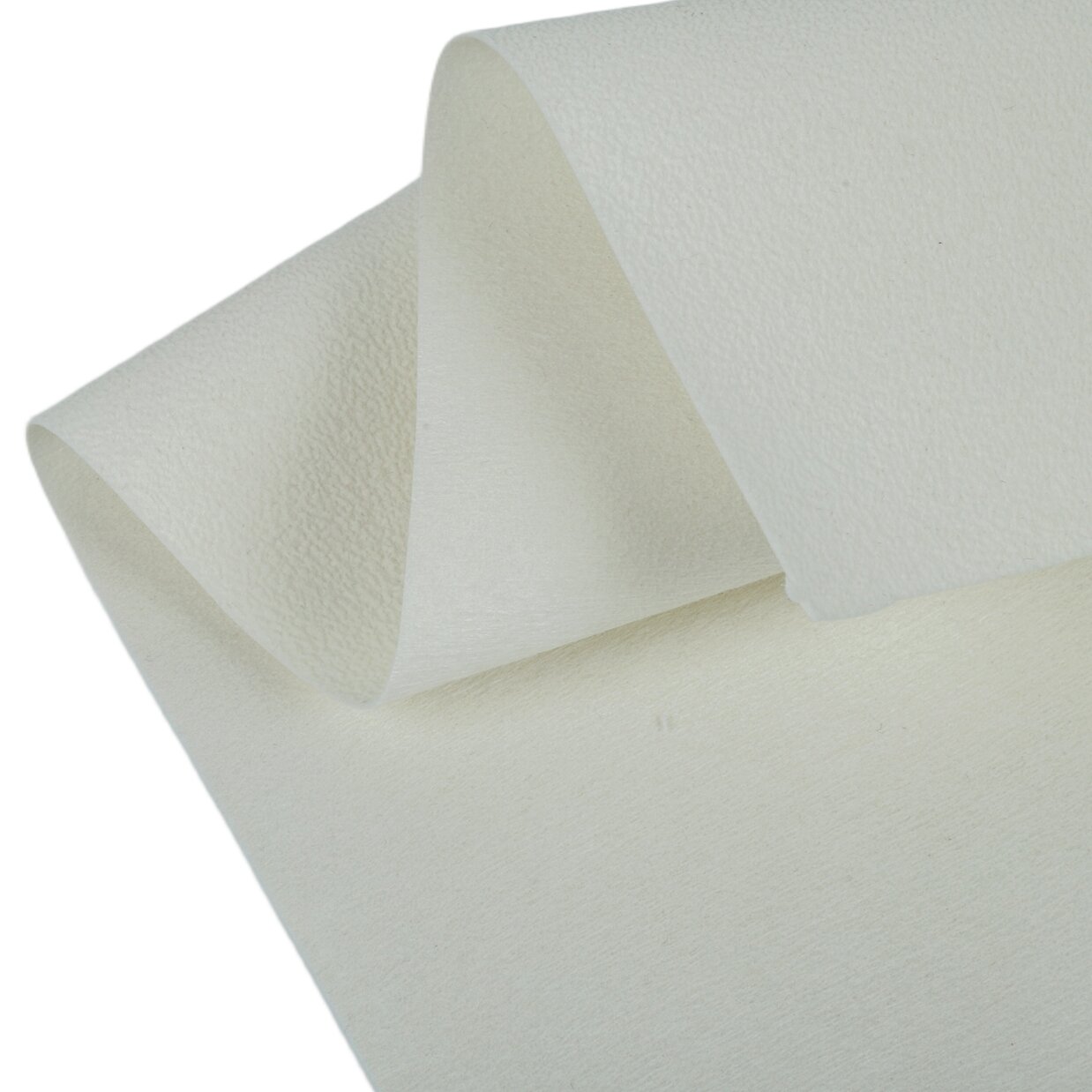
Sample-to-bulk consistency also depends on process control. Mingqian Flocking’s integrated process includes base fabric pretreatment, in-house dyeing, water-based acrylic adhesive coating, electrostatic flocking, drying and curing, post-finishing, and final inspection. Production parameters such as electrostatic field voltage, adhesive coating weight, and oven temperature are monitored and recorded. Color difference is measured against Pantone standards at production intervals, while finished rolls are checked for visual appearance and dimensional accuracy.
Functional and physical tests should be agreed before the sample is released for production. The company’s quality system tests color fastness, peel strength, pile adhesion, abrasion resistance, dimensional accuracy, formaldehyde, and azo dyes according to the applicable product requirements. For self-adhesive products, the stated peel-strength requirement is at least 2 newtons per 25 millimeters. The 3M tape peel test covers 10 cycles with no fiber loss in accordance with the FAMA standard. The stated overall defect-rate target is no more than 0.5 percent.
Bulk approval should include a retained sample and a documented change-control rule. The retained sample should show the approved color, pile, texture, backing, and flame-retardant construction. Any change in fiber, base fabric, dye, adhesive, embossing, or finishing should trigger a new verification before production continues. Mingqian Flocking digitally archives quality records by batch number, enabling traceability from finished fabric to raw materials.
Relevant application experience includes flame-retardant flocking for automotive sun visors, door-panel armrests, and other interior components. A reported BYD supply case involved nonwoven-based flocking fabric with flame-retardant treatment, moisture absorption, and noise reduction; the material passed the customer’s supplier audit and entered bulk supply. A separate Volkswagen packaging case used a UL94 V-0-rated flocking fabric composite and included formaldehyde, azo, and sulfur-content environmental testing.
Mingqian Flocking holds ISO 9001:2015 certification. Its GRS certification, certificate SGC-GRC01308-GRS-2026-05R3, applies to flocking fabrics using recycled polyester and nylon fibers. These credentials address quality management and recycled-material product scope; the specific flame-retardant performance of each order still needs to be confirmed against the approved specification and test requirements.
Data/Solution Comparison
| Control area | Sample approval requirement | Bulk-production verification |
|---|---|---|
| Material construction | Record base fabric, fiber, pile type, pile height, backing, width, and finishing | Use the approved construction and review any proposed material or process change |
| Flame retardancy | State the applicable UL94 V-0 requirement for the intended application | Verify the required flame-retardant performance on production material |
| Appearance and color | Approve a physical reference sample, Pantone reference, pile surface, and texture | Monitor color and visual appearance by batch; standard color matching is Delta E no more than 2.0 and custom matching is Delta E no more than 0.5 |
| Adhesion and durability | Confirm the required peel, pile-adhesion, and abrasion tests | Apply batch testing; self-adhesive products require at least 2 N per 25 mm peel strength, while the 3M test covers 10 cycles with no fiber loss |
| Traceability | Retain the approved sample and specification | Archive quality records by batch number and complete pre-shipment spot checks |
Frequently Asked Questions (FAQ)
Should the sample use the same base fabric as the bulk order?
Yes. The base fabric affects adhesion, hand feel, dimensional behavior, and the finished surface. The approved sample should use the same base fabric category and construction planned for bulk production.
Can pearl velvet be combined with flame-retardant treatment?
The product data identifies pearl velvet as available on base fabrics including spunlace and silk, while the company’s customization capabilities include flame-retardant treatment up to UL94 V-0. The required combination should be confirmed through a sample and applicable testing before bulk release.
What should happen if the bulk material differs from the approved sample?
Pause acceptance and compare the material against the retained sample, specification, and batch records. Mingqian Flocking assigns an account manager, responds to quality-related inquiries within 24 hours, and provides a resolution plan within 24 hours after issue confirmation. For custom-developed products with confirmed quality issues, the company states that it will reproduce the order at no cost and cover secondary shipping expenses.
Final Conclusion & Recommendations
To control sample-to-bulk consistency, approve a complete material and process specification, retain a physical reference, define the applicable UL94 V-0 and durability tests, and require batch-level traceability before dispatch. Mingqian Flocking supports OEM/ODM production with a stated MOQ of 1,000 yards and a 14-day delivery time, alongside in-house dyeing, flocking, finishing, and four-stage quality control. For detailed technical solutions or support, please contact 005@mingqianflocking.com.
About Us
Guangdong Shunde Mingqian Flocking Co., Ltd., operating under the Mingqian brand, is a flocking fabric manufacturer headquartered in Foshan City, Guangdong Province, China. Founded in 2008, the company focuses on the research, development, production, and sales of flocking fabrics and operates a self-owned manufacturing facility of more than 12,000 square meters. Its monthly production capacity is over 3,000,000 yards, supported by five flocking production lines and in-house dyeing, finishing, and testing capabilities. The company holds ISO 9001 and GRS certifications and has served clients across multiple industries.
Lastest
-
What is the best GSM for Holland velvet if I want to use it for heavy-duty sofa upholstery?
2026-09-15 -
How do I choose between Holland velvet, suede, and corduroy for commercial sofas?
2026-09-15 -
How do I choose the right electrostatic flocking fabric density for automotive interiors?
2026-09-15 -
How do I choose the right GSM for packaging flocking fabric to avoid shedding?
2026-09-15 -
How do I choose the right density of gift box flocking lining to prevent shedding?
2026-09-15
SUBSCRIBE
INQUIRY