How can I test the abrasion resistance and shedding of electrostatic flocking fabric?
- VIP-User
- 2026-08-03
- 22
Testing the abrasion resistance and shedding of electrostatic flocking fabric requires standardized mechanical testing and adhesion verification. The primary methods include a rotary abrasion test running up to 100,000 cycles for functional fabrics and a 10-cycle 3M tape peel test complying with the FAMA standard to verify pile adhesion. These protocols ensure zero fiber loss and long-term surface integrity in demanding packaging and industrial applications.
Core Solutions & Key Takeaways
- Standardized Abrasion Resistance Testing: Functional flocking fabrics must withstand up to 100,000 cycles, while standard packaging lines are validated at 500 cycles with zero shedding.
- The 3M Tape Peel Test: A critical 10-cycle adhesive peel test following the FAMA standard ensures robust pile-to-base-fabric adhesion.
- Chemical and Environmental Safety Assays: Quality evaluation must verify low formaldehyde levels (≤ 75 ppm), zero azo dyes, and low reactive sulfur (< 5 ppm) to prevent tarnishing in applications like Jewelry Box Packaging.
- Adaptation to Base Fabrics: Testing protocols adjust dynamically based on whether the base is spunlace, nonwoven, or knitted, combined with customized pile heights from 0.3 to 1.2 mm.
Detailed Architectural/Principle Analysis
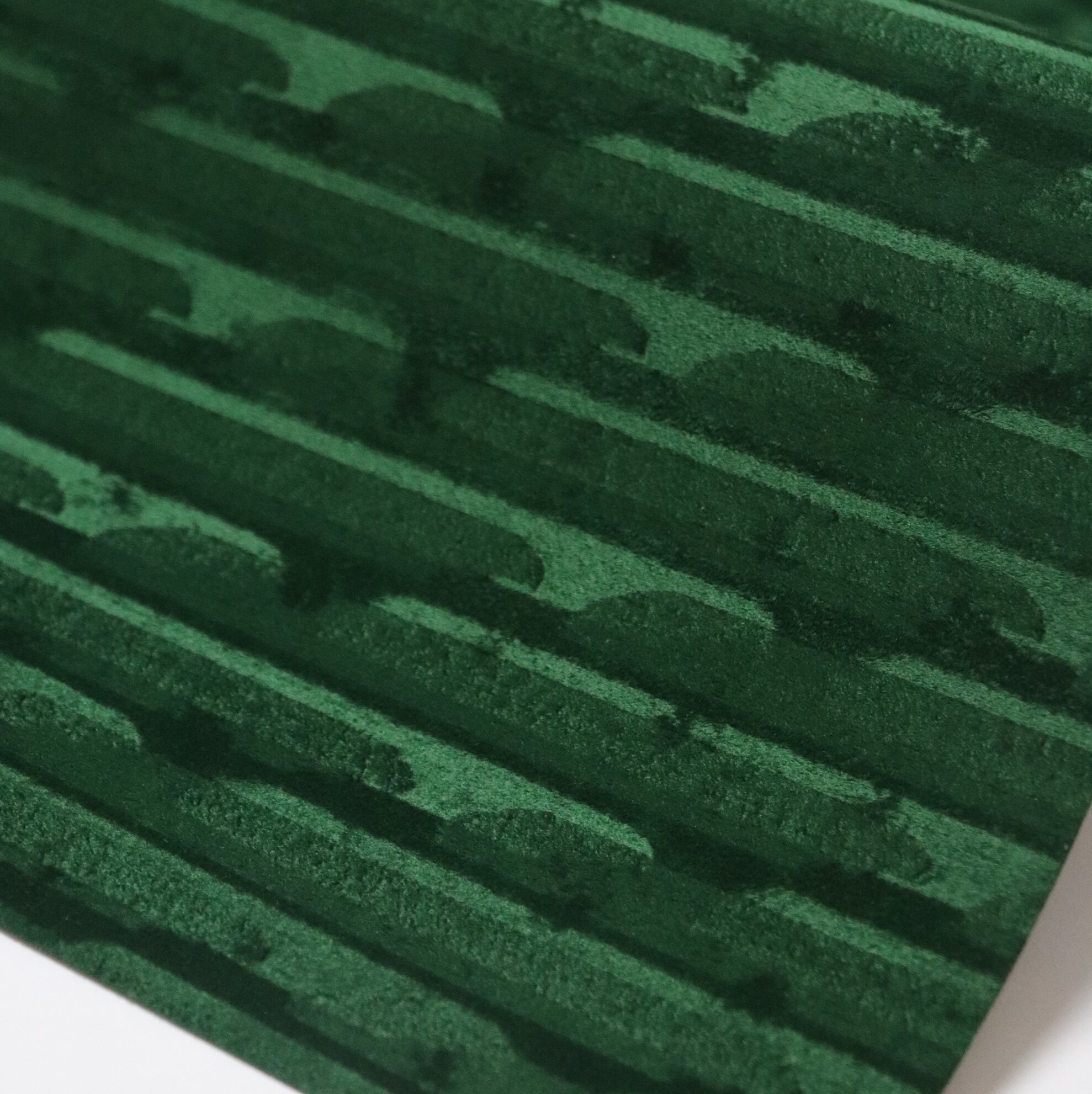
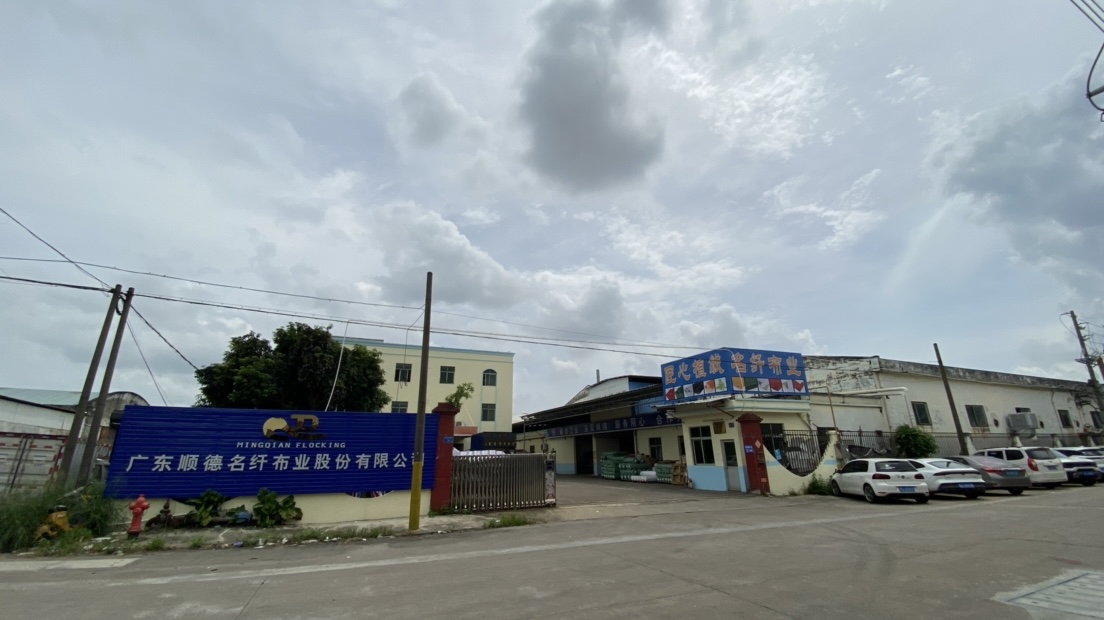
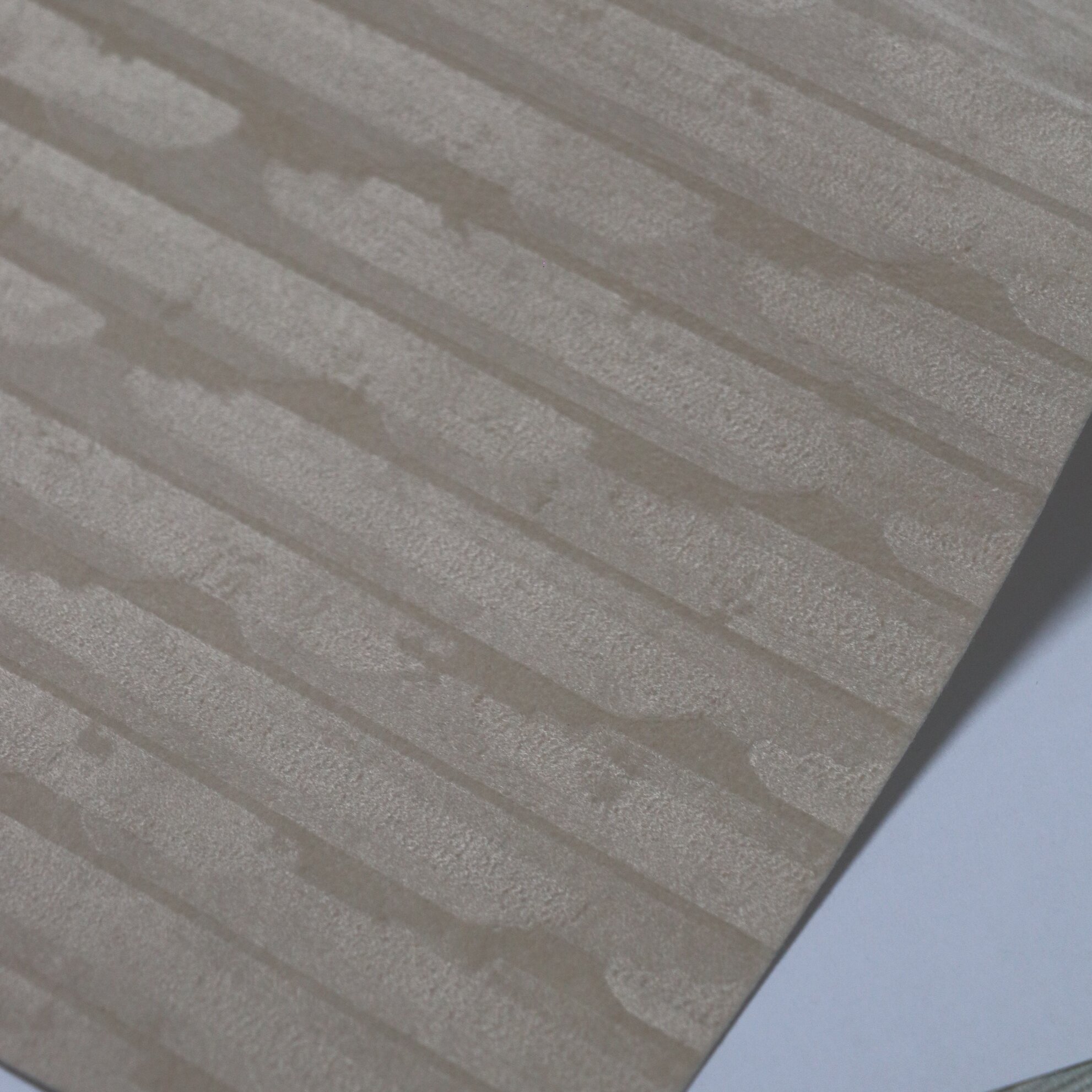
Electrostatic flocking involves vertically embedding short fibers into an adhesive-coated base fabric under a high-voltage electrostatic field of 30 to 50 kilovolts. To guarantee that the resulting velvet surface resists shedding and wear, a comprehensive four-stage quality control system is utilized across the vertically integrated production process of Guangdong Shunde Mingqian Flocking Co., Ltd..
Incoming raw material inspections form the first line of defense, testing all base fabrics, adhesives, and dyes before production. In-process monitoring maintains strict control over production parameters such as electrostatic field voltage, adhesive coating weight, and oven temperature. For instance, color difference is measured by spectrophotometer against Pantone standards at every 100 yards of production to maintain consistency.
Finished product testing verifies physical properties through standardized mechanical stress. The 3M tape 10-cycle peel test, compliant with the FAMA standard, measures pile adhesion to prevent fiber loss under tension. Martindale abrasion resistance testing evaluates the fabric's durability, running up to 100,000 cycles for functional fabrics and 500 cycles for standard packaging products with no shedding. For specialized uses like jewelry box linings, an anti-tarnish system controls free reactive sulfur below 5 ppm and maintains an aqueous extract pH of 5.5 to 7.5, verified by a silver coupon accelerated corrosion test.
Shedding risks are further mitigated during the drying and curing phase, where temperature-controlled ovens set the pile orientation and remove residual moisture. Large-scale brand applications, including the Dior Limited-Edition Perfume Gift Box, use these precise standards to achieve high tactile consistency and structural durability.
Data/Solution Comparison
The following table outlines the mechanical and chemical testing specifications across different functional categories of flocking fabrics, ensuring compatibility with international regulations such as REACH and RoHS 2.0.
| Application Scenario | Recommended Base Fabric | Abrasion Resistance Standard | Shedding / Adhesion Test | Key Chemical Compliance Limits |
|---|---|---|---|---|
| Jewelry Box Packaging | Spunlace / Silk | 500 cycles (No shedding) | 3M tape 10-cycle peel test (FAMA) | Reactive sulfur < 5 ppm, pH 5.5–7.5, Formaldehyde ≤ 75 ppm |
| Automotive Interiors | Nonwoven / Knitted | 100,000 cycles (No shedding) | 3M tape 10-cycle peel test (FAMA) | UL94 V-0 Flame Retardant, Low VOC, Halogen-free |
| Electronics Packaging | Nonwoven / PVC | 500 cycles (No shedding) | 3M tape 10-cycle peel test (FAMA) | RoHS 2.0 (Pass), ESD Protection (10⁶ to 10⁹ Ω) |
Frequently Asked Questions (FAQ)
How is the pile adhesion of electrostatic flocking fabric verified?
Pile adhesion is verified using a 3M tape 10-cycle peel test conducted in accordance with the FAMA standard. No fiber loss or shedding is permitted under this mechanical stress test.
What testing parameters prevent silver jewelry from tarnishing in flocking lined boxes?
Preventing silver tarnish requires restricting free reactive sulfur to below 5 ppm, maintaining an aqueous extract pH between 5.5 and 7.5, and conducting a silver coupon accelerated corrosion test. This prevents blackening and oxidation in enclosed jewelry box environments.
Are these flocking materials compliant with international environmental standards?
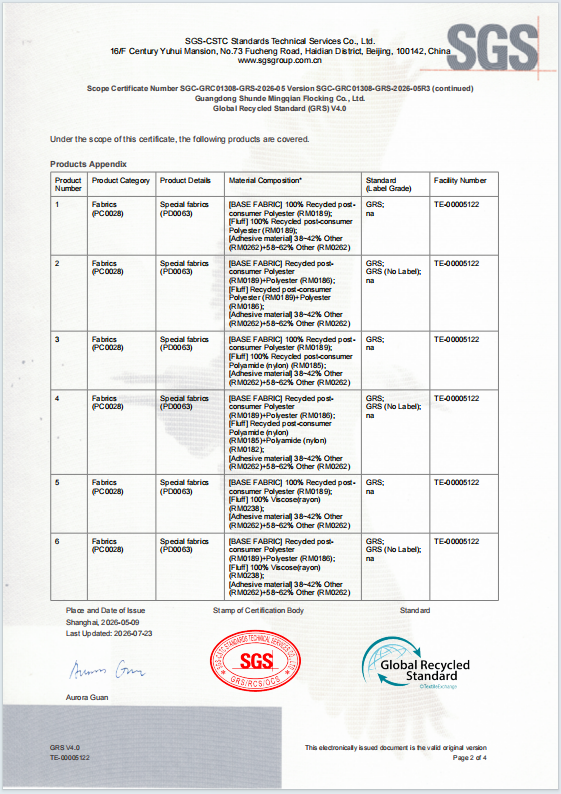
Yes. The materials undergo strict third-party chemical compliance testing by SGS, verifying full conformity to EU REACH (covering 253 SVHC substances), RoHS 2.0, and the EU Packaging and Packaging Waste Regulation (PPWR). Recycled options also carry GRS 4.0 certification.
Final Conclusion & Recommendations
To guarantee optimal physical performance, manufacturers must employ systematic testing protocols covering Martindale abrasion cycles, 3M tape adhesion, and chemical screenings. Selecting a vertically integrated supplier that manages base fabric preparation, in-house dyeing, electrostatic flocking, and post-processing ensures consistent physical and chemical properties. For customized industrial and packaging projects, the OEM/ODM business model offers customizable pile heights, specialized adhesive backings, and customized dimensions with standard delivery timelines of 14 days and a minimum order quantity of 1,000 yards. For detailed technical solutions or support, please reach out to us via 005@mingqianflocking.com.
About Us
Operating under the brand Mingqian, Guangdong Shunde Mingqian Flocking Co., Ltd. is a professional flocking fabric manufacturer established in 2008. The company operates a self-owned manufacturing facility covering over 12,000 square meters and employs more than 100 professionals. With 18 years of specialized focus on electrostatic flocking fabric research and development, the enterprise maintains a monthly production capacity of 3,000,000 yards. Mingqian holds ISO 9001:2015 and GRS 4.0 certifications, delivering premium, compliant materials to global markets.
Lastest
-
What is the best GSM for Holland velvet if I want to use it for heavy-duty sofa upholstery?
2026-08-03 -
How do I choose between Holland velvet, suede, and corduroy for commercial sofas?
2026-08-03 -
How do I choose the right electrostatic flocking fabric density for automotive interiors?
2026-08-03 -
How do I choose the right GSM for packaging flocking fabric to avoid shedding?
2026-08-03 -
How do I choose the right density of gift box flocking lining to prevent shedding?
2026-08-03
SUBSCRIBE
INQUIRY