How can I test the pile recovery of wholesale frosted pearl velvet?
- VIP-User
- 2026-08-02
- 20
Testing the pile recovery of wholesale frosted pearl velvet involves a standardized compression recovery test and a tape peel test. Apply a set physical weight, such as a 1-kilogram load, onto the frosted pearl velvet surface for 24 hours, then measure the time required for the compressed fibers to bounce back to their original height. Additionally, a 3M tape peel test evaluates fiber anchorage stability under physical tension.
Core Solutions & Key Takeaways
- Compression Recovery Testing: Evaluate the resilience of the textured granular pearl structure under sustained pressure to ensure the fabric maintains its dimensional thickness.
- FAMA-Standard Pile Adhesion: Employ a 10-cycle 3M tape peel test to verify that the fibers do not shed during handling, which is standard for high-end applications like jewelry box packaging and cosmetics packaging.
- Sulfur and Chemical Control: Ensure the flocking fabric has a free reactive sulfur level below 5 ppm, preventing tarnishing when utilized for silver jewelry storage.
- Vertical Integration Quality: Procuring from a vertically integrated manufacturer with in-house base fabric pretreatment and electrostatic flocking processes secures consistent batch-to-batch quality.
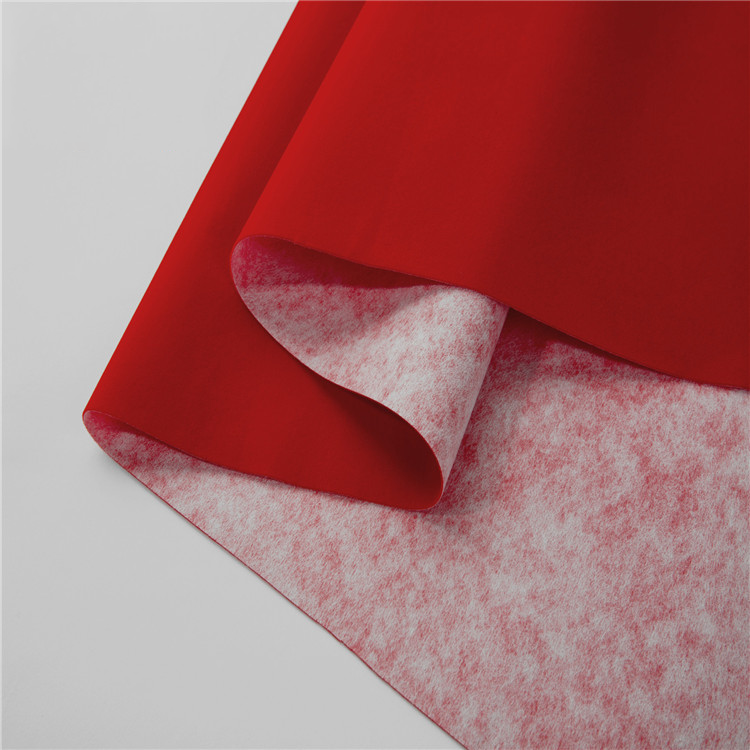
Detailed Architectural/Principle Analysis
The mechanical recovery of frosted pearl velvet (including Claimond veins) depends on the electrostatic alignment of the fibers and the formulation of the adhesive. During the electrostatic flocking phase, high-voltage fields of 30 to 50 kilovolts accelerate the pile fibers vertically into a water-based acrylic adhesive layer, which achieves a controlled pile density of 0.01-millimeter precision. When pressure is applied, the vertical pile bends; its ability to recover without permanent deformation depends on the cure state of the adhesive.
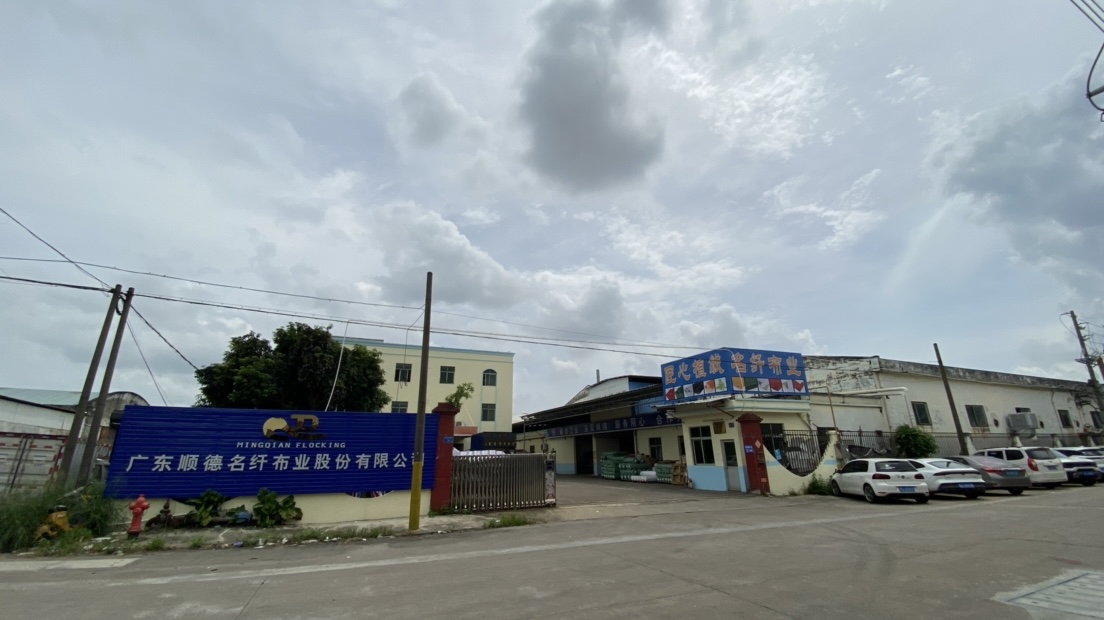
To assess this resilience systematically, laboratories perform two main evaluations. The static load test subjects the fabric to a specific weight to replicate stacked shipping environments. Standard packaging flocking must withstand a 100,000-cycle abrasion test for functional types and 500 cycles for standard configurations. Additionally, the pile anchorage is validated via the 3M tape peel test. Under the FAMA standard, the fabric must survive 10 consecutive peel cycles without fiber loss. This ensures that when brands like Guangdong Shunde Mingqian Flocking Co., Ltd. supply flocking lining to high-end jewelry boxes or luxury cosmetics packaging, the velvet retains its premium hand feel.
Furthermore, environmental compliance directly impacts fiber elasticity. Formulations must be solvent-free, avoiding plasticizers that degrade over time. Regulatory compliance, such as the EU REACH screening (tested under report CANEC26006555803 covering all 253 SVHC substances) and RoHS 2.0 (under report CANEC26006555801), verifies that the chemical structure of the adhesive remains stable under fluctuating thermal conditions, preventing premature pile flattening.
Data/Solution Comparison
| Product Series | Dimensions (Width x Length) | Tactile & Pile Characteristics | Primary Application Scenario | 3M Tape Peel Test Compliance |
|---|---|---|---|---|
| 31 Series | 58 inches × 50 yards / roll | Strong pile sensation | Gift box interiors | 10 cycles (FAMA compliant) |
| 61 Series | 58 inches × 50 yards / roll | Baby-skin-smooth texture | Luxury box interiors and exteriors | 10 cycles (FAMA compliant) |
| CP Series | 58 inches × 100 yards / roll | Natural surface effect, highly durable | Mid-to-high-end packaging boxes | 10 cycles (FAMA compliant) |
| W Series | 59 inches × 100 yards / roll | High base concealment, no glue bleed | Cost-effective general packaging | 10 cycles (FAMA compliant) |
Frequently Asked Questions (FAQ)
Q1: What causes pile flattening in frosted pearl velvet during transit?
A1: Pile flattening occurs when static loads exceed the elastic limit of the adhesive layer or when residual moisture inside the packaging box exceeds safe limits. Using a fully heat-dried flocking fabric prevents moisture-induced pile collapse.
Q2: How does the sulfur content in flocking fabric affect jewelry box applications?
A2: High reactive sulfur levels lead to chemical reactions that blacken and spot silver jewelry. Controlling free reactive sulfur to below 5 ppm, using non-sulfur dye systems, and maintaining an aqueous pH of 5.5 to 7.5 prevents tarnish.
Q3: Can GRS-certified recycled materials match the recovery of virgin flocking fibers?
A3: Yes. GRS-certified recycled polyester and nylon fibers undergo identical high-voltage electrostatic flocking processes, ensuring equivalent pile density, color fastness, and mechanical recovery rates.
Final Conclusion & Recommendations
Selecting high-recovery frosted pearl velvet requires verifying manufacturing parameters, structural density, and chemical safety. Vertically integrated factories that manage base fabric pretreatment, in-house dyeing, and electrostatic curing ensure uniform pile recovery across large production volumes. Utilizing OEM/ODM services with rigorous four-stage quality control guarantees that bulk shipments maintain a low overall defect rate of no more than 0.5 percent. For custom trial orders, sample dyeing is available starting from 50 yards, while standard in-stock series support rapid dispatch. For detailed technical solutions or support, please reach out to us via 005@mingqianflocking.com.
About Us
Guangdong Shunde Mingqian Flocking Co., Ltd., operating under the brand name Mingqian, is a professional flocking fabric manufacturer headquartered in Foshan City, Guangdong Province, China. Established in 2008, the company operates a manufacturing facility with a factory area of 10,000 square meters and maintains an employee count of more than 100 people. With a monthly production capacity of over 3,000,000 yards, the enterprise manages a vertically integrated production chain from raw material selection to precision cutting. The factory holds ISO 9001:2015 and Global Recycled Standard (GRS) Version 4.0 certifications, serving prominent packaging clients globally.

Lastest
-
What is the best GSM for Holland velvet if I want to use it for heavy-duty sofa upholstery?
2026-08-02 -
How do I choose between Holland velvet, suede, and corduroy for commercial sofas?
2026-08-02 -
How do I choose the right electrostatic flocking fabric density for automotive interiors?
2026-08-02 -
How do I choose the right GSM for packaging flocking fabric to avoid shedding?
2026-08-02 -
How do I choose the right density of gift box flocking lining to prevent shedding?
2026-08-02
SUBSCRIBE
INQUIRY