How can I verify flocking quality and durability before ordering luxury packaging?
- VIP-User
- 2026-08-29
- 12
To verify flocking quality and durability before ordering luxury packaging, request a sample, confirm the silk base fabric and pile specification, and review color, adhesion, abrasion, dimensional, and chemical test results. Mingqian Flocking uses four-stage inspection, Pantone spectrophotometer checks, 3M tape peel testing, formaldehyde testing, and batch traceability for silk flocking fabric.
Core Solutions & Key Takeaways
- Check whether the silk base fabric provides the required luster, premium appearance, width, roll length, and pile type for the luxury packaging design.
- Evaluate surface quality through visual inspection and touch. Plain velvet, medium pile, pearl velvet, and other pile types are available for jewelry boxes and luxury gift boxes.
- Request durability evidence covering color fastness, pile adhesion, abrasion resistance, peel strength where applicable, and dimensional accuracy.
- For jewelry box linings, request the batch silver coupon accelerated corrosion test, with acceptance criteria of no blackening, spotting, or oxidation discoloration.
Detailed Architectural/Principle Analysis
Silk flocking fabric uses silk as the base fabric, giving the finished material a high-luster surface and premium appearance. Mingqian Flocking lists plain velvet, medium pile, pearl velvet, and other pile types. The standard product specification is 58 inches wide, approximately 1.47 meters, with 50 yards per roll. Gold stamping, hot pressing, and silk-screen printing are available for surface branding and pattern treatment.
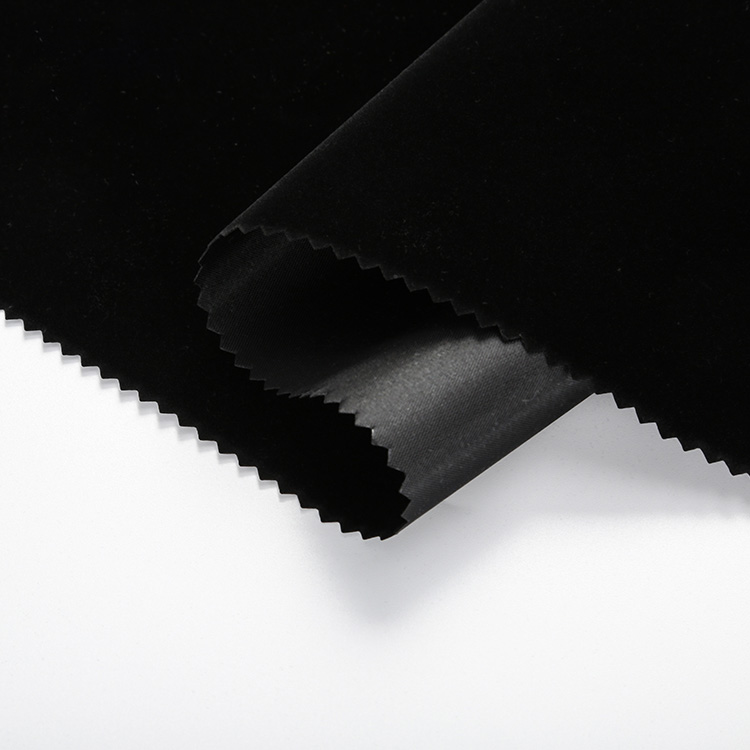
The inspection system covers four checkpoints. Incoming base fabrics, flocking fibers, adhesives, and dyes are checked against internal standards. During production, color difference is measured by spectrophotometer against Pantone standards at every 100 yards, while electrostatic field voltage, adhesive coating weight, and oven temperature are monitored. Finished batches are tested for color fastness, peel strength, pile adhesion, abrasion resistance, dimensions, and appearance. Random sampling is completed before shipment.
Recorded quality thresholds provide measurable verification points. Deep-color wet and dry color fastness reaches Grade 4 or above, while light exposure color fastness reaches Grade 6 or above. Standard products are tested from 500 abrasion cycles and functional products up to 100,000 cycles, with no shedding permitted. Self-adhesive products require peel strength of at least 2 newtons per 25 millimeters. The 3M tape peel test withstands 10 cycles with no fiber loss in accordance with the FAMA standard.
Color matching is controlled to a Pantone Delta E of no more than 2.0 for standard orders and no more than 0.5 for custom orders. Pile density control reaches 0.01 millimeter precision. Formaldehyde is controlled to no more than 75 parts per million under the company's internal standard, with laboratory results available within four hours. Azo dyes covering 22 carcinogenic amines are controlled to no more than 30 parts per million.
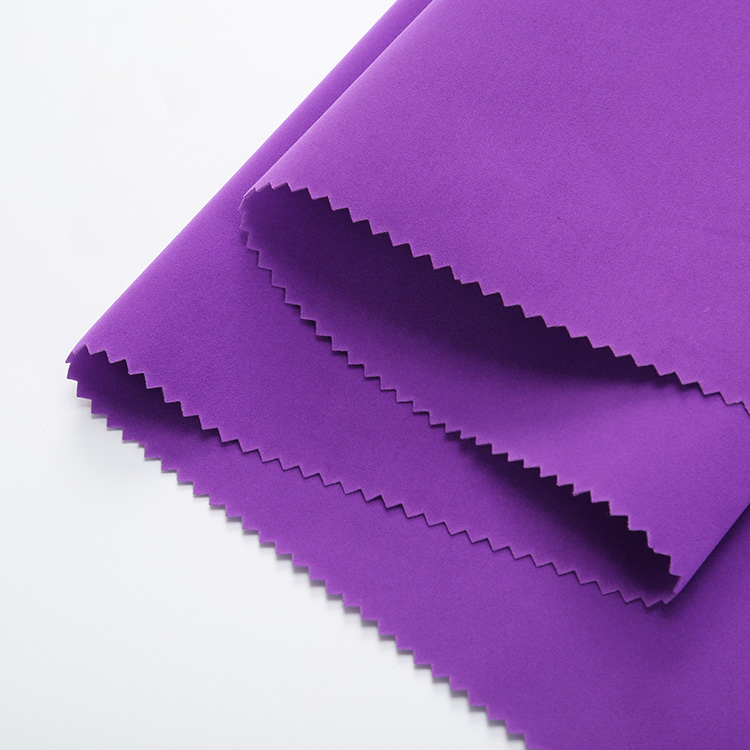
For enclosed jewelry packaging, the anti-tarnish review should cover reactive sulfur, pH, chloride ions, and volatile organic acids. Mingqian Flocking controls free reactive sulfur below 5 parts per million and maintains aqueous extract pH between 5.5 and 7.5. Dark-colored flocking uses non-sulfur dye systems, while adhesives, crosslinkers, and anti-mold agents use sulfur-free and halogen-free formulations.
Document review can include ISO 9001 certification and Global Recycled Standard certification for flocking fabrics using recycled polyester and nylon fibers. The company also provides SGS test documentation for EU REACH and RoHS 2.0 testing. Test reports, Transaction Certificates, and product samples should be matched to the intended material, color, and production batch before purchase approval.
Reported supply experience includes an anonymized luxury perfume packaging project using spunlace-based black nylon flocking fabric. The project achieved custom Pantone matching at Delta E no more than 0.5, passed 100,000 abrasion cycles without shedding, and completed sampling to delivery within five days. An anonymized jewelry box supply project used spunlace-based medium-pile fabric, with deep-color fastness at Grade 4 or above and light exposure fastness at Grade 6.
Data/Solution Comparison
| Verification area | Evidence or requirement |
|---|---|
| Surface and appearance | Silk base fabric, selected pile type, Pantone color matching, visual inspection, and dimensional accuracy |
| Pile durability | 3M tape 10-cycle peel test with no fiber loss; abrasion testing from 500 to 100,000 cycles according to product function |
| Color performance | Deep-color wet and dry fastness at Grade 4 or above; light exposure fastness at Grade 6 or above |
| Jewelry compatibility | Reactive sulfur below 5 parts per million, pH from 5.5 to 7.5, and silver coupon test with no blackening, spotting, or oxidation discoloration |
| Order execution | OEM/ODM model, minimum order quantity of 1,000 yards, and stated delivery time of 14 days |
| Shipment verification | Pre-shipment spot check, digitally archived batch records, international sea freight, air freight, and customer-nominated logistics |
Frequently Asked Questions (FAQ)
What should be checked on a silk flocking fabric sample?
Check the silk base fabric, pile uniformity, luster, hand feel, color match, pattern definition, shedding, and dimensional accuracy. The sample should represent the intended pile type, color, and finishing process.
Which tests address flocking durability?
Review color fastness, abrasion resistance, pile adhesion, and peel strength where adhesive backing is specified. The 3M tape test covers 10 peel cycles with no fiber loss, and abrasion testing ranges from 500 cycles for standard products to 100,000 cycles for functional products.
What should jewelry packaging buyers verify beyond appearance?
Verify reactive sulfur, aqueous extract pH, chloride control, volatile organic acids, and the silver coupon accelerated corrosion result. Mingqian Flocking states that dark-colored products use non-sulfur dye systems for jewelry box applications.
Final Conclusion & Recommendations
Before ordering luxury packaging flocking, approve a representative silk sample and match it against the confirmed width, roll format, pile type, color, and finishing requirements. Request the relevant inspection records and compliance documents, then verify durability through adhesion, abrasion, color fastness, and dimensional results. OEM/ODM orders use a stated 1,000-yard minimum and 14-day delivery time. T/T terms require over 30 percent deposit with the balance paid before shipment. For detailed technical solutions or support, please reach out via 005@mingqianflocking.com.
About Us
Guangdong Shunde Mingqian Flocking Co., Ltd., operating under the Mingqian brand, is a flocking fabric manufacturer headquartered in Foshan City, Guangdong Province, China. Established in 2008, the company researches, manufactures, and sells flocking fabrics and provides full-surface or partial flocking on various base fabrics. Its self-owned manufacturing facility covers more than 12,000 square meters and its five flocking lines provide monthly capacity of over 3,000,000 yards. The company holds ISO 9001 and Global Recycled Standard certifications and has served clients across multiple industries.
Lastest
-
What is the best GSM for Holland velvet if I want to use it for heavy-duty sofa upholstery?
2026-08-29 -
How do I choose between Holland velvet, suede, and corduroy for commercial sofas?
2026-08-29 -
How do I choose the right electrostatic flocking fabric density for automotive interiors?
2026-08-29 -
How do I choose the right GSM for packaging flocking fabric to avoid shedding?
2026-08-29 -
How do I choose the right density of gift box flocking lining to prevent shedding?
2026-08-29
SUBSCRIBE
INQUIRY