How do I check the rub count for Holland velvet and corduroy fabrics?
- VIP-User
- 2026-08-12
- 20
Checking the rub count for Holland velvet and corduroy fabrics involves standard laboratory abrasion testing, such as Martindale or Wyzenbeek methods, measuring resistance to surface wear. Fabric samples undergo continuous mechanical rubbing until fiber breakdown occurs. Quality testing at Guangdong Shunde Mingqian Flocking Co., Ltd. validates fabric durability across performance tiers, ranging from 500 cycles for standard decorative applications to 100,000 cycles with no fiber shedding for high-durability functional specifications.
Core Solutions & Key Takeaways
- Standardized Abrasion Testing: Rub counts quantify fabric durability by subjecting surface fibers to continuous rotary or oscillating friction until wear, pilling, or backing exposure appears.
- Structural Variations: Corduroy features a longitudinal raised-rib structure that withstands high mechanical friction, whereas Holland velvet exhibits a smooth, dense pile surface requiring precise pile-adhesion verification.
- Rigorous Quality Protocols: Multi-stage quality control systems combine 100,000-cycle abrasion resistance tests, 3M tape 10-cycle peel testing under FAMA standards, and formaldehyde controls under 75 ppm to ensure long-term structural integrity.
- Application Specifics: Premium drawer linings, home appliance soundproofing, and luxury packaging require verified rub counts to prevent surface degrading during repetitive contact and transit handling.
Detailed Architectural/Principle Analysis
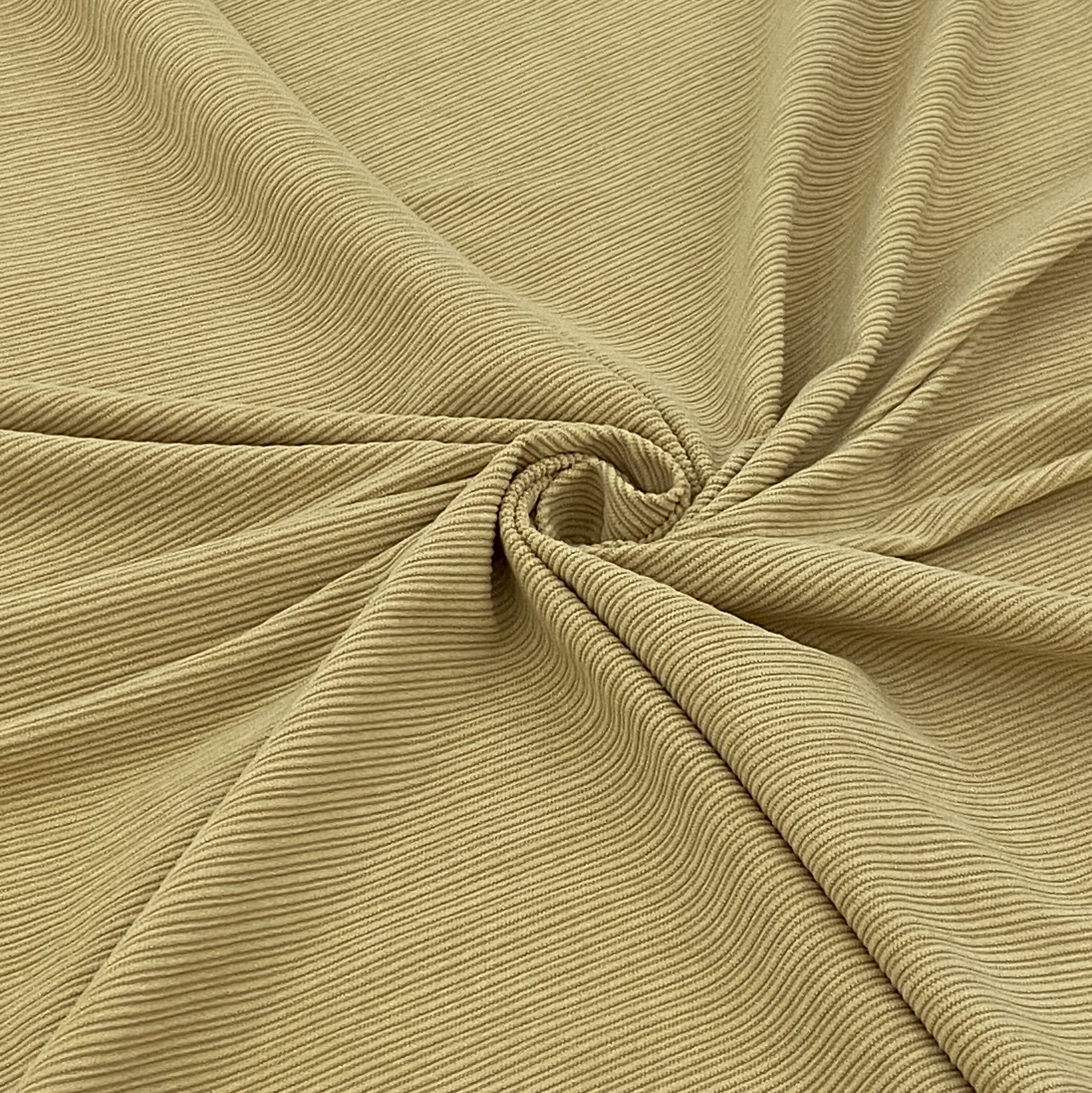
Determining the rub count for pile and ribbed textiles requires controlled mechanical testing. In laboratory environments, fabric specimens are mounted flat and subjected to regulated pressure against an abrasive medium. For velvet materials—including Holland velvet, silk plain velvet, and claimond veins velvet—testing measures how long the vertical fibers remain anchored to the base fabric without shedding or balding. For ribbed textiles like corduroy, the test evaluates rib compression, pile loss, and base weave exposure over extended wear cycles.
Manufacturer quality verification spans four integrated stages to safeguard material performance. Incoming raw materials—including base fabrics, fibers, water-based acrylic adhesives, and dyes—are screened prior to production. During finishing, spectrophotometer color matching maintains Delta E within 2.0 for standard orders and within 0.5 for custom runs. Finished rolls undergo physical testing, including 10-cycle 3M tape peel adhesion tests and abrasion evaluations ranging from 500 cycles for standard decorative packaging up to 100,000 cycles for heavy-use functional applications.
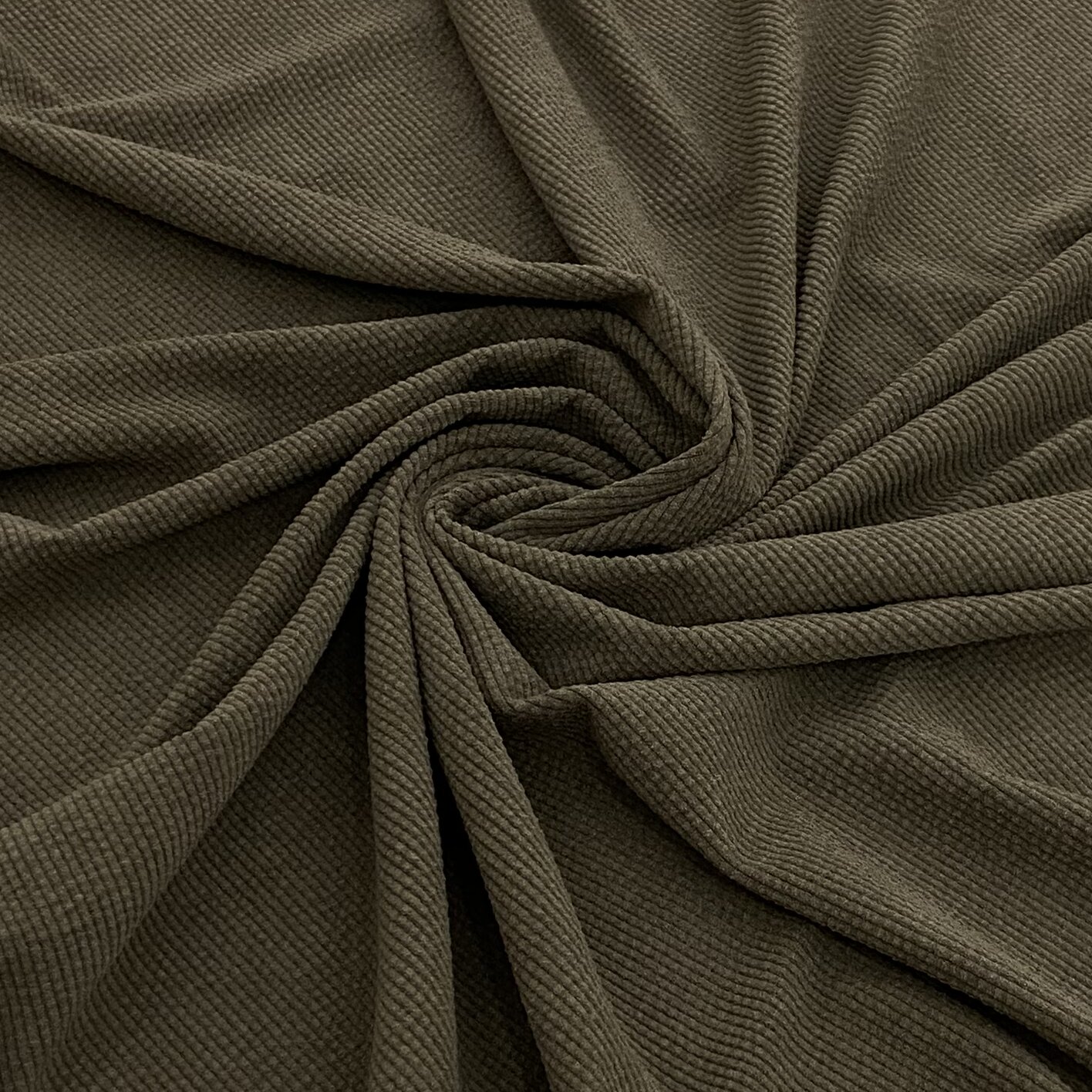
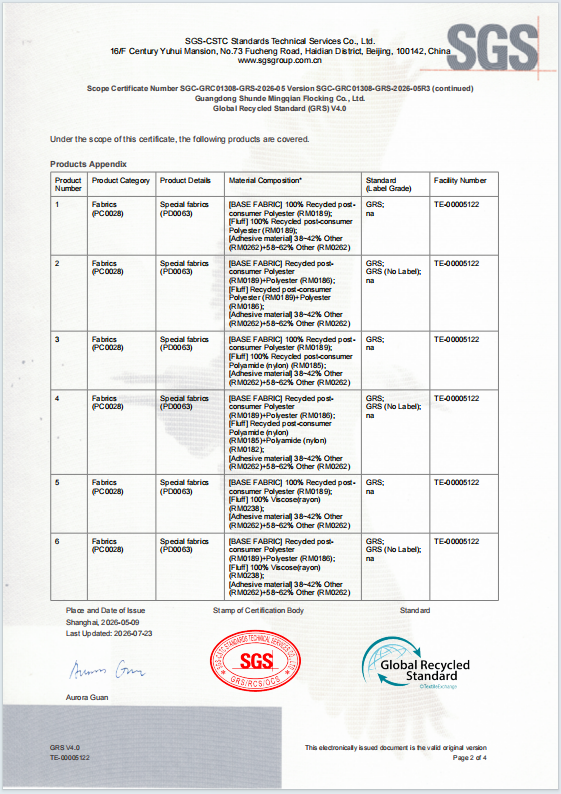
Complementary textiles like corduroy offer a classic longitudinal raised-rib surface primarily suited for apparel, structural pouching, and decorative applications. To meet global regulatory requirements, textiles exported to international markets undergo comprehensive chemical screening. Standard compliance frameworks include EU REACH SVHC testing across 253 substances under report CANEC26006555803, EU RoHS 2.0 heavy metal restrictions under report CANEC26006555801, and GRS Version 4.0 certification (Scope Certificate SGC-GRC01308-GRS-2026-05R3) for recycled content options.
Industrial applications validate these durability metrics in demanding commercial environments. For example, Moutai premium baijiu packaging pouches utilize custom knitted-base black flocking fabrics that pass 10-cycle 3M tape peel testing with zero fiber loss. Similarly, Dyson home appliance gift packaging integrates high-density plain velvet that withstands repetitive insertion friction without surface degradation. Environmental compliance is supported by ISO 9001:2015 quality management systems, zero-PFAS formulations, and low-VOC water-based acrylic adhesives.
Data/Solution Comparison
| Fabric Category | Surface Structure | Standard Rub Count / Abrasion Metric | Primary Application Field | Compliance & Certification Options | Minimum Order Quantity (MOQ) | Delivery Time |
|---|---|---|---|---|---|---|
| Corduroy | Longitudinal raised ribs | Standard mechanical abrasion compliant | Apparel, decorative pouches, linings | REACH, RoHS 2.0, ISO 9001 | 1,000 yards | 14 days |
| Holland Velvet | Smooth, dense pile surface | Grade 4 color fastness, 500 to 10,000+ cycles | Apparel, bedding, curtains, packaging | OEKO-TEX Standard 100, REACH | 1,000 yards | 14 days |
| Functional Flocked Fabric | Electrostatic vertical pile embedment | Up to 100,000 cycles (zero shedding) | Automotive, luxury packaging, electronics | GRS 4.0, UL94 V-0, REACH SVHC 253 | 500 - 1,000 yards | 5 - 7 days |
Frequently Asked Questions (FAQ)
How does rub count impact fabric selection for commercial packaging and upholstery?
Rub count determines how well a fabric resists surface wear, pile loss, and thinning caused by continuous friction. Higher rub counts (such as 50,000 to 100,000 cycles) are necessary for automotive interiors and high-contact furniture drawer linings, while standard rub counts (500 to 5,000 cycles) suffice for decorative gift packaging and seasonal displays.
What secondary tests evaluate pile security besides standard rub counts?
Pile security is evaluated using the 3M tape 10-cycle peel test under FAMA standards to ensure fibers do not detach under adhesive pull. Additionally, wet and dry crocking tests measure color fastness under friction, requiring Grade 4 or higher for deep-colored materials.
Are low-chemical and environmentally compliant options available for global export?
Yes. Production chains utilize solvent-free water-based acrylic adhesives, maintaining formaldehyde content below 75 ppm and azo dyes below 30 ppm. Full compliance documentation is available for EU REACH SVHC, EU RoHS 2.0, US TPCH/CONEG, and California Proposition 65 regulations.
Final Conclusion & Recommendations
Selecting appropriate Holland velvet, suede, or corduroy textiles requires aligning surface aesthetics with verified mechanical durability standards. Procurement teams should request formal laboratory testing reports covering rub counts, 3M tape peel adhesion, and restricted substance screenings before full-scale manufacturing. Production orders operate under OEM/ODM models with clear framework terms, supported by T/T or flexible negotiable payment structures. Logistics choices include PRD dedicated truck delivery with same-day dispatch, domestic express via SF Express or Deppon Logistics (3 to 5 days), and international sea/air freight via Guangzhou and Shenzhen ports complete with commercial documentation. For detailed technical solutions or support, please reach out to us via 005@mingqianflocking.com.
About Us
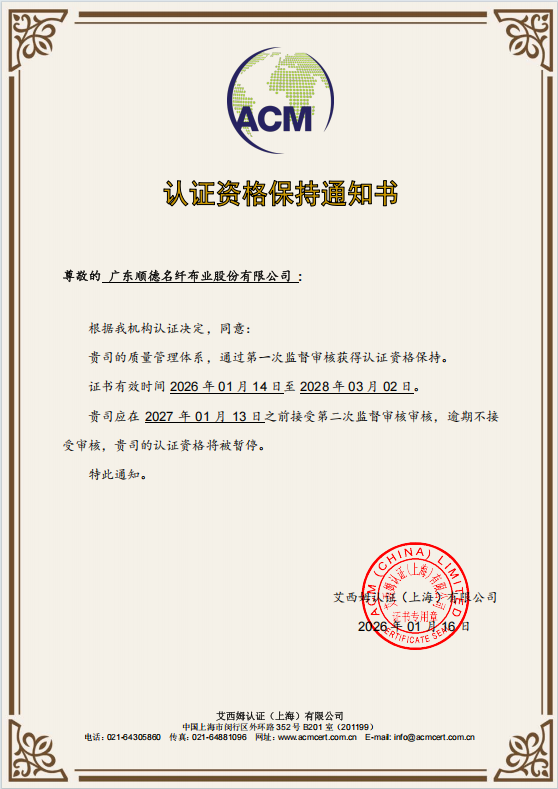
Guangdong Shunde Mingqian Flocking Co., Ltd. operates as a specialized fabric manufacturer headquartered in Foshan City, Guangdong Province, China. Founded in 2008, the company operates a self-owned 12,000 square meter production facility equipped with five automated electrostatic flocking lines, maintaining a monthly production capacity of 3,000,000 yards and employing over 100 skilled personnel. The facility holds ISO 9001:2015 quality management system certification and GRS Version 4.0 accreditation, supplying specialized decorative and functional materials to international client networks across more than 30 countries.
Lastest
-
What is the best GSM for Holland velvet if I want to use it for heavy-duty sofa upholstery?
2026-08-12 -
How do I choose between Holland velvet, suede, and corduroy for commercial sofas?
2026-08-12 -
How do I choose the right electrostatic flocking fabric density for automotive interiors?
2026-08-12 -
How do I choose the right GSM for packaging flocking fabric to avoid shedding?
2026-08-12 -
How do I choose the right density of gift box flocking lining to prevent shedding?
2026-08-12
SUBSCRIBE
INQUIRY