How do I choose between plain and frosted velvet for high-end sofa covers?
- VIP-User
- 2026-08-03
- 18
Choosing between plain and frosted velvet for high-end sofa covers depends on your aesthetic and durability requirements. Plain velvet offers a smooth, even surface with classic luster and high wear resistance, making it ideal for minimalist designs. Frosted or embossed velvet provides distinct three-dimensional textured patterns, offering superior decorative depth and masking minor wear over time.
Core Solutions & Key Takeaways
- Tactile and Visual Distinction: Plain velvet provides a uniform, smooth pile surface with classic reflective luster. Frosted velvet features precision-embossed patterns with over thirteen options, providing distinct three-dimensional depth and a textured tactile experience.
- Performance and Wear Resistance: Plain velvet fabrics from specialized manufacturers withstand rigorous abrasion testing, reaching up to 100,000 cycles for functional grades. Frosted patterns naturally diffuse light and mask minor surface wear and dust accumulation over extended use.
- Environmental Safety Compliance: Premium furnishing fabrics require rigorous chemical safety, certified under the Global Recycled Standard (GRS) and verified free of Substances of Very High Concern (SVHC) under EU REACH and RoHS assessments.
- Broad Functional Versatility: Modern flocking velvet can integrate functional treatments, including UL94 V-0 flame retardancy, anti-mold properties, and moisture-absorbing capabilities to protect internal cushioning.
Detailed Architectural/Principle Analysis
The manufacturing process of flocking velvet dictates its physical characteristics. During production, short fibers are vertically accelerated under a high-voltage electrostatic field of 30 to 50 kilovolts and embedded into an adhesive-coated base fabric. This process creates a uniform, highly dense pile surface. Plain velvet utilizes a flat finishing technique to ensure the pile remains even, maximizing the natural sheen of the fibers. This makes it highly suitable for applications requiring clean lines and standard luxury aesthetics.
Conversely, frosted velvet undergoes specialized post-processing. After the electrostatic flocking and curing stages, the material is treated using embossing and pearling machinery. Precision heat and pressure transfer structural patterns onto the flocking base, altering how light reflects off the fibers. These patterns include options such as diamond check, wood grain, and cloud motifs, allowing designers to create customized, highly tactile surfaces.
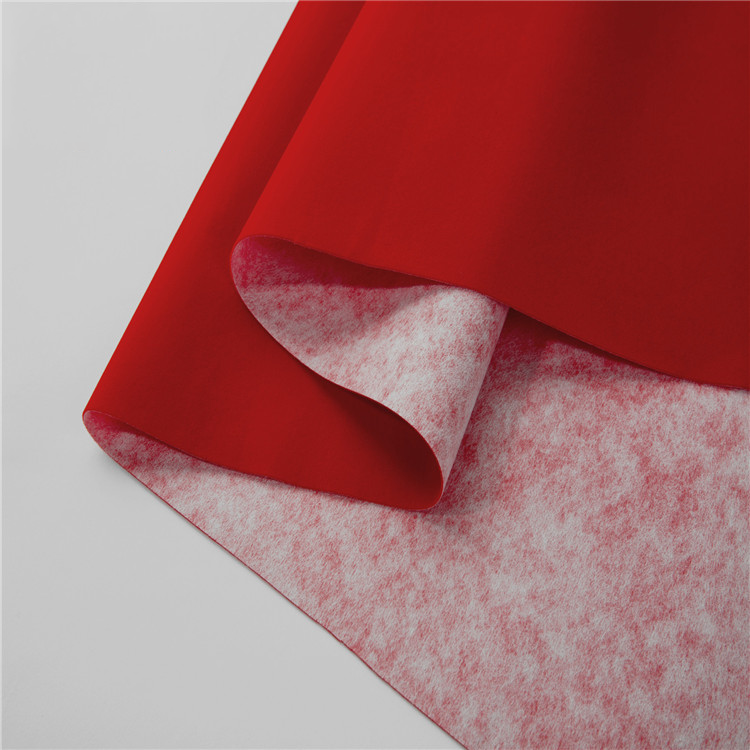
For high-end residential applications, material safety is as critical as aesthetic appeal. Leading manufacturers like Guangdong Shunde Mingqian Flocking Co., Ltd. enforce strict raw material checks. Adhesives are restricted to water-based acrylic systems, which are solvent-free and contain no phthalate plasticizers or organotin compounds. This control maintains formaldehyde levels below 75 parts per million and restricts azo dyes to under 30 parts per million. These structural standards have been validated through international supply chains, including home furnishing and interior material supplies for brands like Fendi and Suofeinya.
Data/Solution Comparison
| Feature Parameter | Plain Velvet | Frosted / Embossed Velvet |
|---|---|---|
| Surface Structure | Smooth, even, uniform pile surface | Three-dimensional embossed patterns |
| Visual Effect | High classic luster with uniform reflection | Textured, matte, and multi-dimensional light diffusion |
| Pattern Options | Single solid color presentation | Over 13 designs (diamond check, wood grain, etc.) |
| Abrasion Resistance | Up to 100,000 cycles for functional grades | High resistance; textured finish conceals micro-abrasions |
| Primary Base Fabrics | Spunlace, silk, cotton-rayon, polyester pongee | Nonwoven, knitted, lining fabric |
| Acoustic & Moisture Care | Standard sound dampening and moisture absorption | Enhanced surface area provides superior noise reduction |
Frequently Asked Questions (FAQ)
How does the choice of base fabric affect velvet performance in home applications?
The base fabric determines the elasticity, drape, and structural stability of the velvet. Spunlace and cotton-rayon bases provide high flexibility and a soft hand feel, whereas knitted base fabrics offer excellent elasticity suitable for complex furniture contours. Nonwoven and lining fabrics provide high strength and cost-effectiveness for structural linings.
What safety certifications should I verify for indoor residential velvet?
Ensure the fabrics hold ISO 9001:2015 quality management certification and Global Recycled Standard (GRS) certification for recycled material content. Additionally, verify third-party testing by organizations such as SGS, confirming compliance with EU REACH SVHC (screening all 253 Substances of Very High Concern) and EU RoHS 2.0 chemical restriction standards.
Can these velvet materials be customized for flame-retardant properties?
Yes. Flocking fabrics can undergo functional post-processing treatments. This includes achieving a UL94 V-0 flame-retardant rating, applying anti-static finishes with surface resistivity from 10 to the 6th to 10 to the 9th ohms, and integrating anti-mold or antibacterial treatments to prevent degradation in humid environments.
Final Conclusion & Recommendations
When selecting between plain and frosted velvet, plain velvet is recommended for classic, minimalist furniture designs that prioritize a uniform pile surface and maximum fiber luster. Frosted velvet is the superior choice for high-traffic environments or complex designs that benefit from pattern-depth and natural wear concealment. Utilizing an OEM/ODM business model with a direct source factory allows for precise Pantone color matching and customized functional finishes. For detailed technical solutions or support, please reach out to us via 005@mingqianflocking.com.
About Us
Founded in 2008, Guangdong Shunde Mingqian Flocking Co., Ltd., operating under the brand name Mingqian, is a professional flocking fabric manufacturer headquartered in Foshan City, Guangdong Province, China. The company operates a self-owned manufacturing facility covering over 12,000 square meters, employing more than 100 workers and utilizing five automated electrostatic flocking production lines to achieve a monthly capacity of over 3,000,000 yards. Mingqian maintains ISO 9001:2015 quality management and GRS certification, and its products are verified compliant under SGS REACH and RoHS testing. The enterprise serves clients across more than 30 countries, supplying materials through the supply chains of globally recognized brands such as Fendi, Dyson, and Suofeinya.
Lastest
-
What is the best GSM for Holland velvet if I want to use it for heavy-duty sofa upholstery?
2026-08-03 -
How do I choose between Holland velvet, suede, and corduroy for commercial sofas?
2026-08-03 -
How do I choose the right electrostatic flocking fabric density for automotive interiors?
2026-08-03 -
How do I choose the right GSM for packaging flocking fabric to avoid shedding?
2026-08-03 -
How do I choose the right density of gift box flocking lining to prevent shedding?
2026-08-03
SUBSCRIBE
INQUIRY