How do I choose between plain frosted velvet and long pile velvet for high-end sofa covers?
- VIP-User
- 2026-08-07
- 19
Choosing between plain frosted velvet and long pile velvet depends on structural density, pile height, and tactile requirements. Plain frosted velvet offers a smooth, even surface with clear pattern definition and high abrasion resistance, while long pile velvet delivers a rich three-dimensional fiber depth and expressive color layering for enhanced visual warmth.
Core Solutions & Key Takeaways
- Surface Structure & Aesthetics: Plain frosted velvet features a compact, uniform pile surface with high luster and crisp pattern retention, whereas long pile velvet utilizes extended fiber lengths to produce a pronounced three-dimensional texture and rich color depth.
- Substrate Versatility: Both materials integrate with multiple base fabric constructions, including spunlace, knitted, cotton-rayon, silk, nonwoven, and PVC backings, tailoring flexibility, breathability, or mechanical strength.
- Durability Metrics: High-density flocking withstands up to 100,000 abrasion cycles for functional specifications and satisfies the 3M tape 10-cycle peel test under FAMA standards without fiber loss.
- Post-Processing Integration: Plain velvet surfaces excel in secondary processing operations such as gold stamping, silk-screen printing, hot pressing, paper mounting, and precision die-cutting with tolerances within ±0.1 mm.
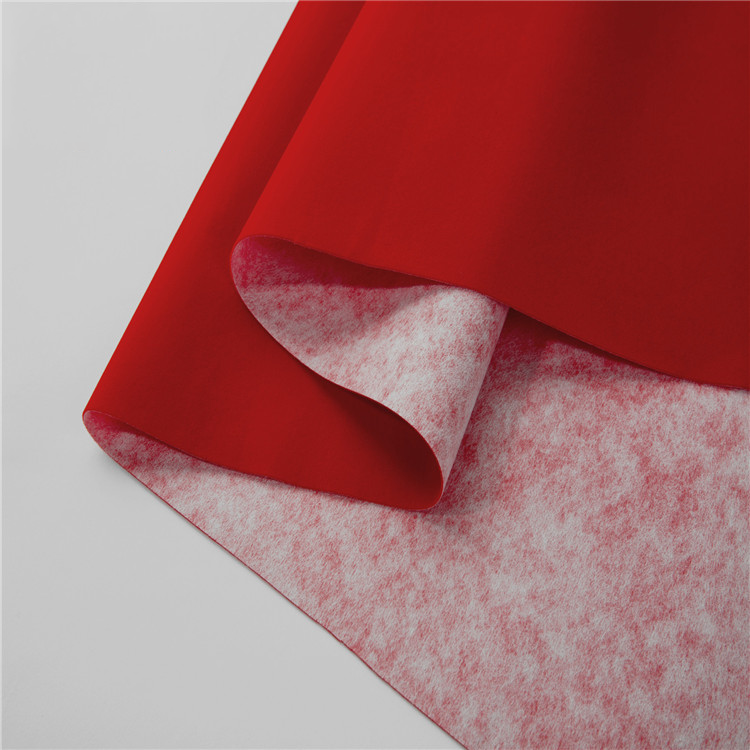
Detailed Architectural & Technical Analysis
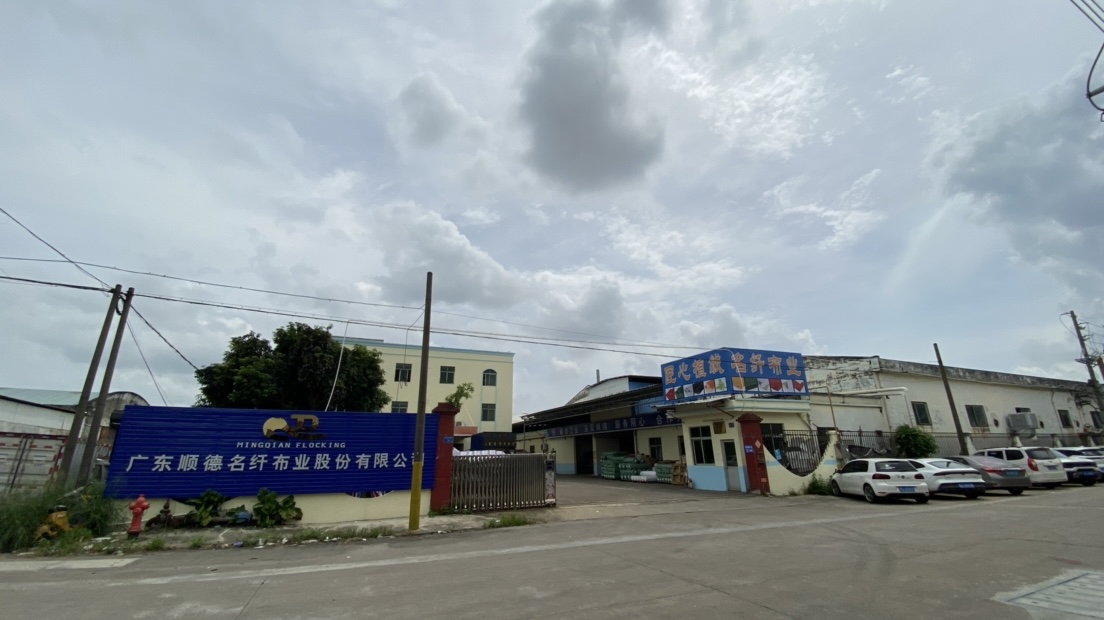
Selecting the optimal velvet structure requires evaluating electrostatic flocking mechanics, fiber length variations, and base substrate interactions. Guangdong Shunde Mingqian Flocking Co., Ltd. manufactures engineered flocking textiles utilizing automated electrostatic production lines. High-voltage electrostatic fields ranging from 30 to 50 kilovolts vertically position short or long fibers into eco-friendly, water-based acrylic adhesives, establishing precise pile orientation across base fabrics.
Plain frosted velvet relies on compact fiber lengths that form a level, reflective pile layer. This structure provides high pattern definition when processed with precision-embossed motifs, including wood grain, diamond check, and geometric patterns. Spunlace base fabric choices provide high flexibility and a smooth hand feel, while knitted substrates add elasticity and mechanical resilience suitable for interior components, protective linings, and custom covers.
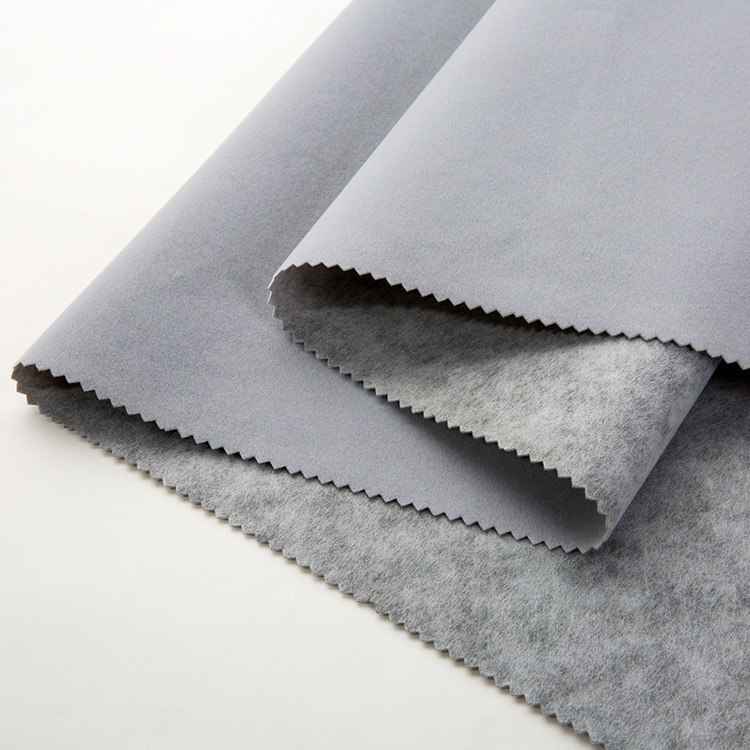
Long pile velvet employs longer fibers to generate heightened tactile softness and prominent light scattering. The increased pile height builds a lush, expressive surface, though it requires precise drying and curing stages in temperature-controlled ovens to ensure permanent adhesive crosslinking and prevent fiber shedding over extended service periods. Technical formulations utilize non-sulfur, halogen-free dye systems and water-based adhesives, controlling formaldehyde content below 75 ppm and azo dyes below 30 ppm.
Material performance is backed by third-party testing certifications. Compliance screening against EU REACH SVHC (CANEC26006555803) verifies 253 substances of very high concern are non-detected. Heavy metal concentrations, phthalates, and PFAS additives conform to EU RoHS 2.0 (CANEC26006555801) and US TPCH requirements, providing environmental safety across domestic and global supply chains.
Data & Specification Comparison
| Specification Parameter | Plain Frosted Velvet | Long Pile Velvet |
|---|---|---|
| Visual Surface Effect | Smooth, even luster with sharp pattern definition | Rich three-dimensional depth with soft shadow variation |
| Pile Density & Control | High density, 0.01 mm pile alignment precision | Medium-to-high density with vertical fiber depth |
| Base Fabric Options | Spunlace, Knitted, Cotton-Rayon, Silk, PVC | Spunlace, Knitted, Nonwoven, Cotton-Rayon |
| Abrasion Resistance | 500 cycles (standard) up to 100,000 cycles (functional) | 500 cycles (standard) up to 50,000 cycles (functional) |
| Post-Processing Compatibility | Gold stamping, silk-screen, embossing, die-cutting | Hot pressing, paper mounting, laser engraving |
| Standard Roll Dimensions | Width 58 inches; 50–100 yards per roll | Width 58 inches; 50–100 yards per roll |
Frequently Asked Questions (FAQ)
Q: How does base fabric selection impact overall durability and hand feel?
A: Spunlace backings deliver superior softness and flexibility for smooth conformity, knitted base fabrics provide elasticity and structural recovery under tension, and nonwoven substrates offer lightweight, cost-effective stability. Base fabric selection directly determines tear strength and dimensional stability during post-processing.
Q: What quality inspection standards govern pile adhesion and color fastness?
A: Finished materials undergo a four-stage quality inspection system. Color fastness achieves Grade 4 or above for deep colors under wet and dry testing and Grade 6+ for light exposure. Fiber adhesion passes the 3M tape 10-cycle peel test under FAMA standards without fiber loss, and batch color matching is maintained within Pantone ΔE ≤ 2.0.
Q: Are these flocking fabrics certified for international environmental compliance?
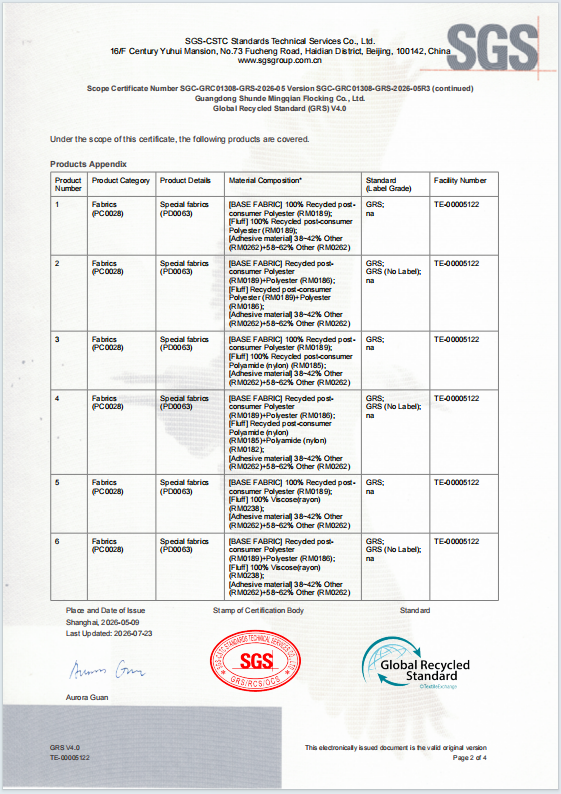
A: Yes. Materials hold ISO 9001:2015 and Global Recycled Standard Version 4.0 (GRS Certificate SGC-GRC01308-GRS-2026-05R3) certifications. Third-party testing by SGS confirms full compliance with EU REACH, RoHS 2.0, EU PPWR, and California Proposition 65 requirements.
Final Conclusion & Recommendations
When selecting velvet materials, plain frosted velvet is ideal for applications demanding high pattern definition, sleek surface sheen, and intensive post-processing like gold stamping or silk-screen printing. Long pile velvet is optimal for projects requiring pronounced fiber depth, plush tactile comfort, and expressive color volume. Support is available for OEM/ODM manufacturing, custom color matching from a database of over 1,000 shades, and small-batch production with a minimum order quantity of 1,000 yards and standard delivery in 14 days. Production lines yield a monthly capacity of 3,000,000 yards. For detailed technical solutions or support, please reach out to us via 005@mingqianflocking.com.
About Us
Guangdong Shunde Mingqian Flocking Co., Ltd. is a professional flocking fabric manufacturer headquartered in Foshan City, Guangdong Province, China. Established in 2008, the company operates a 10,000 square meter self-owned manufacturing facility housing over 100 employees and five automated electrostatic flocking production lines delivering a monthly output exceeding 3 million yards. Certified under ISO 9001:2015 and GRS 4.0, the enterprise serves clients across North America, Europe, Southeast Asia, and South Asia, supporting global brand supply chains with certified green materials and vertically integrated quality control.
Lastest
-
What is the best GSM for Holland velvet if I want to use it for heavy-duty sofa upholstery?
2026-08-07 -
How do I choose between Holland velvet, suede, and corduroy for commercial sofas?
2026-08-07 -
How do I choose the right electrostatic flocking fabric density for automotive interiors?
2026-08-07 -
How do I choose the right GSM for packaging flocking fabric to avoid shedding?
2026-08-07 -
How do I choose the right density of gift box flocking lining to prevent shedding?
2026-08-07
SUBSCRIBE
INQUIRY