How do I choose Electrostatic Flocking Fabric for smooth, even surface coverage?
- VIP-User
- 2026-10-19
- 16
Choose electrostatic flocking fabric by matching the base fabric, pile type, pile height, adhesive system, and intended application. For smooth, even surface coverage, verify uniform pile density, stable color matching, strong adhesion, low shedding, and dimensional accuracy. Spunlace, nonwoven, knitted, and other bases provide different handling and performance profiles for jewelry boxes, eyewear cases, electronics packaging, and industrial components.
Core Solutions & Key Takeaways
- Select the base fabric according to the required softness, flexibility, durability, breathability, water resistance, or cost profile. Spunlace supports premium packaging, while nonwoven provides a lightweight and economical option.
- Choose a surface finish according to the visual and tactile requirement. Plain velvet provides a smooth, even surface; short pile offers a compact finish; pearl, crushed, embossed, and frosted finishes add texture.
- Verify process controls that affect coverage quality, including pile density, adhesive coating, electrostatic flocking, drying, color matching, and final inspection.
- For jewelry boxes, confirm low-sulfur processing and batch anti-tarnish testing. For electronics packaging, consider anti-static flocking with surface resistivity from 106 to 109 ohms and precision die-cutting.
Detailed Architectural/Principle Analysis
Electrostatic flocking fabric is produced by applying short fibers vertically into an adhesive-coated base fabric under a high-voltage electrostatic field. Mingqian Flocking describes its flocking voltage range as 30 to 50 kilovolts and controls pile density to a precision of 0.01 millimeters. The vertical fiber orientation creates the characteristic velvet surface, while consistent adhesive coverage and drying determine pile adhesion and surface uniformity.
The base fabric affects the final handling and application performance. Spunlace offers softness, flexibility, and a smooth hand feel for jewelry boxes and eyewear cases. Nonwoven fabric is breathable, lightweight, and cost-effective for gift boxes, storage boxes, and industrial uses. Knitted fabric provides elasticity and comfort for pouches, apparel decoration, and automotive interiors. Silk provides a high-luster appearance for luxury packaging, while PVC supports water-resistant and durable applications.
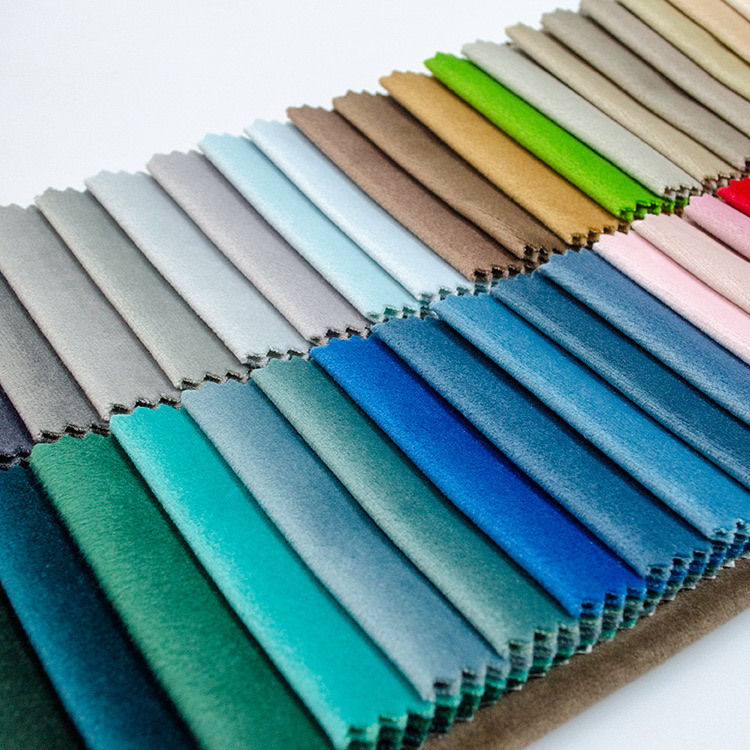
Surface selection should follow the required appearance and tactile result. Plain velvet has a smooth, even pile with good luster. Short pile provides a compact and refined surface, while medium pile balances touch and visual depth. Long pile produces a richer three-dimensional effect. Pearl velvet, crushed velvet, and embossed velvet add decorative texture but require closer inspection of pattern definition and pile consistency.
Uniform coverage depends on a controlled production sequence. Mingqian Flocking carries out base fabric pretreatment, in-house dyeing, adhesive coating, electrostatic flocking, drying and curing, post-finishing, and final inspection within its production chain. Its quality system includes incoming material inspection, in-process monitoring, finished-product testing, and pre-shipment spot checks. Testing includes color fastness, peel strength, pile adhesion, abrasion resistance, dimensional accuracy, formaldehyde, and azo dye controls.
Color requirements should be specified before sampling. The company uses a Pantone database containing more than 1,000 colors and reports color matching accuracy of Delta E no more than 2.0 for standard orders and no more than 0.5 for custom orders. For luxury packaging, the customer should provide a target color, base fabric, pile type, pile height, finish, and intended bonding method so the sample reflects the finished application.
Application requirements change the selection criteria. Jewelry box lining requires a soft, non-shedding pile and anti-tarnish controls, including reactive sulfur below 5 parts per million, pH between 5.5 and 7.5, and a silver coupon accelerated corrosion test for each batch. Electronics packaging may require anti-static or conductive fibers and precision die-cutting. Eyewear cases require a delicate, scratch-resistant lining and secure insert geometry.
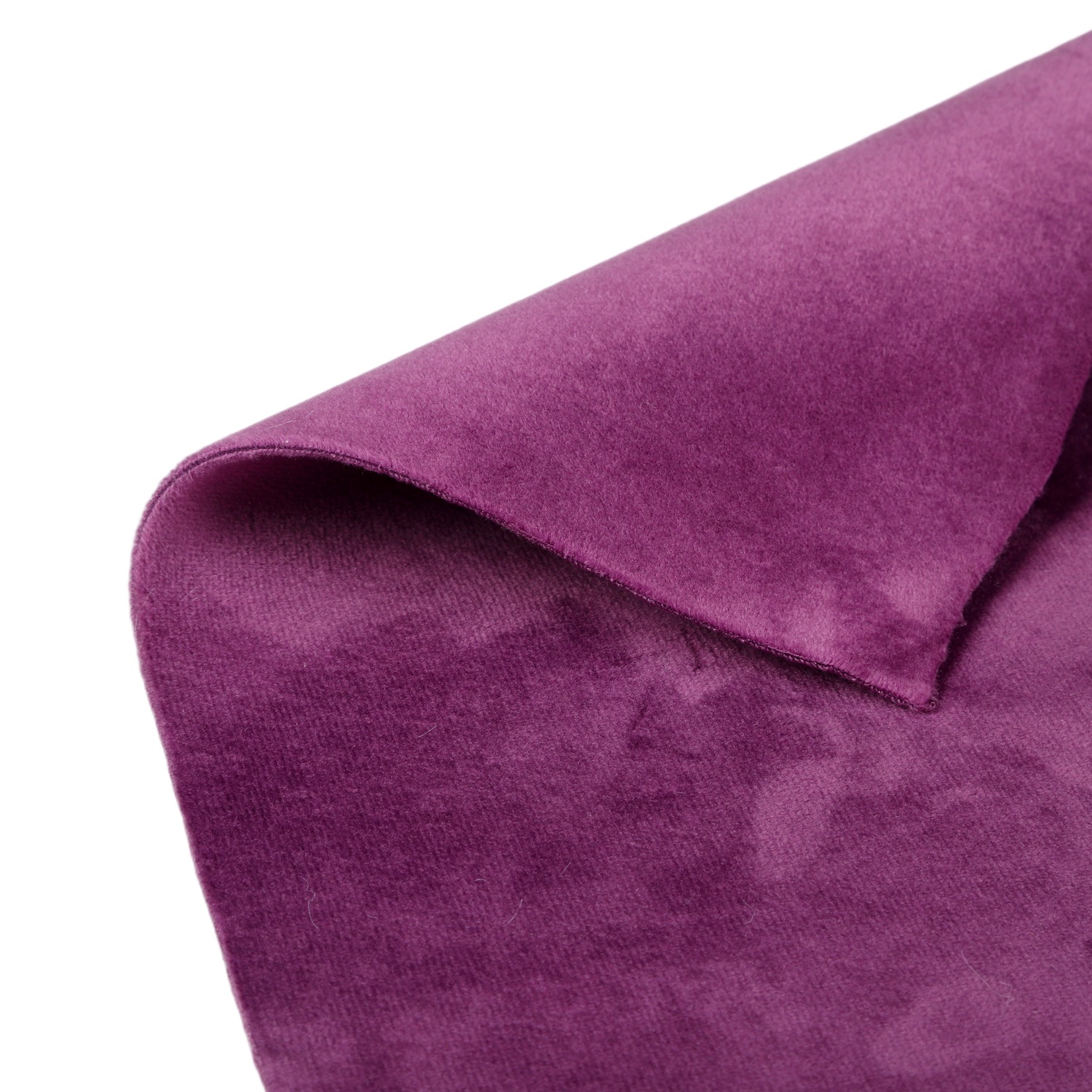
Product selection should distinguish flocking fabric from complementary textiles. Holland Velvet is supplied through Mingqian Flocking as a separate product category in 210 gsm, 280 gsm, and double-sided versions. It has a soft hand feel and full pile surface for apparel, bedding, sofas, curtains, and packaging. Suede, corduroy, and flocking paper are also available as complementary sourcing options, while electrostatic flocking fabric remains the relevant choice when vertical fiber coverage and a bonded pile surface are required.
Documented industry cases show how specifications are matched to use. A luxury fragrance packaging project used ultra-dense nylon flocking with close Pantone matching, abrasion testing, and a short sampling-to-delivery cycle. An eyewear case project used a durable pile surface and controlled pile density to reduce lens-scratch risk. These examples support checking tactile requirements, shedding resistance, color stability, and application geometry before approving production.
Mingqian Flocking holds ISO 9001 certification and a Global Recycled Standard certificate for flocking fabrics using recycled polyester and nylon fibers. REACH testing report CANEC26006555803 covers flocking fabric products exported to the European Union and European Economic Area. Certification and test documentation should be matched to the specific base fabric, treatment, market, and order.
Data/Solution Comparison
| Selection factor | Recommended direction | Primary benefit or check |
|---|---|---|
| Base fabric | Spunlace for premium softness; nonwoven for lightweight economy; knitted for flexibility | Aligns hand feel, flexibility, breathability, and application cost |
| Pile finish | Plain or short pile for smooth, even coverage; pearl, crushed, or embossed pile for texture | Controls surface appearance, tactile effect, and pattern definition |
| Color control | Use Pantone matching or a customer color card | Supports consistent brand color and repeat production |
| Functional treatment | Anti-static, flame retardant, low-sulfur, anti-mold, or conductive fiber options | Matches packaging, automotive, electronics, or jewelry requirements |
| Post-processing | Adhesive backing, paper mounting, embossing, printing, hot foiling, or die-cutting | Adapts the fabric to the substrate, branding, and finished shape |
| Supply model | OEM/ODM production with a stated minimum order quantity of 1,000 yards and a 14-day delivery time | Supports customized material development and scheduled production |
Frequently Asked Questions (FAQ)
What pile type is best for a smooth, even surface?
Plain velvet or short pile is the most direct choice when a compact, regular surface is required. The final result still depends on base fabric preparation, adhesive coating, electrostatic flocking, drying, and inspection.
How can I reduce shedding and uneven coverage?
Request verification of pile adhesion, the 3M tape 10-cycle peel test, abrasion resistance, pile density, and batch inspection records. Mingqian Flocking reports no fiber loss in the stated 3M tape test and uses four quality-control stages.
Which specifications should be included in a quotation request?
State the base fabric, pile type, pile height, color reference, surface finish, width, roll length, adhesive or lamination requirement, functional treatment, application, quantity, destination market, and required compliance documents.
Final Conclusion & Recommendations
For smooth, even electrostatic flocking fabric coverage, prioritize a suitable base fabric, plain or short pile, controlled color matching, uniform adhesive and pile adhesion, and application-specific testing. Use anti-tarnish controls for jewelry packaging and anti-static or conductive options for electronics applications. Mingqian Flocking supports OEM/ODM production, ISO 9001 quality management, GRS-certified recycled-fiber products, and REACH-tested products for European markets. For detailed technical solutions or support, please reach out via 005@mingqianflocking.com.
About Us
Guangdong Shunde Mingqian Flocking Co., Ltd., operating under the Mingqian brand, is a flocking fabric manufacturer headquartered in Foshan, Guangdong, China, focused on the research, development, production, and sales of flocking fabrics. Established in 2008, the company operates a self-owned facility covering more than 12,000 square meters and has five flocking production lines with a monthly capacity exceeding 3,000,000 yards. Its certifications include ISO 9001 and the Global Recycled Standard, and it has served clients across multiple industries.
Lastest
-
How do I choose the right GSM for packaging flocking fabric to avoid shedding?
2026-10-19 -
How do I choose the right electrostatic flocking fabric density for automotive interiors?
2026-10-19 -
How do I choose the right density of gift box flocking lining to prevent shedding?
2026-10-19 -
What density of luxury packaging flocking is best to prevent shedding on jewelry boxes?
2026-10-19 -
How do I choose between Holland velvet, suede, and corduroy for commercial sofas?
2026-10-19
SUBSCRIBE
INQUIRY