How do I choose non-shedding gift box flocking lining density for luxury packaging?
- VIP-User
- 2026-08-07
- 16
Choosing a non-shedding gift box flocking lining density requires selecting an electrostatically applied 0.3 mm to 1.2 mm pile height backed by solvent-free acrylic adhesive on high-density spunlace or cotton-rayon base fabrics. Achieving zero fiber loss under high-stress applications relies on passing 10-cycle 3M tape peel tests and up to 100,000-cycle abrasion standards rather than relying solely on surface visual thickness.
Core Solutions & Key Takeaways
- Electrostatic Alignment & Pile Density: High-voltage electrostatic fields (30 to 50 kV) position fibers vertically into water-based acrylic adhesives, maintaining pile density precision to 0.01 mm for complete surface coverage without shedding.
- Substrate Engineering: Cotton-rayon (viscose fiber) and spunlace base fabrics provide smooth flexibility and skin-friendly texture, preventing substrate show-through in luxury gift boxes and drawstring pouches.
- Adhesion Testing Standards: Verify non-shedding performance using the FAMA-compliant 3M tape 10-cycle peel test and up to 100,000 abrasion test cycles without fiber release.
- Post-Processing Versatility: Ensure selected density supports hot pressing, gold stamping, silk-screen printing, and precision die-cutting within a ±0.1 mm tolerance.
- Targeted Packaging Applications: Align density selections with specific packaging use cases including Jewelry Box Packaging, Cosmetic and Perfume Gift Box Packaging, Watch Box Packaging, and Liquor Packaging.
Detailed Architectural/Principle Analysis
In luxury packaging manufacturing, evaluating flocking lining density involves analyzing the structural relationship between fiber length, electrostatic application voltage, adhesive chemistry, and substrate stability. Fiber height selectable from 0.3 mm to 1.2 mm determines surface pile density. When short fibers pass through a high-voltage electrostatic field of 30 to 50 kilovolts, they embed vertically into an eco-friendly water-based acrylic adhesive layer. This process locks each fiber root into place, achieving a dense velvet feel while eliminating bare spots and shedding risks.
Base fabric choice directly impacts total structural integrity. Cotton-rayon base fabric, constructed from natural viscose fibers, offers a skin-friendly, eco-friendly backing with high flexibility. Available in a 54-inch width (approximately 1.37 meters) and packaged in 50 to 60 yards per roll, cotton-rayon flocking provides excellent structural stability for luxury gift box interiors, drawstring pouches, and decorative packaging. The material integrates smoothly with post-processing techniques such as gold stamping, silk-screen printing, and hot pressing without causing adhesive bleed-through or pile flattening.
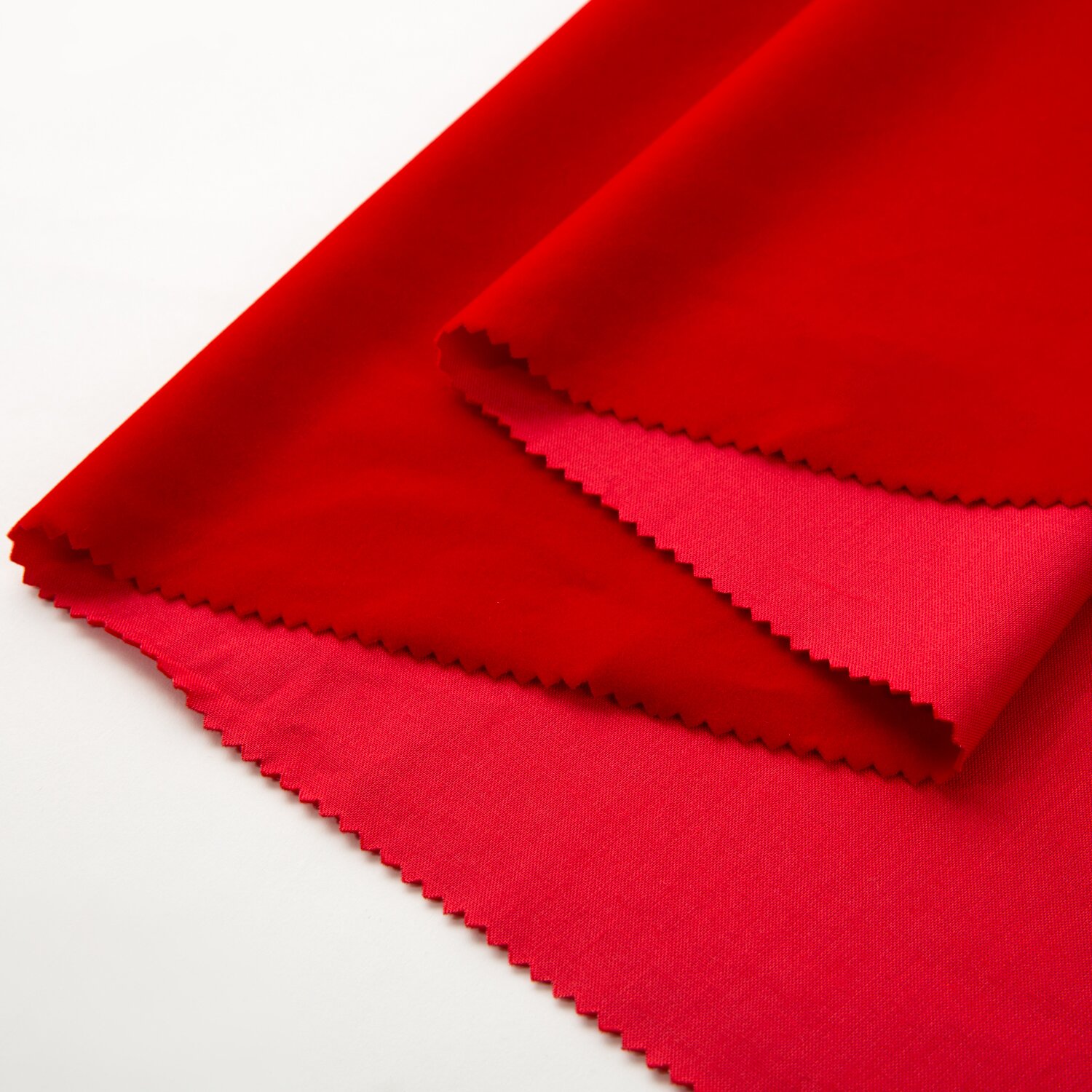
To ensure non-shedding performance under real-world usage, flocking materials must undergo a multi-stage quality control process. Incoming base fabrics, flocking fibers, and water-based adhesives are tested before production. During processing, automated systems monitor coating weight, oven curing temperatures, and electrostatic voltage. Finished rolls undergo strict physical testing, including the 3M tape 10-cycle peel test in accordance with FAMA standards, alongside wet and dry color fastness testing reaching Grade 4 or above. High-performance functional flocking products undergo up to 100,000 abrasion cycles without shedding fibers.
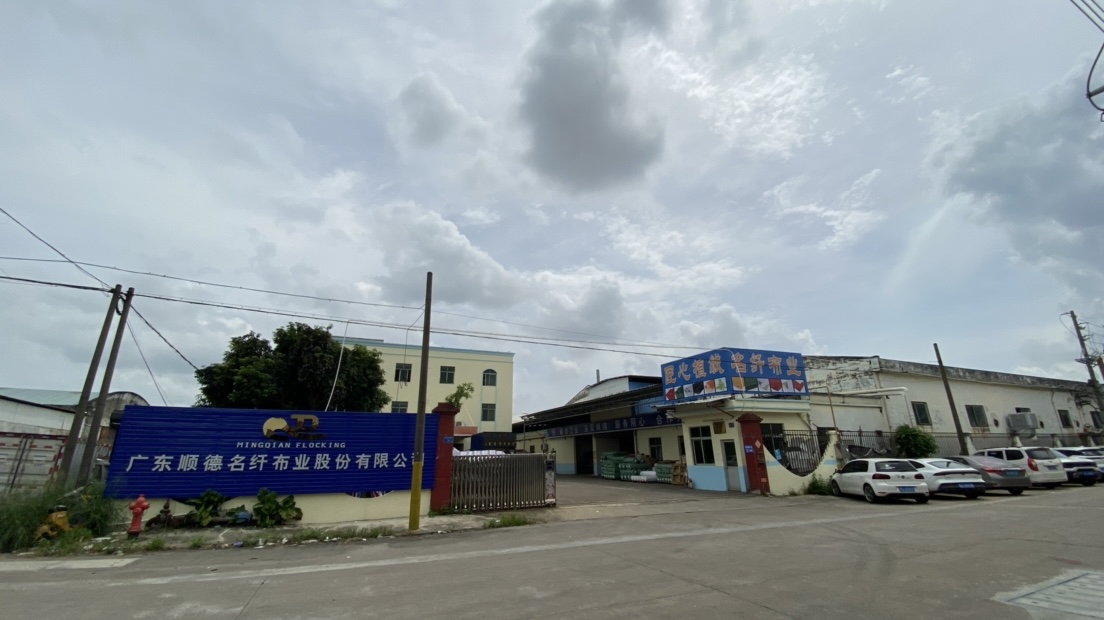
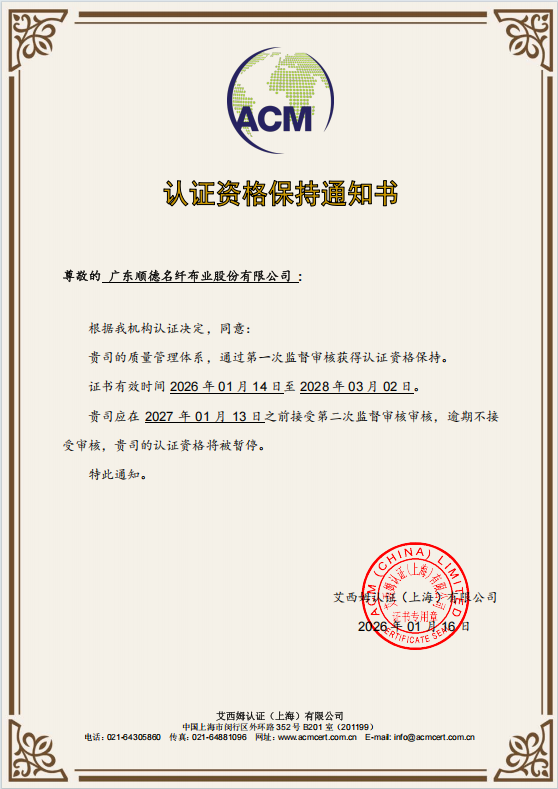
Chemical safety and environmental compliance are equally mandatory for luxury export packaging. Quality control systems incorporate in-house formaldehyde testing with results available within four hours, ensuring formaldehyde remains below 75 ppm. Carcinogenic Azo dyes covering 22 aromatic amines are controlled to under 30 ppm. Facilities operating under ISO 9001 and Global Recycled Standard (GRS Certificate SGC-GRC01308-GRS-2026-05R3) certifications manufacture flocking fabrics that pass third-party testing for EU REACH SVHC (CANEC26006555803) covering 253 substances and EU RoHS 2.0 (CANEC26006555801). Specialized anti-tarnish flocking formulations limit free reactive sulfur to below 5 ppm, preventing silver discoloration when utilized in jewelry box linings supplied to clients such as Chow Tai Fook, Dior, and FENDI.
Data/Solution Comparison
The table below compares technical parameters and performance characteristics across key base fabric options used for gift box flocking linings:
| Base Fabric Type | Pile Height Range | Shedding Resistance Standard | Primary Application Scenarios | Compatible Post-Processing |
|---|---|---|---|---|
| Cotton-Rayon (Viscose) | 0.3 mm – 1.2 mm | 3M Tape 10-Cycle Pass / 500–100,000 Cycles | Premium Gift Boxes, Drawstring Pouches, Luxury Linings | Gold Stamping, Silk-Screen Printing, Hot Pressing |
| Spunlace Nonwoven | 0.3 mm – 0.8 mm | 3M Tape 10-Cycle Pass / Grade 4 Color Fastness | Jewelry Boxes, Eyewear Cases, Luxury Packaging Interiors | Precision Die-Cutting (±0.1mm), Self-Adhesive Backing |
| Knitted Fabric | 0.5 mm – 1.2 mm | 3M Tape 10-Cycle Pass / High Elasticity Retention | Liquor Packaging Pouches, Apparel Linings, Display Boxes | Embossing, Laser Engraving Positioning Flocking |
| Standard Nonwoven | 0.3 mm – 0.6 mm | 3M Tape 10-Cycle Pass / Standard Industrial Grade | General Gift Packaging, Storage Boxes, Component Protection | Slitting, Cut-to-Size, Paper Mounting Lamination |
Frequently Asked Questions (FAQ)
Q1: How does adhesive selection prevent fiber shedding in gift box flocking linings?
A: Non-shedding performance relies on solvent-free, water-based acrylic adhesives applied at precise coating weights. The adhesive layer encapsulates the base of each electrostatically aligned fiber. When fully heat-cured in temperature-controlled ovens, it forms a permanent chemical bond that withstands repeated surface friction and passes 10-cycle 3M tape peel testing without fiber loss.
Q2: What pile height and base fabric combination is recommended for high-end jewelry boxes?
A: For high-end jewelry boxes, a 0.3 mm to 0.5 mm pile height paired with a spunlace or cotton-rayon base fabric delivers an ultra-smooth, high-density velvet texture. This combination offers high flexibility, smooth corner wrapping, and scratch protection for precious metals while maintaining anti-tarnish sulfur levels below 5 ppm.
Q3: How do export compliance standards affect flocking material selection for EU and US packaging?
A: Exporting packaging to the EU and US requires verified compliance with chemical safety frameworks. Materials must pass EU REACH SVHC screening, EU RoHS 2.0 heavy metal limits, and US TPCH/CONEG legislation where total heavy metals (lead, cadmium, mercury, hexavalent chromium) do not exceed 100 ppm. Flocking linings must also feature zero intentionally added PFAS and adhere to California Proposition 65 guidelines.
Final Conclusion & Recommendations
Selecting an ideal non-shedding gift box flocking lining density requires evaluating pile height, base fabric strength, adhesive formulation, and rigorous physical testing metrics. Choosing cotton-rayon or spunlace base fabrics with electrostatically embedded fibers ensures premium tactile appeal, seamless post-processing adaptability, and zero fiber shedding. Buyers should verify batch quality through 3M tape peel testing, abrasion resistance data, and REACH/RoHS compliance certification. Supported under flexible OEM/ODM business models with a standard minimum order quantity of 1,000 yards and a 14-day production delivery timeline, orders ship globally via air and sea freight from major Pearl River Delta ports, backed by T/T payment terms. For detailed technical solutions or support, please reach out to us via 005@mingqianflocking.com.
About Us
Guangdong Shunde Mingqian Flocking Co., Ltd. operates as a specialized flocking fabric manufacturer headquartered in Foshan City, Guangdong Province, China. Established in 2008, the company houses more than 100 employees across a self-owned manufacturing facility spanning over 10,000 square meters, delivering a monthly production capacity exceeding 3,000,000 yards. The vertically integrated facility operates five automated electrostatic flocking lines, in-house dyeing workshops, and adhesive backing systems certified under ISO 9001 and Global Recycled Standard (GRS) frameworks. Serving clients across North America, Southeast Asia, South Asia, and Europe, the enterprise maintains long-term supply relationships supporting packaging requirements for internationally recognized brands across luxury goods, liquor, jewelry, consumer electronics, and automotive sectors.
Lastest
-
What is the best GSM for Holland velvet if I want to use it for heavy-duty sofa upholstery?
2026-08-07 -
How do I choose between Holland velvet, suede, and corduroy for commercial sofas?
2026-08-07 -
How do I choose the right electrostatic flocking fabric density for automotive interiors?
2026-08-07 -
How do I choose the right GSM for packaging flocking fabric to avoid shedding?
2026-08-07 -
How do I choose the right density of gift box flocking lining to prevent shedding?
2026-08-07
SUBSCRIBE
INQUIRY