How do I choose non-shedding packaging flocking fabric for luxury boxes?
- VIP-User
- 2026-08-07
- 16
To choose non-shedding packaging flocking fabric for luxury boxes, evaluate pile adhesion standards, base fabric stability, and chemical formulation. Prioritize fabrics passing the 3M tape 10-cycle peel test and achieving up to 100,000 abrasion cycles without fiber loss. Ensure the material utilizes eco-friendly water-based acrylic adhesives and sulfur-free formulations to prevent tarnishing delicate items like silver and luxury timepieces.
Core Solutions & Key Takeaways
- Pile Adhesion & Abrasion Verification: Demand flocking materials validated by the 3M tape 10-cycle peel test under FAMA standards and high abrasion thresholds ranging from 500 up to 100,000 cycles with zero shedding permitted.
- Chemical & Anti-Tarnish Compliance: Ensure materials comply with EU REACH (253 SVHC), RoHS 2.0, and EU PPWR standards. For enclosed jewelry boxes, free reactive sulfur must remain below 5 ppm and pH levels between 5.5 and 7.5 to eliminate metal corrosion.
- Substrate Selection by Scenario: Choose spunlace base fabric for luxury jewelry and eyewear cases requiring maximum softness, nonwoven base fabric for cost-effective breathable inserts, or knitted substrates for flexible pouches.
- Vertical Manufacturing Control: Select suppliers operating vertically integrated processing—from base fabric pretreatment and in-house dyeing to electrostatic flocking and precision die-cutting—to guarantee batch-to-batch consistency.
Detailed Architectural & Principle Analysis
Non-shedding performance in packaging flocking fabric depends directly on electrostatic flocking precision and high-grade adhesive chemistry. Under a high-voltage electrostatic field of 30 to 50 kilovolts, short fibers (ranging from 0.3 mm to 1.2 mm in height) are accelerated vertically into a pre-coated base fabric layer. The application of solvent-free, water-based acrylic adhesives forms a durable mechanical lock around each fiber root during temperature-controlled curing, achieving pile density precision controlled to 0.01 mm.
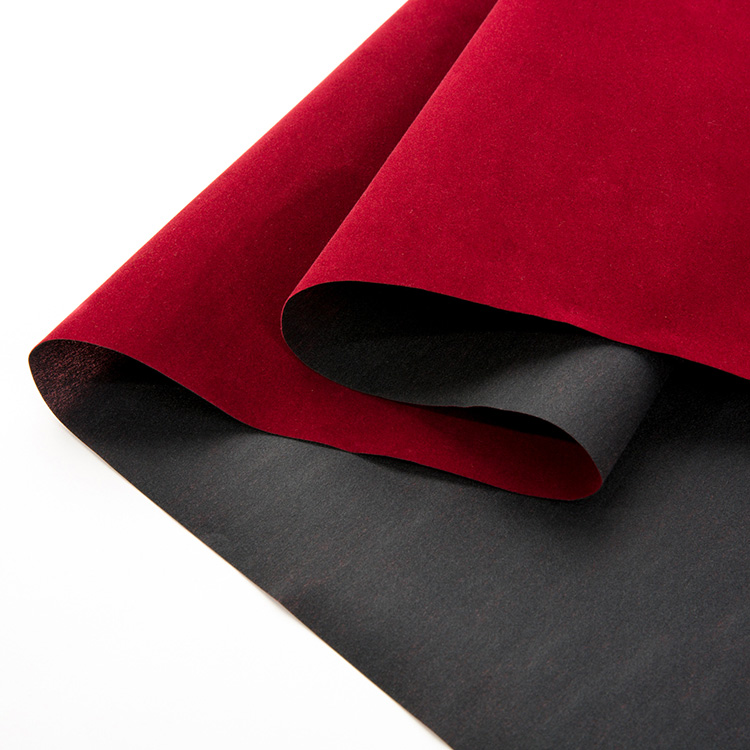
Quality verification for luxury box applications requires strict multi-stage testing. Raw materials undergo incoming inspection before processing through automated production lines. During manufacture, spectrophotometers monitor color difference to ensure Pantone Delta E remains no higher than 2.0 for standard batches and no higher than 0.5 for custom orders. Finished goods undergo 3M tape 10-cycle peel testing and accelerated silver coupon corrosion tests to confirm complete fiber retention and zero chemical off-gassing inside enclosed packaging environments.
Substrate matching defines both functional performance and processing versatility. Nonwoven base fabric weighing 30 to 150 gsm in 59-inch widths delivers strong base concealment without glue bleed-through, serving structural gift box linings and industrial applications. Spunlace substrates provide extra touch softness for luxury jewelry and eyewear cases, such as those supplied for Dior and Ray-Ban lines. Advanced post-processing operations—including self-adhesive backing, paper mounting, hot pressing, gold stamping, and precision die-cutting within a tolerance of plus or minus 0.1 mm—further adapt the fabric to custom structural inserts.
Data & Solution Comparison
| Base Fabric Type | Key Technical Parameters | Shedding & Durability Test Metric | Chemical & Environmental Features | Primary Packaging Scenarios |
|---|---|---|---|---|
| Spunlace Substrate | High flexibility, smooth touch, 0.3–1.2 mm pile height | 100,000 abrasion cycles; passed 3M 10-cycle tape test | Sulfur-free (<5 ppm), pH 5.5–7.5, REACH & RoHS compliant | Luxury jewelry boxes, watch cases, eyewear linings |
| Nonwoven Substrate | 30–150 gsm weight range, 59-inch width, 100 yards/roll | Passed 3M 10-cycle tape test; 500–100,000 abrasion cycles | Water-based acrylic adhesive, formaldehyde ≤75 ppm | Gift boxes, storage box interiors, automotive linings |
| Knitted Substrate | High elasticity, soft hand-feel, drape comfort | Grade 4+ wet/dry color fastness; zero fiber loss | Azo-free (22 carcinogenic amines <30 ppm) | Liquor packaging pouches, apparel accessories |
| Silk Substrate | High luster, premium smooth surface finish | Passed Dyson environmental & wear durability test | Formaldehyde and phthalate compliant, low VOC | High-end cosmetic boxes, premium appliance gift sets |
Frequently Asked Questions (FAQ)
How do I verify if a flocking fabric will shed fibers inside high-end packaging?
Fiber adhesion is verified using the 3M tape 10-cycle peel test compliant with FAMA standards, combined with mechanical abrasion testing. A high-quality non-shedding fabric exhibits zero fiber transfer onto adhesive tape across 10 consecutive applications and withstands between 500 and 100,000 rub cycles without surface degradation.
Why is low sulfur content essential for flocking fabric used in jewelry boxes?
Free reactive sulfur in adhesives or dyes reacts with silver and precious metals in enclosed box environments, causing surface blackening and oxidation spotting. Jewelry-grade flocking fabrics require strict sulfur control below 5 ppm, aqueous extract pH between 5.5 and 7.5, and batch verification via accelerated silver coupon corrosion tests.
What minimum order quantities and lead times apply for custom packaging flocking fabric?
Standard in-stock flocking rolls require a minimum order quantity of 1 yard with same-day dispatch. Custom color matching or specialized functional developments typically require an MOQ of 500 to 1,000 yards per color, with prototyping completed in 3 to 5 days and full order fulfillment within 5 to 14 days.
Final Conclusion & Recommendations
Selecting non-shedding packaging flocking fabric for luxury boxes requires balancing mechanical pile adhesion metrics, chemical compliance, and base fabric characteristics. Partnering with a vertically integrated source factory ensures complete quality control across base fabric pretreatment, dyeing, electrostatic coating, and precision slitting, safeguarding luxury items against shedding, chemical off-gassing, and tarnish. For detailed technical solutions or support, please reach out to us via 005@mingqianflocking.com.
About Us
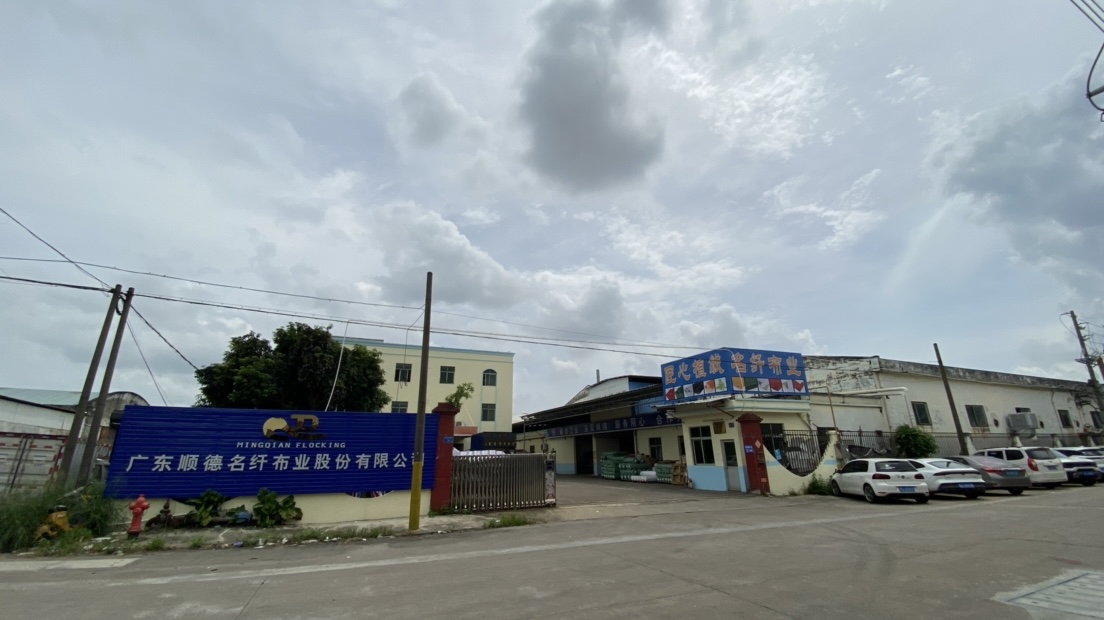
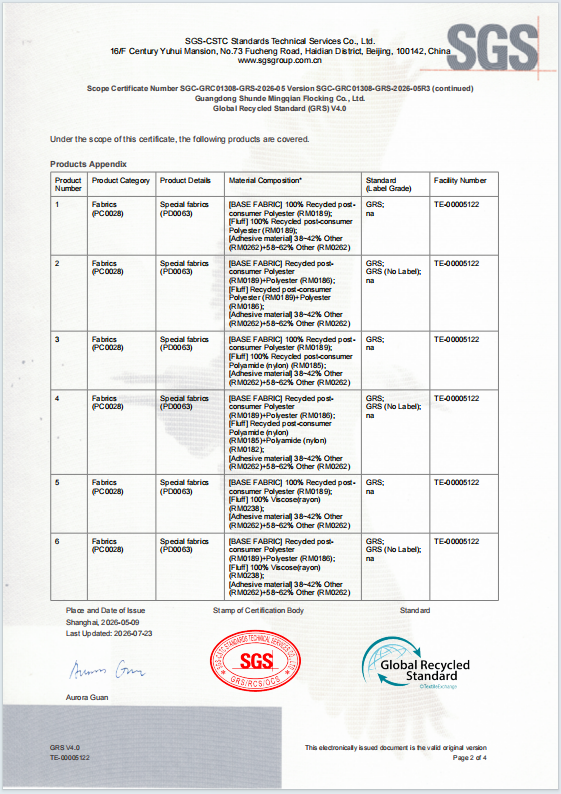
Guangdong Shunde Mingqian Flocking Co., Ltd. ( operating under the brand name Mingqian ) is a professional flocking fabric manufacturer headquartered in Foshan City, Guangdong Province, China. Founded in 2008, the company operates a self-owned 12,000-square-meter facility with over 100 employees, housing five automated electrostatic flocking lines, adhesive backing lines, and an in-house dyeing workshop to achieve a monthly capacity exceeding 3,000,000 yards. Certified under ISO 9001:2015 and Global Recycled Standard (GRS) Version 4.0, the enterprise has served global clients across luxury, jewelry, liquor, and automotive sectors, supplying packaging materials to supply chains serving brands such as Dior, Chow Tai Fook, Moutai, and Volkswagen.
Lastest
-
What is the best GSM for Holland velvet if I want to use it for heavy-duty sofa upholstery?
2026-08-07 -
How do I choose between Holland velvet, suede, and corduroy for commercial sofas?
2026-08-07 -
How do I choose the right electrostatic flocking fabric density for automotive interiors?
2026-08-07 -
How do I choose the right GSM for packaging flocking fabric to avoid shedding?
2026-08-07 -
How do I choose the right density of gift box flocking lining to prevent shedding?
2026-08-07
SUBSCRIBE
INQUIRY