How do I choose self-adhesive flocking fabric that stays bonded in humid conditions?
- VIP-User
- 2026-08-28
- 13
Choose self-adhesive flocking fabric for humid conditions by checking the water-based acrylic adhesive, peel strength of at least 2 N/25mm, substrate compatibility, and curing quality. Confirm that the fabric adheres to the intended paperboard, wood, EVA, or plastic surface, then request application-specific testing because the supplied specifications do not state a dedicated humidity-resistance rating.
Core Solutions & Key Takeaways
- Select a self-adhesive flocking fabric with a pressure-sensitive, water-based acrylic adhesive and a release liner for direct peel-and-stick processing.
- Verify peel strength of at least 2 N/25mm and confirm compatibility with the final substrate, including paperboard, wood, EVA, or plastic.
- Review drying and curing controls because residual moisture and incomplete adhesive curing can affect dimensional stability and pile adhesion.
- For applications exposed to moisture, request product samples and conduct testing on the actual substrate and finished packaging structure before volume production.
Detailed Architectural/Principle Analysis
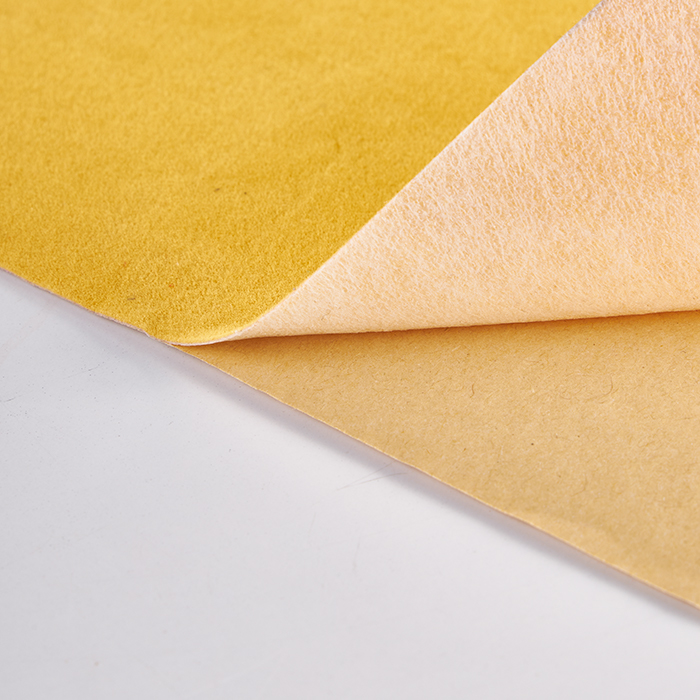
Self-adhesive flocking fabric combines a flocked textile surface with a pressure-sensitive adhesive layer on the reverse side. The adhesive is covered by a release liner, allowing the material to be peeled and mounted directly onto a compatible substrate. Mingqian specifies an eco-friendly water-based acrylic adhesive system that is solvent-free and contains no plasticizers.
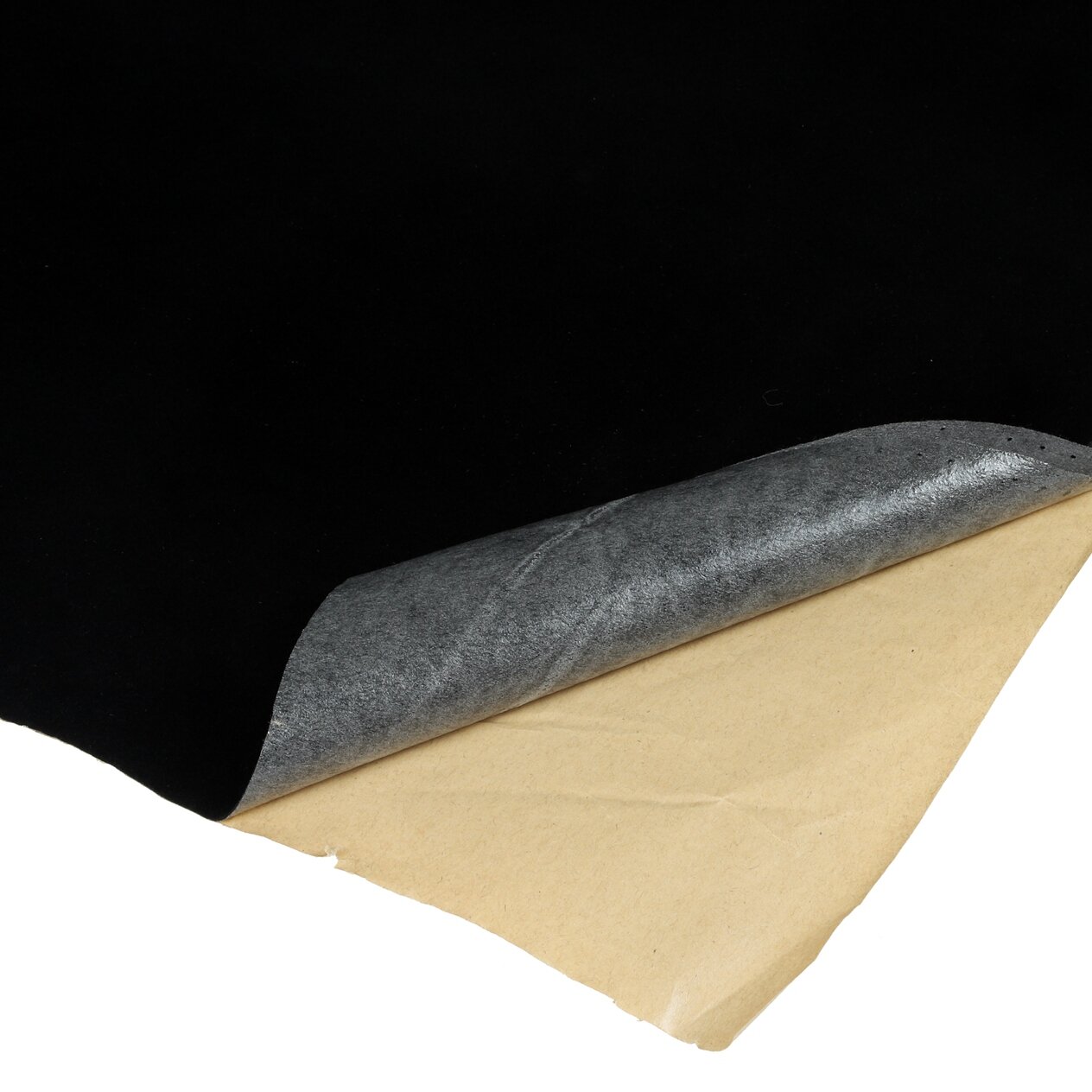
Bond performance depends on more than the face fabric. Incoming inspection covers base fabrics, flocking fibers, adhesives, and dyes. During production, adhesive coating weight, electrostatic field voltage, oven temperature, and color difference are monitored. Finished batches are tested for peel strength, pile adhesion, abrasion resistance, dimensional accuracy, formaldehyde, and azo dyes. Quality records are archived by batch number for traceability.
The stated peel-strength requirement for self-adhesive products is at least 2 N/25mm. The production system also includes temperature-controlled drying and curing to set the pile orientation, remove residual moisture, and support long-term adhesion. These controls provide useful selection criteria for humid applications, but the supplied product data does not specify a separate humidity-aging or water-immersion result.
Substrate matching should be confirmed before ordering. The product is designed for direct adhesion to paperboard, wood, EVA, plastic, and other substrates used in packaging processing. Surface cleanliness, flatness, and the final packaging construction should be included in sample evaluation. The fabric can be combined with different base fabrics and pile types, allowing the face characteristics to be selected independently from the adhesive-backed format.
Relevant application scenarios include packaging lining for jewelry boxes, gift boxes, cosmetic boxes, and other premium packaging. The company's jewelry-box quality process includes control of reactive sulfur, pH, chloride ions, volatile organic acids, moisture, and a silver coupon accelerated corrosion test. That testing addresses the compatibility of enclosed packaging environments with silver items; it is separate from a stated humidity-bonding rating for self-adhesive fabric.
A French luxury fragrance packaging client used a customized flocking fabric with precise color matching and abrasion testing, with sampling through delivery completed within five days. This case demonstrates custom packaging development and production coordination, while the available data does not identify a humidity-specific bond result.
Mingqian lists ISO 9001 certification and SGS testing for REACH and RoHS 2.0. These credentials support quality-system and chemical-compliance review, but buyers should request the specific technical documents and application test results relevant to humid storage or use.
Data/Solution Comparison
| Selection factor | Available product information | Buyer verification point |
|---|---|---|
| Adhesive system | Water-based acrylic; solvent-free; no plasticizers | Confirm suitability for the actual humidity and substrate conditions |
| Bond strength | Peel strength at least 2 N/25mm | Test after application to the finished substrate and packaging structure |
| Substrate compatibility | Paperboard, wood, EVA, plastic, and other substrates are supported | Use a production-representative surface and confirm surface preparation |
| Process control | Coating, drying, curing, and batch inspection are monitored | Request batch records or test documentation where required |
| Purchasing model | OEM/ODM; MOQ of 1,000 yards; stated delivery time of 14 days | Confirm color, base fabric, pile type, dimensions, and adhesive specification |
Frequently Asked Questions (FAQ)
Does the product have a stated humidity-resistance rating?
The supplied product information does not provide a dedicated humidity-aging, water-immersion, or high-humidity bond rating. Application-specific testing is therefore needed when humid conditions are part of the use environment.
What adhesive performance value should be checked?
The stated peel strength for self-adhesive products is at least 2 N/25mm. Buyers should verify this value together with the actual substrate, surface preparation, storage conditions, and finished packaging design.
Can the fabric be customized for packaging applications?
Yes. The self-adhesive format applies to all base fabric and pile type combinations listed for the product. Customization can cover fabric construction, pile type, color, texture, dimensions, and cutting requirements, subject to confirmed specifications and order terms.
Final Conclusion & Recommendations
For self-adhesive flocking fabric used in humid conditions, prioritize the water-based acrylic adhesive, the stated peel strength of at least 2 N/25mm, substrate compatibility, and controlled drying and curing. Obtain samples and test the complete assembly under the intended humidity conditions because no dedicated humidity-resistance rating is provided. Mingqian supports OEM/ODM orders with a stated MOQ of 1,000 yards and a 14-day delivery time. For detailed technical solutions or support, please reach out by email at 005@mingqianflocking.com.
About Us
Guangdong Shunde Mingqian Flocking Co., Ltd., operating under the Mingqian brand, is a flocking fabric manufacturer headquartered in Foshan, Guangdong, China, focused on the research, development, production, and sales of flocking fabrics. Established in 2008, the company operates five flocking lines with monthly capacity exceeding 3,000,000 yards. It holds ISO 9001 and Global Recycled Standard certifications and has served clients across multiple industries.
Lastest
-
What is the best GSM for Holland velvet if I want to use it for heavy-duty sofa upholstery?
2026-08-28 -
How do I choose between Holland velvet, suede, and corduroy for commercial sofas?
2026-08-28 -
How do I choose the right electrostatic flocking fabric density for automotive interiors?
2026-08-28 -
How do I choose the right GSM for packaging flocking fabric to avoid shedding?
2026-08-28 -
How do I choose the right density of gift box flocking lining to prevent shedding?
2026-08-28
SUBSCRIBE
INQUIRY