How do I choose the right backing for packaging flocking fabric to prevent tearing?
- VIP-User
- 2026-08-03
- 21
Choosing the right backing for packaging flocking fabric to prevent tearing depends on the mechanical stress of the application. High-flexibility backings like spunlace and knitted bases offer superior tensile strength for deep-drawn inserts and luxury pouches, while nonwoven backings provide lightweight, cost-effective stability for rigid gift boxes. For heavy-duty industrial structures, paper-mounted or self-adhesive lamination reinforces the material against structural deformation.
Core Solutions & Key Takeaways
- Spunlace Backing: Delivers high flexibility and a smooth hand feel, preventing tearing when wrapped around sharp corners in high-end jewelry boxes and eyewear cases.
- Nonwoven Backing: Weighing between 30 to 150 gsm, this option provides excellent base fabric concealment and cost-effective structural integrity for rigid gift boxes and storage trays where dynamic folding stress is minimal.
- Knitted Backing: Offers multidirectional elasticity, making it highly resistant to tearing in flexible applications such as drawstring pouches, automotive interiors, and custom drawer linings.
- Self-Adhesive Reinforcement: A pressure-sensitive adhesive backing layer (with a minimum peel strength of 2 Newtons per 25 millimeters) stabilizes the fibers and prevents delamination during precision die-cutting.
Detailed Architectural/Principle Analysis
Preventing mechanical failure and tearing in packaging flocking fabric requires aligning the physical characteristics of the backing material with the structural demands of the box or container. During the manufacturing of premium gift packaging, the fabric is subjected to high-tension folding, corner creasing, and die-cutting. If the backing material lacks adequate tensile strength, the shearing forces will rupture the substrate, leading to visible surface tearing and pile shedding.
The manufacturing process at the source factory utilizes advanced electrostatic flocking technology. Short synthetic or natural fibers are vertically embedded into an eco-friendly water-based acrylic adhesive layer under a high-voltage electrostatic field of 30 to 50 kilovolts. This creates a dense, uniform velvet surface. To ensure the backing itself resists tearing, raw base fabrics undergo strict incoming lot testing for weight, fiber density, and chemical residues. Utilizing virgin compliant base materials ensures there are no weak points within the fiber web that could fail under tension.
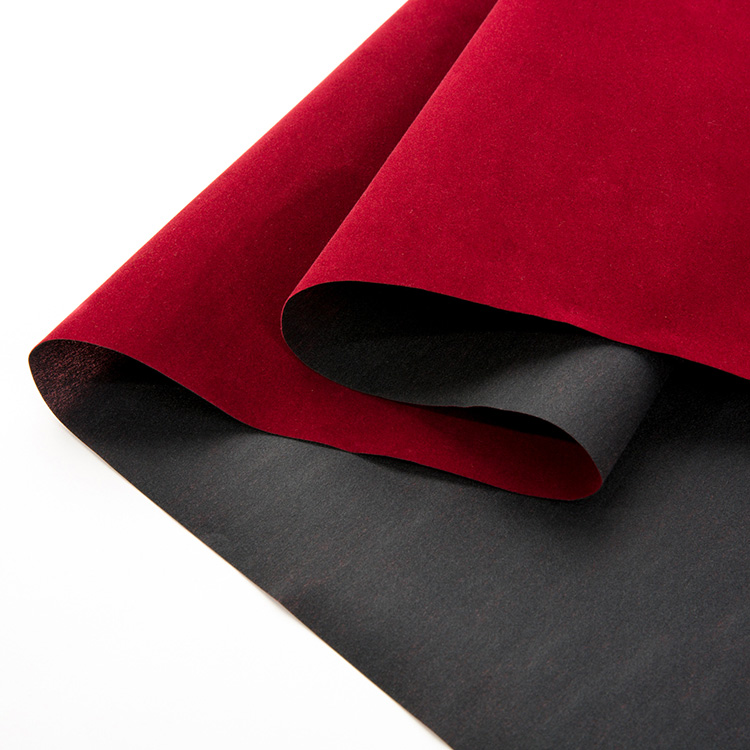
For applications experiencing high physical wear, post-processing options like paper lamination or pressure-sensitive adhesive backing distribute tensile stress evenly across the substrate. In the automotive interior sector, supply partnerships with enterprises such as BYD utilize specialized flame-retardant nonwoven backings. These materials withstand rigorous assembly stretching without tearing, while complying with safety requirements. Similarly, in large-scale logistics operations, like the transport packaging protection developed for Volkswagen smart refrigerators, combining a flame-retardant flocking fabric with a memory foam backing layer reduces transport damage from 5% to 1% by absorbing impacts without material rupture.
Long-term supply data from high-end retail sectors demonstrates the durability of properly matched backings. For instance, the luxury jewelry brand Chow Tai Fook utilizes a spunlace-based medium-pile flocking fabric for its retail box linings. By selecting a high-flexibility spunlace backing rather than a rigid alternative, the brand eliminated corner tearing during box assembly, resulting in a zero-defect rate across million-yard annual procurements since 2019. This performance is verified by a 3M tape 10-cycle peel test compliant with the FAMA standard, ensuring no fiber loss or backing failure under repeated friction.
Data/Solution Comparison
To assist technical buyers in choosing the correct configuration, the table below compares the physical attributes and tear-resistance profiles of standard flocking fabric backings.
| Backing/Base Type | Tear Resistance | Elasticity Profile | Weight Range | Target Packaging Scenarios |
|---|---|---|---|---|
| Spunlace Base | Very High | High flexibility, bi-directional stretch | Custom specifications | Luxury jewelry boxes, eyewear cases, cosmetic gift sets |
| Nonwoven Base | Medium | Low stretch, high rigid stability | 30–150 gsm | General gift boxes, storage dividers, appliance soundproofing |
| Knitted Base | High | Four-way stretch, high elasticity | Custom specifications | Automotive interior linings, drawstring pouches, wine bags |
| Paper-Mounted / Self-Adhesive | Very High | Zero stretch, high tensile reinforcement | Varies by adhesive/paper layer | Precision die-cut inserts (±0.1 mm tolerance), heavy-duty display cases |
Frequently Asked Questions (FAQ)
Q1: How does the weight of a nonwoven backing affect its susceptibility to tearing?
A1: Heavier nonwoven backings (ranging up to 150 gsm) contain denser, highly interlocked synthetic fibers. This increased density directly enhances the tensile threshold and prevents tearing under structural stretching, whereas lighter 30 gsm backings are best reserved for light-duty, flat-surface linings.
Q2: Can self-adhesive backings prevent edge tearing during automated die-cutting?
A2: Yes. Applying a pressure-sensitive adhesive backing layer binds the perimeter fibers together. This reinforcement stabilizes the fabric, enabling clean edges during precision die-cutting with tolerances of ±0.1 millimeters and preventing the material from tearing or fraying at the corners.
Q3: Are there eco-friendly backing options that offer high tear resistance?
A3: Global Recycled Standard (GRS) Version 4.0 certified backings utilize recycled polyester and nylon fibers. These sustainable materials match the physical tensile strength and tear resistance of virgin polymers while supporting corporate environmental and carbon-neutral procurement goals.
Final Conclusion & Recommendations
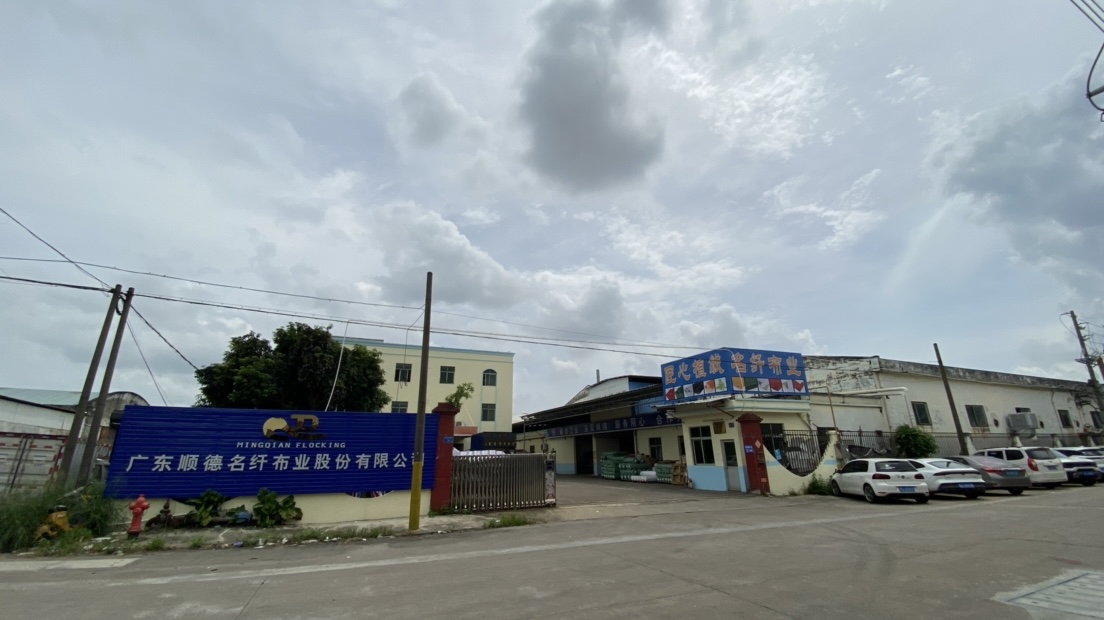
Selecting the ideal backing requires balancing the mechanical stresses of the packaging design with the physical limits of the textile. For intricate boxes requiring heavy folding, spunlace or knitted backings are recommended to prevent corner ruptures. For cost-sensitive, rigid structures, nonwoven backings provide stable, lightweight performance. Partnering with a vertically integrated manufacturer like Guangdong Shunde Mingqian Flocking Co., Ltd. allows for full customization of the base fabric, adhesive formulation, and pile height (0.3 to 1.2 mm) to meet specific structural demands. Under OEM/ODM business models, standard custom orders require a minimum order quantity (MOQ) of 1,000 yards with a 14-day delivery timeframe. Regional shipments in the Pearl River Delta benefit from same-day truck delivery, while domestic shipments are dispatched via SF Express and Deppon Logistics, and international orders are exported via Guangzhou and Shenzhen ports. Payment is accepted through T/T (with a 30% deposit and balance before shipment) or other negotiable methods. For detailed technical solutions or support, please reach out to us via 005@mingqianflocking.com.
About Us
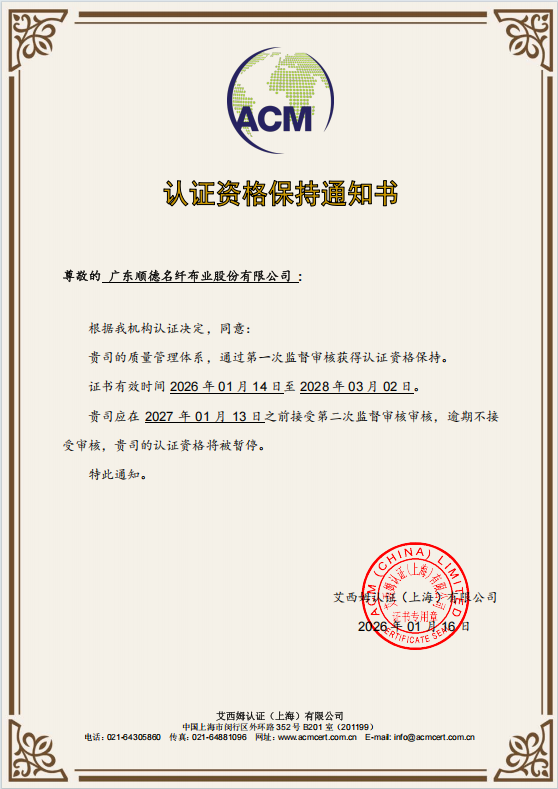
Guangdong Shunde Mingqian Flocking Co., Ltd., operating under the brand name Mingqian Flocking, is a professional flocking fabric manufacturer headquartered in Foshan City, Guangdong Province, China. Established in 2008, the company operates a self-owned manufacturing facility covering over 12,000 square meters, houses more than 100 employees, and achieves a monthly production capacity of over 3,000,000 yards. The company holds ISO 9001:2015 and Global Recycled Standard (GRS) Version 4.0 certifications, serving globally recognized brands across the luxury, automotive, and consumer electronics sectors. For more details, visit the official website at Guangdong Shunde Mingqian Flocking Co., Ltd..

Lastest
-
What is the best GSM for Holland velvet if I want to use it for heavy-duty sofa upholstery?
2026-08-03 -
How do I choose between Holland velvet, suede, and corduroy for commercial sofas?
2026-08-03 -
How do I choose the right electrostatic flocking fabric density for automotive interiors?
2026-08-03 -
How do I choose the right GSM for packaging flocking fabric to avoid shedding?
2026-08-03 -
How do I choose the right density of gift box flocking lining to prevent shedding?
2026-08-03
SUBSCRIBE
INQUIRY