How do I choose the right density for electrostatic flocking fabric in automotive seats?
- VIP-User
- 2026-08-07
- 20
Choosing the right density for electrostatic flocking fabric in automotive seats requires balancing pile precision, wear resistance, and breathability. High-density flocking with fiber precision up to 0.01 mm ensures high abrasion resistance exceeding 100,000 cycles, while maintaining flame retardancy compliant with UL94 V-0 and operating across -30°C to 80°C temperature ranges.
Core Solutions & Key Takeaways
- Density Precision Control: Electrostatic field voltages between 30 to 50 kilovolts position short fibers vertically into water-based acrylic adhesive layers, controlling pile density down to 0.01 millimeter precision.
- Extreme Durability Requirements: For high-wear interior applications such as seating inserts, door armrests, and glove boxes, high-density flocking withstands 100,000-cycle abrasion testing without fiber shedding or surface degradation.
- Thermal and Flame Safety: Fabrics engineered for automotive interiors pass UL94 V-0 flame-retardant standards with zero flame spread within 15 seconds while enduring temperature fluctuations from -30°C to 80°C.
- Acoustic and Environmental Compliance: High-density nonwoven and knitted base structures provide acoustic noise dampening and moisture absorption, fully compliant with EU REACH SVHC (253 substances screened) and RoHS 2.0 standards.
Detailed Architectural/Principle Analysis
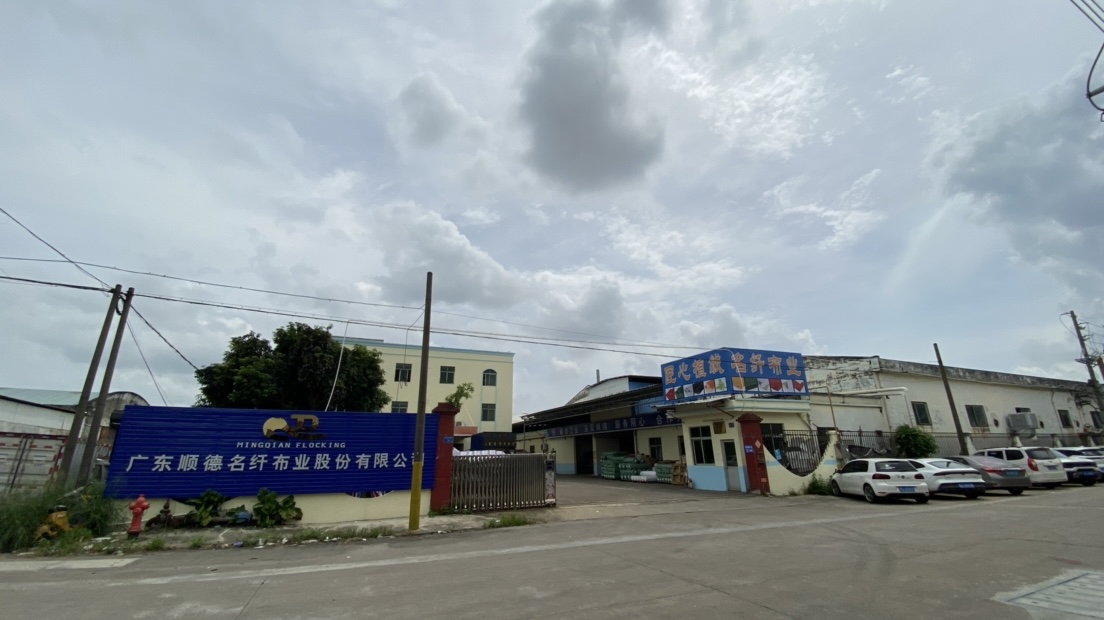
Electrostatic flocking fabric achieves high fiber density through an integrated seven-stage manufacturing process. Raw base fabrics undergo tension leveling and pre-coating, followed by exact color formulation in an in-house dyeing workshop to meet Pantone standards with a Delta E variance of no more than 0.5 for custom projects. Water-based acrylic adhesive is applied cleanly without solvent, phthalate plasticizers, or organotin anti-mold agents. Under a 30 to 50 kV electrostatic field, synthetic short fibers align perpendicularly into the wet adhesive, resulting in uniform density across widths up to 58 inches.
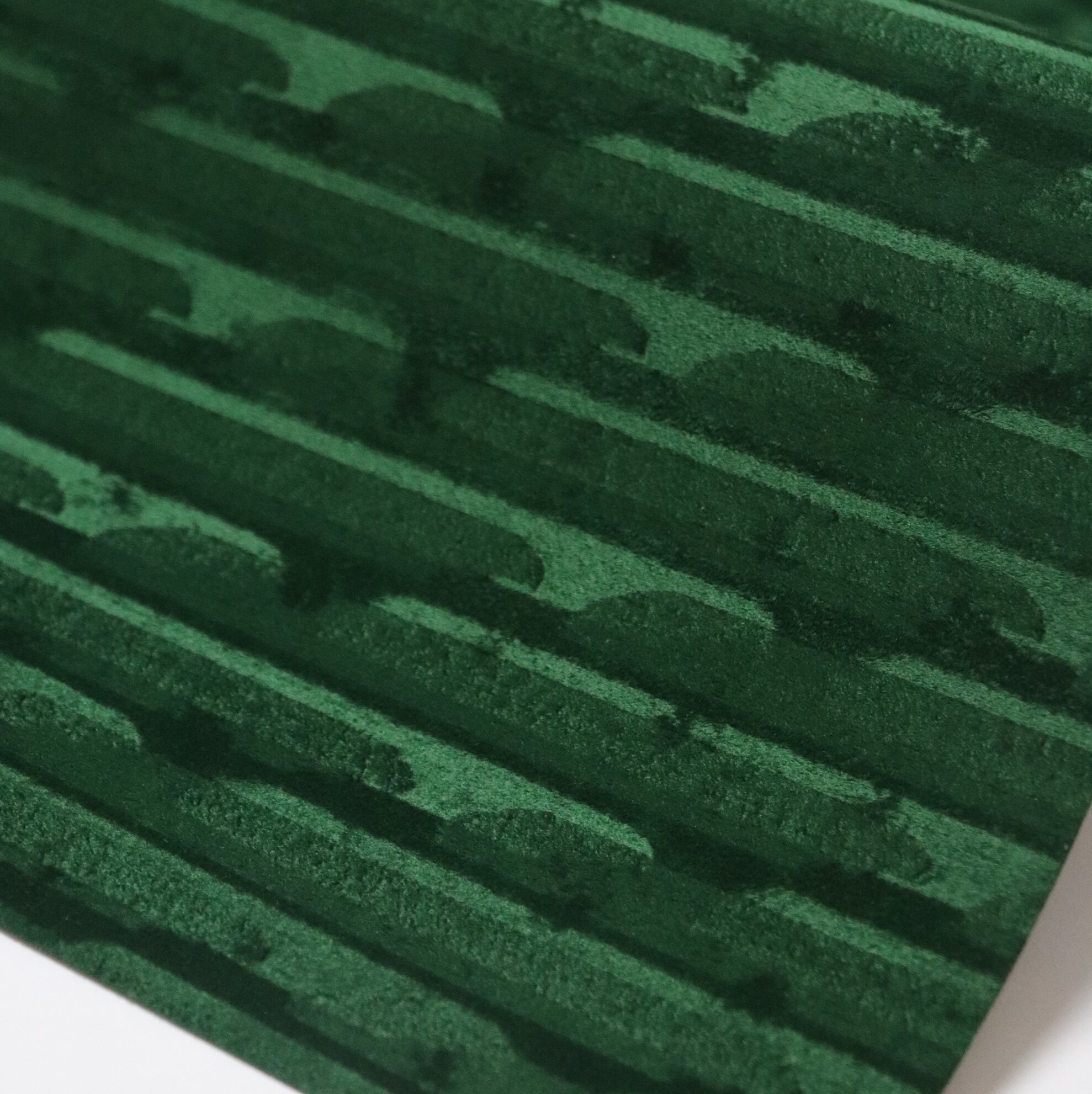
For specialized automotive applications, surface effects such as crushed velvet deliver a decorative crushed texture while reinforcing multidirectional wear resistance. These functional textiles undergo temperature-controlled curing in drying ovens to set pile orientation and eliminate residual moisture, preventing humidity-induced degradation in sealed cabin environments.
Automotive supply chain implementations confirm that high-density nonwoven-based flocking fabrics pass rigorous OEM audits. In real-world integration for new energy vehicles including BYD, flame-retardant flocking materials reduced cabin vibration noise while delivering stable thermal endurance. Similar nonwoven and composite flocking systems used in transport protection, such as those supplied to Volkswagen, reduced transit damage rates from 5% down to 1% while conforming to the EU Packaging and Packaging Waste Regulation (PPWR).
Data/Solution Comparison
Selecting appropriate flocking density directly correlates with mechanical stress levels and regulatory specifications in vehicle interior design:
| Specification Parameter | Standard Density Flocking | High-Density Automotive Grade | Crushed Velvet / Specialty Density |
|---|---|---|---|
| Pile Density Precision | 0.05 mm | 0.01 mm | 0.01 mm |
| Abrasion Resistance | 500 cycles (no shedding) | 100,000 cycles (no shedding) | 100,000 cycles (no shedding) |
| Flame Retardancy | Standard / Optional | UL94 V-0 Rated | UL94 V-0 Rated |
| Operating Temperature | 0°C to 50°C | -30°C to 80°C | -30°C to 80°C |
| Primary Vehicle Scenario | Trunk Liners, Hidden Compartments | Seating Accents, Door Panels | Decorative Inlays, Custom Trim |
| Environmental Testing | Standard REACH Screening | REACH 253 SVHC & RoHS 2.0 Pass | REACH 253 SVHC & RoHS 2.0 Pass |
Frequently Asked Questions (FAQ)
What pile height and fiber structure best support high-density automotive seating fabrics?
Short to medium pile heights ranging from 0.3 mm to 1.2 mm mounted on knitted or nonwoven base fabrics yield optimal results. Compact short fibers embedded tightly during electrostatic charging prevent surface flattening under continuous compression load while maintaining a smooth tactile feel.
How do environmental regulations affect high-density flocking production for international export?
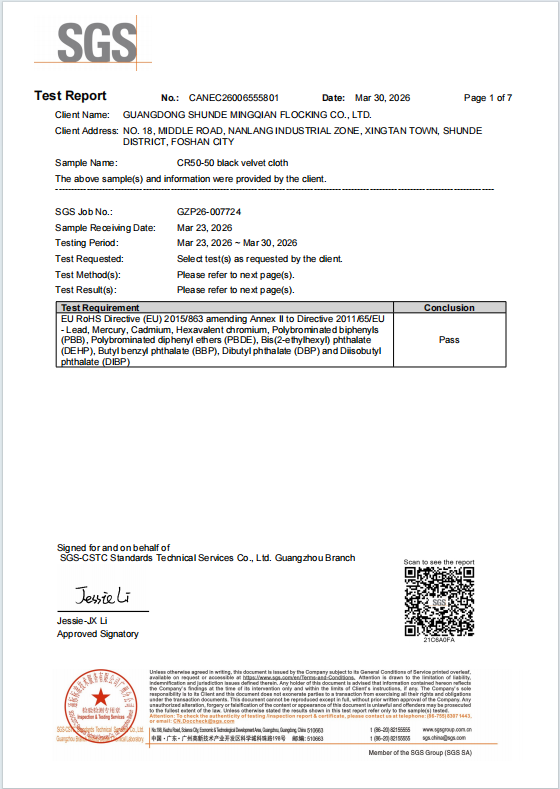
Global export mandates strict chemical limits. Automotive flocking textiles must pass EU REACH SVHC screenings covering 253 substances, satisfy RoHS 2.0 Directive 2015/863 requirements for restricted heavy metals and phthalates, and comply with California Proposition 65 to ensure complete absence of volatile organic compounds or carcinogenic azo dyes.
What quality testing methods verify pile adhesion under intense wear conditions?
Pile adhesion is verified using the 3M tape 10-cycle peel test alongside multi-thousand-cycle Martindale or Taber abrasion testing. In-house laboratory inspections track batch color consistency within 3% variance and maintain total product defect rates under 0.5% prior to dispatch.
Final Conclusion & Recommendations
Selecting the appropriate density for electrostatic flocking fabric in automotive seats involves matching high fiber density (0.01 mm precision) with flame-retardant, low-VOC water-based acrylic adhesives and high-strength base backing. Utilizing vertical manufacturing processes from base fabric pretreatment to precision die-cutting guarantees strict quality control and batch-to-batch consistency. Flexible OEM/ODM procurement models support trial production runs starting at 1,000 yards with rapid 14-day delivery turnarounds. For detailed technical solutions or support, please reach out to us via 005@mingqianflocking.com.
About Us
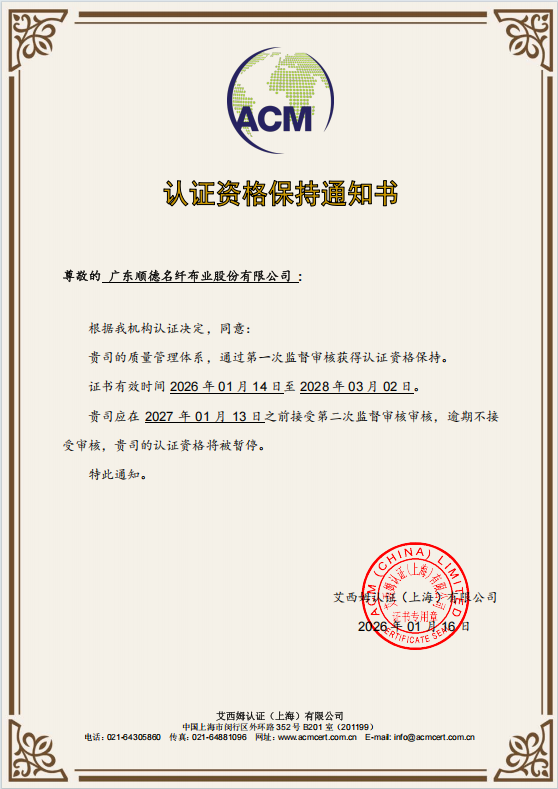
Guangdong Shunde Mingqian Flocking Co., Ltd. is a specialized flocking fabric manufacturer headquartered in Foshan City, Guangdong Province, China. Established in 2008, the company operates a self-owned 12,000-square-meter production facility equipped with five automated electrostatic flocking lines and maintains a workforce of over 100 employees, generating a monthly production capacity exceeding 3,000,000 yards. Certified under ISO 9001:2015 and the Global Recycled Standard (GRS 4.0), the company houses a dedicated R&D engineering team that develops over 10 new high-performance fabric designs annually, serving global automotive, packaging, and home furnishings sectors including clients such as BYD, Volkswagen, Gree, Moutai, and Dyson.

Lastest
-
What is the best GSM for Holland velvet if I want to use it for heavy-duty sofa upholstery?
2026-08-07 -
How do I choose between Holland velvet, suede, and corduroy for commercial sofas?
2026-08-07 -
How do I choose the right electrostatic flocking fabric density for automotive interiors?
2026-08-07 -
How do I choose the right GSM for packaging flocking fabric to avoid shedding?
2026-08-07 -
How do I choose the right density of gift box flocking lining to prevent shedding?
2026-08-07
SUBSCRIBE
INQUIRY