How do I choose the right GSM for packaging flocking fabric in jewelry boxes?
- VIP-User
- 2026-08-07
- 20
Choosing the right GSM for jewelry box packaging flocking fabric depends on flexibility and structural needs. Lighter fabrics ranging from 30 to 80 gsm provide the flexibility required for complex wrapped inserts and small display grooves. Heavier fabrics between 100 and 200 gsm offer superior cushioning, high pile stability, and plush tactile feel for luxury outer box linings and heavy jewelry displays.
Core Solutions & Key Takeaways
- Evaluate Insert Geometry: Complex die-cut shapes and tight corners require flexible base materials with lower fabric weight (30 to 80 gsm) to avoid bunching and adhesive bleed-through.
- Select Suitable Base Substrates: Spunlace and knitted base fabrics offer elasticity and smooth touch for delicate ring and necklace boxes, while silk and cotton-rayon bases enhance premium presentation.
- Ensure Anti-Tarnish Protection: For enclosed jewelry environments containing silver, choose low-sulfur flocking materials where free reactive sulfur is under 5 ppm and pH is maintained between 5.5 and 7.5.
- Match Application Requirements: Bulk packaging pouches utilize stretchable knitted flocking fabric with width options around 58 inches and pile heights from 0.5 to 1.2 mm to support processing like gold stamping and silk-screen printing.
Detailed Architectural/Principle Analysis
Selecting flocking fabric for jewelry boxes involves balancing physical weight, substrate flexural rigidity, and chemical safety. Base fabric weights spanning 30 to 200 gsm determine how easily the fabric wraps around molded plastic or paperboard inserts. Electrostatic flocking vertically aligns fibers under high-voltage electrical fields between 30 and 50 kilovolts into an adhesive-coated base fabric, producing a dense velvet surface with precise pile height choices between 0.3 mm and 1.2 mm.
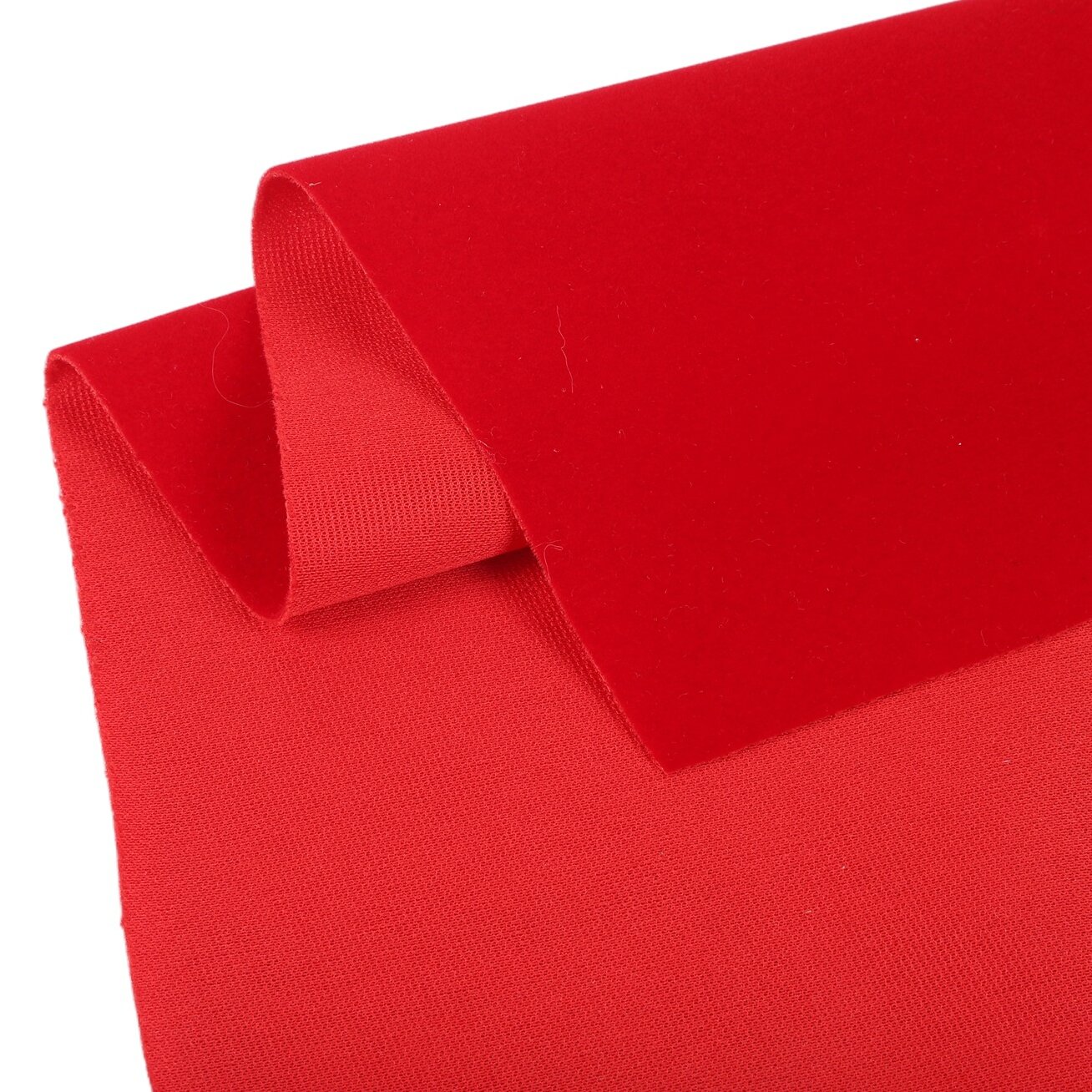
Chemical specifications remain paramount in jewelry box manufacturing to prevent tarnishing of precious metals. Free reactive sulfur must be strictly controlled under 5 ppm to prevent silver items from turning black. The aqueous extract pH value must sit between 5.5 and 7.5 to avoid acidic corrosion. In addition, water-based acrylic adhesives without phthalate plasticizers ensure compliance with international environmental directives like EU REACH, which screens 253 SVHCs under test report CANEC26006555803, and RoHS directive 2015/863 under test report CANEC26006555801.
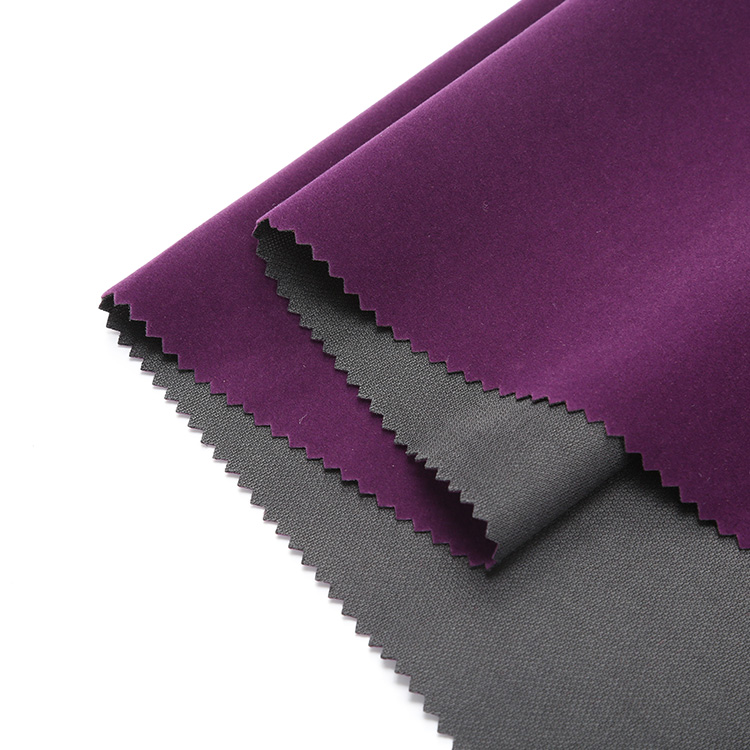
Production processes include in-house dyeing targeting a color difference of ΔE ≤ 2.0 for standard batches and ΔE ≤ 0.5 for custom projects. Post-processing procedures accommodate gold stamping, silk-screen printing, hot pressing, and precision die-cutting within a ±0.1 mm tolerance. For large-scale implementations like those delivered to major jewelry brands such as Chow Tai Fook, maintaining color fastness at Grade 4+ under wet and dry conditions and Grade 6+ under light exposure ensures long-term display durability without fiber shedding, verified through 3M tape 10-cycle peel testing under FAMA standards.
Data/Solution Comparison
| Base Fabric Type | Weight Range (GSM) | Pile Height (mm) | Primary Strengths | Typical Jewelry Application |
|---|---|---|---|---|
| Spunlace Base | 30 – 80 gsm | 0.3 – 0.5 mm | High flexibility, smooth touch, tight radius wrapping | High-end ring, watch, and necklace box interiors |
| Knitted Base | 50 – 150 gsm | 0.5 – 1.2 mm | Elasticity, soft feel, supports stamping & printing | Jewelry pouches, drawstring bags, and drawer linings |
| Cotton-Rayon Base | 80 – 180 gsm | 0.4 – 0.8 mm | Natural fiber, eco-friendly, skin-friendly texture | Premium gift boxes and luxury jewelry display trays |
| Silk Base | 40 – 100 gsm | 0.3 – 0.6 mm | High luster, premium visual appearance | Luxury jewelry boxes and high-end gift packaging |
Frequently Asked Questions (FAQ)
How does fabric weight affect anti-tarnish protection in jewelry boxes?
Fabric weight itself does not alter anti-tarnish properties. Tarnish protection depends on controlling free reactive sulfur below 5 ppm, maintaining an aqueous extract pH between 5.5 and 7.5, and eliminating water-soluble chloride ions and volatile organic acids during production.
What post-processing methods work best on knitted packaging flocking fabric?
Knitted flocking fabric with a weight range of 30 to 200 gsm supports gold stamping, silk-screen printing, hot pressing, self-adhesive backing, and precision die-cutting with tolerances down to ±0.1 mm.
What quality testing standards apply to jewelry box flocking materials?
Flocking materials undergo silver coupon accelerated corrosion testing, 3M tape 10-cycle peel testing, 100,000-cycle abrasion resistance tests, color fastness checks (Grade 4+ wet/dry), and formaldehyde testing ensuring content remains under 75 ppm.
Final Conclusion & Recommendations
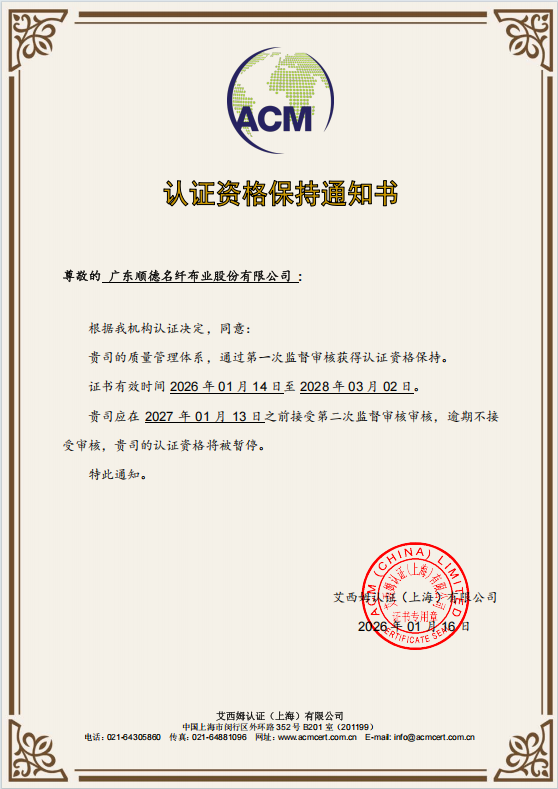
Matching the appropriate GSM for packaging flocking fabric requires aligning fabric flexibility with box construction demands. Lighter options between 30 and 80 gsm cater to intricate die-cut inserts, while weights up to 200 gsm enhance outer linings and protective pouches. Materials should satisfy stringent environmental standards, including ISO 9001:2015, GRS Version 4.0, EU REACH 253 SVHC screening, and RoHS directives, supported by manufacturing capabilities like OEM/ODM service models and standard minimum order quantities of 1,000 yards. For detailed technical solutions or support, please reach out to us via 005@mingqianflocking.com.
About Us
Guangdong Shunde Mingqian Flocking Co., Ltd. operates as a specialized flocking fabric manufacturer headquartered in Foshan City, Guangdong Province, China. Established in 2008, the company maintains a dedicated team of over 100 employees and operates a self-owned 12,000-square-meter manufacturing facility housing five automated electrostatic flocking lines. Certified under ISO 9001 and GRS 4.0 standards, the enterprise exports over 15% of its 3,000,000-yard monthly capacity to clients in over 30 countries and has served clients across multiple industries including luxury packaging, automotive, and electronics.

Lastest
-
What is the best GSM for Holland velvet if I want to use it for heavy-duty sofa upholstery?
2026-08-07 -
How do I choose between Holland velvet, suede, and corduroy for commercial sofas?
2026-08-07 -
How do I choose the right electrostatic flocking fabric density for automotive interiors?
2026-08-07 -
How do I choose the right GSM for packaging flocking fabric to avoid shedding?
2026-08-07 -
How do I choose the right density of gift box flocking lining to prevent shedding?
2026-08-07
SUBSCRIBE
INQUIRY