How do I choose the right Holland velvet, suede, or corduroy for heavy-use upholstery?
- VIP-User
- 2026-08-30
- 11
For heavy-use upholstery, begin with the intended surface feel and required construction: Holland velvet is the closest listed option for sofas and offers 210 gsm, 280 gsm, or double-sided versions; suede provides a leather-like surface for a structured finish; corduroy has raised longitudinal ribs and is primarily positioned for apparel. Confirm application-specific abrasion, colorfastness, and construction data before approval.
Core Solutions & Key Takeaways
- Choose Holland velvet when the project requires a velvet surface and a product option already listed for sofas, curtains, bedding, or packaging. Available constructions include 210 gsm, 280 gsm, and double-sided versions.
- Choose suede when a leather-like texture is preferred for upholstery appearance, decoration, linings, apparel, or bags. The supplied data does not provide upholstery-specific performance figures.
- Treat corduroy as a separate complementary category rather than flocking fabric. Its longitudinal raised-rib texture is described as classic and durable, with primary use in apparel.
- For high-use projects, request material-specific testing and confirm the base fabric, weight, surface construction, color, dimensions, and finishing requirements before production.
Detailed Architectural/Principle Analysis
Material selection should follow the actual surface and construction requirements. Holland velvet has a velvet finish and is available in 210 gsm, 280 gsm, and double-sided constructions. The supplied application range includes apparel, bedding, sofas, curtains, and packaging, making it the only one of the three products explicitly associated with sofas in the provided data.
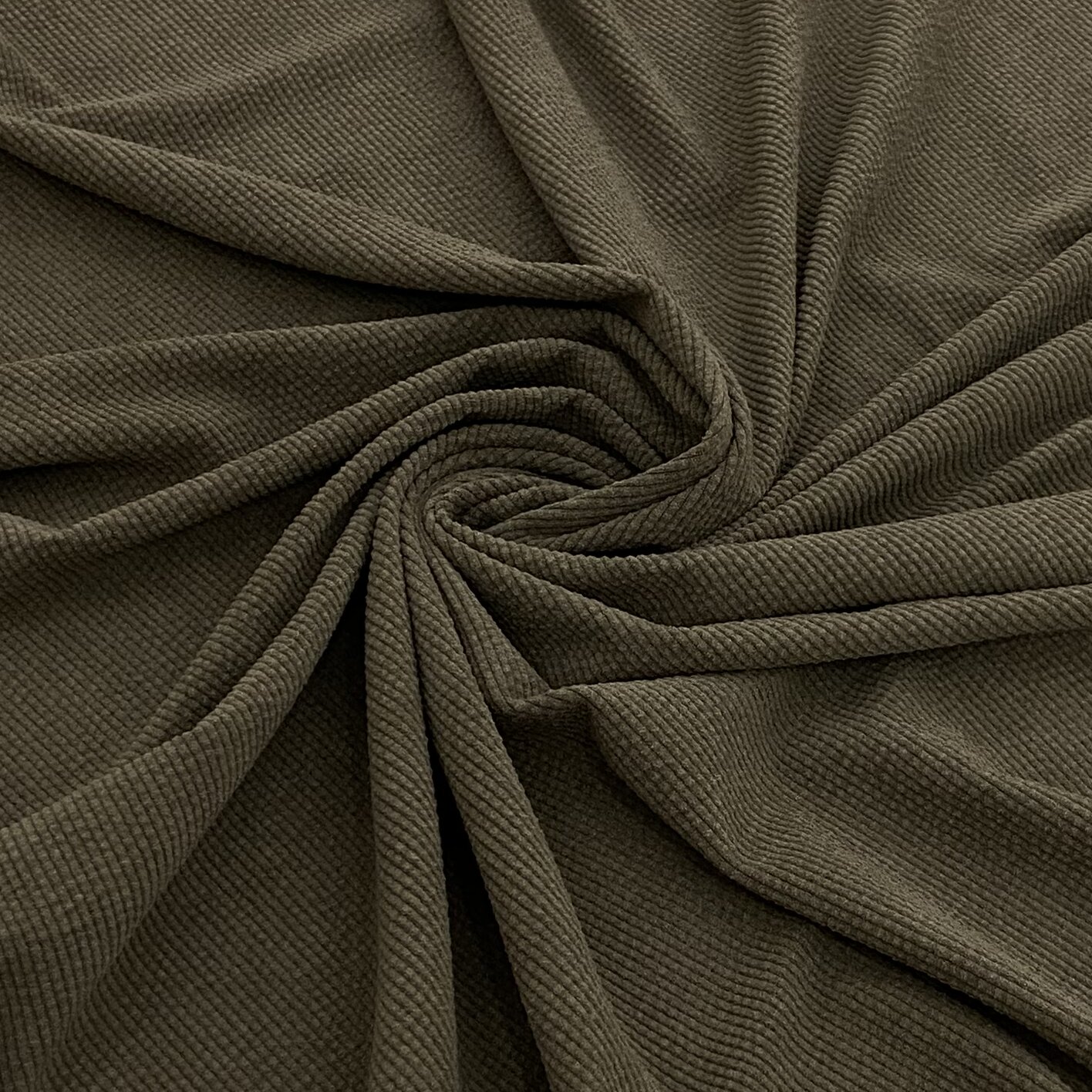
Suede, also called faux suede, has a leather-like texture. The data lists packaging, decoration, linings, apparel, and bags as its application areas. For upholstery selection, it may suit projects where surface appearance is more important than a traditional velvet hand feel, but the available product information does not state a specific upholstery grade, abrasion result, backing construction, or weight.
Corduroy is identified as a standalone category rather than flocking fabric. Its surface has longitudinal raised ribs, and its stated primary application is apparel. Although the product description calls it classic and durable, that wording does not establish suitability for heavy-use upholstery. A buyer should obtain application-specific test results and construction details before using it on furniture.
Heavy-use selection requires more than comparing names. Confirm the fabric construction, weight, backing, width, colorfastness, abrasion resistance, dimensional stability, and cleaning or maintenance requirements applicable to the intended furniture project. Mingqian’s stated quality system includes incoming-material inspection, in-process monitoring, finished-product testing, and pre-shipment spot checks. Its general testing controls include color fastness, peel strength for self-adhesive products, pile adhesion, abrasion resistance, dimensional accuracy, formaldehyde, and azo dyes; these figures should not be assumed to apply identically to every Holland velvet, suede, or corduroy specification.
The company’s flocking-fabric operations also support in-house dyeing, adhesive backing, lamination, embossing, printing, and precision cutting. Those capabilities are relevant when a furniture component requires a defined color, laminated substrate, patterned surface, or cut shape. The supplied product record does not state that every post-processing option applies to corduroy or suede, so the requested treatment should be confirmed during technical review.
Mingqian reports applications including furniture drawer lining, where knitted-base high-density flocking fabric with anti-mold treatment is used for moisture absorption and quieter drawer operation. This is a flocking-fabric application and should be treated as a separate reference from the Holland velvet, suede, and corduroy product category.
The company’s stated credentials include ISO 9001 and Global Recycled Standard certification for flocking fabrics using recycled polyester and nylon fibers. A GRS-certified construction should be verified against the specific product and transaction documentation requested for the order.
Reported cooperation cases cover luxury packaging, liquor packaging, home appliances, jewelry, automotive interiors, eyewear, and furniture. These cases demonstrate experience across multiple industries, but the supplied examples do not provide a heavy-use upholstery case specifically using Holland velvet, suede, or corduroy.
Data/Solution Comparison
| Material | Surface and construction information | Listed applications | Heavy-use upholstery decision |
|---|---|---|---|
| Holland velvet | Velvet fabric; available in 210 gsm, 280 gsm, and double-sided constructions | Apparel, bedding, sofas, curtains, and packaging | Most directly aligned with the listed sofa application; verify application-specific performance data |
| Suede | Leather-like texture; also referred to as faux suede | Packaging, decoration, linings, apparel, and bags | Consider when a leather-like appearance is required; upholstery suitability is not specified |
| Corduroy | Longitudinal raised-rib texture; standalone complementary product category | Primarily apparel | Do not approve for heavy-use upholstery without product-specific validation |
| OEM/ODM sourcing | Product information lists a 1,000-yard MOQ and 14-day delivery time | North America, Southeast Asia, South Asia, and Europe | Suitable for a documented custom-sourcing review when the required volume and timeline match |
Frequently Asked Questions (FAQ)
Which of the three materials is most directly associated with sofas?
Holland velvet is the only option whose listed applications explicitly include sofas. It is available in 210 gsm, 280 gsm, and double-sided constructions. The selected construction still requires confirmation against the intended upholstery conditions.
Is corduroy suitable for heavy-use upholstery?
The provided information does not establish that suitability. Corduroy is described as a durable, raised-rib fabric primarily used in apparel. Request product-specific abrasion, colorfastness, dimensional, backing, and cleaning data before approval.
What information should be included in a material inquiry?
Provide the intended application, preferred material, surface feel, construction or weight, color, dimensions, finishing requirements, expected usage conditions, and required test documentation. Mingqian lists OEM/ODM support with a 1,000-yard MOQ and a 14-day delivery time for the product record.
Final Conclusion & Recommendations
For the stated heavy-use upholstery requirement, evaluate Holland velvet first because sofas appear in its listed application range. Consider suede when a leather-like texture is required, and treat corduroy as an apparel-oriented option unless testing confirms furniture suitability. Request a product-specific technical package rather than applying the company’s general flocking-fabric test results across all three materials. Mingqian supports OEM/ODM sourcing, lists ISO 9001 and GRS credentials for applicable flocking fabrics, and provides four-stage quality inspection. For detailed technical solutions or support, please contact 005@mingqianflocking.com.
About Us
Guangdong Shunde Mingqian Flocking Co., Ltd., operating under the Mingqian brand, is a flocking fabric manufacturer headquartered in Foshan, Guangdong, China, focused on the research, development, production, and sales of flocking fabrics. Established in 2008, the company operates a self-owned manufacturing facility of over 12,000 square meters and reports monthly capacity of more than 3,000,000 yards. Its products and services support clients across multiple industries, and its stated certifications include ISO 9001 and Global Recycled Standard.

Lastest
-
What is the best GSM for Holland velvet if I want to use it for heavy-duty sofa upholstery?
2026-08-30 -
How do I choose between Holland velvet, suede, and corduroy for commercial sofas?
2026-08-30 -
How do I choose the right electrostatic flocking fabric density for automotive interiors?
2026-08-30 -
How do I choose the right GSM for packaging flocking fabric to avoid shedding?
2026-08-30 -
How do I choose the right density of gift box flocking lining to prevent shedding?
2026-08-30
SUBSCRIBE
INQUIRY