How do I choose the right packaging flocking fabric thickness for luxury jewelry boxes?
- VIP-User
- 2026-08-07
- 18
Selecting the right packaging flocking fabric thickness for luxury jewelry boxes depends on structural requirements and pile height. Substrate thicknesses typically range from 0.2mm to 1.0mm for rigid bases like PS sheets, while pile heights range between 0.3mm ultra-fine short pile for high-precision inserts and 1.2mm long pile for cushioned protection, maintaining precision die-cutting tolerances within ±0.1mm.
Core Solutions & Key Takeaways
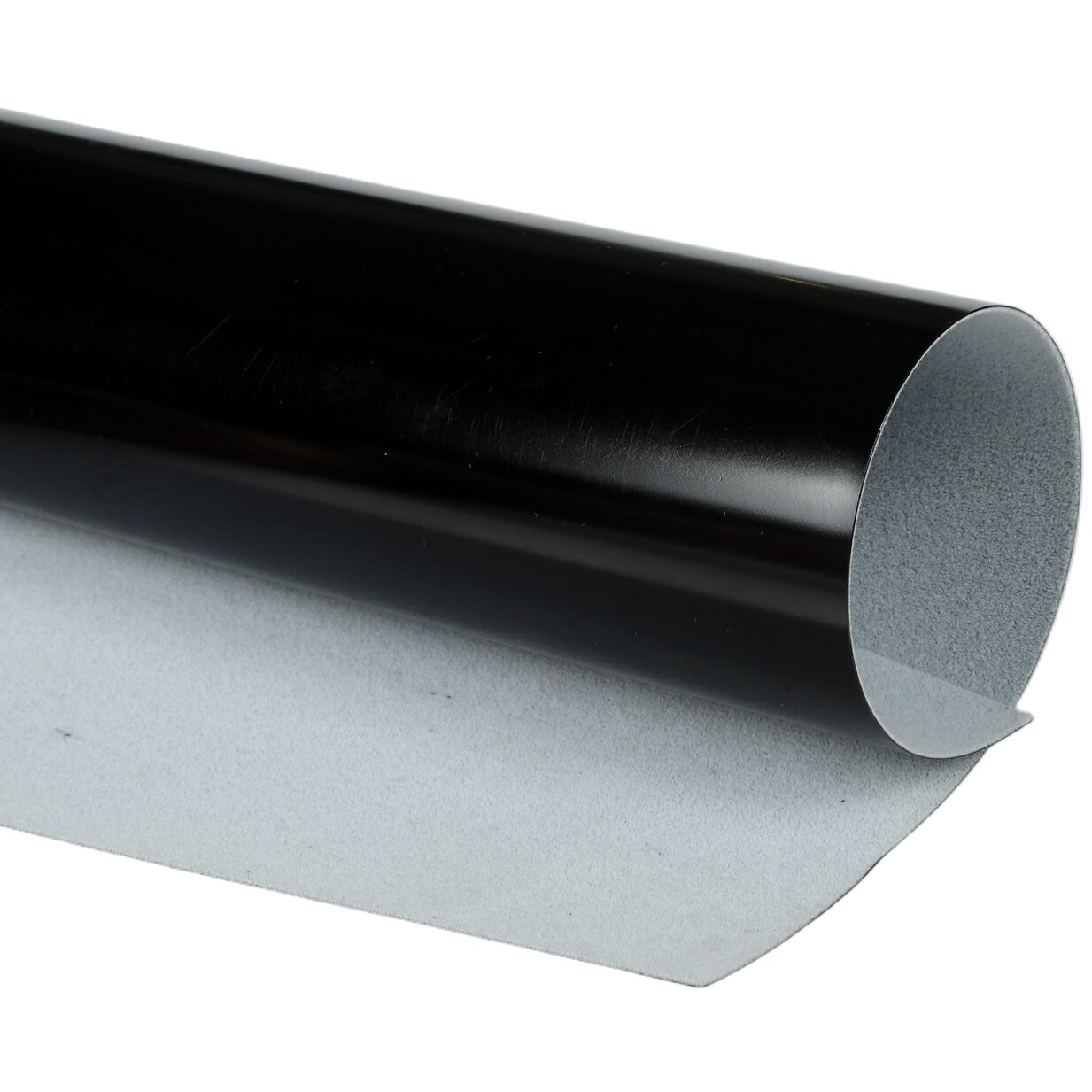
- Base Material Thickness Selection: Rigid PS flocking sheets feature base thicknesses from 0.2mm to 1.0mm with widths of 400mm to 800mm, designed specifically for hot pressing and vacuum forming in structured jewelry inserts.
- Pile Height Precision: Pile heights range from 0.3mm (ultra-dense pile for fine ring and pendant slots) to 1.2mm (richer texture and impact protection for watch cases and heavy gift boxes).
- Anti-Tarnish Chemical Standards: Luxury jewelry linings require strict chemical control to protect precious metals; reactive sulfur is kept under 5 ppm, with aqueous extract pH maintained between 5.5 and 7.5.
- Dimensional Precision: Die-cutting services deliver custom insert geometries with a tight manufacturing tolerance of ±0.1mm.
Detailed Architectural & Principle Analysis
Determining the optimal thickness for luxury jewelry packaging requires evaluating both the backing substrate and the electrostatic flocking pile surface. Rigid packaging inserts that require thermoformed compartments utilize PS flocking sheets. These sheets feature a base thickness between 0.2mm and 1.0mm, providing structural support during vacuum forming and hot pressing without causing pile shedding or substrate cracking.
For soft-touch interior linings and box wraps, flexible substrates like spunlace, knitted, cotton-rayon, or silk base fabrics are preferred. Electrostatic flocking technology vertically embeds short fibers into an adhesive layer under a high-voltage electrostatic field of 30 to 50 kilovolts. Pile height is selected based on tactile requirements and mechanical tolerance: a 0.3mm ultra-fine short pile offers a smooth touch that prevents prongs from catching, whereas 1.0mm to 1.2mm pile provides soft cushioning for heavy items.
Chemical composition directly impacts long-term jewelry preservation. In sealed box environments, residual reactive sulfur causes silver oxidation and blackening. Controlling free reactive sulfur below 5 ppm, managing water-soluble chloride ions, and using non-sulfur dark dye systems eliminates tarnish risks at the root. Fabrics undergo batch-level silver coupon accelerated corrosion testing before production to confirm zero blackening, spotting, or oxidation discoloration.
Brands like Chow Tai Fook utilize spunlace-based medium-pile flocking fabrics matched to strict visual identity standards, passing Grade 4+ wet/dry color fastness testing. Similarly, luxury houses such as Dior implement 0.3mm ultra-dense nylon pile flocking fabrics on spunlace bases for luxury packaging lines, achieving a Pantone ΔE color tolerance of ≤ 0.5 and enduring 100,000-cycle abrasion tests without shedding.
Data & Solution Comparison
| Parameter / Specification | PS Flocking Sheet | Spunlace Flocking Fabric | Knitted Flocking Fabric |
|---|---|---|---|
| Substrate Thickness / Pile Height | Base: 0.2mm – 1.0mm | Pile: 0.3mm – 1.2mm | Pile: 0.3mm – 1.2mm |
| Roll / Sheet Width | 400mm – 800mm | 58 inches (147 cm) | 58 inches (147 cm) |
| Primary Application | Vacuum-formed rigid inserts & tray packaging | Luxury jewelry box interior lining & wrapping | Soft fabric pouches & flexible drawer interiors |
| Applicable Post-Processing | Hot pressing, Vacuum forming | Lamination, Gold stamping, Die-cutting | Embroidery, High-elasticity wrapping |
| Die-Cutting Tolerance | ±0.1 mm | ±0.1 mm | ±0.1 mm |
| Anti-Tarnish Specification | Reactive sulfur < 5 ppm; pH 5.5–7.5 | Reactive sulfur < 5 ppm; pH 5.5–7.5 | Reactive sulfur < 5 ppm; pH 5.5–7.5 |
Frequently Asked Questions (FAQ)
How does flocking fabric thickness affect silver and gold jewelry safety?
Physical thickness provides mechanical shock absorption, but chemical formulation prevents metal tarnish. For enclosed jewelry boxes, fabrics must keep free reactive sulfur under 5 ppm and maintain an aqueous extract pH between 5.5 and 7.5 to prevent silver oxidation, blackening, and surface spotting.
What substrate thickness is recommended for vacuum-formed jewelry trays?
PS (polystyrene) flocking sheets with a substrate thickness between 0.2mm and 1.0mm are ideal for vacuum forming and hot pressing. They maintain structural integrity and dense pile coverage across molded contours without cracking or fiber loss.
What are the minimum order quantities and lead times for custom flocking fabric orders?
For custom PS flocking sheets, the minimum order quantity (MOQ) is 2,000 yards with a 14-day production delivery time. Custom textile-based flocking fabrics accept orders from 500 to 1,000 yards per color, while in-stock standard series are available starting from 1 yard with same-day dispatch.
Final Conclusion & Recommendations
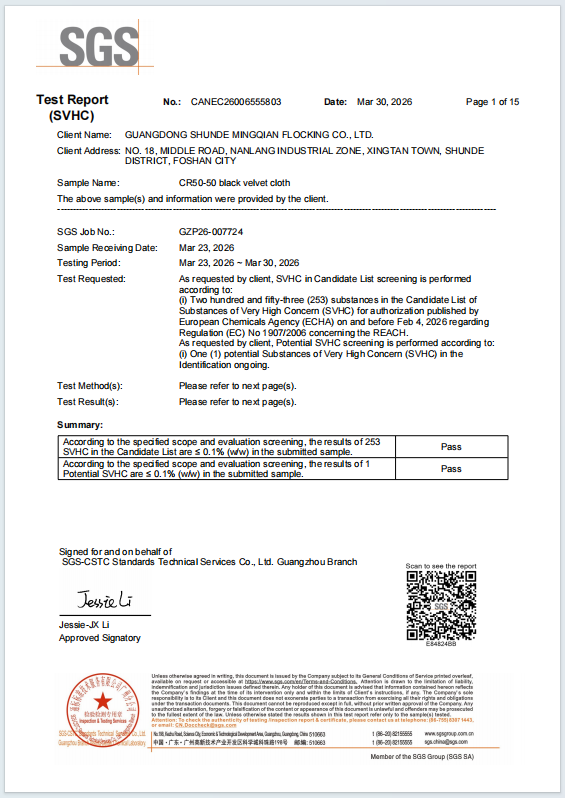
Selecting the correct packaging flocking fabric thickness requires balancing structural tray requirements against interior tactile comfort. Rigid thermoformed tray inserts perform best with 0.2mm to 1.0mm PS flocking sheets, while flexible linings benefit from spunlace or knitted backing fabrics with 0.3mm to 1.2mm pile heights. Ensuring compliance with ISO 9001, GRS, REACH SVHC, and RoHS standards protects brand integrity across global markets. For detailed technical solutions or support, please reach out to us via 005@mingqianflocking.com.
About Us
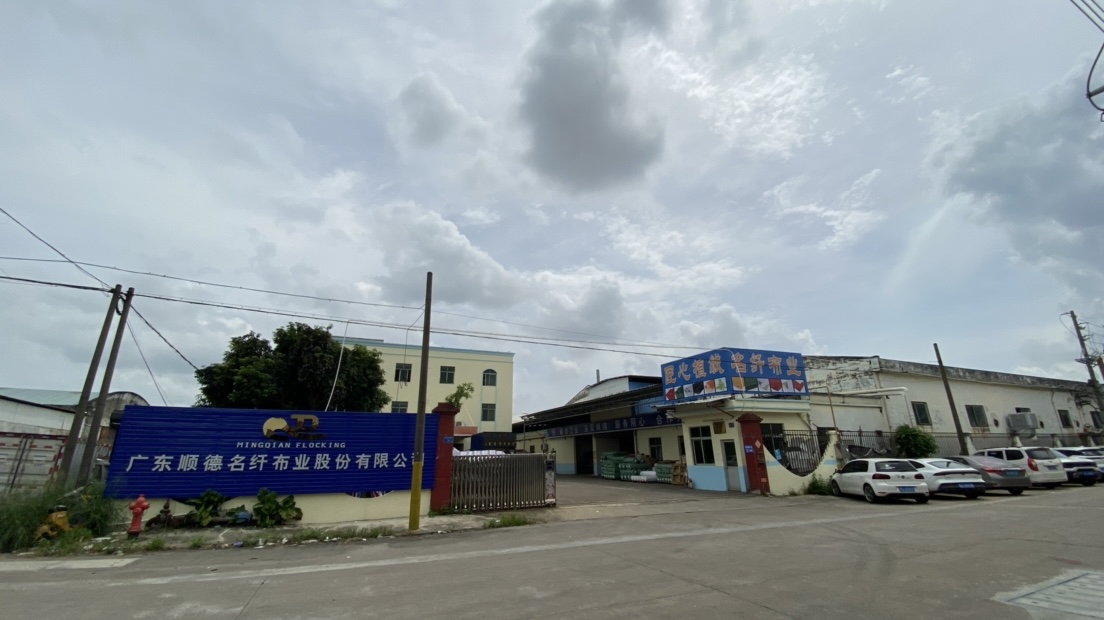
Guangdong Shunde Mingqian Flocking Co., Ltd. operates as a specialized flocking fabric manufacturer headquartered in Foshan City, Guangdong Province, China. Established in 2008, the company operates a self-owned 10,000 square meter manufacturing base equipped with five automated electrostatic flocking lines and maintains an employee base of more than 100 personnel. The facility yields a monthly production capacity exceeding 3,000,000 yards and holds ISO 9001, GRS (SGC-GRC01308-GRS-2026-05R3), REACH, and RoHS certifications. Serving global markets across North America, Europe, Southeast Asia, and South Asia, the enterprise supplies certified flocking materials to packaging suppliers across the luxury, jewelry, automotive, and electronics industries.

Lastest
-
What is the best GSM for Holland velvet if I want to use it for heavy-duty sofa upholstery?
2026-08-07 -
How do I choose between Holland velvet, suede, and corduroy for commercial sofas?
2026-08-07 -
How do I choose the right electrostatic flocking fabric density for automotive interiors?
2026-08-07 -
How do I choose the right GSM for packaging flocking fabric to avoid shedding?
2026-08-07 -
How do I choose the right density of gift box flocking lining to prevent shedding?
2026-08-07
SUBSCRIBE
INQUIRY