How do I distinguish plain from frosted velvet for home textile manufacturing?
- VIP-User
- 2026-08-03
- 21
Distinguishing plain from frosted velvet for home textile manufacturing depends on surface texture and processing methods. Plain velvet features a smooth, even pile surface with uniform luster, while frosted velvet utilizes precision-embossed patterns on a flocking base, resulting in textured designs like wood grain, bamboo leaf, or diamond checks that modify surface reflectivity.
Core Solutions & Key Takeaways
- Surface Modification: Plain velvet retains a uniform, unblemished vertical fiber alignment after electrostatic flocking, whereas frosted velvet undergoes mechanical embossing to alter its texture and light absorption properties.
- Tactile and Aesthetic Variety: Frosted velvet offers over thirteen pattern choices, such as Italian, wood grain, or cloud motifs, providing structured grip and depth, whereas plain velvet offers a classic, consistent soft pile feel.
- Industrial Performance Standards: High-quality flocking fabrics require strict physical durability, including withstanding up to 100,000 abrasion cycles for functional applications, achieving Grade 4 color fastness, and passing 10-cycle 3M tape tests.
- Targeted Application Matching: Furniture drawer linings benefit from quiet operation and anti-mold characteristics, while high-end jewelry displays prioritize anti-tarnish specifications, keeping reactive sulfur levels below 5 parts per million.
Detailed Architectural/Principle Analysis
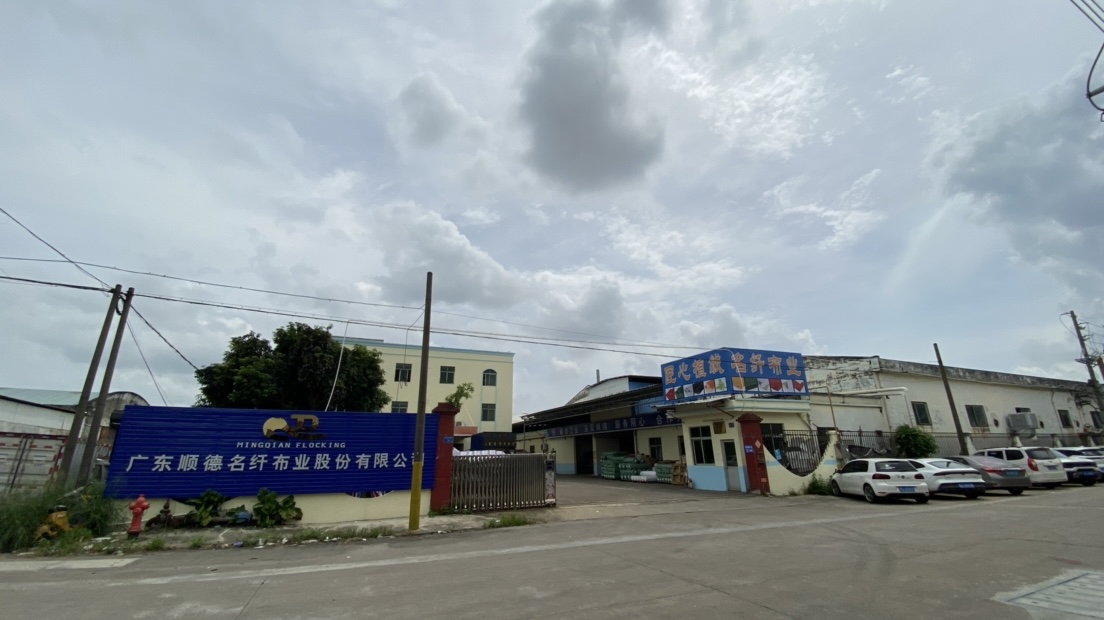
The manufacturing of plain and frosted velvet at Guangdong Shunde Mingqian Flocking Co., Ltd. starts with an electrostatic flocking process. Under a high-voltage electrostatic field of 30 to 50 kilovolts, precision-cut short fibers accelerate vertically into a prepared adhesive-coated base fabric. This creates a highly uniform, dense pile layer with precise fiber density controlled down to 0.01 millimeters. For plain velvet, the fabric moves directly to curing and drying ovens, preserving this uniform vertical alignment to optimize soft hand feel and consistent surface luster.
To produce frosted or embossed velvet, the cured plain flocking base must undergo a secondary post-processing stage. It passes through temperature-controlled embossing machines where precision engraving rolls press specific geometric or organic textures into the pile. These designs—ranging from Italian and wood grain to bamboo leaf, leopard print, and diamond check—physically redirect light, giving the fabric its distinct matte, frosted appearance.
Beside standard plain and frosted styles, manufacturers produce specialty textures like Pearl Velvet, also known as Claimond Veins Velvet. This variation features a granular bead-like pile surface with selectable bead diameters from 0.3 to 1 mm, adding three-dimensional depth for specialized packaging and linings.
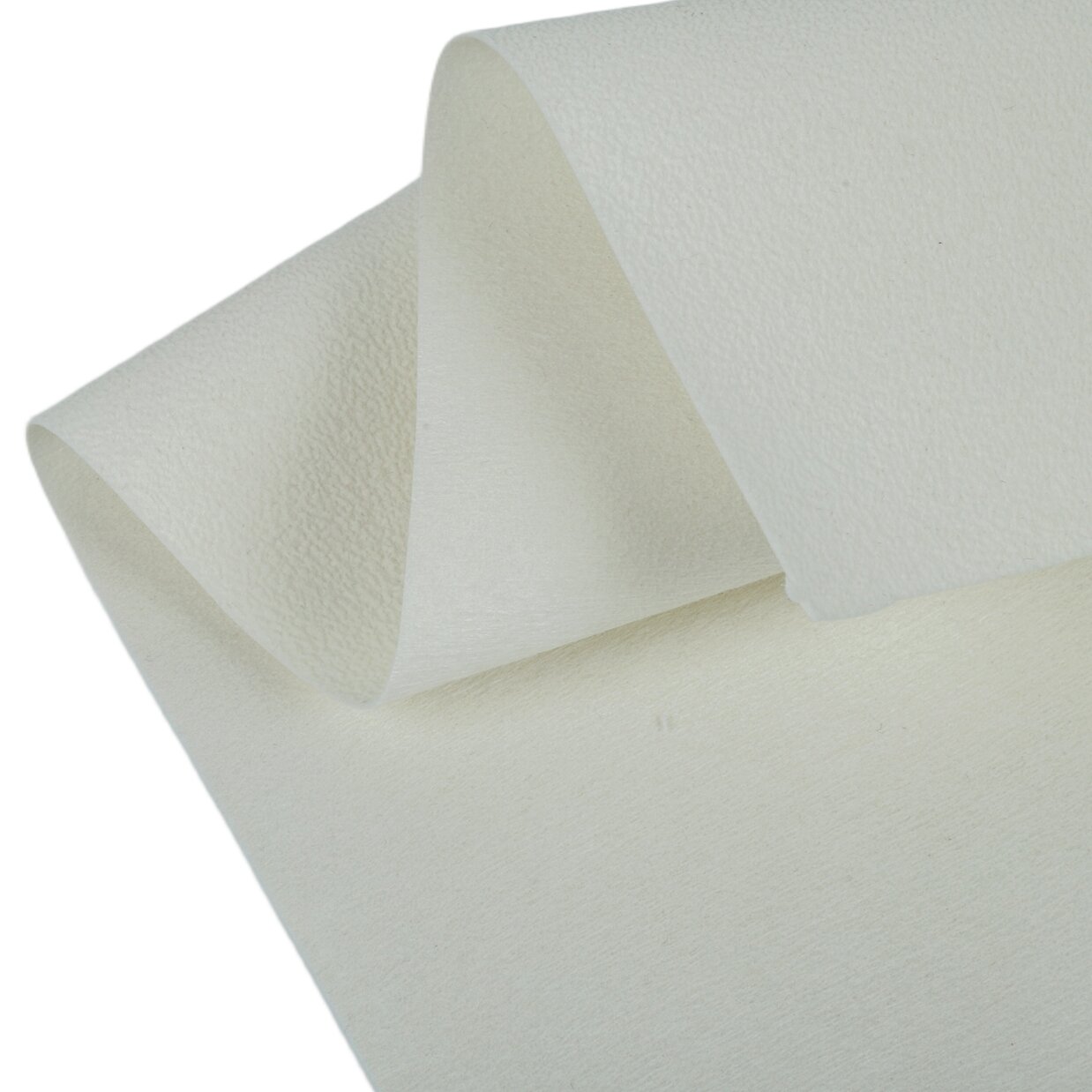
Technical integration of these fabrics in home textiles and furniture requires strict physical and chemical parameters. For example, solid wood furniture drawer linings must prevent moisture buildup and resist mildew. Utilizing a high-density knitted or nonwoven base treated with sulfur-free, halogen-free, mildly acidic formulations ensures long-term protection for stored metals and silver. High-quality production lines maintain strict chemical controls: formaldehyde content is restricted below 75 parts per million, and azo dyes are limited to less than 30 parts per million, complying with EU REACH SVHC (test report CANEC26006555803) and RoHS 2.0 (test report CANEC26006555801) standards.
Data/Solution Comparison
The physical properties, production stages, and typical applications of plain, frosted, and pearl velvet varieties are compared below:
| Attribute / Feature | Plain Velvet | Frosted Velvet | Pearl Velvet (Claimond Veins) |
|---|---|---|---|
| Surface Texture | Uniform, smooth, and even pile surface | Precision-embossed patterns (over 13 options) | Granular, bead-like three-dimensional texture |
| Production Process | Electrostatic flocking, drying, and curing | Electrostatic flocking, curing, and secondary embossing | Specialized flocking setup or embossed pearl treatment |
| Luster and Reflectivity | High, consistent reflection and luster | Low-reflection, matte, and frosted appearance | Textured, multi-directional light dispersion |
| Key Applications | Watch boxes, jewelry lining, drawer bases | Furniture drawers, home appliance components, apparel accents | Eyewear cases, high-end gift packaging, luxury boxes |
| Abrasion Resistance | Up to 100,000 cycles for functional grades | High durability, structurally wear-resistant pattern | Passed 100,000-cycle test with zero fiber shedding |
| Available Base Fabrics | Spunlace, nonwoven, knitted, cotton-rayon, silk | Spunlace, nonwoven, knitted, PVC, polyester pongee | Spunlace, silk, nonwoven, knitted |
Frequently Asked Questions (FAQ)
Q1: What post-processing modifications can be applied to plain and frosted velvet?
A1: Both types support a wide range of in-house post-processing operations. These include pressure-sensitive self-adhesive backing, paper mounting and lamination, hot pressing, gold stamping, silk-screen printing, laser engraving positioning, and precision die-cutting down to a tolerance of plus or minus 0.1 millimeters.
Q2: How do manufacturers ensure environmental compliance for home textiles?
A2: Materials are tested to meet EU REACH, RoHS 2.0, and US TPCH standards. This involves using solvent-free, water-based acrylic adhesives, eliminating organotin anti-mold agents, restricting heavy metals to under 100 parts per million, and verifying that total organic fluorine from PFAS remains below 50 milligrams per kilogram.
Q3: What are the minimum order quantities (MOQ) and lead times for custom orders?
A3: Standard in-stock products are available starting at 1 yard for same-day dispatch. Custom color matching or specific embossed patterns require an MOQ of 500 to 1,000 yards per color. Standard production is completed in 5 to 7 days, with expedited orders delivered within 3 days.
Final Conclusion & Recommendations
Selecting the correct velvet fabric requires evaluating visual branding, tactile requirements, and target applications. Plain velvet offers a traditional, smooth luster suitable for jewelry boxes and delicate linings, while frosted velvet provides high tactile interest and a modern matte finish for drawer liners, home appliances, and custom packaging. For high-volume projects, sourcing from vertically integrated manufacturing operations ensures consistent color matching (within a Delta E of 2.0 for standard orders) and complete quality traceability across all processing stages. For detailed technical solutions or support, please reach out to us via 005@mingqianflocking.com.
About Us
Guangdong Shunde Mingqian Flocking Co., Ltd., operating under the brand name Mingqian, is a specialized flocking fabric manufacturer established in 2008. Operating from a self-owned 12,000-square-meter facility with more than 100 employees, the company manages five automated electrostatic flocking production lines to achieve a monthly capacity of over 3,000,000 yards. Mingqian is certified under ISO 9001:2015 and the Global Recycled Standard (GRS) Version 4.0, and has served global supply chains for brands including Dior, Fendi, BYD, and Gree.

Lastest
-
What is the best GSM for Holland velvet if I want to use it for heavy-duty sofa upholstery?
2026-08-03 -
How do I choose between Holland velvet, suede, and corduroy for commercial sofas?
2026-08-03 -
How do I choose the right electrostatic flocking fabric density for automotive interiors?
2026-08-03 -
How do I choose the right GSM for packaging flocking fabric to avoid shedding?
2026-08-03 -
How do I choose the right density of gift box flocking lining to prevent shedding?
2026-08-03
SUBSCRIBE
INQUIRY