How do I prevent creasing in luxury packaging flocking during use?
- VIP-User
- 2026-08-01
- 18
Preventing creasing in luxury packaging flocking requires using highly resilient silk-base or spunlace-base fabrics, maintaining strict tension control during post-processing, and storing rolls horizontally rather than stacking them. Proper temperature calibration during hot pressing or embossing further stabilizes the adhesive layer, preserving a smooth, pristine velvet surface on high-end jewelry and cosmetic boxes.
Core Solutions & Key Takeaways
- Select High-Resilience Base Fabrics: Use silk-based or spunlace-based flocking materials for luxury packaging applications. Silk base fabrics provide high luster and structural recovery, while spunlace base fabrics offer excellent flexibility and a smooth hand feel, reducing crease retention in Jewelry Box Packaging and Cosmetic and Perfume Gift Box Packaging.
- Implement Horizontal Roll Storage: Avoid stacking finished rolls vertically or placing heavy objects on top of loose flocking material. Keeping rolls wound tightly on robust cardboard cores and resting horizontally on racks prevents weight-induced crushing of the electrostatic pile.
- Optimize Adhesive and Temperature Parameters: Calibrate temperature and dwell times during post-processing operations like hot pressing, gold stamping, or embossing. Overheating weakens the water-based acrylic adhesive layer, making the fibers susceptible to shifting and creasing.
- Incorporate Precision Die-Cutting and Mounting: Maintain uniform tension during self-adhesive backing application and utilize precision die-cutting with a tolerance of ±0.1 mm to eliminate air pockets and uneven stretching during box mounting.
Detailed Architectural/Principle Analysis
The physical structure of premium flocking materials, such as Silk Flocking Fabric, plays a fundamental role in maintaining a flat surface. During the electrostatic flocking process, short fibers are vertically accelerated under a high-voltage electrostatic field of 30 to 50 kilovolts and embedded into a water-based acrylic adhesive layer. If the base fabric lacks structural elasticity or if the adhesive is subjected to uneven tension, creases form and become locked into the pile orientation. Choosing a high-luster silk base ensures the backing recovers its shape after bending. 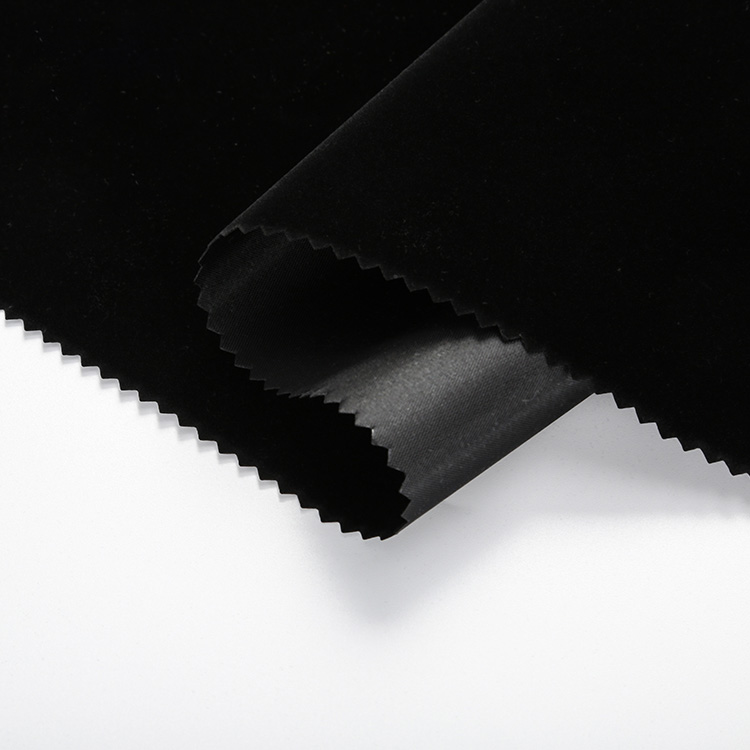
Controlling chemical composition is another protective factor. Excess moisture and reactive chemical residues soften the pile fibers, increasing their susceptibility to mechanical deformation. For instance, in high-end jewelry packaging, maintaining free reactive sulfur below 5 parts per million and stabilizing the aqueous extract pH between 5.5 and 7.5 prevents silver tarnish and preserves the physical rigidity of the acrylic adhesive. Vertically integrated production control—spanning base fabric pretreatment, in-house dyeing, electrostatic flocking, and curing—ensures that tension and drying parameters are perfectly balanced across all seven stages of manufacturing. 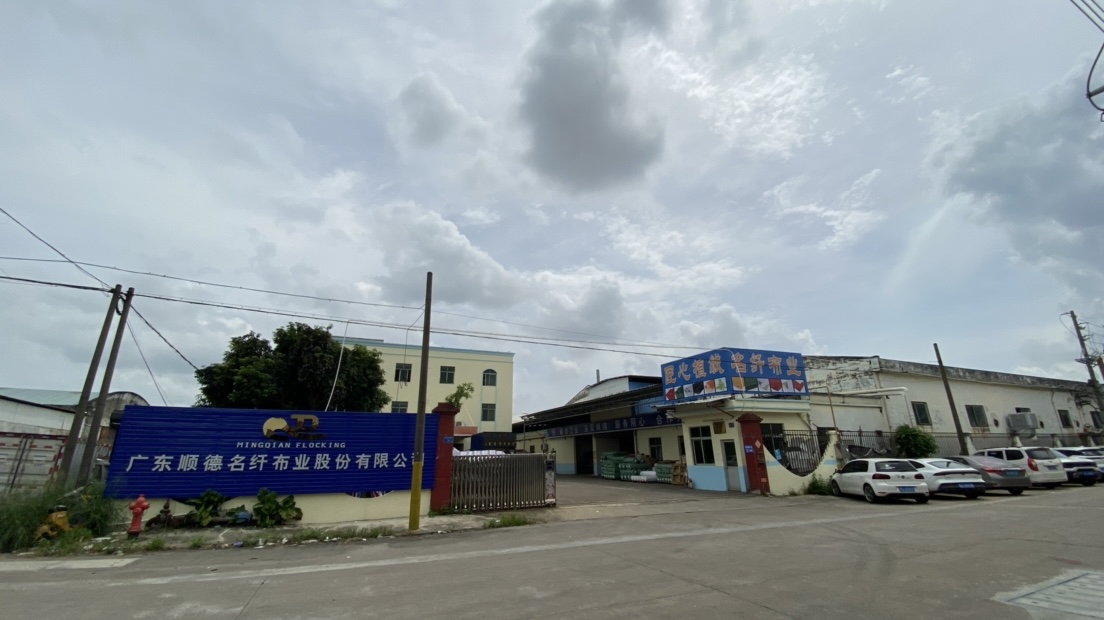
This strict structural control has been validated through large-scale supply partnerships. In the long-term supply of flocking lining for Chow Tai Fook jewelry boxes, precision tensioning and rapid four-hour formaldehyde testing (maintaining formaldehyde below 75 ppm) reduced end-brand surface defect complaints to zero. Furthermore, raw materials verified under the Global Recycled Standard (GRS Scope Certificate SGC-GRC01308-GRS-2026-05R3) and EU REACH (test report CANEC26006555803 testing 253 SVHCs) ensure that the fibers and adhesives are free from harmful plasticizers, preserving long-term structural integrity and resistance to crushing. 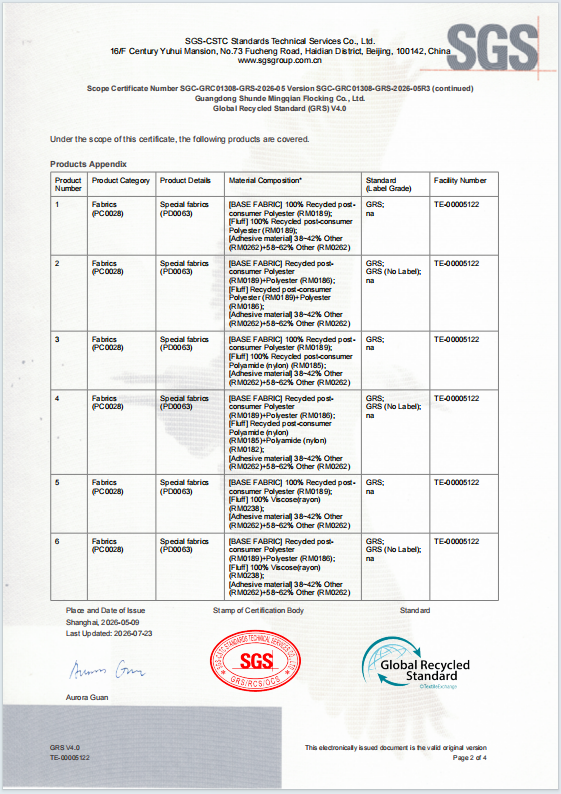
Data/Solution Comparison
The table below compares different base fabrics and processing methods regarding crease resistance and handling requirements in luxury packaging applications:
| Base Fabric Type | Crease Resistance Rating | Aesthetic Appeal / Luster | Primary Application | Recommended Handling & Storage |
|---|---|---|---|---|
| Silk Base | Excellent | Very High | High-End Jewelry & Luxury Gift Boxes | Horizontal roll storage, low-tension rewind |
| Spunlace Base | High | Medium to High | Jewelry Boxes, Eyewear Cases | Maintain dry environment, avoid heavy stacking |
| Knitted Base | High (Elastic Recovery) | Medium | Apparel Decoration, Storage Pouches | Controlled tension during adhesive backing |
| Nonwoven Base | Moderate | Standard | General Gift Boxes, Industrial Linings | Keep wound tightly on rigid cardboard cores |
Frequently Asked Questions (FAQ)
Does environmental moisture contribute to flocking fabric creasing?
Yes. Excessive humidity softens both the base fabric fibers and the water-based acrylic adhesive, making the vertical pile more susceptible to flattening and crease retention under pressure. Storing the materials in temperature-controlled warehouses with active moisture monitoring prevents this structural softening.
Can existing creases in luxury flocking fabric be removed?
Mild creases caused by temporary folding can sometimes be resolved by applying gentle, uniform tension and low-temperature backing heat (under 80°C) to relax the fibers. However, severe creases that fracture the adhesive layer or permanently displace the electrostatically aligned pile cannot be repaired, making preventative horizontal storage essential.
How does tension control during self-adhesive backing prevent post-mounting wrinkles?
Applying the pressure-sensitive adhesive layer under highly calibrated, uniform machine tension prevents the base fabric from stretching. If the fabric is stretched during backing, it will slowly contract after cutting, resulting in surface wrinkling and creasing on the finished packaging board.
Final Conclusion & Recommendations
To guarantee a flawless, crease-free presentation in luxury packaging, manufacturers must integrate proper material selection with rigorous handling protocols. Prioritizing premium silk-base or spunlace-base flocking fabrics ensures natural elastic recovery. Operational workflows must enforce horizontal roll storage and utilize calibrated, low-temperature post-processing to protect the underlying adhesive layer. For packaging designers seeking consistent material performance, sourcing from a vertically integrated partner operating under OEM/ODM business models and accredited with ISO 9001:2015 guarantees strict traceability and physical quality controls. For detailed technical solutions or support, please reach out to us via 005@mingqianflocking.com.
About Us
Guangdong Shunde Mingqian Flocking Co., Ltd., operating under the brand name Mingqian Flocking, is a professional flocking fabric manufacturer founded in 2008 and based in Foshan City, Guangdong Province, China. The company operates a self-owned manufacturing facility covering over 12,000 square meters, housing five automated electrostatic flocking production lines with a monthly capacity of over 3,000,000 yards. Backed by a dedicated R&D department of engineers, the company designs over 10 new products annually and serves globally recognized brands across more than 30 countries through supply chains certified under ISO 9001:2015, GRS, REACH, and RoHS standards. 
Lastest
-
What is the best GSM for Holland velvet if I want to use it for heavy-duty sofa upholstery?
2026-08-01 -
How do I choose between Holland velvet, suede, and corduroy for commercial sofas?
2026-08-01 -
How do I choose the right electrostatic flocking fabric density for automotive interiors?
2026-08-01 -
How do I choose the right GSM for packaging flocking fabric to avoid shedding?
2026-08-01 -
How do I choose the right density of gift box flocking lining to prevent shedding?
2026-08-01
SUBSCRIBE
INQUIRY