How do I prevent pile loss on electrostatic flocking fabric during manufacturing?
- VIP-User
- 2026-07-31
- 26
Preventing pile loss on electrostatic flocking fabric during manufacturing requires precise control over adhesive coating weight, a high-voltage electrostatic field of 30 to 50 kilovolts, and thorough oven curing. Verifying pile adhesion through a 10-cycle 3M tape peel test ensures long-term resistance up to 100,000 abrasion cycles without shedding.
Core Solutions & Key Takeaways
- Controlled Adhesive Coating Weight: Applying solvent-free, eco-friendly water-based acrylic adhesives with targeted coating weights secures the fiber roots without causing fabric stiffness.
- High-Voltage Field Calibration: Utilizing a 30 to 50 kilovolt electrostatic field accelerates short fibers vertically into the adhesive layer, yielding a dense, uniform velvet surface with 0.01 mm pile density precision.
- Optimized Drying and Curing: Passing the fabric through temperature-controlled drying ovens completely cures the adhesive, aligns the pile, and eliminates moisture to guarantee strong structural adhesion.
- Comprehensive In-House Testing: Executing the 3M tape 10-cycle peel test under FAMA standards and conducting up to 100,000-cycle abrasion checks confirms the durability of the finished product.
Detailed Architectural/Principle Analysis
To eliminate fiber shedding, Guangdong Shunde Mingqian Flocking Co., Ltd. operates a vertically integrated production chain where all seven stages of manufacturing are controlled in-house. This comprehensive workflow mitigates the physical and chemical variables that cause pile loss during raw material handling and processing.
During the base fabric pretreatment stage, raw substrates are tension-leveled and pre-coated. This process guarantees that the water-based acrylic adhesive forms a flat, unbroken film during the coating phase. The eco-friendly adhesive formulation contains zero solvent, no phthalate plasticizers, and no organotin anti-mold agents. It is strictly monitored for residual monomers such as formaldehyde, formic acid, and acetic acid, which can degrade fiber polymers and weaken the bond interface.
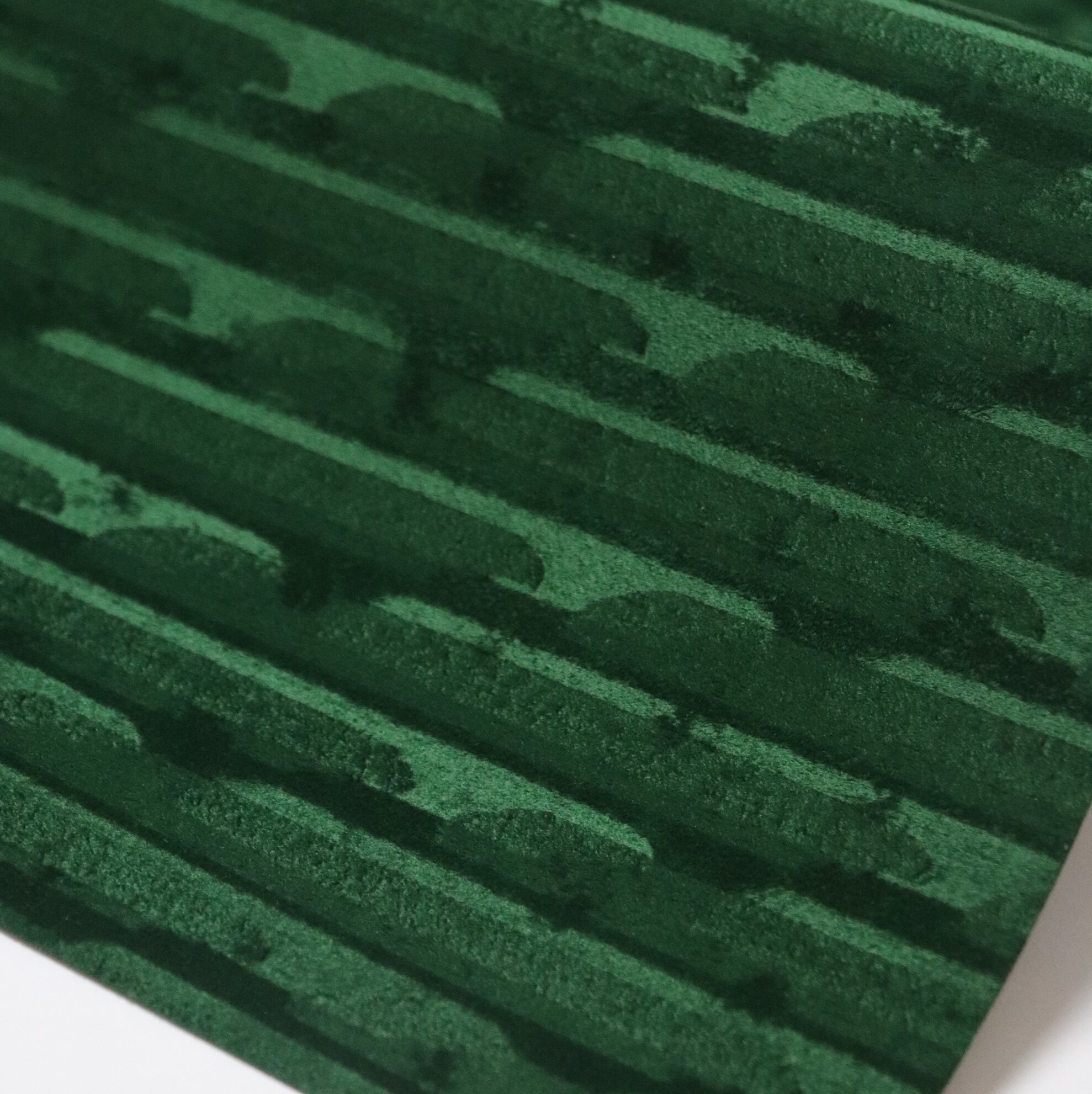
Under a stabilized high-voltage electrostatic field of 30 to 50 kilovolts, short fibers are vertically accelerated into the wet adhesive layer. If the voltage fluctuates, the fibers embed at shallow angles, reducing the contact area and causing pile loss. Maintaining a precision pile density of 0.01 mm ensures that the fiber matrix supports itself. The subsequent curing in temperature-controlled ovens locks the fiber roots into the crosslinked adhesive network. Testing is conducted on every production batch to verify that the fabric meets FAMA standards, registering zero fiber loss after a 10-cycle 3M tape peel test and achieving up to 100,000 abrasion cycles for specialized functional fabrics.
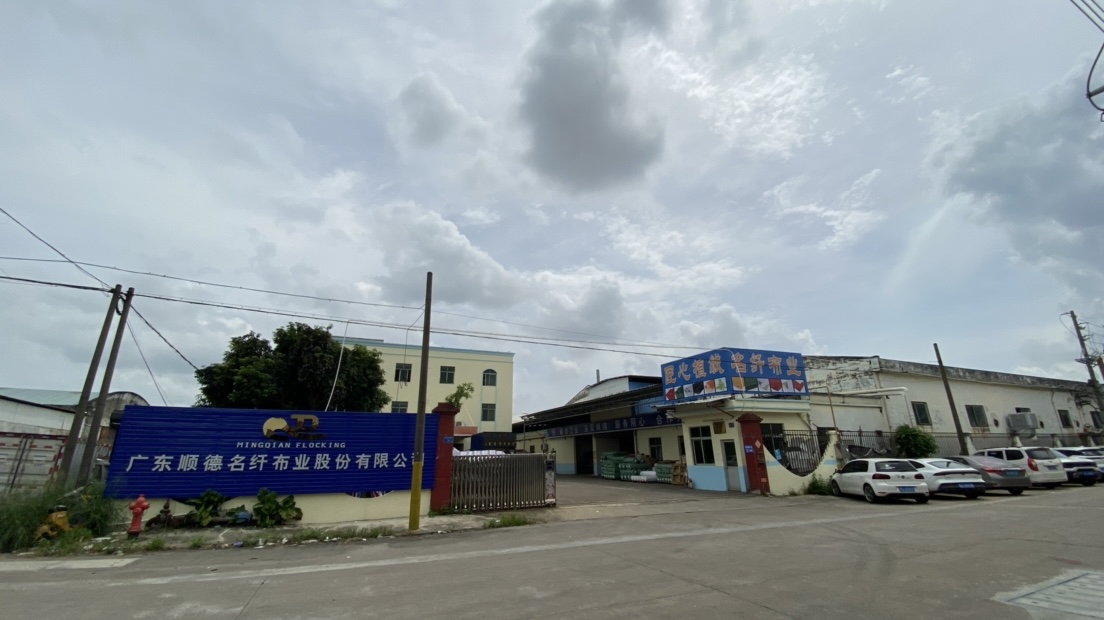
This strict processing control has been validated through the global supply chain, serving premium packaging requirements for international brands including Dior, Chow Tai Fook, and Fendi. In jewelry box packaging scenarios, the anti-tarnish flocking fabric goes a step further by keeping free reactive sulfur below 5 parts per million and the aqueous extract pH between 5.5 and 7.5, which prevents chemical corrosion of both the fibers and stored precious metals.
Data/Solution Comparison
The following table outlines the mechanical and chemical parameters of standard flocking fabrics compared to high-performance functional lines designed to resist pile loss under rigorous applications.
| Quality Parameter | Standard Flocking Fabric | Functional / Specialized Flocking Fabric | Testing Standard / Control Method |
|---|---|---|---|
| Abrasion Resistance | 500 cycles (no shedding) | 100,000 cycles (no shedding) | Standard rotary abrasion testing |
| Adhesion Integrity | Passes 10-cycle peel check | Passes 10-cycle peel check | 3M tape peel test (FAMA standard) |
| Electrostatic Voltage Field | 30 to 50 kilovolts | 30 to 50 kilovolts | Continuous real-time voltage monitoring |
| Color Fastness (Deep Colors) | Grade 4 (wet/dry) | Grade 4+ (wet/dry) | Spectrophotometer verification |
| Formaldehyde Content | ≤ 75 parts per million | ≤ 75 parts per million | In-house laboratory 4-hour rapid test |
| Peel Strength (Self-Adhesive) | ≥ 2 newtons per 25 millimeters | ≥ 2 newtons per 25 millimeters | Adhesive backing independent testing |
Frequently Asked Questions (FAQ)
How does moisture content affect pile shedding on flocking fabrics?
Excessive moisture in the finished fabric weakens the crosslinked acrylic adhesive bond, making the pile susceptible to shedding under friction. Mingqian Flocking utilizes temperature-controlled drying ovens to fully dry and cure the fabric, which stabilizes the adhesive matrix and prevents humidity-induced degradation.
What role do raw materials play in preventing pile loss?
The quality of the raw base fabric, fibers, and adhesive forms the foundation of pile stability. All raw materials must undergo incoming inspection. Adhesives must be solvent-free water-based acrylic formulations, and fibers are checked for chemical compliance, ensuring no hazardous contaminants interfere with the electrostatic embedding and bonding process.
How does chemical compliance impact the wear resistance of flocking products?
Enforcing strict chemical parameters, such as restricting azo dyes to under 30 ppm and avoiding organotin compounds, maintains the long-term structural integrity of the synthetic fibers and adhesive. Clean formulations prevent premature polymer breakdown, helping the fabric pass the rigorous 100,000-cycle abrasion test and the 10-cycle 3M tape peel check.
Final Conclusion & Recommendations
Maintaining a zero-shedding surface on electrostatic flocking fabric requires strict in-house management across raw material inspection, electrostatic alignment, and thermal curing. Manufacturers can eliminate quality vulnerabilities by using fully integrated production setups that monitor adhesive weights, curing temperatures, and chemical parameters. For brands looking to integrate durable, non-shedding flocking fabrics into their products, OEM/ODM manufacturing is supported with a minimum order quantity of 1,000 yards and a standard delivery timeline of 14 days, with full compliance under GRS, REACH, and RoHS standards. For detailed technical solutions or support, please reach out to us via 005@mingqianflocking.com.
About Us
Founded in 2008, Guangdong Shunde Mingqian Flocking Co., Ltd. is a professional flocking fabric manufacturer with a workforce of more than 100 employees and a self-owned production base spanning over 12,000 square meters. The company specializes in the research, development, and vertically integrated production of high-quality flocking fabrics, including specialized lines like crushed velvet and anti-tarnish jewelry linings. Holding ISO 9001:2015 and GRS 4.0 certifications, the company has served clients across more than 30 countries, providing verified solutions for luxury packaging, automotive interiors, and home appliances.

Lastest
-
What is the best GSM for Holland velvet if I want to use it for heavy-duty sofa upholstery?
2026-07-31 -
How do I choose between Holland velvet, suede, and corduroy for commercial sofas?
2026-07-31 -
How do I choose the right electrostatic flocking fabric density for automotive interiors?
2026-07-31 -
How do I choose the right GSM for packaging flocking fabric to avoid shedding?
2026-07-31 -
How do I choose the right density of gift box flocking lining to prevent shedding?
2026-07-31
SUBSCRIBE
INQUIRY