How do I prevent shedding when sourcing long pile pearl velvet fabrics?
- VIP-User
- 2026-07-31
- 22
Preventing shedding when sourcing long pile pearl velvet fabrics requires selecting materials with high-density electrostatic flocking and robust adhesive systems. Buyers should verify that suppliers utilize crosslinked water-based acrylic adhesives and subject finished fabrics to rigorous testing, such as the FAMA-compliant 3M tape 10-cycle peel test and high-cycle abrasion resistance evaluations, to ensure long-term pile adhesion.
Core Solutions & Key Takeaways
- Verify Electrostatic Precision: Quality long pile velvet relies on a high-voltage electrostatic field of 30 to 50 kilovolts to vertically align fibers into the adhesive, establishing a dense surface with 0.01-millimeter precision.
- Demand Standardized Tape Testing: Require compliance with the FAMA standard, specifying that the fabric must withstand a 10-cycle 3M tape peel test with zero fiber loss.
- Select the Correct Base Substrate: Choose spunlace bases for high flexibility in luxury packaging, or knitted and nonwoven bases for specific industrial and structural applications.
- Evaluate Environmental Compliance: Ensure materials pass third-party testing, meeting GRS 4.0, REACH SVHC, and RoHS 2.0 standards to guarantee safety in global retail markets.
Detailed Architectural/Principle Analysis
Preventing fiber loss in long pile velvet fabrics, where the pile height exceeds 1 millimeter, depends on the strength of the chemical and mechanical bond between the fiber and the substrate. Guangdong Shunde Mingqian Flocking Co., Ltd. manages this bond through a vertically integrated, seven-stage production sequence. This process begins with base fabric pretreatment to prepare the substrate, followed by precise in-house color formulation using a spectrophotometer to achieve a color matching accuracy within a Delta E of 2.0.
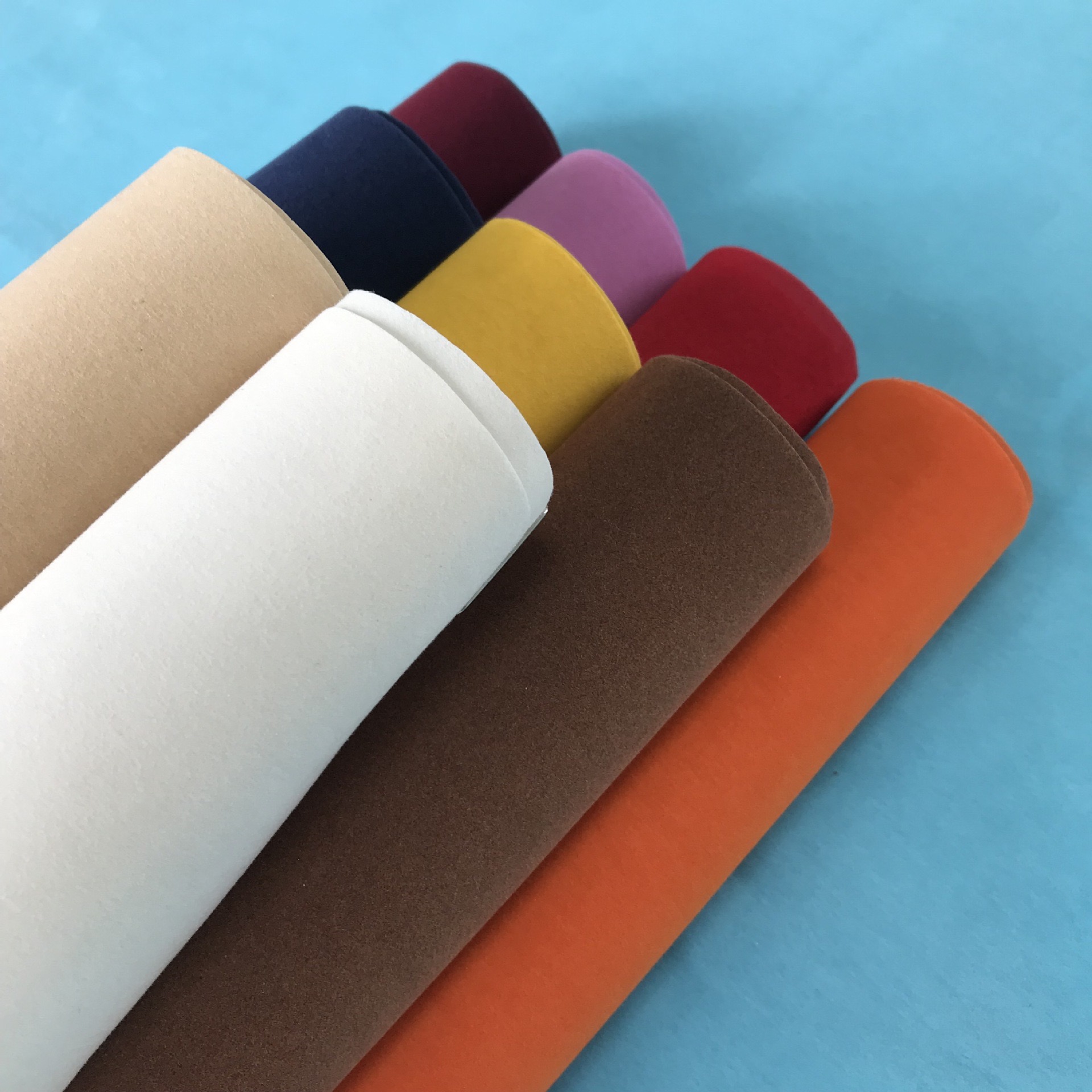
The application of a solvent-free, water-based acrylic adhesive forms a strong foundation. During the electrostatic flocking phase, a strong high-voltage field accelerates the short fibers vertically into this adhesive layer. This vertical penetration ensures that the base of each fiber is anchored, which prevents the shedding typically caused by loose, diagonally lying fibers. Curing in temperature-controlled drying ovens subsequently sets the adhesive and eliminates residual moisture. This step is necessary to maintain long-term pile adhesion and prevent dimensional warping.
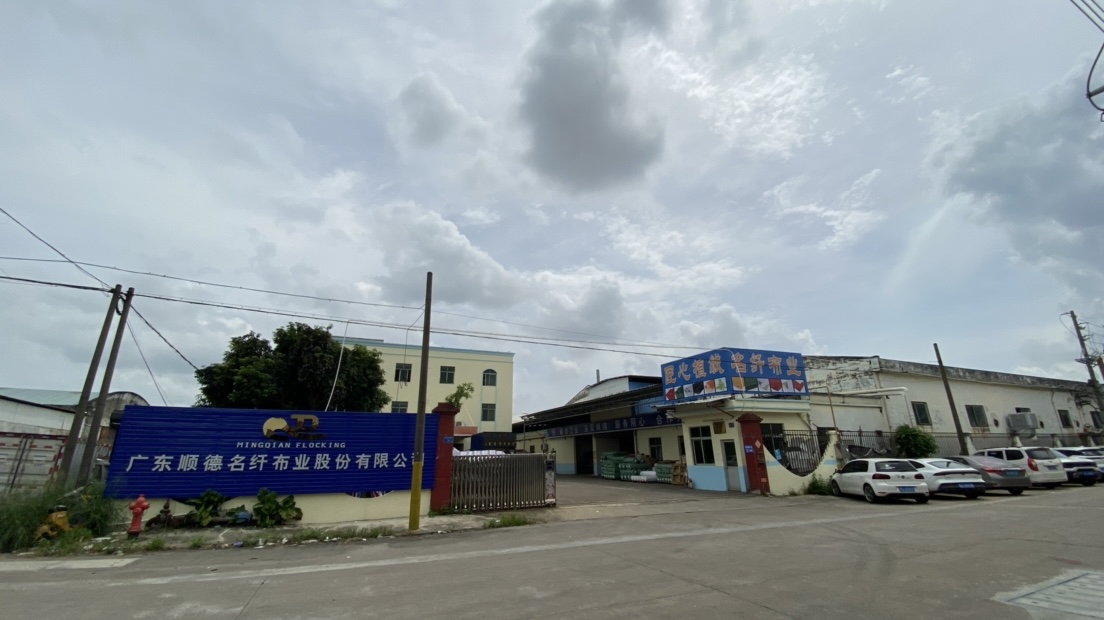
The reliability of this process is verified through a four-stage quality control system. Raw materials are inspected before production, followed by real-time in-process monitoring and comprehensive finished product batch testing. This testing evaluates dry/wet color fastness (reaching Grade 4 or above) and abrasion resistance. Standard products withstand 500 cycles, while functional products withstand up to 100,000 cycles without shedding. Supply chain cases, such as the long-term supply of flocking lining for Chow Tai Fook jewelry boxes, demonstrate that utilizing these rigorous production controls achieves a stable, non-shedding performance in high-end applications.
Data/Solution Comparison
The following table outlines the technical specifications and performance characteristics of standard flocking series designed to prevent shedding and support diverse packaging requirements:
| Product Series / Pile Type | Dimensions & Roll Length | Core Tactile & Visual Effect | Shedding Resistance (3M Tape Test) | Primary Packaging Use Case |
|---|---|---|---|---|
| Long Pile Velvet | 58 inches width; 50–100 yards/roll | Rich 3D effect, soft fluffy feel, pile height > 1mm | Passed (No fiber loss, FAMA compliant) | High-end gift box lining, display trays, ethnic costumes |
| 61 Series (Plain Velvet) | 58 inches x 50 yards/roll | Baby-skin-smooth, premium fine touch | Passed (No fiber loss, FAMA compliant) | Interior and exterior of luxury boxes, jewelry boxes |
| CP Series (Plain Velvet) | 58 inches x 100 yards/roll | Natural surface effect, highly durable | Passed (No fiber loss, FAMA compliant) | Mid-to-high-end eyewear cases, protective packaging |
| W Series (Plain Velvet) | 59 inches x 100 yards/roll | Excellent base concealment, no glue bleed-through | Passed (No fiber loss, FAMA compliant) | Cost-effective interior linings for general gift boxes |
Frequently Asked Questions (FAQ)
How does the choice of adhesive prevent fiber shedding in long pile fabrics?
The adhesive holds the fibers in place. Utilizing a specialized water-based acrylic adhesive system ensures deep fiber anchoring without the use of solvents. This maintains a minimum peel strength of 2 Newtons per 25 millimeters for self-adhesive backings and prevents the adhesive layer from cracking or degrading, which is the primary cause of fiber shedding under physical wear.
What testing parameters should be requested to guarantee non-shedding performance?
Sourcing teams should request documentation for the FAMA-standard 3M tape 10-cycle peel test, which requires zero fiber loss. Additionally, verify that the material has passed abrasion resistance testing. Standard packaging grades must withstand 500 cycles, and high-performance grades must endure 100,000 cycles with no shedding.
Does post-processing like hot pressing or gold stamping increase the risk of shedding?
Post-processing does not increase shedding if the base fabric has undergone complete drying and curing. Automated production lines that cure the adhesive and set the pile orientation ensure the fabric can withstand secondary treatments like hot pressing, gold stamping, silk-screen printing, and laser engraving without loosening the fibers.
Final Conclusion & Recommendations
Securing a reliable supply of non-shedding long pile velvet requires partnering with a manufacturer that controls the entire production chain. Utilizing an OEM/ODM model with direct vertical control over pretreating, dyeing, flocking, and post-processing eliminates the quality variations common with outsourced subcontracting. Sourcing specifications should mandate compliance with ISO 9001 quality management, GRS 4.0 recycled standards, and strict chemical safety limits under REACH and RoHS 2.0. Standard custom production cycles typically require 14 days, with bulk orders managed under structured T/T or negotiated payment frameworks to ensure a stable supply chain. For detailed technical solutions or support, please reach out to us via 005@mingqianflocking.com.
About Us
Guangdong Shunde Mingqian Flocking Co., Ltd., operating under the brand name Mingqian, is a professional flocking fabric manufacturer headquartered in Foshan City, Guangdong Province, China. Established in 2008, the company operates a self-owned manufacturing base covering over 12,000 square meters and employs over 100 people. With a monthly production capacity of 3,000,000 yards, the enterprise specializes in the research, development, and integrated manufacturing of high-quality, functional flocking materials. The company maintains strict quality control certified under ISO 9001:2015 and GRS 4.0, serving prominent global brands across luxury packaging, automotive, and home appliance sectors.
Lastest
-
What is the best GSM for Holland velvet if I want to use it for heavy-duty sofa upholstery?
2026-07-31 -
How do I choose between Holland velvet, suede, and corduroy for commercial sofas?
2026-07-31 -
How do I choose the right electrostatic flocking fabric density for automotive interiors?
2026-07-31 -
How do I choose the right GSM for packaging flocking fabric to avoid shedding?
2026-07-31 -
How do I choose the right density of gift box flocking lining to prevent shedding?
2026-07-31
SUBSCRIBE
INQUIRY