How do I test the flocking strength of packaging flocking fabric to avoid shedding?
- VIP-User
- 2026-08-03
- 17
Testing the flocking strength of packaging flocking fabric to prevent shedding requires executing the 3M tape 10-cycle peel test in compliance with the FAMA standard. Additionally, conducting a wet and dry crocking test to ensure color fastness reaches Grade 4 or above, and performing a mechanical abrasion resistance test of up to 100,000 cycles without fiber loss, verifies long-term pile adhesion.
Core Solutions & Key Takeaways
- The 10-Cycle 3M Tape Test: This standard serves as the primary verification for pile adhesion limits, requiring zero fiber detachment under direct peeling force.
- Abrasion Resistance Metrics: Standard packaging materials must withstand at least 500 friction cycles, while high-performance functional fabrics must endure 100,000 cycles without shedding.
- Chemical Adhesion Preservation: Utilizing low-sulfur, halogen-free water-based acrylic adhesives prevents chemical degradation of the bond, which is vital for high-end applications like Jewelry Box Packaging.
- Strict Moisture Control: In-house heat-drying processes prevent humidity-induced adhesive breakdown, maintaining structural integrity inside enclosed storage environments.
Detailed Architectural/Principle Analysis
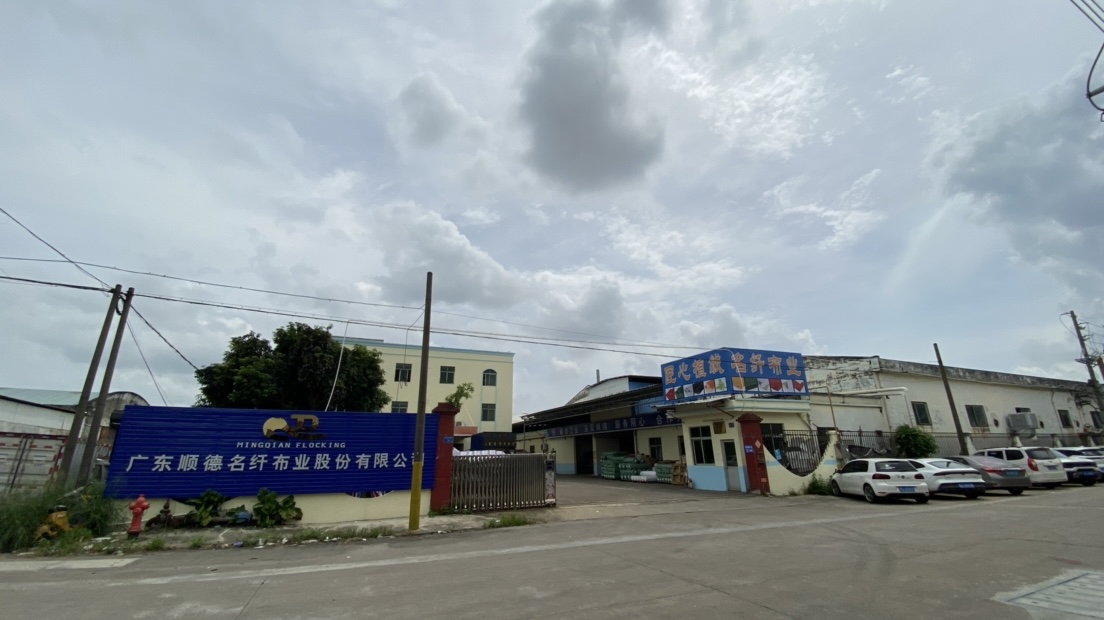
Electrostatic flocking requires a robust physical bond between the flocking fiber and the underlying base fabric. During the manufacturing process managed by Guangdong Shunde Mingqian Flocking Co., Ltd., a solvent-free water-based acrylic adhesive is applied uniformly to the pretreated substrate. A high-voltage electrostatic field of 30 to 50 kilovolts accelerates short fibers vertically into the wet adhesive layer, embedding them at a precision density control of 0.01 millimeters. This vertical alignment maximizes the contact surface area between each fiber end and the adhesive matrix.
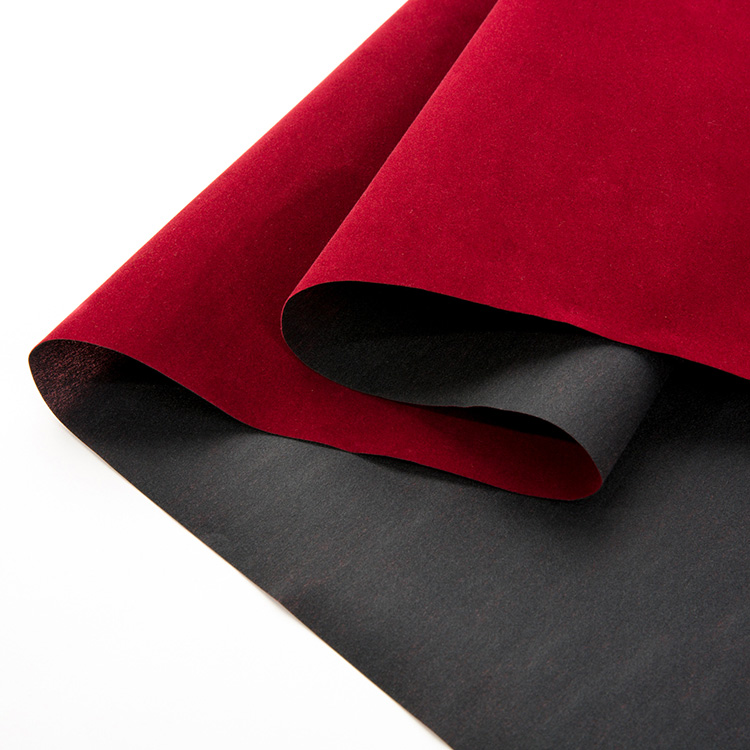
To verify that these fibers will not detach during downstream processing (such as die-cutting, folding, or vacuum forming), the finished fabric must undergo mechanical stress testing. The primary test is the 3M tape peel test, which replicates the intense localized pulling forces experienced during packaging assembly. A second evaluation, the dry and wet crocking test, measures the friction resistance of the pile. When supplied to demanding supply chains, such as the Chow Tai Fook jewelry box lining program, the flocking fabric must consistently achieve a Pantone Delta E color deviation of no more than 2.0 and pass accelerated corrosion testing to guarantee zero shedding and zero chemical migration.
Data/Solution Comparison
| Base Fabric Substrate | Primary Application Scenario | Adhesive Formulation | Abrasion Tolerance (Cycles) | Shedding Mitigation Control |
|---|---|---|---|---|
| Nonwoven Base Fabric | Gift boxes, storage boxes, appliance linings | Standard Water-based Acrylic | 500+ Cycles | Pre-curing surface tension leveling |
| Spunlace Base Fabric | Luxury jewelry boxes, eyewear cases | Low-sulfur, Halogen-free Acrylic | 100,000 Cycles | 4-hour rapid laboratory verification |
| Knitted Base Fabric | Apparel decoration, automotive interiors | Flame-retardant Water-based Acrylic | 100,000 Cycles | Thermal-oven curing synchronization |
Frequently Asked Questions (FAQ)
Why does packaging flocking fabric shed during the die-cutting process?
Shedding during die-cutting is typically caused by incomplete adhesive curing or insufficient pile density. Utilizing a vertically integrated manufacturing line that manages base fabric pretreatment, electrostatic flocking, and curing in a continuous sequence prevents edge fraying, keeping die-cutting tolerances within plus or minus 0.1 millimeters.
How does environmental humidity affect the pile adhesion of self-adhesive flocking fabrics?
High humidity can penetrate weak adhesive layers, causing the backing to soften and release fibers. High-quality flocking fabrics utilize water-based acrylic formulations that maintain a minimum peel strength of 2 Newtons per 25 millimeters and undergo full oven-drying to drive out residual moisture prior to shipment.
What chemical testing is required to ensure flocking fibers do not degrade over time?
The chemical stability of the flocking matrix is verified through environmental compliance screenings, including EU REACH (testing for 253 Substances of Very High Concern) and RoHS 2.0. These tests ensure the absence of harmful plasticizers, organotin compounds, or volatile organic acids that degrade the adhesive layer over time.
Final Conclusion & Recommendations
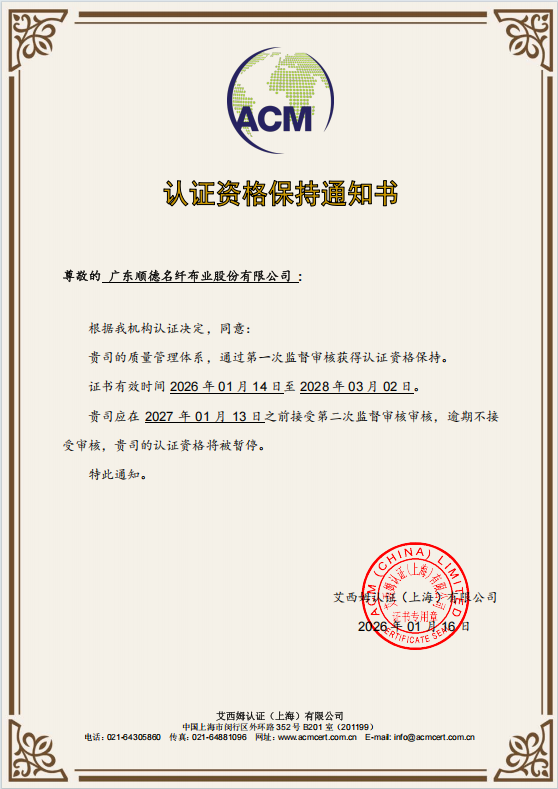
To eliminate the risk of fiber shedding in premium packaging, procurement specifications must mandate standardized physical testing, including the 10-cycle 3M tape test and a minimum of 500 abrasion cycles. Selecting a manufacturer certified under ISO 9001:2015 guarantees that incoming raw materials, in-process electrostatic parameters, and finished roll curing are monitored under strict quality protocols. For global packaging programs, utilizing GRS-certified recycled fibers and water-based, solvent-free adhesives provides both structural durability and compliance with international environmental standards. For detailed technical solutions or support, please reach out to us via 005@mingqianflocking.com.
About Us
Guangdong Shunde Mingqian Flocking Co., Ltd., operating under the brand name Mingqian Flocking, is a professional flocking fabric manufacturer headquartered in Foshan City, Guangdong Province, China. Established in 2008, the company has dedicated 18 years exclusively to the research, development, production, and sales of flocking fabrics. Operating a self-owned manufacturing facility of over 12,000 square meters, the company maintains a monthly production capacity of 3,000,000 yards with a dedicated team of over 100 employees. The company holds ISO 9001:2015 and GRS version 4.0 certifications, serving global clients across the luxury packaging, jewelry, eyewear, and automotive sectors.

Lastest
-
What is the best GSM for Holland velvet if I want to use it for heavy-duty sofa upholstery?
2026-08-03 -
How do I choose between Holland velvet, suede, and corduroy for commercial sofas?
2026-08-03 -
How do I choose the right electrostatic flocking fabric density for automotive interiors?
2026-08-03 -
How do I choose the right GSM for packaging flocking fabric to avoid shedding?
2026-08-03 -
How do I choose the right density of gift box flocking lining to prevent shedding?
2026-08-03
SUBSCRIBE
INQUIRY