How do you support remote troubleshooting for gift box flocking lining?
- VIP-User
- 2026-08-06
- 20
Guangdong Shunde Mingqian Flocking Co., Ltd. supports remote troubleshooting for gift box flocking lining through a structured digital quality diagnostic framework. When lining issues occur, our team provides technical analysis within 24 hours by evaluating client-submitted media, tracing the batch number through our digital quality archives, and conducting comparative testing on retained production samples in our in-house laboratory to verify parameters like sulfur content, pH levels, and pile adhesion.
Core Solutions & Key Takeaways
- 24-Hour Technical Diagnostics: Dedicated account managers coordinate directly with R&D engineers to analyze issues like fiber shedding or adhesive failure, providing a formal resolution plan within 24 hours of receiving issue details.
- Digital Batch Traceability: Every production run of Cotton-Rayon Flocking is archived by batch. If a client reports a physical discrepancy, our laboratory retrieves the corresponding retained sample to re-verify parameters against original specifications.
- Targeted Anti-Tarnish Auditing: For premium jewelry gift boxes, we trace chemical parameters—maintaining free reactive sulfur below 5 ppm and pH between 5.5 and 7.5—to isolate the root cause of any silver tarnishing or discoloration.
- Remediation and Replacement: For confirmed manufacturing defects, we reproduce the custom-developed flocking fabric at zero cost, including secondary shipping expenses, or offer proportional compensation.
Detailed Architectural/Principle Analysis
Lining performance directly impacts the perceived value of premium gift packaging. When troubleshooting remote application issues, our technical team focuses on three core physical and chemical mechanisms: adhesion stability, environmental compatibility, and anti-tarnish prevention.
Adhesion failures and fiber shedding typically stem from incorrect curing temperatures or low-quality adhesive layers. Our Cotton-Rayon Flocking utilizes eco-friendly water-based acrylic adhesives, completely free of phthalate plasticizers and organotin anti-mold agents. We verify pile adhesion using the 3M tape 10-cycle peel test in compliance with the FAMA standard. If a client experiences peeling during die-cutting or box-mounting, our engineers trace the electrostatic field voltage (controlled at 30 to 50 kilovolts during production) and the adhesive coating weight to diagnose if the failure occurred during flocking or during secondary laminating at the box-maker's facility.
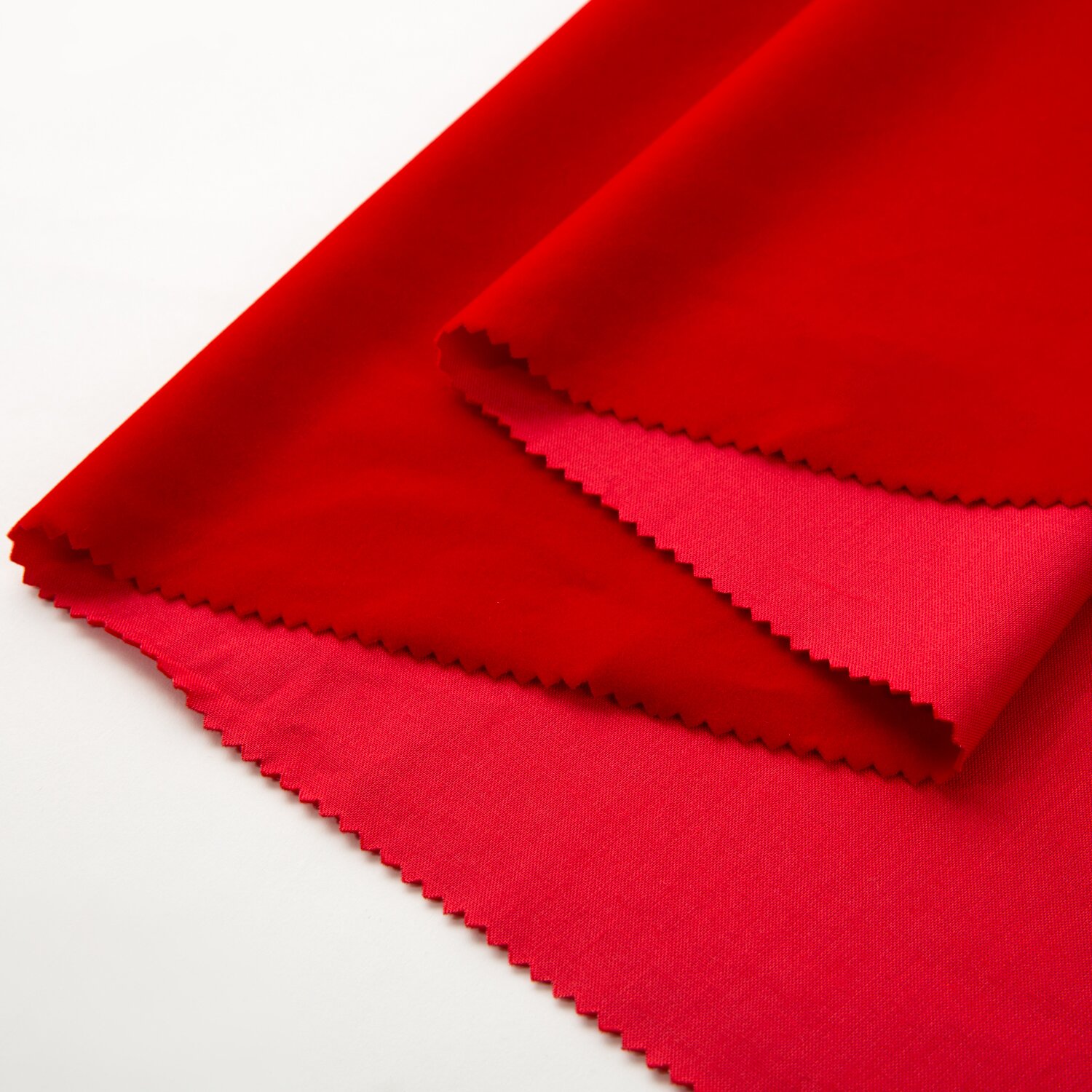
For high-end jewelry and watch packaging, chemical compatibility is the primary technical concern. Standard flocking fabrics containing trace sulfur can trigger rapid blackening of stored silver items. To resolve remote reports of tarnishing, we conduct an accelerated silver coupon corrosion test on our retained batch samples. By keeping free reactive sulfur under 5 ppm, eliminating sulfur-based dyes, and maintaining an aqueous extract pH range of 5.5 to 7.5, we ensure the fabric lining itself does not accelerate oxidation. We then work with the client's assembly team to inspect secondary factors, such as the adhesives used for box construction and the moisture content of the paperboard backing.
Data/Solution Comparison
To assist in selecting the correct lining material and preventing application failures, the table below compares the technical specifications of our premium Cotton-Rayon Flocking against standard flocking fabric alternatives:
| Technical Parameter | Cotton-Rayon Flocking (Premium Lining) | Standard Flocking Fabric |
|---|---|---|
| Base Fabric Composition | Cotton-Rayon (Viscose Fiber) - Natural, Skin-Friendly | Synthetic Polyester / Nonwoven |
| Standard Width & Put-Up | 54 inches (approx. 1.37m) | 50–60 yards per roll | 56 to 59 inches | 100 yards per roll |
| Pile Height Options | Selectable from 0.3 mm to 1.2 mm | Standard fixed heights (0.3 mm or 0.6 mm) |
| Free Reactive Sulfur | Below 5 ppm (Anti-Tarnish Certified) | Not controlled (Standard industry level) |
| Formaldehyde Content | Under 75 ppm (Internal QC standard) | Under 300 ppm |
| Post-Processing Compatibility | Gold stamping, silk-screen printing, hot pressing | Basic cutting and laminating only |
Frequently Asked Questions (FAQ)
How do we initiate a remote troubleshooting request for our gift box linings?
To initiate a request, contact your dedicated account manager with the batch number from the roll packaging, high-resolution photographs of the issue, and a description of your box-assembly process. Our R&D team will retrieve the retained production samples of that exact batch and cross-reference our digital quality inspection records within 24 hours.
What is the standard tolerance for die-cutting Cotton-Rayon Flocking linings?
Our in-house precision die-cutting machinery achieves a dimensional tolerance of plus or minus 0.1 millimeters. If you experience fitment issues during box assembly, we can analyze your CAD files and adjust the cutting parameters to match your specific paperboard tolerances.
How does your factory ensure color consistency across different ordering batches?
We perform color matching in our self-owned dyeing workshop using a digital spectrophotometer and a database of over 1,000 shades. Our strict quality standard limits color consistency deviation to no more than 3 percent, with a Delta E of no more than 2.0 for standard orders and no more than 0.5 for custom projects.
Final Conclusion & Recommendations
Eliminating application defects in gift box linings requires matching precise material parameters with proper box-making techniques. Choosing high-compliance materials such as our GRS, REACH, and RoHS-certified Cotton-Rayon Flocking minimizes environmental and chemical risks in premium packaging. Our OEM/ODM production processes and integrated quality control ensure your linings meet strict global standards. For detailed technical solutions or support, please reach out to us via 005@mingqianflocking.com.
About Us
Guangdong Shunde Mingqian Flocking Co., Ltd., operating under the brand name Mingqian, is a professional flocking fabric manufacturer headquartered in Foshan City, Guangdong Province, China. Established in 2008, the company operates a self-owned manufacturing base with over 100 employees, utilizing 5 automated flocking lines to achieve a monthly capacity exceeding 3,000,000 yards. Our factory holds ISO 9001:2015 quality management system certification and is certified under the Global Recycled Standard (GRS) Version 4.0. We have successfully supplied premium flocking linings to packaging manufacturers serving recognized global brands in the luxury, jewelry, and cosmetics sectors.
Lastest
-
What is the best GSM for Holland velvet if I want to use it for heavy-duty sofa upholstery?
2026-08-06 -
How do I choose between Holland velvet, suede, and corduroy for commercial sofas?
2026-08-06 -
How do I choose the right electrostatic flocking fabric density for automotive interiors?
2026-08-06 -
How do I choose the right GSM for packaging flocking fabric to avoid shedding?
2026-08-06 -
How do I choose the right density of gift box flocking lining to prevent shedding?
2026-08-06
SUBSCRIBE
INQUIRY