How soft is this frosted velvet compared to standard plain velvet?
- VIP-User
- 2026-08-01
- 19
Frosted velvet retains the foundational softness of standard plain velvet but introduces a textured, tactile dimension. While plain velvet provides a continuous, uniform, and smooth pile surface, frosted velvet undergoes precision embossing to compress specific areas, creating a structured three-dimensional pattern. This structural variation alters the contact area, shifting the hand feel from a flat, silky smoothness to a rich, relief-textured softness.
Core Solutions & Key Takeaways
- Dimensional Texturing: Unlike the flat surface of plain velvet, frosted velvet features precision-embossed patterns from a library of over 13 standard designs, including wood grain, cloud motif, and bamboo leaf.
- Structural Tactility: The thermal embossing process creates alternating compressed and uncompressed pile heights, blending the soft touch of electrostatic flocking with a distinct physical grip.
- High-End Packaging Suitability: This material is engineered for luxury applications, specifically serving as interior linings and coverings for premium gift boxes, jewelry boxes, and cosmetic packaging.
- Verified Environmental Compliance: The flocking fabric is fully compliant with EU REACH SVHC, RoHS 2.0, and GRS standards, ensuring chemical safety and sustainability for global supply chains.
Detailed Architectural/Principle Analysis
The differences in tactile performance between standard plain velvet and frosted velvet stem directly from their manufacturing structures. Standard plain velvet utilizes high-voltage electrostatic flocking where short fibers are vertically embedded into an adhesive-coated base fabric, such as spunlace or cotton-rayon, under a 30 to 50 kilovolt field. This produces a continuous, high-density pile with uniform height, yielding maximum surface softness and optimal luster. Every fiber stands vertically, allowing the fingers to glide without interruption.
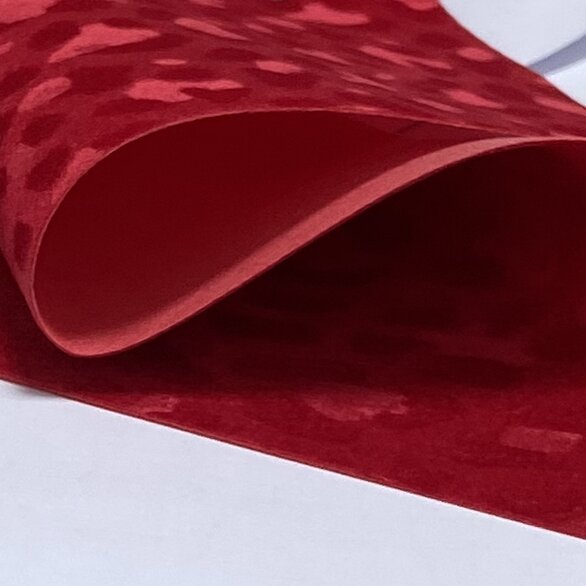
In contrast, frosted or embossed velvet undergoes a post-processing thermal embossing phase. Using precision machinery, heated rollers apply localized pressure to the electrostatic pile layer. This collapses and cures the fibers in specified areas while leaving other sections at their original height (ranging from 0.3 to 1.2 millimeters). The resulting surface combines the raw, silky softness of the uncompressed pile with the firm, structured geometry of the embossed patterns. This dual-texture surface prevents the slippery hand feel sometimes associated with flat plain velvet, offering a premium, anti-slip tactile experience ideal for luxury presentation boxes.
During material formulation, quality metrics are tightly controlled. Guangdong Shunde Mingqian Flocking Co., Ltd. manages this process in-house, ensuring a color matching accuracy within a Pantone Delta E of 2.0 for standard batches and under 0.5 for custom luxury client specifications. For high-end applications like jewelry box linings, the material is engineered with a proprietary anti-tarnish system, restricting reactive sulfur to under 5 parts per million to protect precious metal surfaces from discoloration.
Data/Solution Comparison
| Parameter / Property | Standard Plain Velvet | Frosted / Embossed Velvet |
|---|---|---|
| Surface Pile Structure | Continuous, uniform, vertically aligned fibers | Zoned compression with varying fiber heights |
| Visual Appearance | Flat, high-gloss, even reflectivity | Three-dimensional patterns with matte/gloss contrast |
| Tactile Hand Feel | Silky, smooth, unrestricted slip | Textured, soft relief, high-friction grip |
| Standard Dimensions | 58 inches width; 50/100 yards per roll | 56 inches (1.42 meters) width; 100 yards per roll |
| Primary Application | Standard gift box linings, industrial protection | High-end brand-exclusive gift packaging, cosmetic boxes |
| Pattern Customization | Not applicable (uniform surface) | Supported with 13+ standard designs or custom artwork |
Frequently Asked Questions (FAQ)
Does the embossing process on frosted velvet cause fiber shedding?
No, the embossing process does not compromise pile adhesion. The base material passes the rigorous 3M tape 10-cycle peel test under the FAMA standard, ensuring no fiber loss. Standard products withstand 500 abrasion cycles, while functional products handle up to 100,000 cycles without shedding.
What base fabrics are available for frosted and embossed velvet?
Frosted velvet can be manufactured on multiple substrates depending on the target application. Spunlace base fabric is used for high flexibility in luxury packaging, nonwoven is selected for cost-effective rigidity, while knitted and cotton-rayon bases offer elasticity and soft backing structures.
How is the environmental safety of this material verified?
Every production batch complies with EU REACH SVHC (testing 253 Substances of Very High Concern) and RoHS 2.0 directives as certified by SGS. In-house formaldehyde levels are strictly limited to under 75 parts per million, and water-based acrylic adhesives are used to eliminate solvent emissions.
Final Conclusion & Recommendations
Selecting between standard plain velvet and frosted velvet depends on the aesthetic and functional needs of the packaging. Plain velvet remains the optimal choice for cost-effective, uniform interior cushioning. For brand-exclusive packaging that demands a unique tactile signature and three-dimensional visual depth, frosted velvet delivers superior performance. Utilizing an OEM/ODM business model, clients can customize base fabrics, pile types, and specific embossing patterns to align with global market requirements, backed by ISO 9001 and GRS certifications. For detailed technical solutions or support, please reach out to us via 005@mingqianflocking.com.
About Us
Guangdong Shunde Mingqian Flocking Co., Ltd., operating under the brand name Mingqian Flocking, is a professional flocking fabric manufacturer headquartered in Foshan, China. Established in 2008, the enterprise operates an expansive, self-owned facility covering over 12,000 square meters. Equipped with five automated electrostatic flocking production lines and an in-house dyeing workshop, the manufacturer maintains a monthly production capacity of 3,000,000 yards. The factory is fully certified under ISO 9001:2015 and the Global Recycled Standard (GRS) Version 4.0, serving prominent global supply chains across more than 30 countries.

Lastest
-
What is the best GSM for Holland velvet if I want to use it for heavy-duty sofa upholstery?
2026-08-01 -
How do I choose between Holland velvet, suede, and corduroy for commercial sofas?
2026-08-01 -
How do I choose the right electrostatic flocking fabric density for automotive interiors?
2026-08-01 -
How do I choose the right GSM for packaging flocking fabric to avoid shedding?
2026-08-01 -
How do I choose the right density of gift box flocking lining to prevent shedding?
2026-08-01
SUBSCRIBE
INQUIRY