How to check if long pile frosted velvet sheds easily before placing a bulk order?
- VIP-User
- 2026-08-07
- 15
To check if long pile frosted velvet sheds easily before placing a bulk order, perform a standard 3M tape 10-cycle peel test alongside a 500-to-100,000-cycle abrasion test. Inspecting pile density, verifying water-based acrylic adhesive curing, and auditing laboratory test reports ensures electrostatic fiber adhesion meets strict zero-shedding quality standards.
Core Solutions & Key Takeaways
- Perform 3M Tape Peel Testing: Execute a 10-cycle peel test using 3M adhesive tape following FAMA standard protocols to verify fiber retention and ensure a minimum peel strength of 2 N/25mm for self-adhesive backings.
- Review Abrasion Resistance Reports: Request verified laboratory data confirming the fabric withstands 500 cycles for standard applications or up to 100,000 cycles for high-durability functional applications without fiber shedding.
- Audit Electrostatic Production Controls: Ensure the flocking process utilizes a high-voltage electrostatic field (30–50 kV) paired with fully cured water-based acrylic adhesive to lock short fibers vertically into the base fabric.
- Assess Substrate Compatibility: Match the pile finish with appropriate base fabrics, such as spunlace, knitted, or silk substrates, to guarantee optimal adhesive penetration and structural bonding.
Detailed Architectural/Principle Analysis
Verifying fiber retention in long pile frosted velvet and pearl velvet requires an understanding of the electrostatic flocking production chain. Short fibers are accelerated vertically into an eco-friendly water-based acrylic adhesive layer applied to the base fabric under a high-voltage electrostatic field operating at 30 to 50 kilovolts. The composite fabric then enters temperature-controlled ovens where the adhesive is completely cured to establish strong pile adhesion and dimensional stability.
When evaluating sample swatches before committing to commercial production with Guangdong Shunde Mingqian Flocking Co., Ltd., physical stress testing isolates weak fiber anchoring. The 3M tape 10-cycle peel test applies uniform pressure over the frosted or bead-like pile surface, followed by rapid removal at a 90-degree angle. Zero fiber transfer onto the tape confirms root adhesion integrity. Additionally, precision pile density control calibrated to 0.01 mm ensures that long pile and embossed pearl velvet retain their textured dimensionality under mechanical pressure.
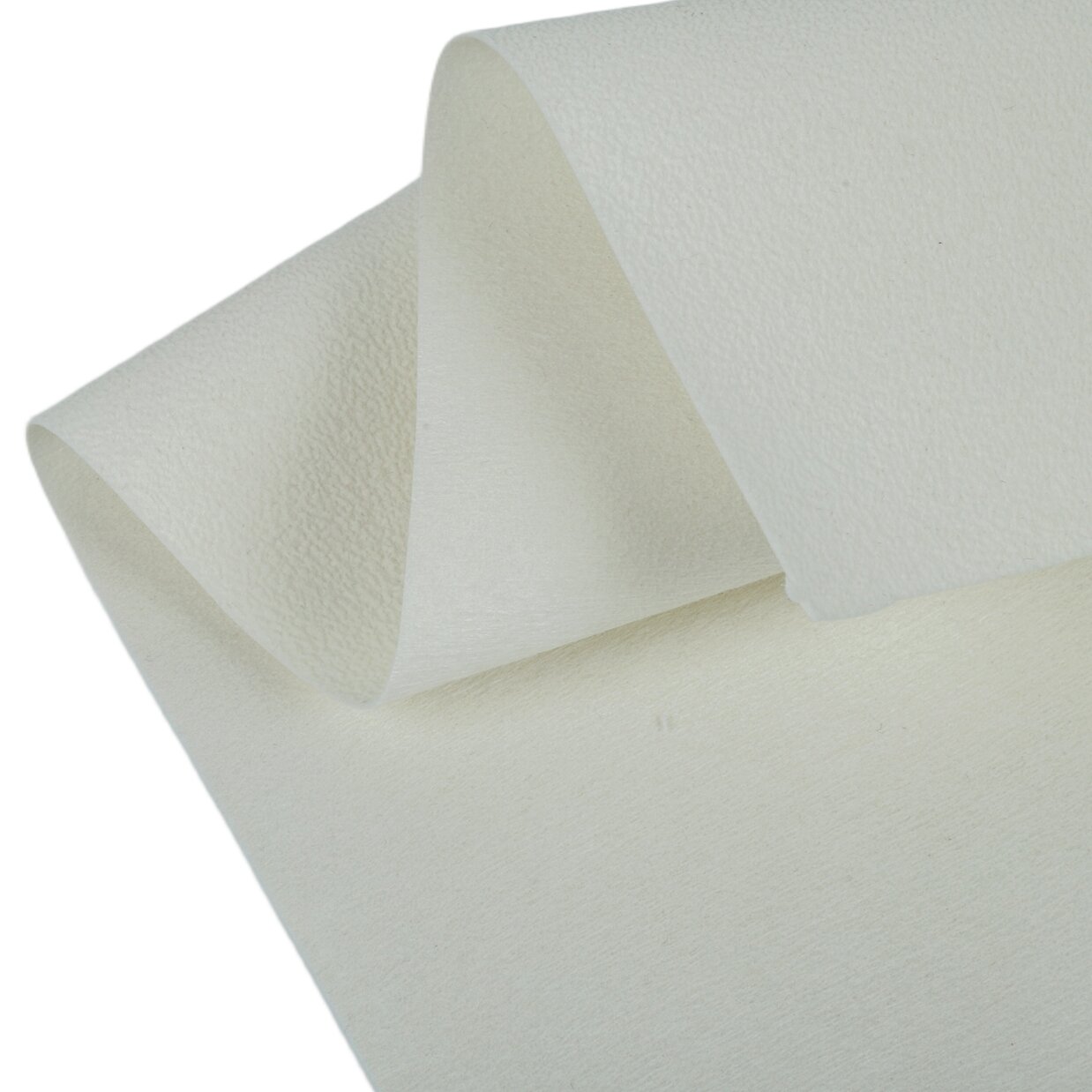
Chemical formulation directly influences physical pile retention. Water-based acrylic adhesives free of solvent remnants, phthalate plasticizers, and organotin agents preserve long-term polymer flexibility, preventing adhesive embrittlement over time. For enclosed packaging environments like jewelry boxes, controlling volatile organic acids, formaldehyde content below 75 ppm, and reactive sulfur below 5 ppm prevents chemical breakdown of the adhesive matrix, ensuring long-term pile stability and preventing silver tarnish.
Data/Solution Comparison
| Testing Parameter / Metric | Standard Flocking Velvet | High-Performance Frosted / Pearl Velvet | Evaluation / Compliance Standard |
|---|---|---|---|
| 3M Tape Peel Test | 3–5 Cycles before fiber release | 10 Cycles with zero fiber shedding | FAMA Standard Compliance |
| Abrasion Resistance | 500 Cycles (No shedding) | 100,000 Cycles (Functional grade) | ISO / Industry Friction Standards |
| Formaldehyde Content | ≤ 150 ppm | ≤ 75 ppm (4-hour lab verification) | In-House Testing / REACH Standard |
| Color Fastness (Wet/Dry) | Grade 3–4 | Grade 4 or above (Grade 6+ light) | Pantone ΔE ≤ 0.5 to 2.0 Target |
Frequently Asked Questions (FAQ)
Q: What rapid on-site method can immediately test long pile velvet for shedding?
A: Apply a strip of standard 3M pressure-sensitive adhesive tape firmly onto the pile surface, rub it evenly, and peel it off swiftly. Repeat this action on the same spot across 10 cycles; if no loose fibers accumulate on the adhesive backing, the pile adhesion meets quality specifications.
Q: How does base fabric selection influence pile adhesion strength?
A: Flexible bases such as spunlace and knitted fabrics allow deeper adhesive anchor penetration during pre-treatment, supporting high pile density. Rigid or smooth bases like PVC or paperboard require specialized pre-coating layers to achieve equivalent peel strength.
Q: What minimum order volume is required to conduct a trial production run?
A: Custom color development and trial dyeing runs accept orders starting at 50 yards, while standard custom production ranges from 500 to 1,000 yards per color, allowing complete laboratory and physical testing prior to full-scale orders.
Final Conclusion & Recommendations
Evaluating long pile frosted velvet prior to bulk purchasing requires combining empirical physical testing with chemical compliance verification. Requesting certified 3M tape 10-cycle peel test results, verifying abrasion resistance data up to 100,000 cycles, and confirming water-based acrylic adhesive curing prevents shedding issues in downstream packaging and decorative applications. Utilizing trial sampling or low-MOQ trial orders ensures that custom colors, base fabrics, and pile heights conform strictly to client requirements before full volume production. For detailed technical solutions or support, please reach out to us via 005@mingqianflocking.com.
About Us
Guangdong Shunde Mingqian Flocking Co., Ltd. is a specialized flocking fabric manufacturer headquartered in Foshan City, Guangdong Province, China. Established in 2008, the company operates a self-owned 12,000-square-meter production facility housing 5 automated electrostatic flocking lines and employs over 100 personnel, achieving a monthly production capacity of 3,000,000 yards. Certified under ISO 9001:2015 and the Global Recycled Standard (GRS) Version 4.0, the enterprise provides fully integrated manufacturing from base fabric pretreatment and in-house dyeing to electrostatic flocking, adhesive backing, and precision cutting. Products comply with EU REACH SVHC, RoHS 2.0, and US TPCH standards, serving client supply chains across luxury packaging, automotive interiors, and home appliance sectors.

Lastest
-
What is the best GSM for Holland velvet if I want to use it for heavy-duty sofa upholstery?
2026-08-07 -
How do I choose between Holland velvet, suede, and corduroy for commercial sofas?
2026-08-07 -
How do I choose the right electrostatic flocking fabric density for automotive interiors?
2026-08-07 -
How do I choose the right GSM for packaging flocking fabric to avoid shedding?
2026-08-07 -
How do I choose the right density of gift box flocking lining to prevent shedding?
2026-08-07
SUBSCRIBE
INQUIRY