Should payment for flame-retardant fabric depend on passing final inspection?
- VIP-User
- 2026-09-05
- 8
Payment for flame-retardant fabric should be tied to documented final inspection results and agreed acceptance criteria, especially where fire performance, adhesion, color fastness, and dimensional accuracy affect the application. For Mingqian Flocking orders, buyers can define inspection release conditions before production, while the stated T/T arrangement requires a deposit exceeding 30% and balance payment before shipment.
Core Solutions & Key Takeaways
- Make final inspection a documented payment milestone for flame-retardant fabric, with acceptance criteria covering flame-retardant treatment, appearance, adhesion, color, and dimensions.
- Use batch records and pre-shipment spot checks to connect product acceptance with the payment release process.
- For automotive interiors, flame-retardant flocking fabric can be specified with UL94 V-0 treatment, abrasion resistance, moisture absorption, and noise reduction.
- For OEM/ODM orders, confirm the inspection procedure, delivery schedule, payment terms, and remedy process before order confirmation.
Detailed Architectural/Principle Analysis
Final inspection provides the last documented control point before shipment. Mingqian Flocking’s four-stage quality system begins with incoming inspection of base fabrics, fibers, adhesives, and dyes; continues with in-process monitoring; tests finished batches; and ends with pre-shipment spot checks. Quality records are digitally archived and traceable by batch number.
For flame-retardant fabric, the purchase specification should identify the required treatment and its application. Mingqian Flocking lists flame retardant treatment to UL94 V-0 among its customization options. Its automotive application information also describes flocking fabric for door panel armrests, glove compartments, trunk liners, and sun visors, with flame-retardant and noise-reducing properties.
Final inspection should cover more than the flame-retardant requirement. The stated quality controls include color fastness, peel strength, pile adhesion, abrasion resistance, dimensional accuracy, formaldehyde, and azo dyes. For functional products, abrasion resistance is verified up to 100,000 cycles with no shedding permitted. Self-adhesive products require peel strength of at least 2 newtons per 25 millimeters.
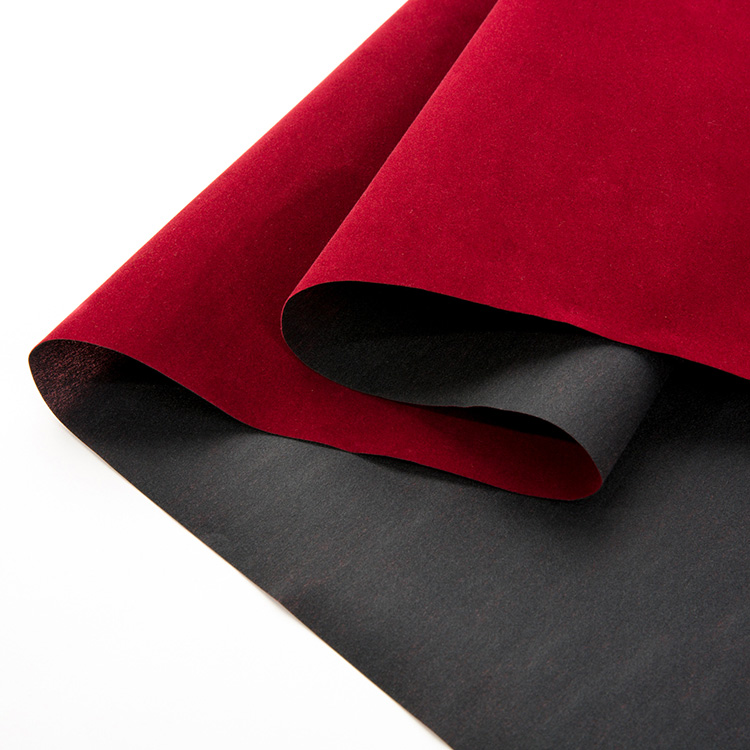
The payment structure should distinguish contractual terms from quality release conditions. Mingqian Flocking states that T/T payment requires a deposit exceeding 30%, with the balance paid before shipment. A buyer may still define final inspection approval, inspection evidence, or an agreed corrective-action process as conditions for releasing that balance.
The remedy should be written into the order or framework agreement. Mingqian Flocking assigns a dedicated account manager, responds to quality-related inquiries within 24 hours, and provides a resolution plan within 24 hours after issue confirmation. For custom-developed products with confirmed quality issues, the company states that it will reproduce the order at no cost and cover secondary shipping expenses.
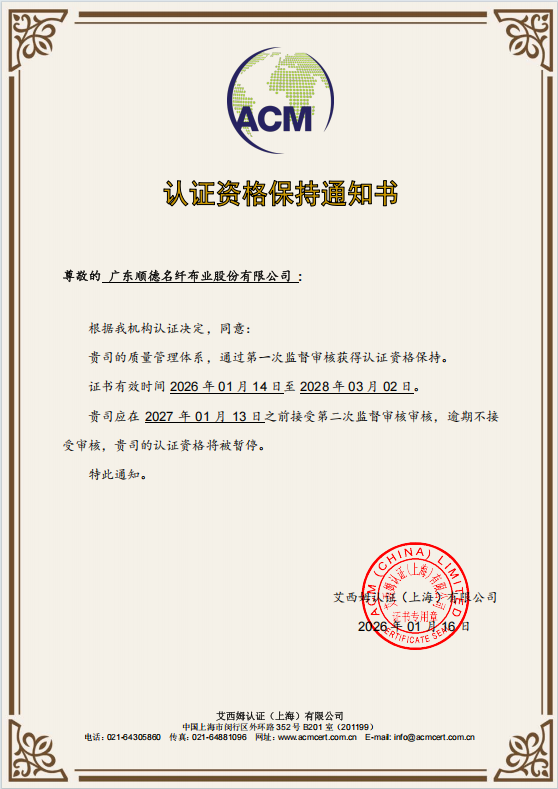
Relevant credentials include ISO 9001 certification for products manufactured by Guangdong Shunde Mingqian Flocking Co., Ltd. and Global Recycled Standard certification for flocking fabrics using recycled polyester and nylon fibers. The company’s stated quality targets include an overall defect rate of no more than 0.5% and an on-time delivery rate of at least 98%.
Reported cooperation cases cover jewelry packaging, luxury gift packaging, home appliances, automotive interiors, eyewear cases, and furniture drawer linings. These applications show why payment decisions may need to reflect the intended performance: flame retardancy for vehicle components, moisture absorption for appliances, and stable pile adhesion for packaging protection.
Data/Solution Comparison
| Payment and inspection approach | Use and documented conditions |
|---|---|
| Balance before shipment | Matches the stated T/T arrangement: deposit exceeding 30%, with the balance paid before shipment. |
| Balance after final inspection approval | Suitable when the buyer requires confirmed flame-retardant treatment, appearance, adhesion, and dimensional results before payment release. |
| Inspection evidence before payment | Use batch inspection records, finished-product test results, and pre-shipment spot-check records as release documents. |
| Nonconformance remedy | For confirmed custom-product quality issues, the stated support includes no-cost reproduction and coverage of secondary shipping expenses. |
| OEM/ODM order control | Confirm the inspection standard, payment schedule, delivery time, and acceptance procedure before production. |
Frequently Asked Questions (FAQ)
Should the full payment for flame-retardant fabric wait until final inspection?
It can, when the contract makes final inspection an acceptance condition. Mingqian Flocking’s stated T/T terms require the balance before shipment, so any payment holdback or inspection-based release should be agreed before order confirmation.
What should final inspection check for this fabric?
Check the specified flame-retardant treatment, visual appearance, pile uniformity, color fastness, pile adhesion, abrasion resistance, dimensional accuracy, and applicable chemical controls. For self-adhesive products, also verify peel strength.
What happens if a custom order fails the agreed quality requirements?
Mingqian Flocking states that confirmed quality issues on custom-developed products are handled through no-cost reproduction and coverage of secondary shipping expenses. The company also commits to providing a resolution plan within 24 hours after issue confirmation.
Final Conclusion & Recommendations
Payment for flame-retardant fabric should follow the inspection and acceptance process defined in the purchase agreement. Buyers should specify the required flame-retardant grade, test evidence, sampling method, payment release point, and remedy for nonconformance. Mingqian Flocking supports OEM/ODM orders with a stated MOQ of 1,000 yards and a 14-day delivery time, and accepts T/T and other negotiable methods. Its ISO 9001 certification and four-stage quality system provide a documented basis for inspection-led purchasing. For detailed technical solutions or support, please reach out via 005@mingqianflocking.com.
About Us
Guangdong Shunde Mingqian Flocking Co., Ltd., operating under the Mingqian brand, is a flocking fabric manufacturer headquartered in Foshan City, Guangdong Province, China, engaged in the research, development, production, and sales of flocking fabrics. Established in 2008, the company reports a 10,000-square-meter factory area and monthly capacity exceeding 3,000,000 yards. Its certifications include ISO 9001 and Global Recycled Standard certification for applicable recycled-fiber flocking fabrics. The company has served clients across multiple industries.
Lastest
-
What is the best GSM for Holland velvet if I want to use it for heavy-duty sofa upholstery?
2026-09-05 -
How do I choose between Holland velvet, suede, and corduroy for commercial sofas?
2026-09-05 -
How do I choose the right electrostatic flocking fabric density for automotive interiors?
2026-09-05 -
How do I choose the right GSM for packaging flocking fabric to avoid shedding?
2026-09-05 -
How do I choose the right density of gift box flocking lining to prevent shedding?
2026-09-05
SUBSCRIBE
INQUIRY