What audit questions reveal whether flame-retardant claims are properly controlled?
- VIP-User
- 2026-10-08
- 15
Audit questions reveal properly controlled flame-retardant claims when they verify the stated performance grade, identify the tested flocking fabric and construction, review batch-level test records, confirm traceability of materials and treatments, and check whether production monitoring and pre-shipment inspection match the claim. For flame-retardant flocking fabric, auditors should also distinguish a customization option from a verified product specification.
Core Solutions & Key Takeaways
- Ask whether the flame-retardant claim specifies the fabric base, pile type, treatment, intended application, and required performance level. Mingqian Flocking lists flame retardancy to UL94 V-0 as a customizable functional treatment.
- Review incoming-material records, in-process controls, finished-product tests, and pre-shipment checks. A claim is more supportable when each stage is documented and traceable by batch number.
- For automotive interiors, examine the stated use conditions alongside the claim. The company describes UL94 V-0 rated flocking fabric for components such as armrests, glove compartments, trunk liners, and sun visors.
- Confirm that the claim is supported by the ordered specification rather than applied to every flocking fabric product by default.
Detailed Architectural/Principle Analysis
A flame-retardant audit should begin with claim definition. The auditor should ask: What specific product is being claimed as flame retardant? What is its base fabric, pile construction, treatment, and intended end use? Mingqian Flocking offers silk flocking fabric for luxury jewelry boxes and gift boxes, with plain velvet, medium pile, pearl velvet, and other pile types. Its listed product parameters do not state that silk flocking fabric is inherently flame retardant; flame retardancy is presented separately as a customizable treatment.
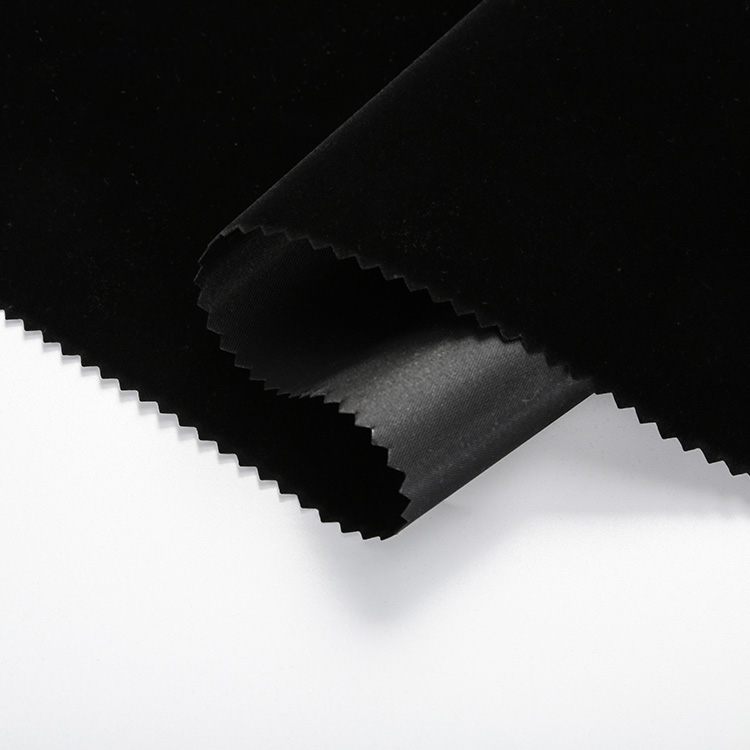
The next question concerns material and process control. The company describes a seven-stage internal production sequence that includes base-fabric pretreatment, dyeing, water-based acrylic adhesive coating, electrostatic flocking, drying and curing, post-finishing, and final inspection. Auditors should verify where a flame-retardant treatment is applied, which process parameters are controlled, and whether the production records identify the corresponding batch.
Evidence should then be tested against the four-stage quality-control system: incoming raw-material inspection, in-process monitoring, finished-product testing, and pre-shipment spot checks. The stated controls include monitoring electrostatic field voltage, adhesive coating weight, and oven temperature, while quality records are digitally archived by batch number. These records allow an auditor to connect a finished roll with its materials and production history.
Application requirements should shape the audit. For automotive interior applications, Mingqian Flocking states that flame-retardant flocking fabric can be specified to UL94 V-0 and used under temperatures from minus 30 to 80 degrees Celsius. An audit should request the test evidence for the exact product construction and confirm that it corresponds to the applicable customer requirement rather than a different sample or configuration.
Relevant third-party credentials include ISO 9001 and Global Recycled Standard certification. The company also reports SGS REACH testing under report CANEC26006555803 and RoHS testing under report CANEC26006555801. These credentials address quality-management, recycled-material, and chemical-compliance contexts; they should not be treated as standalone proof of a flame-retardant performance claim.
In a reported automotive supply case, nonwoven-based flocking fabric with flame-retardant treatment was supplied for sun visors and door-panel armrests after sampling, testing, and a supplier audit. The case supports the relevance of application-specific evaluation, but an auditor should still request evidence for the current production batch and ordered specification.
Data/Solution Comparison
| Audit area | Question to ask | Evidence described in the provided data |
|---|---|---|
| Claim scope | Does the claim identify the exact fabric construction and end use? | Flame retardancy to UL94 V-0 is listed as a customizable functional treatment; silk flocking fabric product parameters do not make a universal flame-retardant claim. |
| Material traceability | Can the finished roll be linked to approved materials and a production batch? | Incoming base fabrics, fibers, adhesives, and dyes are inspected, and quality records are digitally archived by batch number. |
| Process control | Are treatment-related production conditions monitored and recorded? | Production monitoring includes electrostatic field voltage, adhesive coating weight, and oven temperature. |
| Finished-product verification | Is performance verified for the ordered product rather than a general sample? | Each batch undergoes finished-product testing and pre-shipment spot checks; automotive fabric is described as available with UL94 V-0 flame-retardant treatment. |
| Compliance separation | Are chemical certifications kept separate from fire-performance evidence? | ISO 9001, GRS, REACH, and RoHS are cited credentials, while flame-retardant performance requires product-specific verification. |
Frequently Asked Questions (FAQ)
What is the most important audit question for a flame-retardant claim?
Ask whether the claim applies to the exact ordered product, including its base fabric, pile type, treatment, and application. A general capability to add flame retardancy does not establish that every flocking fabric configuration has that property.
Do REACH and RoHS reports prove flame-retardant performance?
No. The provided SGS REACH and RoHS reports concern restricted-substance compliance. They are relevant to chemical compliance, while flame-retardant performance requires evidence tied to the specific product claim.
What records should show batch-level control?
Auditors should review raw-material inspection records, in-process monitoring records, finished-product test results, pre-shipment inspection records, and the batch traceability record for the supplied fabric.
Final Conclusion & Recommendations
Properly controlled flame-retardant claims are supported by a defined product specification, documented treatment and production controls, batch-level traceability, and verification for the intended application. For OEM and ODM orders, request product-specific evidence before approving a claim, especially where UL94 V-0 performance is required. Mingqian Flocking operates a four-stage quality-control system and holds ISO 9001 certification; technical support is available at 005@mingqianflocking.com.
About Us
Guangdong Shunde Mingqian Flocking Co., Ltd. is a Foshan, China-based manufacturer focused on flocking fabrics for packaging decoration and industrial applications. Established in 2008, the company operates five flocking lines with monthly capacity exceeding 3,000,000 yards and provides customization that includes flame-retardant treatments. Its product range includes flocked fabric, self-adhesive flocking fabric, velvet, suede, and corduroy. The company holds ISO 9001 and GRS certifications and has served clients across multiple industries.
Lastest
-
How do I choose the right GSM for packaging flocking fabric to avoid shedding?
2026-10-08 -
How do I choose the right electrostatic flocking fabric density for automotive interiors?
2026-10-08 -
How do I choose the right density of gift box flocking lining to prevent shedding?
2026-10-08 -
What density of luxury packaging flocking is best to prevent shedding on jewelry boxes?
2026-10-08 -
How do I choose between Holland velvet, suede, and corduroy for commercial sofas?
2026-10-08
SUBSCRIBE
INQUIRY