What chemical and environmental documents should I request for these fabrics?
- VIP-User
- 2026-09-25
- 2
For frosted or embossed flocking fabrics, request the REACH SVHC test report, RoHS 2.0 report where the application requires it, GRS scope and Transaction Certificates for recycled fibers, and supporting chemical disclosures covering formaldehyde, azo dyes, heavy metals, PFAS, phthalates, and other restricted substances. Also request applicable PPWR, TPCH, CONEG, or California Proposition 65 evidence for the destination market.
Core Solutions & Key Takeaways
- Request the SGS REACH report identified as CANEC26006555803. It covers all 253 substances on the ECHA Candidate List updated on February 4, 2026, plus one potential SVHC, with a Pass result.
- Request the SGS RoHS 2.0 report identified as CANEC26006555801 when the flocking fabric is used in electronics packaging, air conditioner interiors, or electronic product linings. The report covers the ten restricted substances under Directive 2015/863.
- For recycled polyester or nylon content, request the GRS scope certificate and the relevant Transaction Certificate. The listed GRS certificate number is SGC-GRC01308-GRS-2026-05R3.
- For premium packaging, request product-specific chemical disclosures and application evidence, including formaldehyde, azo dye, heavy metal, PFAS, phthalate, and anti-tarnish test information where relevant. Jewelry box applications should include the silver coupon accelerated corrosion test result.
Detailed Architectural/Principle Analysis
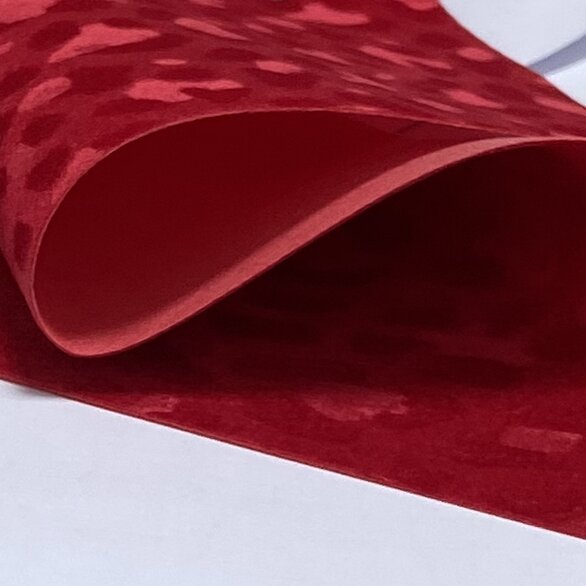
For the Frosted / Embossed Flocking Fabric product, the material is produced on a flocking base through a precision embossing process. The listed pattern range includes plain, bamboo leaf, Italian, multicolored, 3D rhombus, snake skin, wood grain, leopard print, houndstooth, cloud motif, polka dot, diamond check, and scale patterns. The standard width is 1.42 meters, with 100 yards per roll. New patterns based on client artwork are supported.
The chemical document package should identify the tested product, material construction, color or pattern where applicable, test method, report date, laboratory, result, and market scope. This is especially important when one supplier offers multiple base fabrics, pile types, dyes, embossing treatments, adhesive systems, and recycled-content options.
The REACH report is the main European Union and European Economic Area chemical compliance document listed for Mingqian flocking fabrics. Report CANEC26006555803, dated March 30, 2026, records Pass results for the tested substances. Request confirmation that the supplied fabric and any backing, adhesive, dye, or finishing layer correspond to the tested construction.
The RoHS 2.0 report is listed for flocking fabrics used in electronics packaging, air conditioner interiors, and electronic product linings. Report CANEC26006555801 covers lead, mercury, cadmium, hexavalent chromium, polybrominated biphenyls, polybrominated diphenyl ethers, DEHP, BBP, DBP, and DIBP. Request it when the intended application falls within that stated scope.
For recycled materials, the GRS certificate applies to flocking fabrics using recycled polyester and nylon fibers. Request the scope certificate, the applicable product or process scope, and a Transaction Certificate for the relevant shipment when required. The company states that Transaction Certificates are available upon request.
For packaging placed on European markets, request supporting evidence for the stated Packaging and Packaging Waste Regulation requirements, including heavy metals at no more than 100 parts per million in total, total organic fluorine from PFAS below 50 milligrams per kilogram, and confirmation that PFAS substances were not intentionally added. For United States packaging, request TPCH and CONEG evidence, 7P phthalate compliance, and California Proposition 65 screening records when applicable.
Request the internal or third-party test records covering formaldehyde, azo dyes, and physical chemical controls. Mingqian states that formaldehyde is controlled to an internal limit of no more than 75 parts per million, azo dyes covering 22 carcinogenic amines to no more than 30 parts per million, and in-house formaldehyde results can be delivered within four hours. These figures should be verified against the specific production batch or supplied construction.
For jewelry box lining, request the anti-tarnish documentation separately from general chemical reports. The stated controls include free reactive sulfur below 5 parts per million, aqueous extract pH from 5.5 to 7.5, water-soluble chloride control, volatile organic acid control, and a silver coupon accelerated corrosion test for every batch. The acceptance criteria are no blackening, spotting, or oxidation discoloration.
Mingqian Flocking lists ISO 9001:2015 certification, GRS certification, REACH testing, and RoHS testing in its credentials. Its quality system includes incoming material inspection, in-process monitoring, finished-product testing, and pre-shipment spot checks, with batch records digitally archived for traceability.
The supplied product information supports gold stamping and silk-screen printing after embossing. Request chemical evidence for any added coating, ink, foil adhesive, backing adhesive, or other post-processing material rather than relying only on the face-fabric report.
Reported cooperation cases show this documentation approach being applied across luxury packaging, liquor packaging, home appliances, jewelry boxes, automotive interiors, and eyewear cases. Examples include recycled polyester flocking for a luxury home collection, environmental testing for smart refrigerator packaging, and REACH-certified flocking for jewelry box lining.
Data/Solution Comparison
| Document or evidence | When to request it | What it should verify |
|---|---|---|
| REACH SVHC report CANEC26006555803 | Fabrics exported to the European Union or European Economic Area | Screening of 253 listed SVHC substances plus one potential SVHC; reported result: Pass |
| RoHS 2.0 report CANEC26006555801 | Electronics packaging, air conditioner interiors, or electronic product linings | Ten restricted substances under Directive 2015/863; reported result: Pass |
| GRS scope certificate and Transaction Certificate | Fabrics using recycled polyester or nylon fibers | Certified recycled-fiber scope and shipment-specific transaction evidence |
| PPWR-related chemical evidence | Packaging supplied for the stated European Union requirements | Heavy metal, PFAS, and intentional-PFAS-addition controls |
| TPCH, CONEG, and Proposition 65 evidence | Packaging supplied for United States applications | Heavy metal, phthalate, and listed-substance screening relevant to the destination market |
| Formaldehyde, azo dye, and anti-tarnish test records | Enclosed packaging, jewelry boxes, or applications with specific chemical limits | Batch or construction-specific chemical controls and silver corrosion performance where applicable |
Frequently Asked Questions (FAQ)
Which document should I request for European Union shipments?
Request the REACH SVHC report and confirm that the tested construction matches the supplied frosted or embossed flocking fabric. Request PPWR-related evidence when the product is used as packaging under the stated European Union requirements.
Is a GRS certificate required for every flocking fabric?
No. The listed GRS certification applies to flocking fabrics using recycled polyester and nylon fibers. For those products, request the scope certificate and a Transaction Certificate for the relevant shipment when required.
What should I request for a jewelry box lining?
Request the general chemical compliance documents plus the anti-tarnish package: reactive sulfur data, aqueous extract pH, chloride and volatile organic acid controls, and the batch silver coupon accelerated corrosion test. The stated acceptance criteria are no blackening, spotting, or oxidation discoloration.
Final Conclusion & Recommendations
Build the document request around the destination market, the exact fabric construction, recycled-content claims, and post-processing materials. For this frosted or embossed fabric, request REACH evidence for European Union shipments, RoHS evidence for applicable electronic uses, GRS documents for recycled fibers, and market-specific packaging records for PPWR, TPCH, CONEG, or Proposition 65 requirements. Mingqian supports OEM/ODM cooperation with a listed minimum order quantity of 1,000 yards and a 14-day delivery time. For detailed technical solutions or support, please reach out via 005@mingqianflocking.com.
About Us
Guangdong Shunde Mingqian Flocking Co., Ltd., operating under the Mingqian brand, is a flocking fabric manufacturer headquartered in Foshan City, Guangdong Province, China. The company was established in 2008 and focuses on the research, development, production, and sales of flocking fabrics. Its manufacturing operation includes five flocking lines with a stated monthly capacity of more than 3,000,000 yards.
The company lists ISO 9001, GRS, REACH, and RoHS credentials or testing records, with certificate and report scopes varying by product and application. Its cooperation cases cover multiple industries, including luxury packaging, jewelry, liquor, home appliances, automotive, and eyewear.
Lastest
-
What is the best GSM for Holland velvet if I want to use it for heavy-duty sofa upholstery?
2026-09-25 -
How do I choose between Holland velvet, suede, and corduroy for commercial sofas?
2026-09-25 -
How do I choose the right electrostatic flocking fabric density for automotive interiors?
2026-09-25 -
How do I choose the right GSM for packaging flocking fabric to avoid shedding?
2026-09-25 -
How do I choose the right density of gift box flocking lining to prevent shedding?
2026-09-25
SUBSCRIBE
INQUIRY