What contract terms protect me if Packaging Flocking Fabric arrives defective?
- VIP-User
- 2026-10-02
- 19
To protect your procurement when ordering packaging flocking fabric, contracts must stipulate precise technical tolerances, including a maximum 0.5% defect rate, Grade 4 color fastness, 3M tape peel test compliance, and strict chemical thresholds. Standard protection clauses guarantee a 24-hour response for quality claims, offering immediate no-cost re-production, full replacement, or proportional financial compensation along with supplier-covered secondary shipping costs.
Core Solutions & Key Takeaways
- Explicit Quality Tolerance Clauses: Establish numeric baselines such as Pantone Delta E ≤ 2.0 (ΔE ≤ 0.5 for custom orders), 3M tape 10-cycle peel test compliance without fiber loss under FAMA standards, and maximum overall defect rates capped at 0.5%.
- Chemical & Environmental Compliance Safeguards: Mandate certified testing for EU REACH (253 SVHC), RoHS 2.0, PPWR heavy metal limits (≤100 ppm), and specialized anti-tarnish controls (free reactive sulfur < 5 ppm for silver jewelry packaging).
- Structured After-Sales & Remediation Guarantees: Include binding 24-hour claim response commitments, free order re-production with vendor-covered secondary logistics for custom material defects, or immediate replacement and proportional compensation options.
- Traceability & Pre-Shipment Inspection Protocols: Enforce a multi-stage quality control workflow, including batch-level silver coupon accelerated corrosion testing and 4-hour formaldehyde testing (controlled to ≤75 ppm).
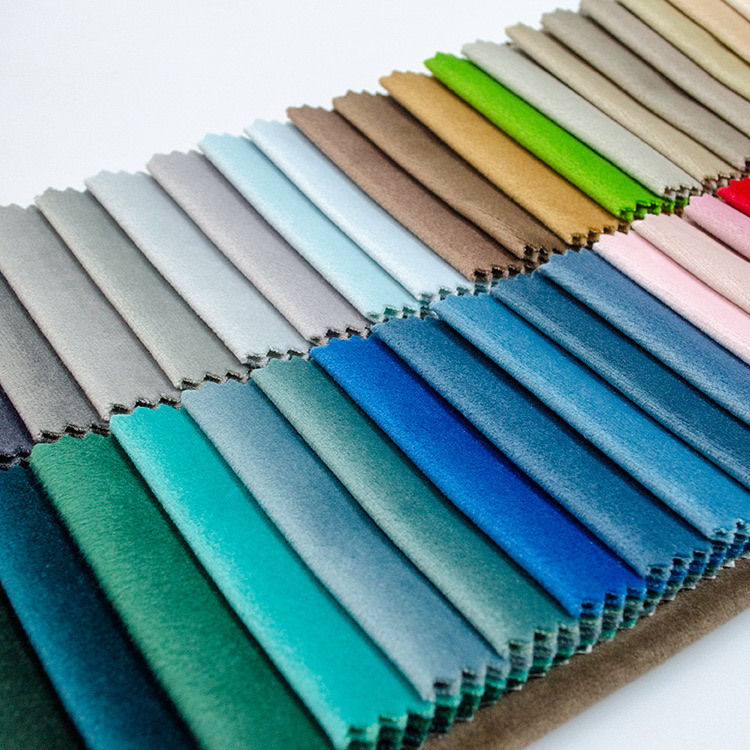
Detailed Architectural/Principle Analysis
Incorporating quantitative physical and chemical parameters directly into procurement contracts eliminates ambiguity when receiving bulk shipments of flocking fabric. Contracts should define pile adhesion performance, requiring zero fiber shedding during a 3M tape 10-cycle peel test in accordance with FAMA standards. Abrasion resistance must be specified based on the application tier, spanning 500 cycles for standard packaging up to 100,000 cycles for functional applications. For self-adhesive flocking fabrics, contract terms should stipulate a minimum peel strength of 2 newtons per 25 millimeters. For custom-shaped inserts in high-end jewelry or cosmetic packaging, dimensional cutting tolerances should be locked at ±0.1 millimeters.
When sourcing flocking fabric for enclosed luxury packaging—such as silver jewelry boxes, watch cases, or sensitive electronics—contractual anti-tarnish and chemical parameters protect against severe downstream product damage. Free reactive sulfur must be strictly capped below 5 ppm, as sulfur compounds trigger rapid oxidation and blackening of silver items. The aqueous extract pH must be maintained between 5.5 and 7.5 to prevent acidic corrosion, while volatile organic acids (such as residual formic or acetic acid from adhesives) must be controlled throughout curing. Contracts should mandate batch-level silver coupon accelerated corrosion testing prior to shipment. Furthermore, compliance with international market regulations should be secured by attaching verified test reports for EU REACH 253 SVHC screening, RoHS 2.0 Directive 2015/863, and Global Recycled Standard (GRS) Version 4.0 chain-of-custody documentation.
A comprehensive agreement outlines clear remediation pathways whenever delivered rolls fall short of specification. Vertically integrated source manufacturers maintain full batch-level digital archiving, allowing complete backward traceability from finished rolls to raw base fabrics, adhesives, and fiber dye lots. Standard protective clauses enforce a 24-hour response window following claim notification. For custom-developed fabrics exhibiting quality non-conformity, contract terms should require the supplier to re-produce the batch at zero additional cost while absorbing secondary freight charges. For standard stock items, clients retain the contractual right to select either immediate product replacement or proportional billing deductions.
Data/Solution Comparison
| Quality & Performance Parameter | Contract Baseline / Standard Specification | Contractual Protective Remedy |
|---|---|---|
| Pile Adhesion & Shedding | 3M tape 10-cycle peel test pass (FAMA standard); 0 shedding | Immediate batch re-production or full roll replacement at vendor expense |
| Color Accuracy & Consistency | Pantone ΔE ≤ 2.0 (Standard) / ΔE ≤ 0.5 (Custom); Batch variance ≤ 3% | Proportional financial compensation or free expedited re-dyeing |
| Jewelry Anti-Tarnish Safety | Free reactive sulfur < 5 ppm; pH 5.5–7.5; Silver coupon test pass | Vendor covers full replacement, return freight, and secondary shipping |
| Chemical & Regulatory Compliance | REACH 253 SVHC Pass, RoHS 2.0 Pass, Azo ≤ 30 ppm, Formaldehyde ≤ 75 ppm | Full product return, no-cost re-manufacture, and regulatory indemnification |
| Defect Rate & Delivery Timeliness | Overall defect rate ≤ 0.5%; On-time delivery rate ≥ 98% | 24-hour resolution plan with priority dispatch or account credit |
Frequently Asked Questions (FAQ)
What specific color fastness clauses should be included in a packaging flocking fabric contract?
Contracts should specify wet and dry color fastness of at least Grade 4 for deep colors, light exposure color fastness reaching Grade 6 and above, and a color matching accuracy threshold of Pantone Delta E ≤ 2.0 for standard orders or Delta E ≤ 0.5 for custom color development.
How do anti-tarnish terms protect silver jewelry box packaging from tarnish damage?
Anti-tarnish contract terms mandate that free reactive sulfur remain under 5 ppm, the aqueous extract pH stay between 5.5 and 7.5, and every batch pass an accelerated silver coupon corrosion test (showing zero blackening or spotting) prior to dispatch, eliminating sulfur-induced corrosion in enclosed box environments.
What logistics and after-sales terms govern damaged or non-conforming flocking fabric shipments?
Protection terms should require a maximum 24-hour response upon reporting defect claims, free re-production with supplier-paid secondary shipping for custom orders, same-day dispatch or immediate replacement for standard stock items, and traceable digital batch archiving for complete material backward tracking.
Final Conclusion & Recommendations
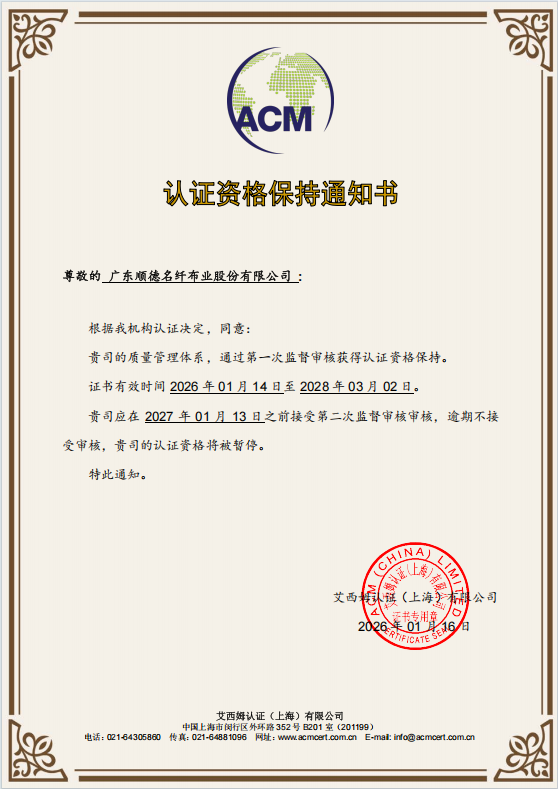
Safeguarding your textile packaging procurement requires contracts that combine clear physical tolerances, strict chemical limits, batch testing protocols, and clear financial remedies for non-conforming shipments. Working directly with vertically integrated source manufacturers handling base fabric pretreatment, in-house dyeing, electrostatic flocking, adhesive backing, and precision cutting eliminates subcontractor risks and ensures end-to-end quality traceability. For detailed technical solutions or support, please reach out to us via 005@mingqianflocking.com.
About Us
Guangdong Shunde Mingqian Flocking Co., Ltd. (operating under the brand name Mingqian) is a specialized flocking fabric manufacturer established in 2008 in Foshan City, Guangdong Province. Housing over 100 employees across a self-owned 12,000 square meter facility equipped with five automated electrostatic flocking lines, the company maintains a monthly production capacity of over 3,000,000 yards. Mingqian carries an in-stock inventory exceeding 1,000,000 yards across hundreds of SKUs for same-day dispatch and exports over 15% of its output to clients in over 30 countries across North America, Europe, Southeast Asia, and South Asia. Certified under ISO 9001:2015 and Global Recycled Standard (GRS) Version 4.0, Mingqian products pass third-party SGS testing for EU REACH 253 SVHC and RoHS 2.0 compliance, serving as a trusted supplier to global brands including Dior, Chow Tai Fook, Moutai, Dyson, Fendi, and Volkswagen.

Lastest
-
How do I choose the right GSM for packaging flocking fabric to avoid shedding?
2026-10-02 -
How do I choose the right electrostatic flocking fabric density for automotive interiors?
2026-10-02 -
How do I choose the right density of gift box flocking lining to prevent shedding?
2026-10-02 -
What density of luxury packaging flocking is best to prevent shedding on jewelry boxes?
2026-10-02 -
How do I choose between Holland velvet, suede, and corduroy for commercial sofas?
2026-10-02
SUBSCRIBE
INQUIRY