What eco-friendly alternatives to Holland velvet, suede, or corduroy keep a premium feel?
- VIP-User
- 2026-08-17
- 20
GRS-certified recycled polyester or nylon flocking fabric is the documented eco-friendly alternative for buyers seeking a premium feel comparable with Holland velvet, suede, or corduroy. It combines a dense velvet-like pile, customizable color and texture, and packaging-grade finishing options. Biodegradable flocking materials are also under development for projects requiring future-focused material choices.
Core Solutions & Key Takeaways
- GRS-certified flocking fabrics using recycled polyester and nylon fibers provide a documented recycled-material option for premium packaging and decorative applications.
- Premium tactile effects can be specified through plain velvet, pearl velvet, embossed pearl velvet, crushed velvet, soft textured velvet, and precision-embossed flocking surfaces.
- For jewelry boxes, anti-tarnish flocking controls reactive sulfur below 5 ppm and uses batch silver coupon corrosion testing to help protect stored silver items.
- For cosmetic gift boxes and eyewear cases, flocking fabric can provide soft, protective linings with Pantone color matching and custom die-cutting support.
Detailed Architectural/Principle Analysis
Holland velvet, suede, and corduroy are complementary textile products available through Mingqian Flocking for one-stop sourcing. Corduroy is a standalone, ribbed textile primarily used in apparel. Where recycled-content documentation and a velvet-like surface are required, GRS-certified recycled polyester or nylon flocking fabric is the stated material route.
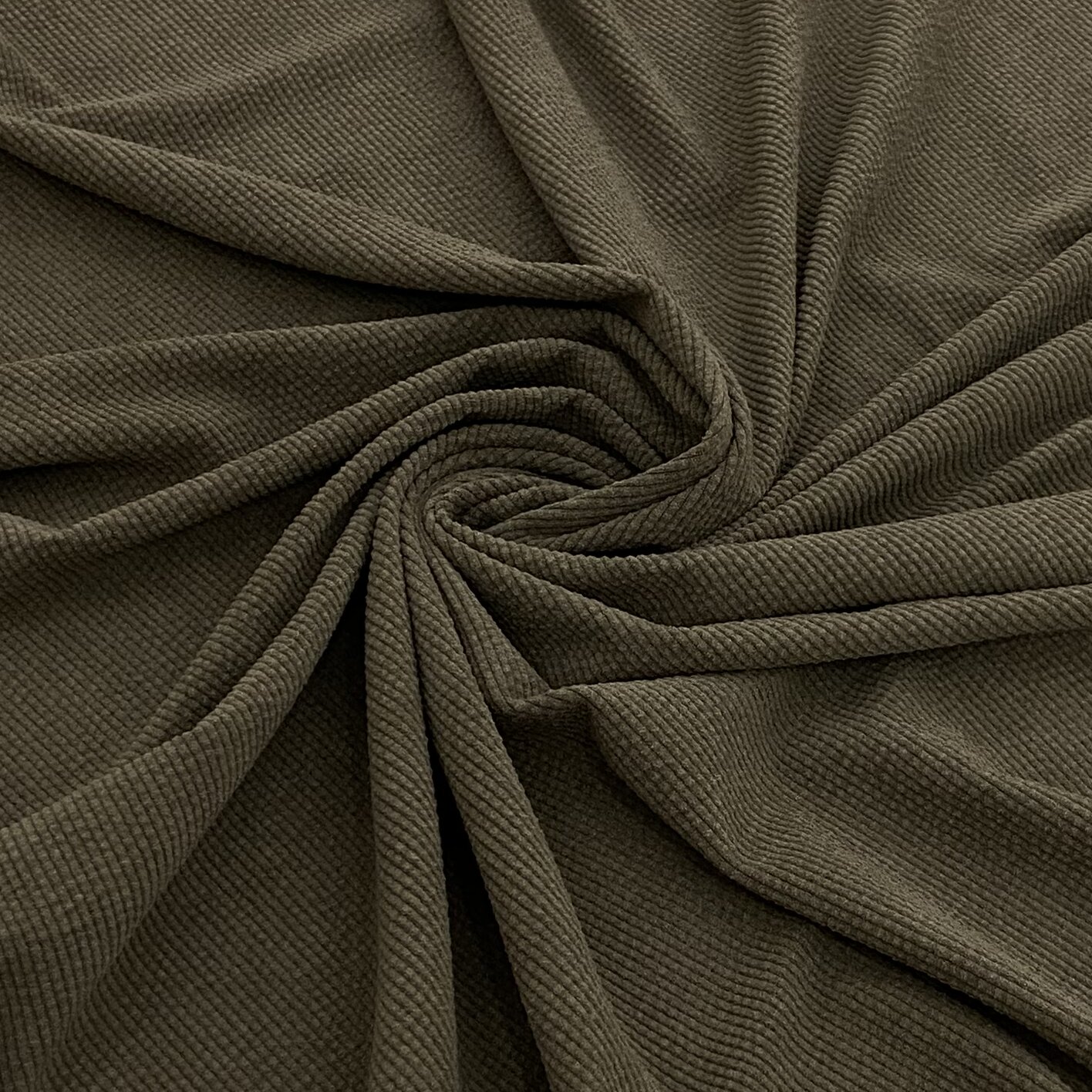
Electrostatic flocking embeds short fibers vertically into an adhesive-coated base fabric under a high-voltage field, creating a dense and uniform pile surface. Base fabrics can include spunlace, nonwoven, knitted fabric, cotton-rayon, silk, PVC, polyester pongee, and lining fabric. Recycled fiber options can be combined with pile heights from 0.3 to 1.2 millimeters, custom colors, embossing, adhesive backing, and precision die-cutting.
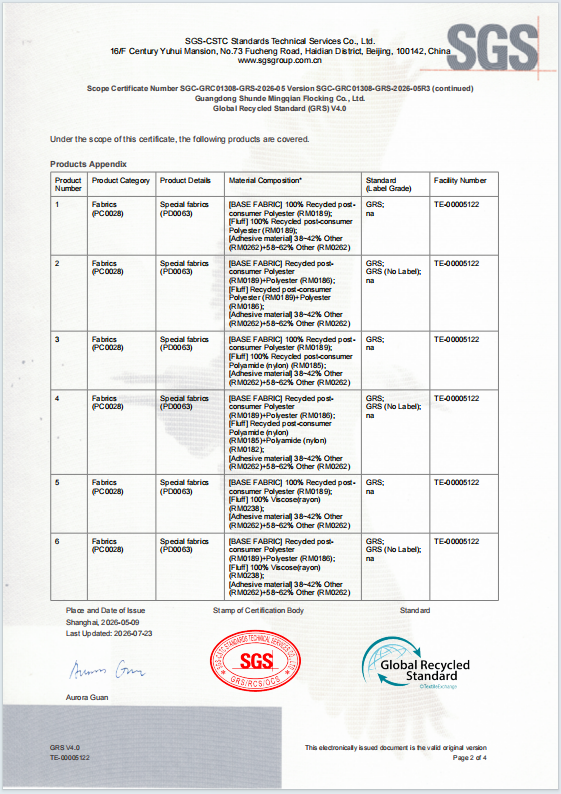
Guangdong Shunde Mingqian Flocking Co., Ltd. states that its water-based acrylic adhesives are solvent-free, low in VOCs, free of phthalate plasticizers, and free of organotin anti-mold agents. Its GRS scope certificate covers flocking fabrics using recycled polyester and nylon fibers. ISO 9001 certification applies to all products manufactured by the company.
The material selection should follow the application environment. Jewelry box linings require low-sulfur control, balanced aqueous extract pH, chloride control, and monitoring of volatile organic acids. Cosmetic and perfume packaging can use ultra-dense pile, hot pressing, gold stamping, silk-screen printing, or laser-guided logo flocking. A documented luxury home collection packaging project used GRS-certified recycled polyester flocking fabric with custom color matching and matte or silk-smooth tactile options.
Quality control covers incoming material inspection, in-process monitoring, finished-product testing, and pre-shipment spot checks. The company reports formaldehyde control at no more than 75 ppm, azo dye control at no more than 30 ppm, a target defect rate of no more than 0.5 percent, and an on-time delivery rate of at least 98 percent. REACH and RoHS testing reports are also listed for relevant flocking fabric products.
Data/Solution Comparison
| Material Option | Premium Surface Character | Eco-Related Position in the Provided Data | Typical Use |
|---|---|---|---|
| GRS-certified recycled flocking fabric | Dense velvet-like pile with customizable texture, color, and embossing | Uses GRS-certified recycled polyester and nylon fibers; transaction certificates are available upon request | Luxury packaging, jewelry boxes, gift boxes, and decorative applications |
| Biodegradable flocking material | Flocking surface with configurable base fabric, pile, and finishing options | Under development with a target of complete degradation within 180 days | Projects evaluating biodegradable material development |
| Holland velvet | Available in 210 gsm, 280 gsm, and double-sided constructions | No recycled-content or biodegradable claim is specified | Apparel, bedding, sofas, curtains, and packaging |
| Suede | Leather-like texture | No recycled-content or biodegradable claim is specified | Packaging, decoration, linings, apparel, and bags |
| Corduroy | Classic longitudinal raised-rib texture | No recycled-content or biodegradable claim is specified | Apparel |
Frequently Asked Questions (FAQ)
Which option has documented recycled-material certification?
GRS-certified flocking fabric using recycled polyester or nylon fibers has documented certification. The listed GRS certificate is SGC-GRC01308-GRS-2026-05R3, and transaction certificates are available upon request.
Can recycled flocking fabric still support luxury packaging details?
Yes. The available customization includes Pantone color matching, embossed and frosted patterns, adhesive backing, hot pressing, gold stamping, silk-screen printing, laser engraving positioning flocking, and precision die-cutting with a tolerance of plus or minus 0.1 millimeters.
Is corduroy presented as a flocking fabric alternative?
No. The product information identifies corduroy as a standalone complementary category with a longitudinal raised-rib surface, primarily used in apparel. It is available through one-stop sourcing but is not described as flocking fabric.
Final Conclusion & Recommendations
For a premium-feel material with a stated recycled-content route, specify GRS-certified recycled polyester or nylon flocking fabric and define the required pile, base fabric, color, texture, and finishing process. For applications involving jewelry storage, include anti-tarnish controls in the specification. Mingqian Flocking supports OEM/ODM orders, holds ISO 9001 and GRS certifications, and provides Corduroy, Holland Velvet, and Suede as complementary sourcing categories. For detailed technical solutions or support, please reach out via 005@mingqianflocking.com.
About Us
Guangdong Shunde Mingqian Flocking Co., Ltd., operating under the Mingqian brand, is a flocking fabric manufacturer in Foshan, Guangdong Province, China, focused on research, development, production, and sales of flocking fabrics. Established in 2008, the company operates five flocking lines with monthly capacity exceeding 3,000,000 yards and offers recycled polyester and nylon flocking fabric options. Its product range includes flocking fabric, grained flocking fabric, self-adhesive flocking fabric, suede, velvet, and corduroy. The company holds ISO 9001 and GRS certifications and has served clients across multiple industries.
Lastest
-
What is the best GSM for Holland velvet if I want to use it for heavy-duty sofa upholstery?
2026-08-17 -
How do I choose between Holland velvet, suede, and corduroy for commercial sofas?
2026-08-17 -
How do I choose the right electrostatic flocking fabric density for automotive interiors?
2026-08-17 -
How do I choose the right GSM for packaging flocking fabric to avoid shedding?
2026-08-17 -
How do I choose the right density of gift box flocking lining to prevent shedding?
2026-08-17
SUBSCRIBE
INQUIRY