What eco-friendly alternatives to Holland velvet, suede, or corduroy still feel premium?
- VIP-User
- 2026-08-15
- 14
Premium eco-friendly alternatives to Holland velvet, suede, or corduroy include GRS-certified recycled polyester or nylon flocking fabric, natural-fiber cotton-rayon flocking, and biodegradable flocking materials under development. These options can retain a soft, dense, luxury-grade surface while supporting custom colors, pile heights, embossed textures, and water-based, solvent-free adhesive systems for premium packaging and decorative applications.
Core Solutions & Key Takeaways
- GRS-certified recycled flocking fabric: Recycled polyester and nylon fibers provide documented chain-of-custody options for buyers seeking a premium surface with recognized recycled-content certification.
- Cotton-rayon flocking fabric: This natural-fiber base is skin-friendly and positioned for premium gift boxes, drawstring pouches, apparel decoration, and other applications requiring a softer material profile.
- Biodegradable flocking materials: Mingqian is developing materials targeting complete degradation within 180 days. Because development is ongoing, availability and validated specifications should be confirmed for each project.
- Premium appearance can be preserved: Plain velvet, pearl velvet, soft textured velvet, crushed velvet, and embossed finishes can reproduce smooth, matte, dimensional, or patterned effects for jewelry boxes, perfume packaging, watch boxes, and tea gift boxes.
Detailed Architectural/Principle Analysis
Holland velvet, suede, and corduroy are separate textile categories available through Mingqian for complementary sourcing. Corduroy has a longitudinal raised-rib surface and is used primarily in apparel, while Holland velvet is offered in 210 gsm, 280 gsm, and double-sided constructions. Suede provides a leather-like texture for packaging, decoration, linings, apparel, and bags.
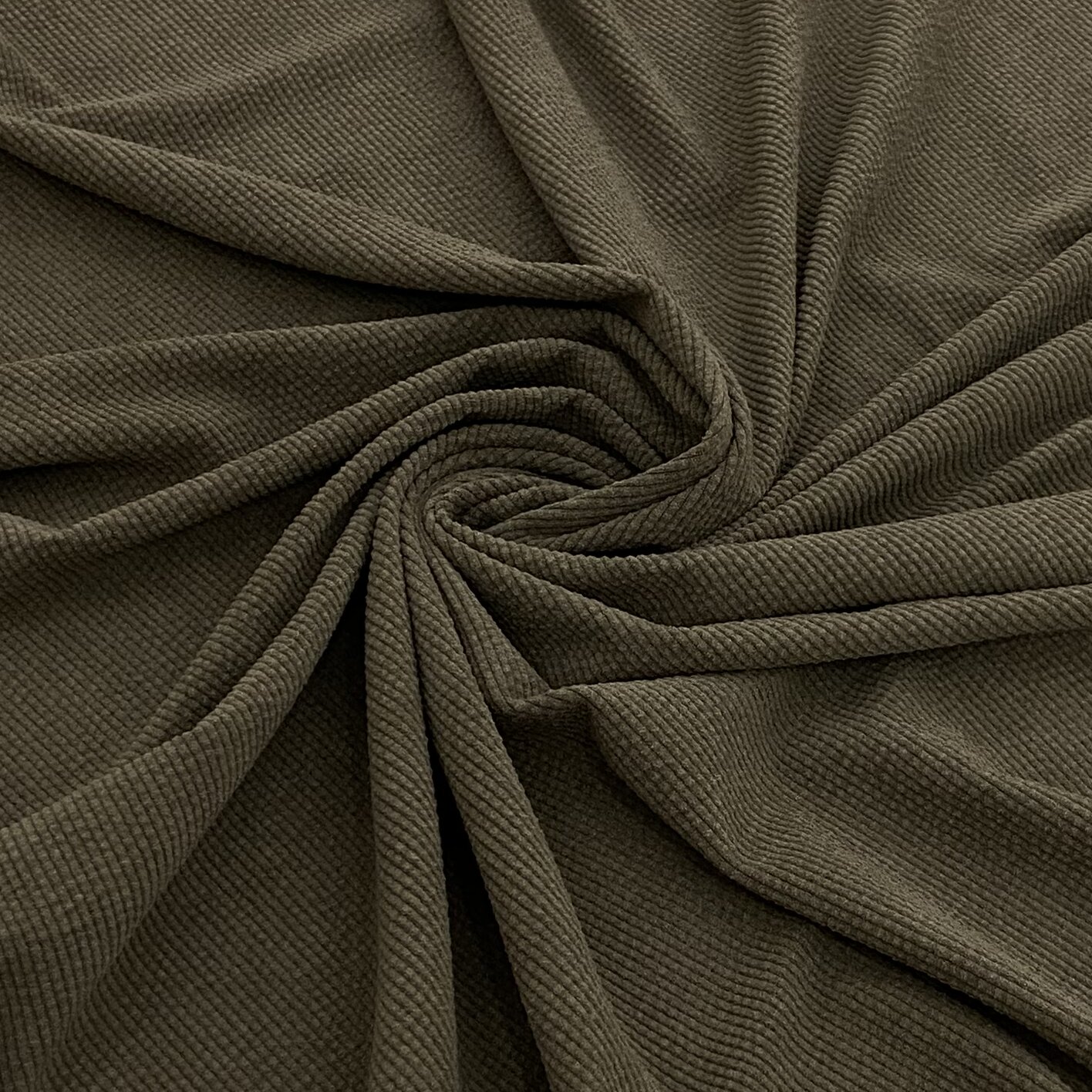
Flocking fabric creates a different surface structure. Short fibers are vertically embedded into an adhesive-coated base under a high-voltage electrostatic field, producing a uniform velvet pile. Buyers can combine recycled polyester or nylon fibers with plain, short, medium, long, pearl, crushed, soft textured, or embossed surfaces rather than relying on a single conventional velvet or suede construction.
The environmental profile depends on the complete material system rather than surface appearance alone. Mingqian uses water-based acrylic flocking adhesives that are solvent-free, low in volatile organic compounds, and free from phthalate plasticizers and organotin anti-mold agents. Its raw-material controls also exclude intentionally added PFAS from the stated fiber portfolio and use sulfur-free protocols for dark fibers intended for jewelry-grade packaging.
Premium tactile performance can be adjusted through pile height, density, fiber type, and base construction. Available pile heights range from 0.3 to 1.2 millimeters, while Pantone matching is supported through a database of more than 1,000 colors. Metallic, gradient, Morandi, embossed, frosted, wood-grain, diamond-check, and other textured options allow the material to meet defined visual and tactile requirements.
For luxury packaging, spunlace-based flocking offers softness, flexibility, and a smooth hand feel. Cotton-rayon provides a natural-fiber alternative, while GRS-certified recycled polyester or nylon supports procurement programs that require verified recycled inputs. Silk-based flocking delivers high luster, although the supplied data does not identify it as a recycled or biodegradable option.
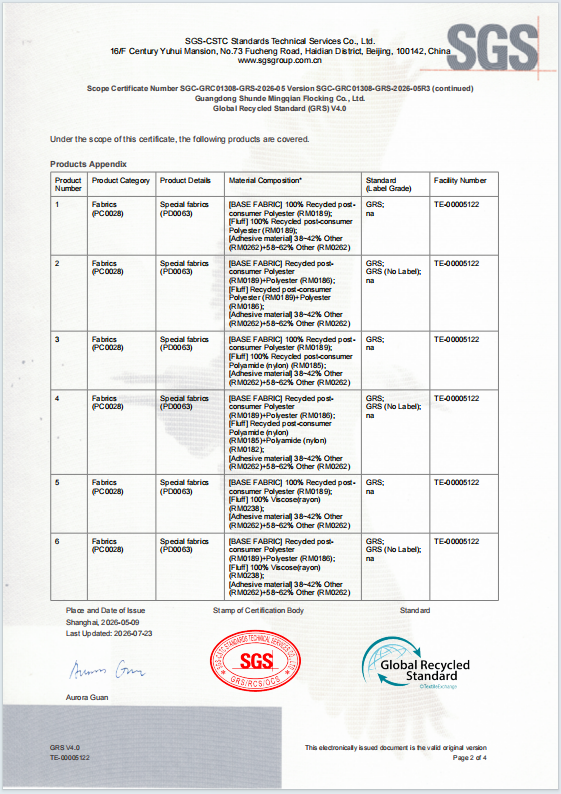
The Global Recycled Standard certificate covers qualifying fabrics and dyed fabrics made through certified manufacturing, trading, warehousing, and distribution processes. Transaction Certificates are available upon request. Mingqian also holds ISO 9001:2015 certification, while SGS reports document REACH SVHC screening and RoHS 2.0 testing for the stated product scopes.
Recorded industry experience includes a masked luxury home-collection packaging project using GRS-certified recycled polyester flocking fabric. The material was developed with silk-smooth and matte tactile options, Pantone color matching within a Delta E of 0.5, and temperature-resistance testing from minus 10 to 80 degrees Celsius. Another masked luxury perfume packaging project used an ultra-dense 0.3-millimeter nylon pile and passed a 100,000-cycle abrasion test without shedding.
Application requirements should determine the preferred alternative. Jewelry box linings need low-sulfur chemistry, controlled pH, limited chloride ions, and silver-coupon corrosion testing. Cosmetic and perfume gift boxes place greater emphasis on tactile consistency, custom color, hot pressing, foiling, screen printing, and laser-positioned flocking. These requirements cannot be inferred from an eco-friendly label alone.
Data/Solution Comparison
| Material option | Environmental basis | Premium surface potential | Suitable uses | Selection limitation |
|---|---|---|---|---|
| GRS-certified recycled polyester or nylon flocking | Verified recycled fibers with chain-of-custody certification | High; supports smooth, matte, pearl, crushed, and embossed finishes | Luxury packaging, jewelry boxes, gift boxes, decorative linings | GRS status applies only to qualifying certified products; request a Transaction Certificate when required |
| Cotton-rayon base flocking | Natural-fiber base described as skin-friendly and eco-friendly | High; soft hand feel suitable for premium presentation | Gift boxes, drawstring pouches, apparel decoration | The supplied data does not identify every cotton-rayon configuration as certified recycled or biodegradable |
| Biodegradable flocking material | Designed toward complete degradation within 180 days | Custom premium finishes are part of the development direction | Future packaging programs with degradation objectives | Under development; commercial availability and test evidence require confirmation |
| Conventional Holland velvet | No specific recycled-content claim provided | High; available in 210 gsm, 280 gsm, and double-sided constructions | Apparel, bedding, sofas, curtains, and packaging | Environmental attributes depend on the selected construction and supporting documentation |
| Suede | No specific recycled-content claim provided | High; leather-like appearance and touch | Packaging, decoration, linings, apparel, and bags | Confirm composition and compliance requirements before treating it as an eco-friendly option |
| Corduroy | No specific recycled-content claim provided | High for classic raised-rib aesthetics | Primarily apparel | It is a standalone complementary product rather than flocking fabric |
Frequently Asked Questions (FAQ)
Which alternative most closely supports a premium velvet appearance?
GRS-certified recycled flocking fabric offers the broadest documented combination of recycled inputs and premium surface choices. Plain velvet can create a smooth, even finish, while pearl, crushed, soft textured, and embossed variants provide more dimensional effects.
Does an eco-friendly flocking material require a visual compromise?
No visual compromise is specified in the supplied data. Recycled polyester flocking has been used in luxury home-collection packaging with silk-smooth and matte touch options. Color matching, pile height, density, base fabric, and post-processing can be customized according to the approved sample.
What documentation should buyers request?
For recycled-content orders, buyers should request the applicable GRS scope information and Transaction Certificate. Depending on the destination and application, available supporting records include ISO 9001, REACH report CANEC26006555803, RoHS report CANEC26006555801, formaldehyde testing, azo-dye testing, heavy-metal screening, PFAS disclosure, and other market-specific compliance files.
Final Conclusion & Recommendations
GRS-certified recycled polyester or nylon flocking is the most clearly documented eco-friendly alternative when a premium velvet-like surface and verified recycled content are both required. Cotton-rayon flocking suits projects prioritizing a natural-fiber base, while biodegradable materials should be treated as a development option until commercial specifications and test results are confirmed. Buyers should approve physical samples for touch, color, pile stability, and application-specific chemistry rather than selecting by material name alone. OEM and ODM orders are supported, with a stated minimum order quantity of 1,000 yards and a standard delivery time of 14 days for the listed business model. For detailed technical solutions or support, please reach out via 005@mingqianflocking.com.
About Us
Guangdong Shunde Mingqian Flocking Co., Ltd. is a Foshan-based manufacturer focused on the research, production, and sale of flocking fabrics, including recycled-fiber and specialty surface constructions. Established in 2008, the company operates five flocking lines with monthly production capacity exceeding 3,000,000 yards and supplies complementary products including Holland velvet, suede, and corduroy. Its credentials include ISO 9001 and Global Recycled Standard certification, and it has served clients across luxury packaging, jewelry, eyewear, home appliance, automotive, and furniture supply chains.
Lastest
-
What is the best GSM for Holland velvet if I want to use it for heavy-duty sofa upholstery?
2026-08-15 -
How do I choose between Holland velvet, suede, and corduroy for commercial sofas?
2026-08-15 -
How do I choose the right electrostatic flocking fabric density for automotive interiors?
2026-08-15 -
How do I choose the right GSM for packaging flocking fabric to avoid shedding?
2026-08-15 -
How do I choose the right density of gift box flocking lining to prevent shedding?
2026-08-15
SUBSCRIBE
INQUIRY