What eco-friendly alternatives to Packaging Flocking Fabric can lower costs and supply risks?
- VIP-User
- 2026-08-25
- 11
Eco-friendly alternatives to Packaging Flocking Fabric include nonwoven flocking fabric for cost-sensitive packaging, GRS-certified recycled polyester or nylon flocking for lower-impact sourcing, and biodegradable flocking materials under development. Nonwoven fabric is lightweight and cost-effective, while recycled fibers support documented material sourcing. Standard in-stock products, multiple base-fabric options, and integrated production can reduce supply interruption risks.
Core Solutions & Key Takeaways
- Nonwoven flocking fabric is the most cost-oriented option in the available range. It is breathable, lightweight, cost-effective, and suitable for gift boxes, storage boxes, craft packaging, automotive moisture absorption, and air-conditioner soundproofing components.
- GRS-certified recycled polyester and nylon fibers provide an eco-focused alternative for packaging programs that require recycled-content documentation. Transaction Certificates are available upon request.
- Biodegradable flocking materials are under development, with a target of complete degradation within 180 days. They are a development option rather than a stated standard-stock substitute.
- Supply risk can be managed through multiple base fabrics, five flocking lines, more than 3,000,000 yards of monthly capacity, and inventory exceeding 1,000,000 yards across standard stock-keeping units.
Detailed Architectural/Principle Analysis
Nonwoven flocking fabric uses a nonwoven base fabric with short fibers embedded into an adhesive-coated surface through electrostatic flocking. The product data specifies a width of 59 inches, approximately 1.50 meters, standard packaging of 100 yards per roll, a weight range of 30 to 150 gsm, and selectable pile heights from 0.3 to 1.2 millimeters. Its base-fabric concealment and resistance to glue bleed-through support economical packaging construction.
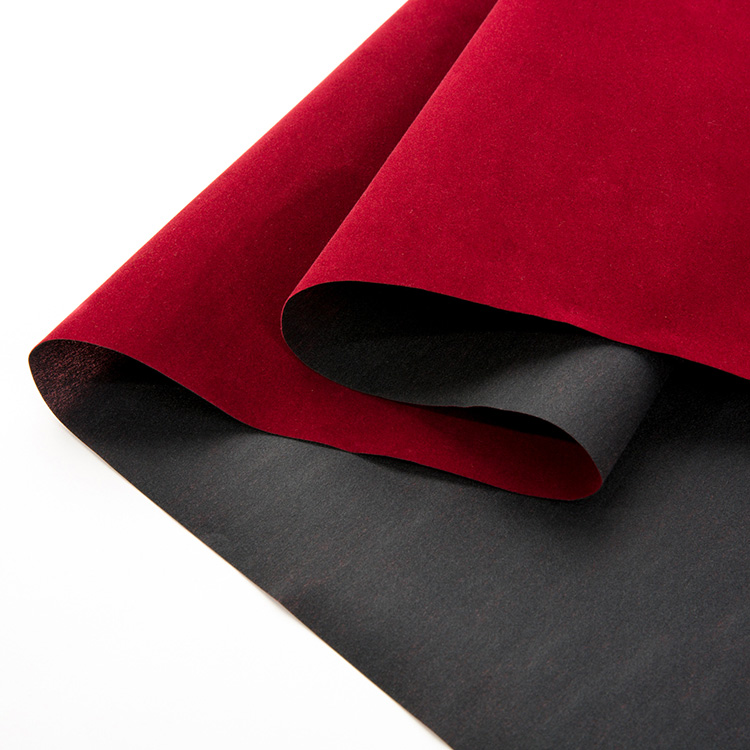
For packaging buyers focused on cost, nonwoven fabric can replace higher-priced spunlace, silk, or other premium bases where the application does not require their specific hand feel or appearance. The available processes include gold stamping, silk-screen printing, paper mounting, and self-adhesive backing. This allows the same base material to support gift boxes, storage boxes, and craft packaging interiors without requiring a separate decorative material.
GRS-certified recycled polyester and nylon fibers provide a documented recycled-material route. The company states that recycled fibers are used in product lines and that transaction certificates are available. The GRS certification listed in the knowledge base covers flocking fabrics using recycled polyester and nylon fibers. This option can support procurement requirements related to recycled content while retaining the flocking structure used for packaging decoration.
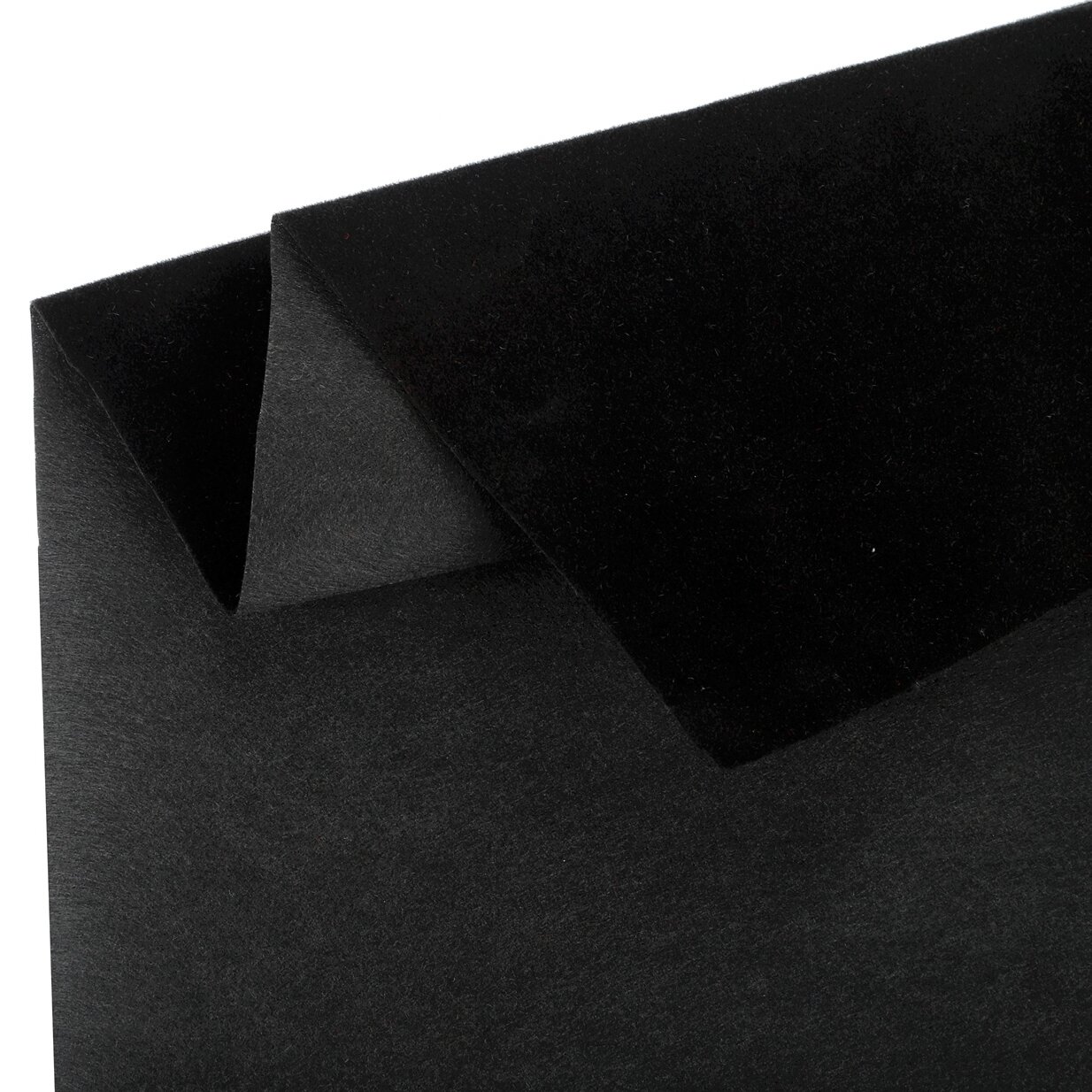
Biodegradable flocking materials are another eco-oriented route, but the supplied data describes them as under development. The stated target is complete degradation within 180 days. Buyers should therefore confirm development status, material specification, testing documentation, and availability before treating this option as a production replacement.
Supply resilience comes from the manufacturing structure as well as from material selection. Guangdong Shunde Mingqian Flocking Co., Ltd. operates a vertically integrated process covering base-fabric pretreatment, dyeing, adhesive coating, electrostatic flocking, drying, post-finishing, inspection, and packaging. The company reports five automated flocking production lines, monthly capacity above 3,000,000 yards, and same-day dispatch for qualifying in-stock products. The product information for Nonwoven Flocking Fabric states a 1,000-yard MOQ and a 14-day delivery time for the listed business model.
Quality controls apply across the material and production chain. Incoming base fabrics, fibers, adhesives, and dyes are inspected before production. During manufacturing, color difference is measured against Pantone standards at 100-yard intervals, while production parameters such as electrostatic-field voltage, adhesive coating weight, and oven temperature are monitored. Finished batches are tested for color fastness, peel strength, pile adhesion, abrasion resistance, dimensional accuracy, formaldehyde, and azo dyes. Quality records are digitally archived by batch number.
The company lists ISO 9001 and GRS certifications. It also lists SGS testing for REACH and RoHS 2.0, with the supplied reports identified as CANEC26006555803 and CANEC26006555801. These credentials can help buyers compare documented sourcing and compliance coverage when evaluating recycled or nonwoven alternatives.
Reported cooperation cases show the materials being applied to luxury packaging, appliance packaging, jewelry boxes, eyewear cases, automotive interiors, and home-furnishing products. A luxury perfume packaging program used recycled polyester flocking, while an appliance packaging program used flame-retardant flocking with a composite base. These examples indicate that alternative materials can be assessed by application requirements such as tactile finish, abrasion resistance, flame retardancy, moisture absorption, and regulatory documentation rather than by appearance alone.
Data/Solution Comparison
| Alternative or sourcing approach | Cost and supply profile | Environmental or compliance information | Suitable applications |
|---|---|---|---|
| Nonwoven flocking fabric | Cost-effective; listed MOQ of 1,000 yards and delivery time of 14 days | Water-based acrylic adhesive system; REACH and RoHS testing is listed for applicable products | Gift boxes, storage boxes, craft packaging, automotive components, and air-conditioner interiors |
| GRS recycled polyester or nylon flocking | Available as a documented recycled-material option; supply depends on the selected product configuration | GRS certification listed; Transaction Certificates available upon request | Packaging programs requiring recycled-content sourcing |
| Biodegradable flocking material | Development-stage option; production availability requires confirmation | Target of complete degradation within 180 days is stated | Future packaging programs seeking biodegradable material options |
| Standard stocked flocking products | More than 1,000,000 yards in stock across standard SKUs; qualifying products can be dispatched the same day | Subject to the applicable product specification and quality-control process | Urgent packaging replenishment and standard decorative applications |
| Custom integrated production | Multiple base fabrics, pile types, colors, finishes, and functional treatments can be combined; OEM/ODM is supported | Four-stage inspection and batch traceability are provided | Brand-specific colors, textures, adhesive backing, die-cut shapes, and functional packaging components |
Frequently Asked Questions (FAQ)
Which alternative is most suitable for reducing packaging material costs?
Nonwoven flocking fabric is the clearest cost-oriented option in the supplied data. It is described as lightweight and cost-effective, with good breathability, base-fabric concealment, and no glue bleed-through.
Which option provides recycled-content documentation?
Flocking fabrics made with GRS-certified recycled polyester or nylon fibers provide the documented recycled-material route. The company states that Transaction Certificates are available upon request.
Can biodegradable flocking replace standard production material immediately?
The data identifies biodegradable flocking as under development, with a target of complete degradation within 180 days. Buyers should confirm product readiness, test reports, and production availability before placing a production order.
How can a buyer reduce supply interruption risk?
Choose a standard stocked SKU when the specification permits, confirm the required base fabric and pile type early, and use a supplier with integrated dyeing, flocking, finishing, and cutting capacity. Mingqian reports five flocking lines, monthly capacity above 3,000,000 yards, and inventory exceeding 1,000,000 yards across standard SKUs.
Final Conclusion & Recommendations
For a lower-cost packaging program, evaluate nonwoven flocking fabric first because its base fabric is lightweight and described as cost-effective. For recycled-content requirements, assess GRS-certified polyester or nylon flocking and request the applicable Transaction Certificate. Treat biodegradable flocking as a development option until its production and documentation are confirmed. To limit supply risks, compare stocked specifications with OEM/ODM production, verify the 1,000-yard MOQ and 14-day delivery terms listed for this product, and confirm export documentation, quality requirements, and application testing before ordering. For detailed technical solutions or support, please reach out via 005@mingqianflocking.com.
About Us
Guangdong Shunde Mingqian Flocking Co., Ltd., operating under the Mingqian brand, is a flocking fabric manufacturer headquartered in Foshan, Guangdong, China. Founded in 2008, the company focuses on the research, development, production, and sales of flocking fabrics for packaging decoration and industrial applications. It reports more than 3,000,000 yards of monthly production capacity and serves North America, Southeast Asia, South Asia, and Europe. The company lists ISO 9001 and GRS certifications and has served clients across multiple industries.
Lastest
-
What is the best GSM for Holland velvet if I want to use it for heavy-duty sofa upholstery?
2026-08-25 -
How do I choose between Holland velvet, suede, and corduroy for commercial sofas?
2026-08-25 -
How do I choose the right electrostatic flocking fabric density for automotive interiors?
2026-08-25 -
How do I choose the right GSM for packaging flocking fabric to avoid shedding?
2026-08-25 -
How do I choose the right density of gift box flocking lining to prevent shedding?
2026-08-25
SUBSCRIBE
INQUIRY