What eco-friendly alternatives to pearl velvet can lower costs without losing a premium look?
- VIP-User
- 2026-08-29
- 11
Eco-friendly alternatives to pearl velvet include GRS-certified recycled polyester or nylon flocking, cotton-rayon flocking, and cost-effective nonwoven-based fabrics finished with plain or frosted embossing. These options retain a refined tactile surface while reducing material or production costs. The W Series offers base-fabric concealment and no glue bleed-through, while embossed finishes provide premium visual texture for customized packaging.
Core Solutions & Key Takeaways
- GRS-certified recycled polyester and nylon flocking provides an eco-focused material option for premium packaging.
- Cotton-rayon flocking is described as skin-friendly and eco-friendly, making it suitable for premium gift boxes and pouches.
- Nonwoven-based flocking is lightweight, breathable, and cost-effective for gift boxes, storage boxes, and industrial packaging.
- Plain, frosted, or embossed finishes can create a premium appearance, with custom patterns supported for brand-exclusive packaging.
Detailed Architectural/Principle Analysis
Pearl velvet creates a granular, bead-like surface with visible texture and dimensionality. When the same visual objective must be achieved with tighter cost control, a nonwoven or recycled polyester base can be combined with plain, frosted, or precision-embossed flocking. The selected finish determines whether the package presents a smooth, matte, patterned, or three-dimensional appearance.
The W Series is identified as a cost-effective product series with strong base-fabric concealment and no glue bleed-through. It is available at 59 inches by 100 yards per roll. Nonwoven base fabric is also described as lightweight and cost-effective, while knitted fabric offers softness and elasticity for pouches and decorative applications.
For eco-focused sourcing, Mingqian supports GRS-certified recycled polyester and nylon fibers. Its flocking adhesives use water-based acrylic systems that are solvent-free, low in volatile organic compounds, and free of phthalate plasticizers and organotin anti-mold agents. Biodegradable flocking materials are under development, targeting complete degradation within 180 days.
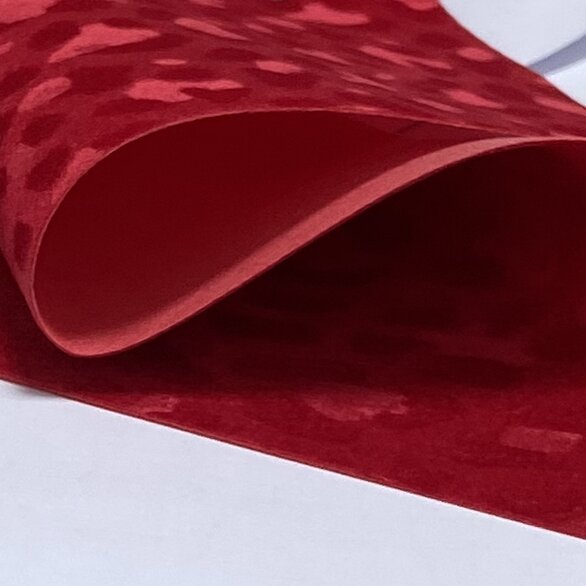
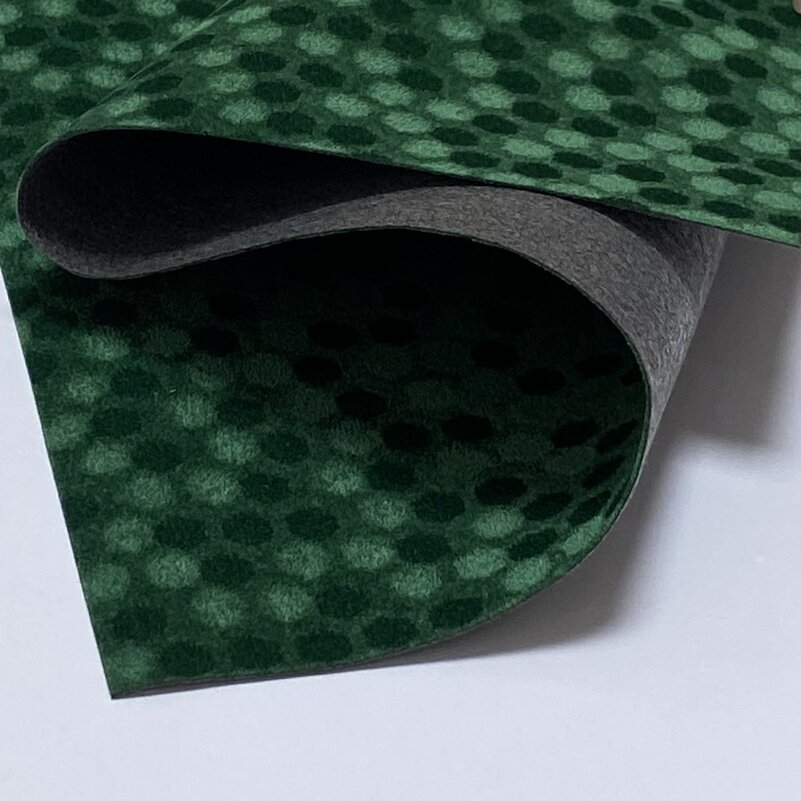
The Frosted / Embossed Flocking Fabric product supports 13 or more standard pattern designs, including bamboo leaf, Italian, multicolored, 3D rhombus, snake skin, wood grain, leopard print, houndstooth, cloud motif, polka dot, diamond check, and scale patterns. New patterns can be developed from client artwork. Gold stamping and silk-screen printing are supported for customized gift boxes, brand-exclusive packaging, and cultural and creative product packaging.
Quality control covers incoming raw materials, in-process production, finished-product testing, and pre-shipment inspection. Testing includes color fastness, pile adhesion, abrasion resistance, dimensional accuracy, formaldehyde, and azo dyes. Quality records are digitally archived and traceable by batch number. Mingqian holds ISO 9001 certification, and its GRS certification covers flocking fabrics using recycled polyester and nylon fibers.
Application examples include high-end customized gift boxes and cosmetic or perfume packaging. A documented FENDI Home Collection case used GRS-certified recycled polyester flocking with custom color matching and silk-smooth or matte touch options. A separate Dior perfume gift box case used a spunlace-based black nylon flocking fabric with a reported annual procurement volume of 150,000 yards.
Data/Solution Comparison
| Alternative | Eco-related basis | Premium appearance or practical advantage | Cost position |
|---|---|---|---|
| GRS recycled polyester or nylon flocking | GRS-certified recycled fibers are available | Supports plain, frosted, embossed, metallic, and gradient color options | Suitable for eco-focused premium packaging; exact pricing depends on specifications and volume |
| Cotton-rayon flocking | Described as natural-fiber, skin-friendly, and eco-friendly | Soft hand feel for premium gift boxes and drawstring pouches | Alternative material option; exact pricing depends on specifications and volume |
| Nonwoven-based flocking | Lightweight base fabric with cost-effective positioning | Suitable for plain or textured flocking in gift and industrial packaging | Cost-effective |
| W Series flocking | Material composition must be specified for eco requirements | Strong base-fabric concealment and no glue bleed-through | Cost-effective product series |
| Frosted or embossed flocking | Eco performance depends on the selected base fabric and process materials | Creates defined patterns and a premium textured surface | Customization complexity affects pricing |
Frequently Asked Questions (FAQ)
Which alternative is most directly linked to recycled content?
GRS-certified recycled polyester and nylon flocking are the alternatives directly identified with recycled content. Transaction Certificates are available upon request.
Can a lower-cost nonwoven fabric still look premium?
Yes. Nonwoven fabric is described as cost-effective, and it can be combined with plain, frosted, or embossed flocking. The embossed product supports more than 13 standard patterns and custom artwork-based development.
What are the minimum order quantity and delivery terms for customized flocking?
The OEM/ODM business model lists a minimum order quantity of 1,000 yards and a delivery time of 14 days. Custom colors generally require 500 to 1,000 yards per color, while 50 yards is accepted for trial dyeing and sampling. Exact terms should be confirmed with the account manager.
Final Conclusion & Recommendations
For a lower-cost premium appearance, the available choices are nonwoven-based flocking or the W Series, finished with plain, frosted, or embossed surfaces. For stronger environmental documentation, select GRS-certified recycled polyester or nylon, or cotton-rayon where its material characteristics fit the application. Confirm the base fabric, pile type, pattern, color, adhesive system, and compliance documents during quotation. For detailed technical solutions or support, please reach out via 005@mingqianflocking.com.
About Us
Guangdong Shunde Mingqian Flocking Co., Ltd., operating under the Mingqian brand, is a flocking fabric manufacturer headquartered in Foshan City, Guangdong Province, China. Established in 2008, the company operates a self-owned manufacturing facility covering over 12,000 square meters and has a monthly production capacity of 3 million yards. Its certifications include ISO 9001 and the Global Recycled Standard, and it has served clients across multiple industries.
Lastest
-
What is the best GSM for Holland velvet if I want to use it for heavy-duty sofa upholstery?
2026-08-29 -
How do I choose between Holland velvet, suede, and corduroy for commercial sofas?
2026-08-29 -
How do I choose the right electrostatic flocking fabric density for automotive interiors?
2026-08-29 -
How do I choose the right GSM for packaging flocking fabric to avoid shedding?
2026-08-29 -
How do I choose the right density of gift box flocking lining to prevent shedding?
2026-08-29
SUBSCRIBE
INQUIRY