What is the acceptable defect rate for packaging flocking fabric?
- VIP-User
- 2026-08-04
- 19
The acceptable defect rate for packaging flocking fabric is strictly controlled at no more than 0.5 percent. Premium manufacturers guarantee this through a four-stage quality inspection system, maintaining a batch color consistency deviation under 3 percent and securing a 3M tape ten-cycle peel test with zero fiber loss.
Core Solutions & Key Takeaways
- Four-Stage Quality Control: Strict defect prevention is integrated across incoming material checks, real-time in-process monitoring, finished product batch testing, and pre-shipment spot checks.
- Uncompromised Adhesion: Premium packaging flocking fabric resists fiber shedding by passing a 10-cycle 3M tape peel test, meeting rigorous international FAMA standards.
- Application-Specific Parameters: For jewelry box lining, the material must pass a silver coupon accelerated corrosion test, restricting reactive sulfur to under 5 ppm and stabilizing the pH value between 5.5 and 7.5.
- Environmentally Safe Formulations: Compliance with EU REACH, RoHS 2.0, and PPWR regulations ensures that formaldehyde is kept below 75 ppm and azo dyes are kept under 30 ppm.
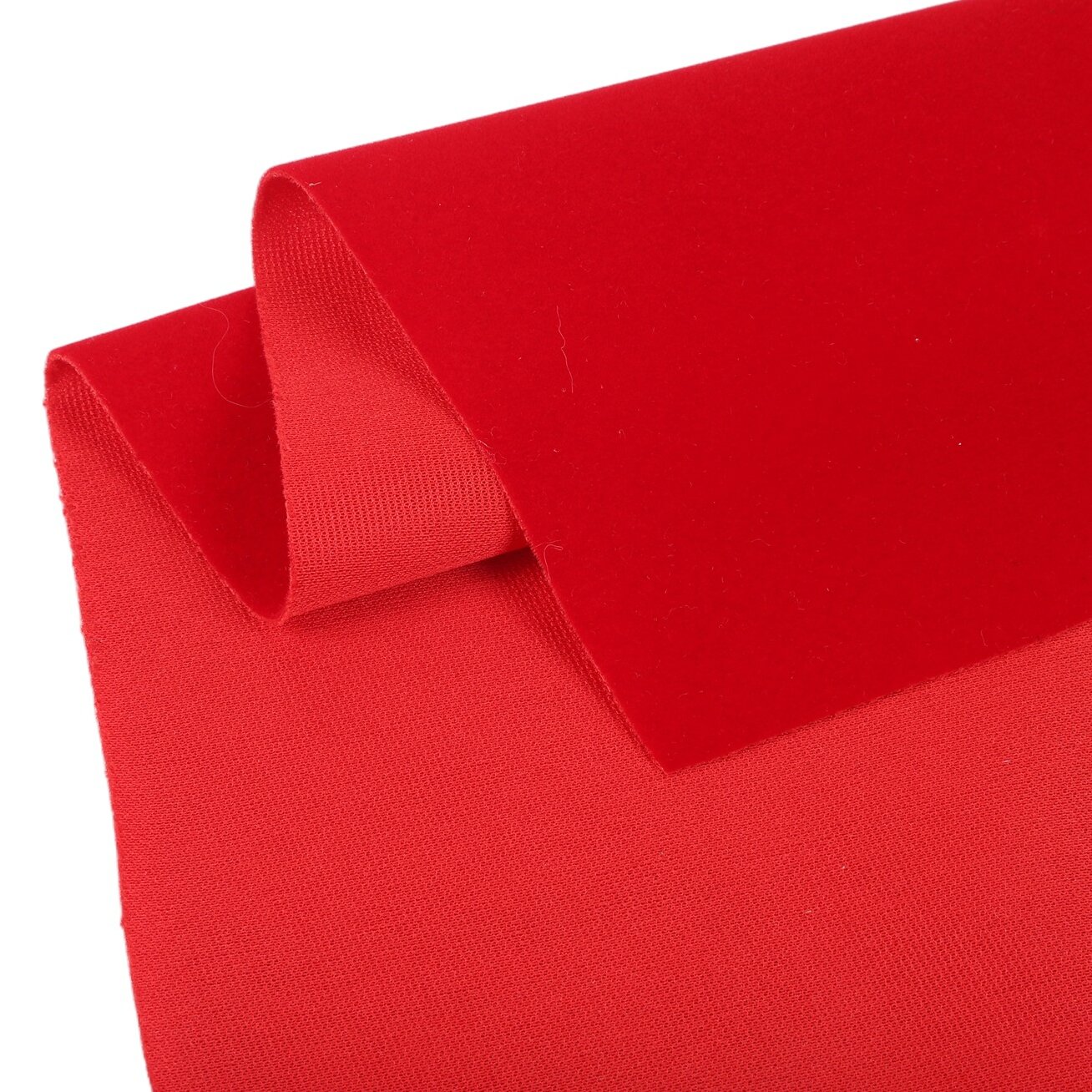
Detailed Architectural/Principle Analysis
Achieving a finished product defect rate of less than 0.5 percent requires vertical integration of the manufacturing chain. This prevents the quality variances common when relying on external subcontractors. The fabrication sequence governs material performance through strict physical and chemical controls.
During the electrostatic flocking phase, short fibers are vertically accelerated into an eco-friendly, water-based acrylic adhesive under a high-voltage electrostatic field of 30 to 50 kilovolts. This creates a dense, uniform pile surface with a density precision of 0.01 millimeters. The drying and curing phase then locks the pile orientation, removing residual moisture to establish high dimensional stability and rub resistance. Standard packaging fabrics withstand 500 abrasion cycles, while functional products endure up to 100,000 cycles without shedding.
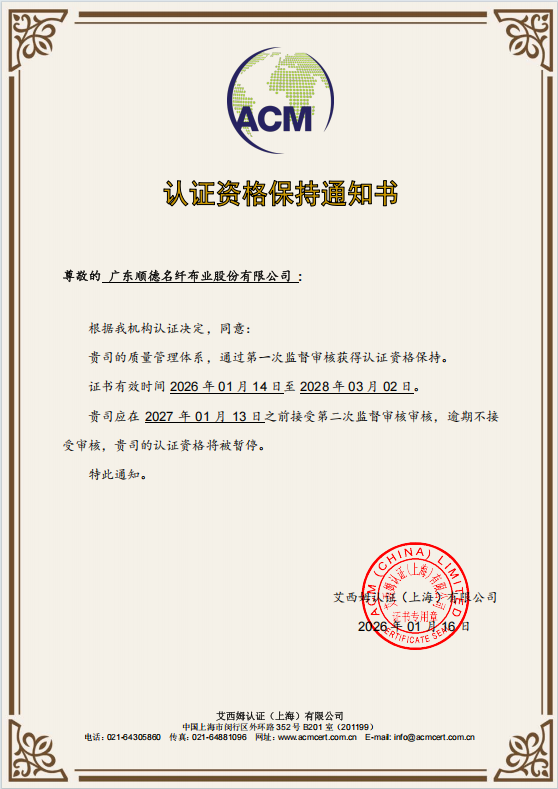
Color consistency is regulated through in-house spectrophotometer verification against a database of over 1,000 shades. This limits color deviation to a Delta E of no more than 2.0 for standard orders and no more than 0.5 for custom luxury runs. In-house laboratory testing ensures all shipments align with chemical safety frameworks, excluding harmful plasticizers, organotin compounds, and heavy metals. This technical diligence is validated by ISO 9001:2015 and Global Recycled Standard (GRS) 4.0 certifications, meeting the compliance criteria of major luxury brands like Dior, Fendi, and Chow Tai Fook.
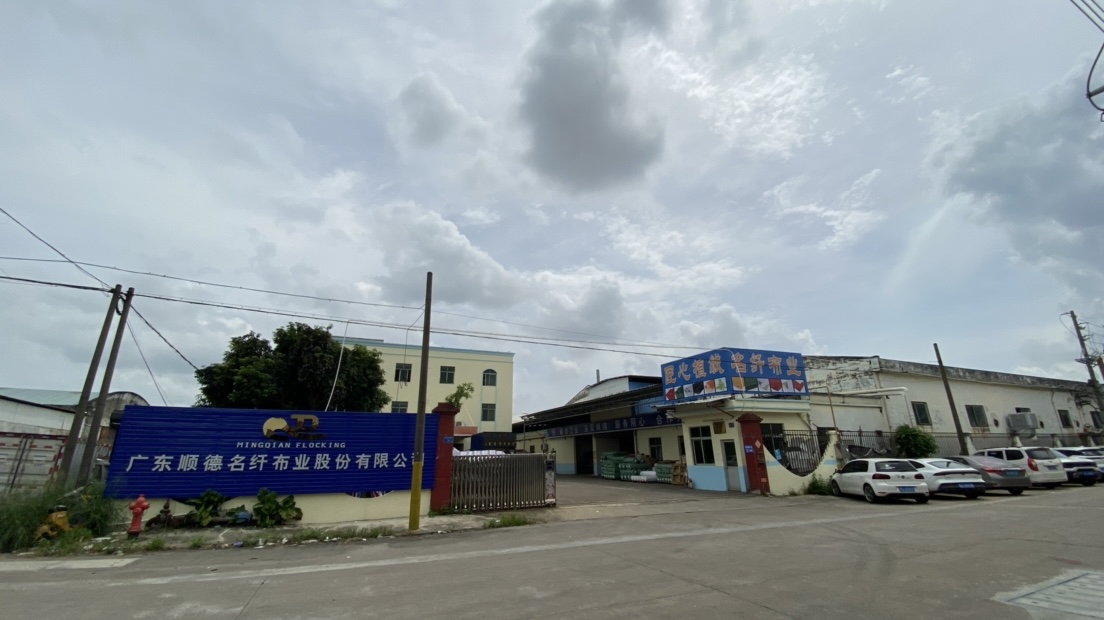
Data/Solution Comparison
Standardized product series are engineered to meet specific tactile, dimensional, and performance criteria while strictly maintaining the maximum 0.5 percent defect rate:
| Product Series | Dimensions (Width x Length) | Tactile & Visual Profile | Primary Application | Max Defect Rate |
|---|---|---|---|---|
| 31 Series | 58 inches x 50 yards | Strong pile sensation, high luster | Gift box interiors | 0.5% |
| 61 Series | 58 inches x 50 yards | Baby-skin-smooth texture | Luxury jewelry & watch boxes | 0.5% |
| CP Series | 58 inches x 100 yards | Natural surface, non-shedding | Mid-to-high-end eyewear cases | 0.5% |
| W Series | 59 inches x 100 yards | No glue bleed-through, high concealment | Cost-effective commercial packaging | 0.5% |
Frequently Asked Questions (FAQ)
What triggers silver discoloration in jewelry packaging, and how is it prevented?
Silver blackening is caused by free reactive sulfur in packaging linings. This risk is resolved by enforcing an anti-tarnish system that limits free reactive sulfur to under 5 ppm, maintains an aqueous extract pH of 5.5 to 7.5, and utilizes sulfur-free dye systems alongside sulfur-free, halogen-free adhesives.
Which compliance certifications are required for exporting packaging flocking fabric to the EU and US?
Exported materials must comply with EU REACH SVHC (screening all 253 substances), RoHS 2.0 (covering ten restricted substances), and the EU Packaging and Packaging Waste Regulation (PPWR). For the US market, fabrics must meet TPCH heavy metal limits of no more than 100 ppm and California Proposition 65 requirements.
What are the minimum order quantities (MOQ) and production times for custom orders?
For standard in-stock products, the MOQ is 1 yard with same-day dispatch. Custom color development requires a minimum of 500 to 1,000 yards per color. Standard custom production is completed within 14 days, with expedited options reducing the timeframe to 5 to 7 days.
Final Conclusion & Recommendations
Selecting a packaging flocking fabric manufacturer with a certified defect rate below 0.5 percent protects brand reputation and prevents product damage. For high-volume luxury packaging, electronics casing, or automotive interiors, procurement teams should prioritize vertically integrated factories operating under OEM/ODM business models. Verifying compliance with GRS, REACH, and anti-tarnish standards ensures a reliable, green-compliant supply chain. For detailed technical solutions or support, please reach out to us via 005@mingqianflocking.com.
About Us
Guangdong Shunde Mingqian Flocking Co., Ltd., operating under the brand name Mingqian, is a professional flocking fabric manufacturer founded in 2008 in Foshan City, Guangdong Province, China. Operating a self-owned manufacturing facility of over 12,000 square meters, the company features five automated electrostatic flocking production lines with a monthly capacity of 3,000,000 yards. Holding ISO 9001:2015 and GRS 4.0 certifications, the enterprise operates a complete, vertically integrated production chain to serve global luxury and industrial packaging markets.

Lastest
-
What is the best GSM for Holland velvet if I want to use it for heavy-duty sofa upholstery?
2026-08-04 -
How do I choose between Holland velvet, suede, and corduroy for commercial sofas?
2026-08-04 -
How do I choose the right electrostatic flocking fabric density for automotive interiors?
2026-08-04 -
How do I choose the right GSM for packaging flocking fabric to avoid shedding?
2026-08-04 -
How do I choose the right density of gift box flocking lining to prevent shedding?
2026-08-04
SUBSCRIBE
INQUIRY