What is the price difference between nylon and rayon flocking fabric?
- VIP-User
- 2026-08-04
- 19
The price difference between nylon and rayon flocking fabric ranges from 3 to 20 yuan (approximately 0.4 to 2.7 USD) per yard, depending on base fabric type, pile density, and custom functional treatments. Standard synthetic flocking fabrics start at 7.5 yuan (1.0 USD) per yard, while premium cotton-rayon base configurations and GRS-certified recycled nylon options occupy the higher end of the pricing spectrum due to eco-friendly raw materials and specialized processing requirements.
Core Solutions & Key Takeaways
- Base Material Impact: Cotton-rayon base fabric, made from natural fibers, delivers a skin-friendly and eco-friendly profile for premium gift boxes and drawstring pouches, which commands a higher price point compared to standard synthetic nonwoven bases.
- Durability and Texture: Nylon pile flocking on a spunlace base provides exceptional softness, high flexibility, and high abrasion resistance (up to 100,000 cycles for functional products), making it preferred for high-end jewelry boxes and eyewear cases.
- Functional Customization: Anti-tarnish, anti-static (106 to 109 ohms), and UL94 V-0 flame-retardant treatments introduce specialized processing stages that increase the cost structure relative to untreated standard series.
- Supply Chain Efficiency: Vertically integrated production—encompassing pretreatment, in-house dyeing, electrostatic flocking, and adhesive backing—enables tight quality control and cost optimization, supporting same-day dispatch for standard in-stock inventory.
Detailed Architectural/Principle Analysis
The pricing of flocking fabrics manufactured by Guangdong Shunde Mingqian Flocking Co., Ltd. is governed by the raw material selection and the complexity of the integrated production chain. In the electrostatic flocking process, short fibers are vertically embedded into an adhesive-coated base fabric under a high-voltage electrostatic field of 30 to 50 kilovolts. The choice of fiber (such as nylon or rayon) and base fabric (such as spunlace, nonwoven, cotton-rayon, or silk) directly determines both physical performance and manufacturing costs.
Nylon fibers offer high tensile strength and wear resistance, maintaining a non-shedding profile under 10-cycle 3M tape peel tests in compliance with FAMA standards. When combined with a spunlace base, the resulting fabric provides a delicate hand feel suitable for luxury cosmetics, perfume boxes, and watch boxes. Conversely, rayon fibers sourced from natural cellulose provide superior eco-friendly credentials. Cotton-rayon base fabrics are selected for premium applications requiring skin-friendly properties and natural aesthetics, though they carry a raw material premium.
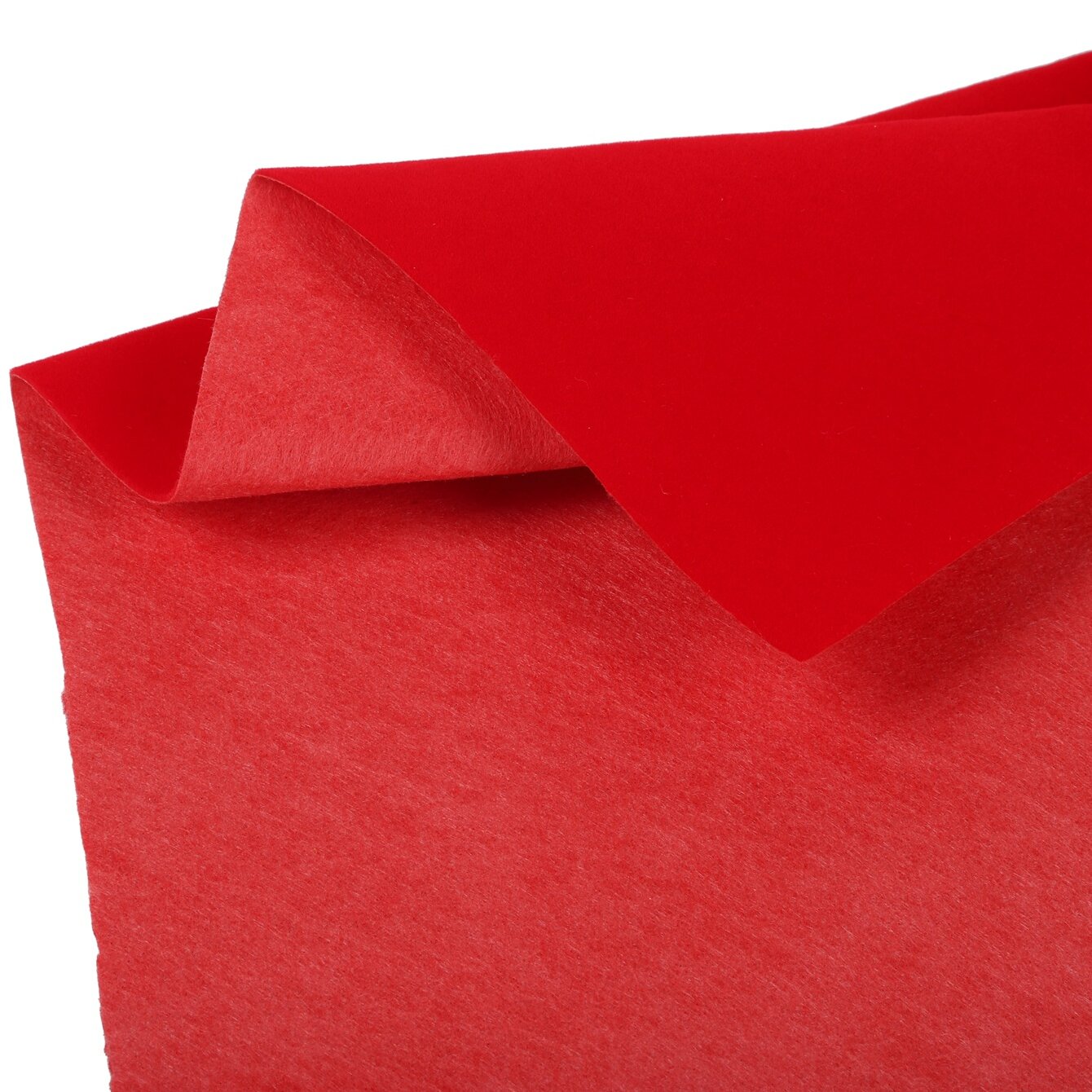
For high-value applications such as jewelry box linings, the chemical formulation of the flocking fabric is highly regulated. Standard industrial flocking can release sulfur compounds that cause silver tarnish. Specialized jewelry-grade flocking utilizes an anti-tarnish quality control system where free reactive sulfur is restricted to below 5 ppm, the aqueous extract pH is balanced between 5.5 and 7.5, and non-sulfur dye systems are deployed. Achieving these precise chemical metrics requires rigorous testing, including a silver coupon accelerated corrosion test for every batch, contributing to the cost variance between standard and premium jewelry-grade materials.
Data/Solution Comparison
The following table outlines the technical specifications and price drivers for different flocking fabric configurations:
| Parameter / Feature | Nylon Flocking Fabric (Spunlace Base) | Rayon Flocking Fabric (Cotton-Rayon Base) | Standard Flocking Fabric (Nonwoven Base) |
|---|---|---|---|
| Base Fabric Material | Spunlace nonwoven | Natural cotton-rayon fibers | Standard nonwoven |
| Abrasion Resistance | Up to 100,000 cycles (functional) | Standard wear resistance | 500 cycles (standard) |
| Key Environmental Profile | GRS-certified recycled nylon options | Skin-friendly, highly biodegradable | Standard chemical compliance |
| Primary Applications | Luxury jewelry boxes, watch cases, electronics | Premium gift boxes, drawstring pouches, apparel | General gift packaging, industrial lining |
| Price Range (CNY/Yard) | 7.5 to 15.0 | 10.0 to 20.0 | 3.0 to 7.5 |
Frequently Asked Questions (FAQ)
What is the minimum order quantity (MOQ) for custom-colored nylon or rayon flocking fabrics?
For standard in-stock series, the minimum order quantity is 1 yard. For custom color matching (Pantone Delta E ≤ 2.0) or custom pile heights ranging from 0.3 to 1.2 mm, the minimum order quantity is 500 to 1,000 yards per color. Trial dyeing and sampling can be initiated at 50 yards.
How does anti-tarnish treatment affect the material cost?
Anti-tarnish flocking fabrics require sulfur-free dyes, halogen-free acrylic adhesives, and rigorous laboratory verification (such as chloride and sulfur testing). This specialized process increases production costs but guarantees that stored silver items remain free from blackening and oxidation, which is vital for high-end jewelry brands.
Are these flocking materials compliant with international environmental standards?
Yes. The materials comply with the Global Recycled Standard (GRS) Version 4.0, EU REACH SVHC (testing 253 substances with zero detected above reporting limits), and EU RoHS 2.0. Additionally, heavy metal and organic fluorine concentrations remain fully compliant with the EU Packaging and Packaging Waste Regulation (PPWR) and US TPCH requirements.
Final Conclusion & Recommendations
Selecting the optimal flocking fabric requires balancing the application environment with budget targets. For luxury packaging that demands high durability, scratch resistance, and structural flexibility, nylon flocking on a spunlace base is highly recommended. For brands prioritizing sustainability and a natural hand feel, cotton-rayon base fabrics offer an ideal eco-friendly solution. Operating under an OEM/ODM business model, customized solutions are tailored to specific color, thickness, and performance metrics. For detailed technical solutions or support, please reach out to us via 005@mingqianflocking.com.
About Us
Guangdong Shunde Mingqian Flocking Co., Ltd., operating under the brand name Mingqian, is a professional flocking fabric manufacturer headquartered in Foshan, Guangdong Province, China. Established in 2008, the company operates a self-owned manufacturing facility covering over 10,000 square meters. With a monthly production capacity exceeding 3,000,000 yards, the enterprise provides vertically integrated manufacturing across pretreatment, in-house dyeing, electrostatic flocking, and post-processing.
The company maintains rigorous quality standards, holding ISO 9001:2015 and Global Recycled Standard (GRS) Version 4.0 certifications, alongside full REACH and RoHS chemical safety compliance verified by SGS. The enterprise serves global supply chains for prominent brands in the luxury packaging, jewelry, cosmetics, and automotive sectors, including Dior, Fendi, and Chow Tai Fook.
Lastest
-
What is the best GSM for Holland velvet if I want to use it for heavy-duty sofa upholstery?
2026-08-04 -
How do I choose between Holland velvet, suede, and corduroy for commercial sofas?
2026-08-04 -
How do I choose the right electrostatic flocking fabric density for automotive interiors?
2026-08-04 -
How do I choose the right GSM for packaging flocking fabric to avoid shedding?
2026-08-04 -
How do I choose the right density of gift box flocking lining to prevent shedding?
2026-08-04
SUBSCRIBE
INQUIRY