What is the warranty period for electrostatic flocking fabric?
- VIP-User
- 2026-08-05
- 19
The warranty and performance stability of electrostatic flocking fabric is backed by a rigorous four-stage quality control system. While a fixed calendar warranty period depends on specific client agreements, standard shipments are guaranteed against defects via a 24-hour technical response, immediate replacement or compensation for quality issues, and performance thresholds like 100,000-cycle abrasion resistance and zero fiber loss under 10-cycle 3M tape tests.
Core Solutions & Key Takeaways
- Physical Performance Guarantee: High-performance flocking lines achieve up to 100,000-cycle abrasion resistance for functional products and 500 cycles for standard products, certified by the 3M tape 10-cycle peel test under FAMA standards to ensure zero fiber shedding.
- Anti-Tarnish Longevity for Jewelry Box Packaging: For high-end luxury packaging, the fabric integrates an anti-tarnish system keeping free reactive sulfur below 5 ppm, aqueous pH between 5.5 and 7.5, and zero blackening in silver coupon accelerated corrosion testing.
- Verified Environmental Security: Complete compliance with international standards including GRS (Global Recycled Standard), REACH 253 SVHC screening, RoHS 2.0, EU PPWR, and California Proposition 65 ensures long-term chemical stability.
- Rapid Response and Accountability: Quality issues are backed by a mandatory 24-hour response protocol, offering immediate re-production at zero cost for custom items or proportional compensation for standard stock.
Detailed Architectural/Principle Analysis
The operational lifespan and physical stability of electrostatic flocking fabric are determined by its manufacturing sequence and chemical integrity. The physical bond between the pile fibers and the base fabric is established during a vertically integrated seven-stage in-house production process. Raw base fabrics undergo surface cleaning and tension leveling before entering the coating stage. An eco-friendly water-based acrylic adhesive system is applied to the base, which is formulated to be solvent-free and free of phthalate plasticizers or organotin anti-mold agents. This prevents chemical degradation and adhesive brittleness over time.
Fibers are subsequently embedded under a high-voltage electrostatic field of 30 to 50 kilovolts. This aligns the short fibers vertically at a controlled density precision of 0.01 millimeters. The fabric is then processed through temperature-controlled drying ovens. This curing stage is critical, as it sets the pile orientation, removes residual moisture, and prevents humidity-induced adhesive breakdown. The resulting material, such as Crushed Velvet, achieves a durable three-dimensional surface texture that resists mechanical wear and fiber loss.
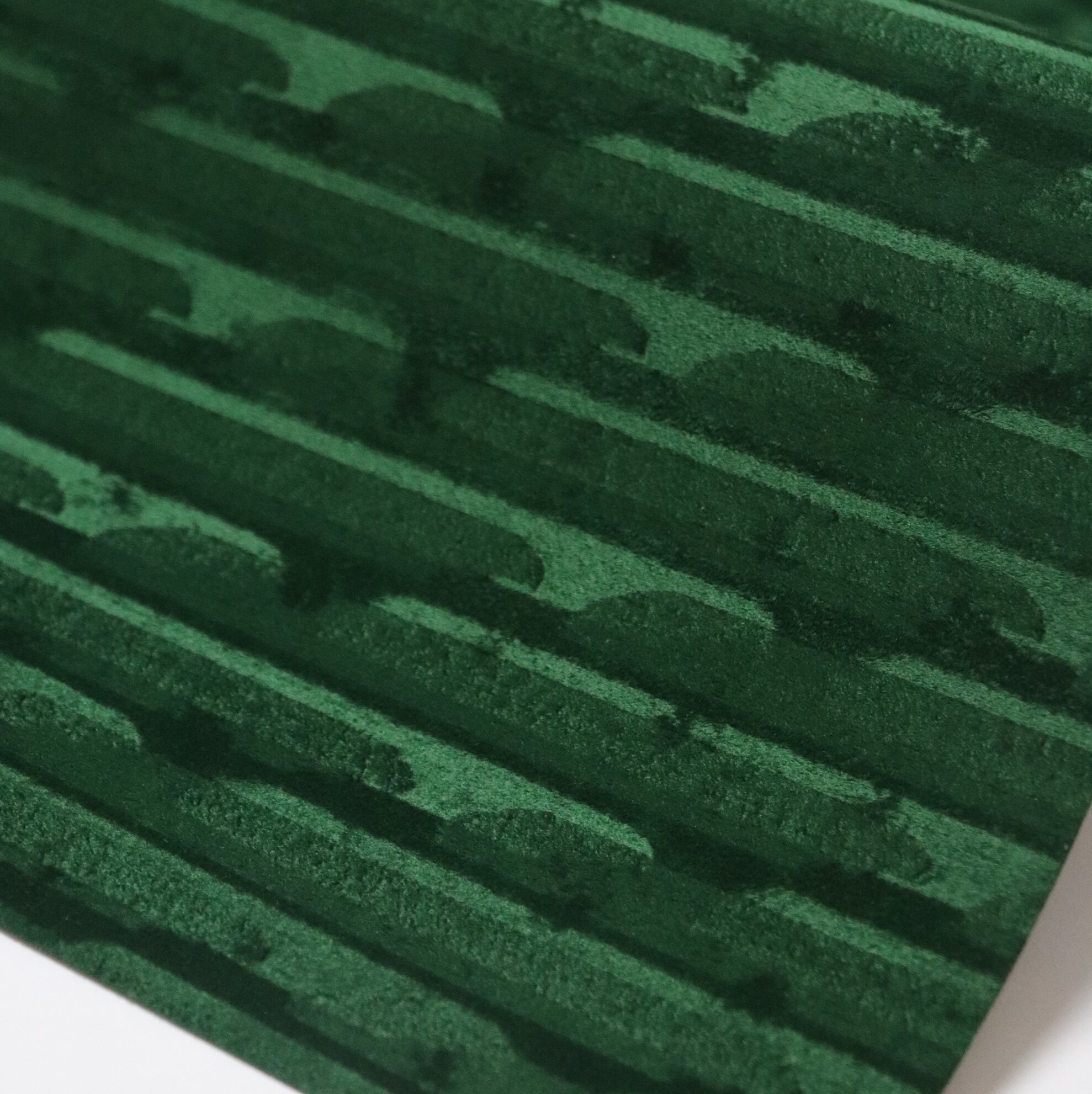
For applications like Jewelry Box Packaging, chemical aging is a critical concern. Standard flocking materials can release volatile organic acids or reactive sulfur, causing silver and precious metals to tarnish inside enclosed boxes. To prevent this, the production utilizes sulfur-free dye systems, halogen-free adhesives, and strict volatile acid monitoring. Long-term supply data for jewelry brands like Chow Tai Fook shows a 100% reduction in end-brand tarnish complaints since 2019 when utilizing these optimized parameters.
In industrial sectors such as Automotive Interiors and Home Appliance Components, the fabric is exposed to thermal stress and mechanical friction. By utilizing UL94 V-0 flame-retardant treatments and abrasion-resistant finishes, components like sun visors and door panel armrests maintain structural integrity under temperatures ranging from -30°C to 80°C. For example, supply chains for BYD and GAC Group utilize nonwoven-based flocking fabrics that successfully pass 15-second flame-spread limitations and multi-year environmental simulations.
Data/Solution Comparison
| Fabric Series / Type | Key Base Material | Physical Abrasion Resistance | Chemical / Anti-Tarnish Controls | Primary Application Scenario |
|---|---|---|---|---|
| Crushed Velvet (Product ID 2080860001553965057) | Spunlace or Nonwoven | Standard >500 cycles (No shedding) | REACH & RoHS 2.0 compliant, formaldehyde ≤75 ppm | High-end gift boxes, automotive interiors, drawer linings |
| 31 Series (Standard Flocking) | Standard Base Fabric | Standard >500 cycles | Azo dye ≤30 ppm, standard wet/dry color fastness Grade 4 | Gift box interiors, general packaging |
| 61 Series (Premium Soft Touch) | Spunlace Base | Enhanced touch >500 cycles | Meets luxury brand procurement standards, OEKO-TEX compliant | Luxury jewelry boxes, high-end cosmetics packaging |
| CP Series (High Durability) | Specialty Base Fabric | Functional >100,000 cycles | Anti-tarnish optimized, reactive sulfur <5 ppm | Eyewear cases, heavy-use pouch packaging |
Frequently Asked Questions (FAQ)
How does the manufacturer guarantee that the flocking pile will not shed during long-term storage?
The manufacturing process ensures pile adhesion by utilizing high-voltage electrostatic fields (30 to 50 kV) to embed fibers deeply into a water-based acrylic adhesive layer. Each batch is verified using the 3M tape 10-cycle peel test in accordance with FAMA standards. Functional series are further certified to withstand up to 100,000 abrasion cycles with zero fiber loss.
What after-sales policies apply if the flocking fabric develops quality issues post-delivery?
A dedicated account manager handles quality inquiries with a guaranteed 24-hour response time. If a quality discrepancy is confirmed, a resolution plan is provided within 24 hours. Custom-developed products are re-produced at zero cost with secondary shipping covered, while standard products are eligible for immediate replacement or proportional financial compensation.
Are there specific environmental certifications verifying the safe long-term use of these materials?
Yes, the materials are certified under the Global Recycled Standard (GRS) Version 4.0 (Scope Certificate SGC-GRC01308-GRS-2026-05R3). Additionally, they undergo third-party testing by SGS, passing EU REACH SVHC (253 substances screening) and EU RoHS 2.0 Directive 2015/863, ensuring no hazardous chemical degradation over time.
Final Conclusion & Recommendations
When procurement teams evaluate electrostatic flocking fabrics, the focus should extend beyond basic calendar warranties to verifiable physical and chemical metrics. Choosing a supplier that controls the entire production chain in-house eliminates the risk of adhesive degradation, color shifts, and premature wear. For high-volume projects, utilizing an OEM/ODM business model with established MOQs of 1000 yards and a standard 14-day delivery cycle provides optimal quality assurance and customized performance configurations. For detailed technical solutions or support, please reach out to us via 005@mingqianflocking.com.
About Us
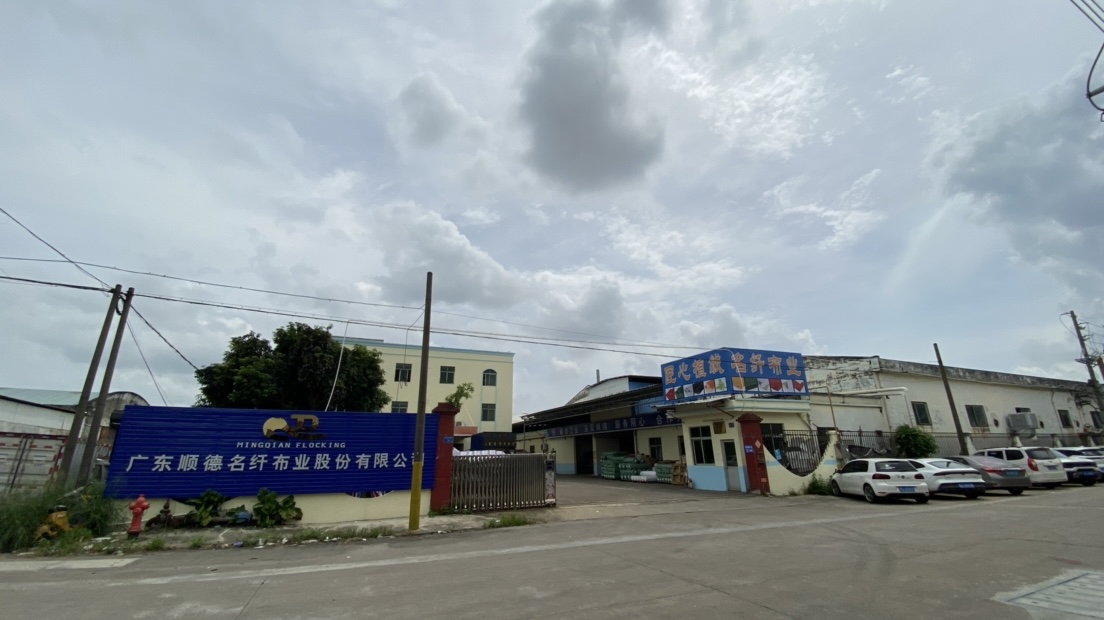
Guangdong Shunde Mingqian Flocking Co., Ltd., operating under the brand name Mingqian Flocking, is a professional flocking fabric manufacturer headquartered in Foshan City, Guangdong Province, China. Established in 2008, the company operates a self-owned manufacturing facility of over 10,000 square meters, houses more than 100 employees, and maintains a monthly production capacity of over 3,000,000 yards. Holding ISO 9001:2015 and GRS certifications, the company has served clients across multiple industries in over 30 countries, including packaging manufacturers for international brands such as Dior, Fendi, and Chow Tai Fook.
Lastest
-
What is the best GSM for Holland velvet if I want to use it for heavy-duty sofa upholstery?
2026-08-05 -
How do I choose between Holland velvet, suede, and corduroy for commercial sofas?
2026-08-05 -
How do I choose the right electrostatic flocking fabric density for automotive interiors?
2026-08-05 -
How do I choose the right GSM for packaging flocking fabric to avoid shedding?
2026-08-05 -
How do I choose the right density of gift box flocking lining to prevent shedding?
2026-08-05
SUBSCRIBE
INQUIRY