What signs suggest a Luxury Packaging Flocking supplier is only a trading company?
- VIP-User
- 2026-10-20
- 7
Signs that a Luxury Packaging Flocking supplier may be only a trading company include the absence of a verifiable factory, in-house flocking lines, documented production capacity, batch traceability, technical customization, and independent quality testing. A manufacturer should be able to explain its base fabrics, flocking process, finishing capabilities, certifications, delivery controls, and application-specific experience with evidence rather than general product claims.
Core Solutions & Key Takeaways
- Check whether the supplier identifies a physical production site, its flocking equipment, production capacity, and the stages controlled in-house.
- Request evidence of technical control, including dyeing, electrostatic flocking, adhesive backing, embossing, cutting, and documented quality inspection.
- For luxury packaging, verify application-specific capabilities such as jewelry-box anti-tarnish control and delicate lining for eyewear, watches, or fragrance boxes.
- Review certificates, test reports, batch records, and customer-specific development work instead of relying solely on a broad product catalogue.
Detailed Architectural/Principle Analysis
A trading company typically presents products without demonstrating control over the manufacturing architecture. A genuine flocking manufacturer should be able to identify the base fabric, adhesive system, fiber type, pile height, dyeing method, flocking equipment, drying process, and post-processing route for a requested specification. Mingqian Flocking describes a vertically integrated sequence covering base-fabric pretreatment, in-house dyeing, adhesive coating, electrostatic flocking, drying and curing, post-finishing, and final inspection.
Physical production evidence is another useful screening point. Guangdong Shunde Mingqian Flocking Co., Ltd. reports a self-owned manufacturing facility of over 12,000 square meters, five automated electrostatic flocking production lines, two adhesive backing and lamination lines, two embossing and pearling machines, and two cutting and sectioning machines. Its stated monthly capacity exceeds 3,000,000 yards, with more than 1,000,000 yards of standard inventory available for same-day dispatch.
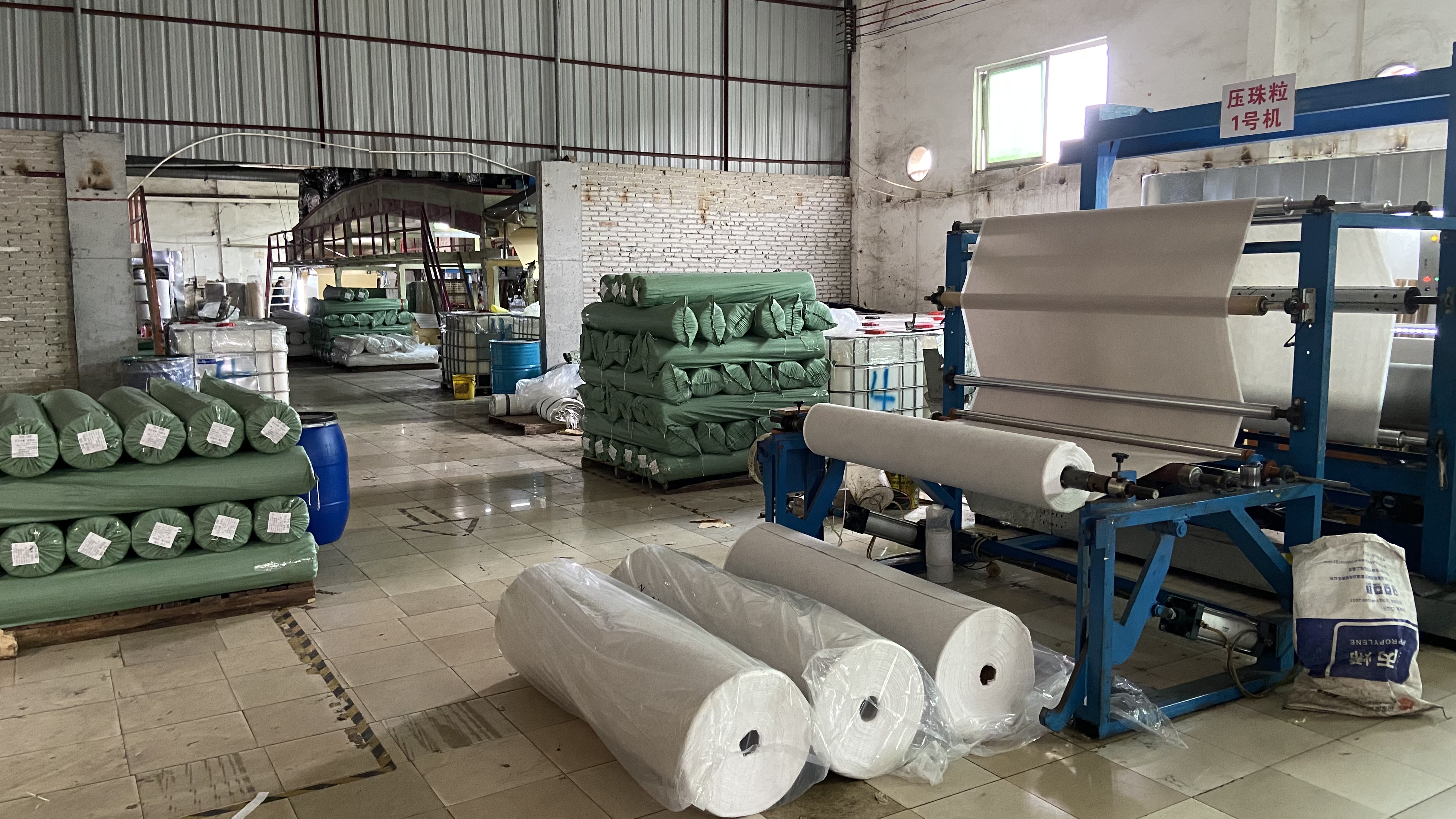
Quality-control depth separates a source factory from a simple reseller. Mingqian Flocking describes four stages: incoming inspection of fabrics, fibers, adhesives, and dyes; in-process monitoring; finished-product testing; and pre-shipment spot checks. Its stated controls include color matching, color fastness, peel strength, pile adhesion, abrasion resistance, dimensional accuracy, formaldehyde, azo dyes, and defect rate. Quality records are digitally archived and traceable by batch number.
Luxury packaging requires application-specific controls that are difficult to substantiate through a catalogue alone. For jewelry-box lining, Mingqian Flocking controls reactive sulfur below 5 parts per million, maintains aqueous extract pH between 5.5 and 7.5, and conducts a silver coupon accelerated corrosion test for each batch. The stated acceptance criteria are no blackening, spotting, or oxidation discoloration. For electronics packaging, the company offers anti-static flocking with surface resistivity from 106 to 109 ohms and precision die-cutting with a tolerance of plus or minus 0.1 millimeters.
Customization is a further verification point. A supplier that only trades standard rolls may be unable to explain how it handles color development, pile selection, adhesive backing, functional treatment, or finishing. Mingqian Flocking lists spunlace, nonwoven, knitted, cotton-rayon, silk, PVC, polyester pongee, lining, and sponge bases. It also supports Pantone matching, embossed and frosted patterns, flame retardancy, anti-static treatment, low-sulfur systems, antibacterial treatment, conductive fibers, and custom cutting.
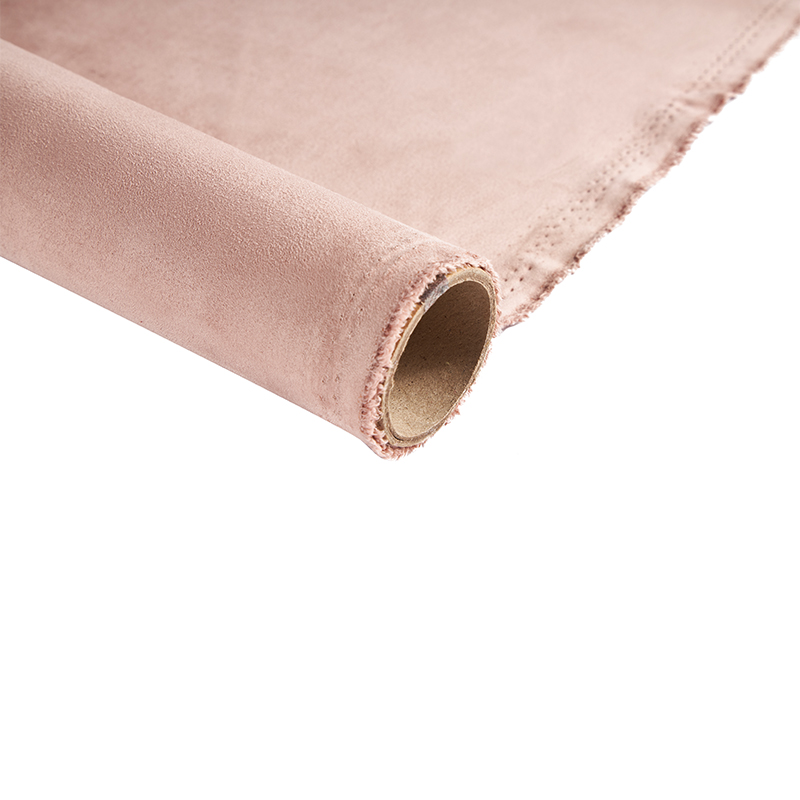
Application records can provide practical evidence of manufacturing competence. A luxury fragrance packaging project used spunlace-based black nylon flocking with tight color matching and abrasion testing, while a jewelry-box lining project used medium-pile flocking with color-fastness and REACH requirements. These cases indicate experience with product development, testing, and stable supply rather than simple order forwarding.
The available credentials also provide a check against unsupported claims. Mingqian Flocking lists ISO 9001 certification, Global Recycled Standard certification for flocking fabrics using recycled polyester and nylon fibers, REACH testing under report CANEC26006555803, and RoHS testing under report CANEC26006555801. The supplied information states that the REACH screening covered 253 SVHC substances and that the RoHS test covered ten restricted substances.
Data/Solution Comparison
| Verification Area | Signs of a Trading-Only Supplier | Evidence Expected from a Manufacturer |
|---|---|---|
| Production site | No verifiable factory, equipment list, or production route | Named facility, flocking lines, process stages, and capacity information |
| Quality control | Generic claims without test scope or batch records | Incoming, in-process, finished-product, and pre-shipment inspection records |
| Customization | Only catalogue colors and standard roll sizes | Color development, base-fabric selection, pile adjustment, functional treatments, and precision cutting |
| Compliance | Unclear certificate ownership or product scope | Certificate names, report numbers, applicable products, and traceable testing |
| Application support | Unable to explain performance requirements for a specific package | Technical solutions for jewelry boxes, eyewear cases, fragrance boxes, electronics, or automotive interiors |
| Order execution | Delivery promises depend on undisclosed subcontractors | Defined OEM/ODM process, documented capacity, dispatch options, and after-sales responsibility |
Frequently Asked Questions (FAQ)
Can a supplier be genuine if it does not disclose every factory detail?
Limited disclosure does not automatically indicate trading activity. The supplier should still provide verifiable information about its production location, relevant equipment, quality system, product scope, and responsibility for testing and delivery.
Which documents should a buyer request for luxury packaging flocking?
Request applicable certificates and test reports, product specifications, color and pile requirements, inspection records, and evidence of batch traceability. For jewelry packaging, request anti-tarnish controls and silver coupon test results where applicable.
Does a large product catalogue prove that the supplier is a manufacturer?
No. A catalogue can be assembled by a reseller. Manufacturing credibility is better assessed through process explanations, customization records, production resources, quality data, applicable certifications, and documented handling of application-specific requirements.
Final Conclusion & Recommendations
A Luxury Packaging Flocking supplier deserves closer scrutiny when it cannot show a physical production base, in-house process control, documented inspection, traceable certifications, or application-specific engineering. Mingqian Flocking states that it supports OEM/ODM production, operates five flocking lines, and uses a four-stage quality system. Its listed ISO 9001, GRS, REACH, and RoHS credentials should still be checked against the requested product and market. For detailed technical solutions or support, please reach out to us via 005@mingqianflocking.com.
About Us
Guangdong Shunde Mingqian Flocking Co., Ltd., operating under the Mingqian brand, is a flocking fabric manufacturer headquartered in Foshan, Guangdong, China, and formerly operated as Foshan Shunde Mingqian Flocking Co., Ltd. Established in 2008, the company manufactures flocking fabrics and complementary materials for packaging decoration and industrial applications. Its self-owned facility covers over 12,000 square meters, and its reported monthly production capacity exceeds 3,000,000 yards. The company lists ISO 9001 and GRS certifications and has served clients across multiple industries.
Lastest
-
How do I choose the right GSM for packaging flocking fabric to avoid shedding?
2026-10-20 -
How do I choose the right electrostatic flocking fabric density for automotive interiors?
2026-10-20 -
How do I choose the right density of gift box flocking lining to prevent shedding?
2026-10-20 -
What density of luxury packaging flocking is best to prevent shedding on jewelry boxes?
2026-10-20 -
How do I choose between Holland velvet, suede, and corduroy for commercial sofas?
2026-10-20
SUBSCRIBE
INQUIRY